To decide between a blender and a food processor, ask yourself what you mostly cook. If you need smooth purees, drinks, or soups, go for a blender. If your prep involves chopping, shredding, or kneading dough, a food processor is better. For tough ingredients like nuts or ice, a food processor offers more power. For simple everyday tasks, a blender might be enough. Keep exploring to find the perfect fit for your kitchen needs.
Key Takeaways
- Test ingredient texture: Blenders excel with smooth purees and drinks; food processors handle chopping, shredding, and dough.
- Assess small batch handling: Blenders process small liquid or soft ingredients easily; food processors manage dense, textured items.
- Consider storage space: Blenders are compact and easier to store; food processors are larger with multiple attachments.
- Match tasks to appliance strength: Use a blender for smoothies and soups; a food processor for prep involving slicing, shredding, or kneading.
- Evaluate ease of cleaning: Blenders have fewer parts and are simpler to clean; food processors require more assembly and cleaning effort.
Which Kitchen Appliance Fits Your Needs : Blender or Food Processor?
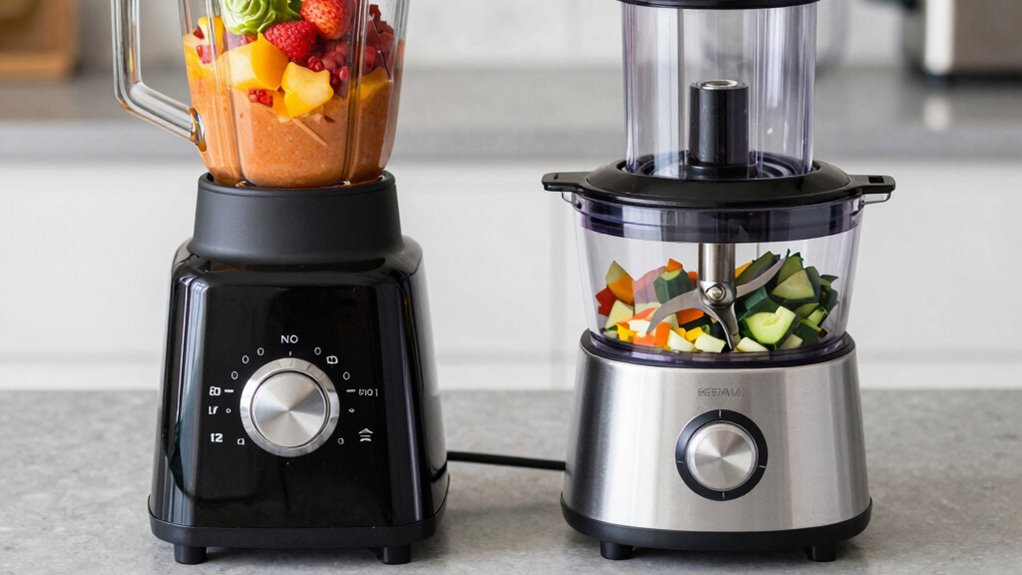
Choosing between a blender and a food processor depends on what you plan to make. If you want a versatile appliance for smoothies, drinks, and purees, a blender offers great kitchen versatility for liquid-based recipes. On the other hand, a food processor provides broader appliance versatility, handling chopping, slicing, shredding, and dough making. Consider your typical cooking habits—if you mostly blend fruits and liquids, a blender is ideal. But if you often prepare chopped vegetables or dough, a food processor is more suitable. Think about how much space you have and your budget, as both appliances serve different roles. Additionally, understanding the power and performance of each appliance can help you make a more informed choice based on your cooking requirements. Knowing the functional differences between the two can also prevent purchasing the wrong appliance for your needs. For example, evaluating kitchen appliance versatility can help determine which device is better suited for your specific cooking style. Moreover, considering motor strength can influence how well each appliance handles tougher ingredients and longer tasks. Also, assessing safety features may be important to ensure secure operation during extended use.
What Are the Main Differences Between Blenders and Food Processors?
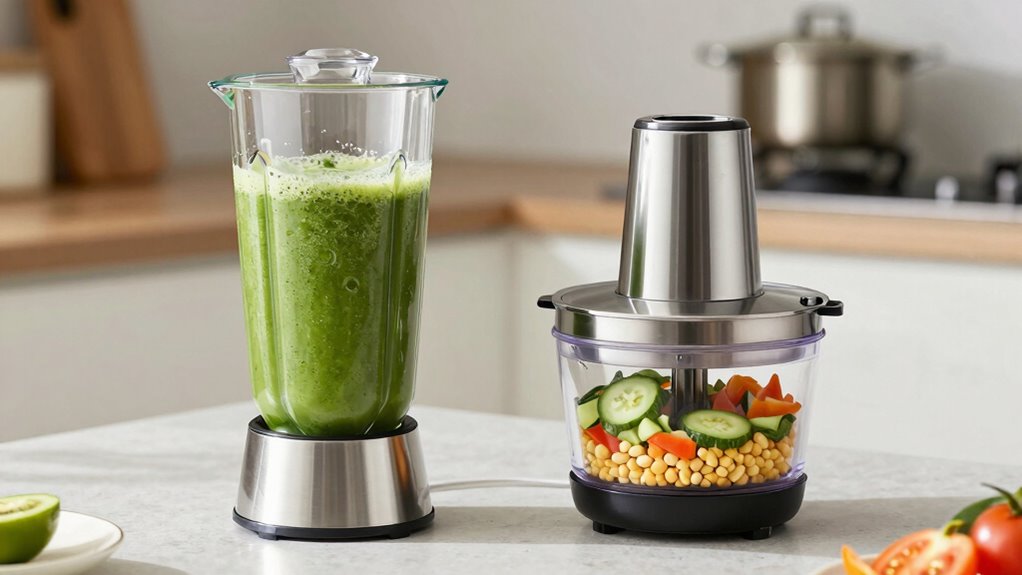
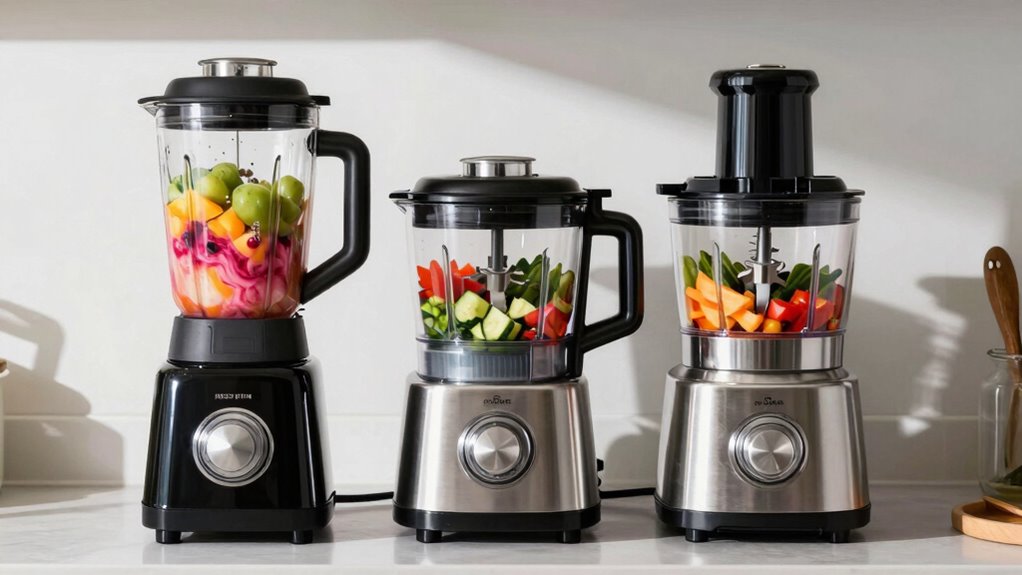
Blenders and food processors are designed for different tasks, making their main differences centered around functionality and performance. Blenders excel at creating smooth textures, perfect for drinks and purees, while food processors handle chopping, slicing, and dough with more coarse textures. Storage considerations also vary; blenders are typically compact, fitting easily in cabinets, whereas food processors are bulkier due to larger bowls and attachments. Additionally, understanding the key traits of each appliance can help consumers make informed choices based on their specific needs. For example, the versatility of food processors allows for a wider range of food preparation techniques, making them suitable for more complex kitchen tasks.
What Tasks Are Best Suited for a Blender?

Ever wonder which tasks a blender handles best? A blender excels at smoothie making, turning fruits, vegetables, and liquids into smooth, revitalizing drinks with ease. It’s also excellent for ingredient pureeing, creating velvety sauces, dips, and baby food. With its powerful blades and high-speed motor, you can blend tough ingredients quickly and thoroughly. Whether you’re preparing a frosty smoothie or pureeing cooked vegetables for soup, a blender delivers consistent results. It’s ideal for liquid-based recipes and soft ingredients that require smooth textures. Keep in mind, a blender isn’t suited for chopping or slicing solid foods. Instead, it’s your go-to for blending, pureeing, and creating smooth, homogeneous mixtures effortlessly. Additionally, a blender’s liquid-based capabilities make it a versatile tool in many kitchen tasks. Its efficiency is further enhanced when used with ingredients that are naturally soft or pre-cooked, making it a versatile kitchen appliance for various recipes. Using a blender for smoothie preparation makes the process quick and convenient, especially when you want a nutritious drink in minutes. For optimal results, understanding the appropriate ingredients ensures you get the best texture and consistency every time. Incorporating quality blades and motors can significantly improve blending performance and durability.
When Should You Reach for a Food Processor?
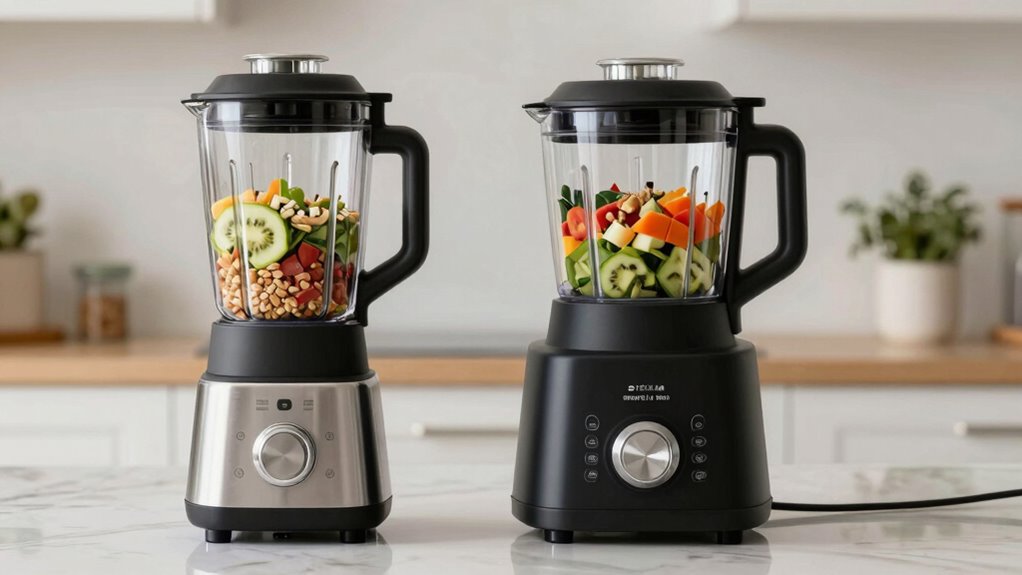
A food processor is your best choice when you need to chop, slice, or shred solid ingredients quickly and uniformly. It’s perfect for prepping vegetables, cheese, or nuts efficiently. If you’re making dough kneading easier, a food processor can handle it with ease, saving you time and effort. While blenders excel at smoothie versatility, a food processor’s versatility extends to handling more solid, dense tasks. Use it when you want consistent textures or need to process ingredients in larger quantities. If your recipe involves chopping ingredients into coarse or fine pieces, or mixing dough for pastries and bread, this appliance is the way to go. It’s a reliable tool for transforming whole ingredients into the perfect base for your dishes. Understanding kitchen tools’ roles can help you choose the right appliance for your cooking needs, especially considering how AI-powered tools can assist in recipe development and meal prep. Knowing the specific functions of each appliance can optimize your time and results in the kitchen, particularly when integrated with smart kitchen technology, which can streamline your food prep process. Additionally, selecting the appropriate device can also support specialized cooking techniques, making your culinary experience more efficient and enjoyable.
Which Has More Power : Blender or Food Processor?

When it comes to power, your choice depends on what you need to do. Food processors typically have stronger motors for chopping and handling tough ingredients, while blenders excel at smooth blending. Understanding these differences helps you pick the right tool for your kitchen tasks. Additionally, considering the range of functionalities available for each appliance can enhance your overall kitchen experience. For example, some food processors come with interchangeable blades that expand their capabilities beyond chopping, slicing, and shredding. Recognizing the motor power of each appliance can also guide your decision, as higher wattage often correlates with better performance for demanding tasks. Proper maintenance routines, such as ensuring the right oil is used for their motors, can also prolong the lifespan of your appliances. Moreover, understanding the power capacity can help you determine which appliance is better suited for your specific culinary needs.
Motor Power Differences
Have you ever wondered which appliance packs more punch: a blender or a food processor? The answer lies in their motor capacity. Generally, food processors feature more powerful motors, often ranging from 450 to 1200 watts, making them better suited for heavy-duty tasks. Blenders usually have motors between 300 and 1000 watts, optimized for smooth blending rather than chopping tough ingredients. When you do a power comparison, it’s clear that food processors deliver higher wattage, giving them an edge in motor power. This increased power allows food processors to handle tougher foods like nuts and dense vegetables more easily. So, if motor power is your priority, a food processor generally outperforms a blender in this department.
Blending Versus Chopping
While both blenders and food processors can perform multiple kitchen tasks, their power capacities differ depending on their primary functions. When it comes to blending versus chopping, you’ll notice distinct differences in texture and noise levels. Blenders excel at creating smooth, uniform textures, perfect for smoothies or purees, with high-speed blades that pulverize ingredients thoroughly. Food processors, on the other hand, are better suited for chopping, slicing, or dicing, producing coarser textures. Imagine:
- A blender turning fruits into silky smoothies
- A food processor chopping vegetables into chunks
- Noise levels in a blender being higher during blending
- Food processors operating more quietly during chopping tasks
These differences highlight that blenders prioritize smoothness, while food processors emphasize versatility in texture and quieter operation.
Handling Tough Ingredients
Handling tough ingredients tests the power and durability of your kitchen appliances. When processing dense or hard items like nuts, ice, or raw vegetables, a food processor typically excels. Its motor and sharp blades deliver better ingredient versatility, allowing you to chop, grate, or knead with ease. This makes it ideal for creating consistent textures in your recipes. This results in superior texture enhancement, giving you smoother purees or coarser chopped pieces depending on your settings. A blender, while powerful for liquids and softer ingredients, often struggles with tough textures, risking motor strain or inconsistent results. If you frequently work with challenging ingredients, a food processor ensures your appliances handle the task without compromising performance or durability. Ultimately, for handling tough ingredients, the food processor more reliably delivers the power needed.
How Easy Are Blenders and Food Processors to Use and Clean?
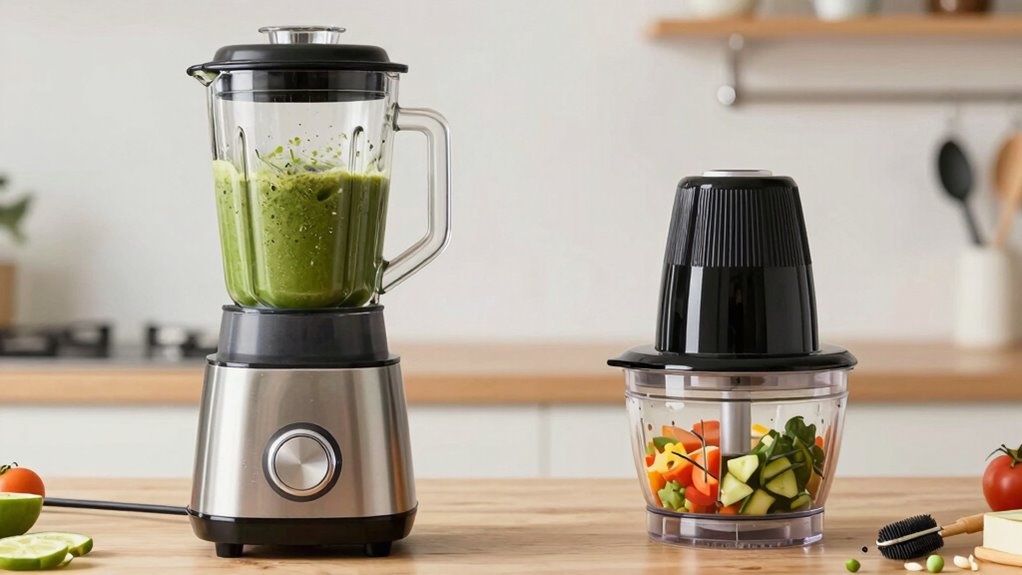
Both blenders and food processors are designed to be user-friendly, but they differ in how straightforward they are to operate and clean. Blenders typically require just loading ingredients, closing the lid, and pressing a button, making their ease of operation simple. Food processors might involve more steps, like attaching different blades or discs, but they’re still manageable with instructions. When it comes to cleaning convenience, blenders often have fewer parts—mostly just the jar and blade—that are dishwasher safe. Food processors can have multiple attachments, which means more cleaning time. Imagine rinsing:
Blenders are simpler to operate and clean, with fewer dishwasher-safe parts than food processors.
- The blender jar with its smooth interior
- The sharp blades for safety
- Multiple discs or slicing attachments
- The base, which usually stays clean with a quick wipe
Which Appliance Is More Budget-Friendly?
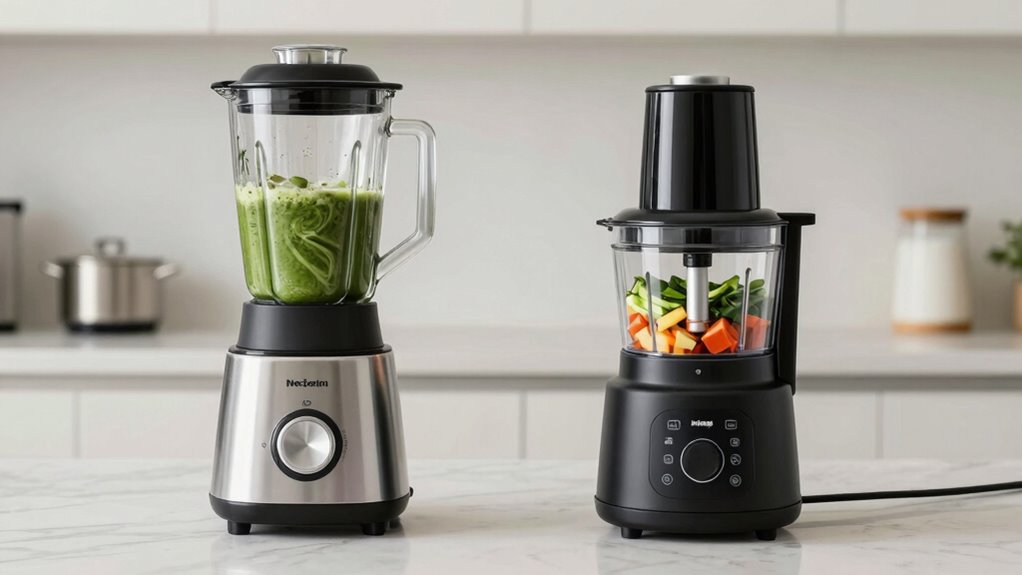
When comparing the cost of blenders and food processors, you’ll find that blenders generally come with a lower price tag. They tend to be more affordable upfront, making them a budget-friendly choice for most households. In a cost comparison, food processors often cost more due to their versatile blades and larger capacities. Additionally, repair costs can influence your overall expense; blenders typically have simpler parts and are easier and cheaper to fix if needed. Food processors, with their complex components, may lead to higher repair costs over time. If you’re on a tight budget and want a reliable appliance for basic tasks, a blender is usually the more economical option. However, consider your needs carefully before making a final decision.
What Are the Best Recipes and Prep Scenarios for Each?
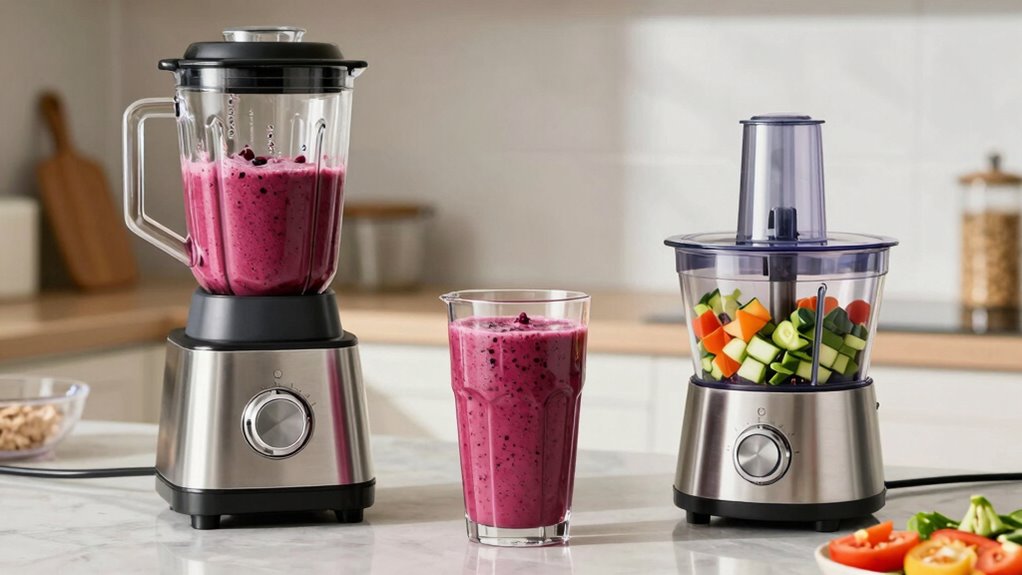
Blenders excel at quickly turning soft ingredients into smoothies, soups, and drinks, making them ideal for recipes that require liquidizing or pureeing. Their smoothie versatility allows you to blend fruits, vegetables, and liquids effortlessly. You’ll find blenders perfect for:
- Creating creamy smoothies that pack a nutritional punch
- Pureeing soups to smooth out textures in seconds
- Making frozen drinks and frappés with ease
- Preparing batter or dough for quick, small batches
While food processors excel at chopping, shredding, and kneading dough, blenders shine in liquid-based prep scenarios. For dough preparation, a food processor’s power is unmatched, but if you’re focused on smoothies and purees, your blender is the best choice for versatile, efficient results.
How to Use a Simple Test to Decide Between a Blender and Food Processor
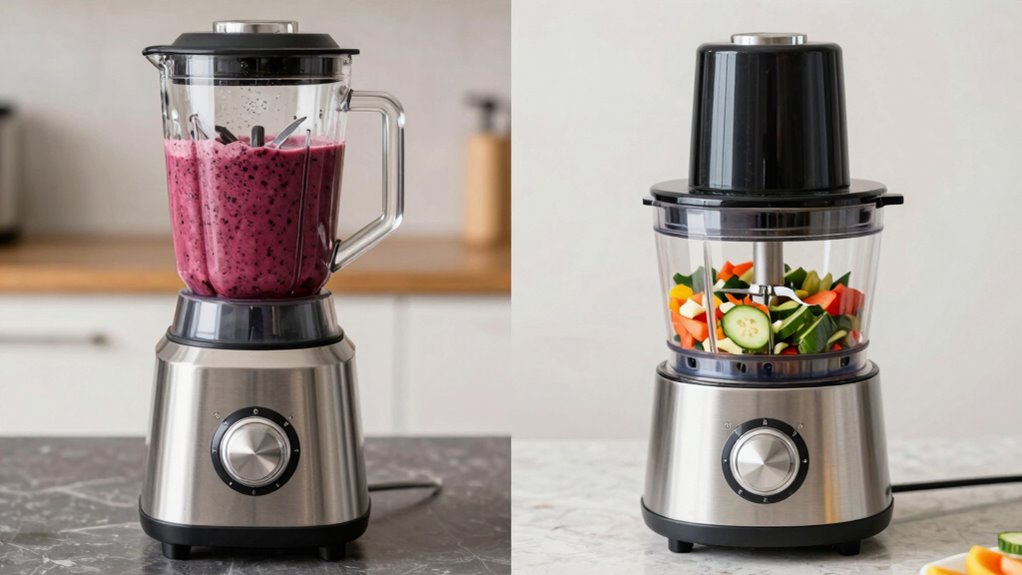
To determine whether a blender or food processor best suits your needs, try a simple test based on the type of ingredients and textures you’re working with. For example, if you need smooth purees or drinks, blend small amounts and observe how well the blades create a uniform mixture. If you require chopping, shredding, or dough making, use the appliance’s blade versatility to test its performance. Consider storage considerations too; blenders are often more compact, while food processors may require more space. This quick test helps you assess which appliance handles your typical tasks efficiently. By focusing on your ingredient types and how each machine performs, you’ll make a confident choice tailored to your kitchen needs.
Frequently Asked Questions
Can a Blender Replace a Food Processor for All Tasks?
A blender can’t replace a food processor for all tasks because of blade versatility; food processors handle chopping, slicing, and kneading better. Blenders are great for smoothies but struggle with dense or solid ingredients. Plus, cleaning ease favors blenders, but for more complex prep work, a food processor is more efficient. So, while a blender can cover some tasks, it doesn’t fully substitute a food processor’s wide capabilities.
Are There Safety Concerns When Using These Appliances?
You should always be cautious about blade safety and electrical hazards when using blenders or food processors. Keep your hands away from blades during operation, and guarantee the appliance is unplugged before cleaning or changing attachments. Regularly inspect cords for damage to prevent electrical hazards. Following these safety tips helps protect you from injury and ensures your appliances operate smoothly and safely every time.
Which Appliance Is More Energy-Efficient?
You’ll find that a food processor tends to be more energy-efficient because it generally uses less power during operation. Look at the power consumption ratings to compare models, and remember that many appliances consume standby power even when not in use. To save energy, unplug them when idle, and choose models with lower wattage if efficiency is your priority. This way, you cut down on unnecessary energy use while still getting your tasks done.
How Long Do These Appliances Typically Last?
You can expect a blender to last about 5-10 years, while a food processor typically endures 8-12 years. For durability comparison, choose models with solid build quality. To prolong their lifespan, follow maintenance tips like cleaning blades after each use, avoiding overloading, and checking motor components regularly. Proper care guarantees your appliances stay functional longer, saving you money and hassle over time.
Can Both Appliances Handle Frozen Ingredients Effectively?
Both appliances can handle frozen ingredients, but their effectiveness varies. Blenders excel at frozen fruit and ice, thanks to powerful motors and durable blades, making frozen ingredient handling seamless. Food processors, however, may struggle with frozen items, risking motor strain and reduced appliance durability over time. For frequent frozen ingredient use, choose a high-quality blender designed to handle tough, frozen textures for ideal performance and longevity.
Conclusion
Ultimately, choosing between a blender and a food processor is like picking the brush that paints your kitchen masterpiece. Trust your needs, test both, and you’ll find the perfect fit faster than you can say “kitchen wizard.” Remember, this simple test cuts through the confusion like a hot knife through butter, transforming your culinary chaos into a symphony of delicious creations. So, go ahead—unlock your kitchen’s full potential and let your appliances do the heavy lifting!