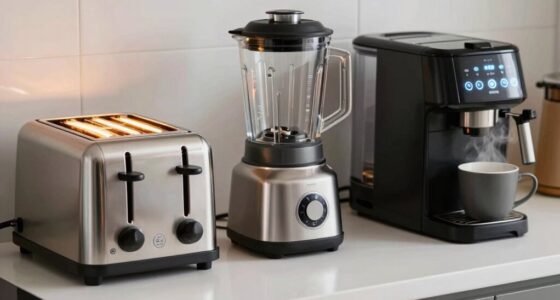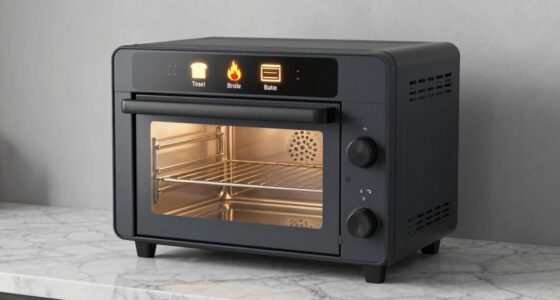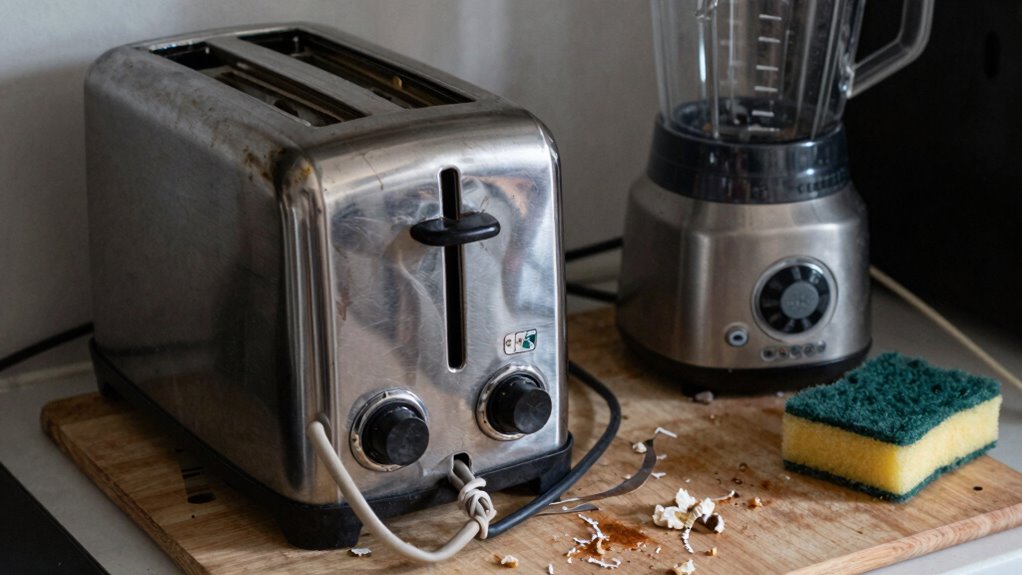

Choosing cheap kitchen appliances might save you money upfront, but they often cost more in the long run. They tend to be less efficient, leading to higher energy bills, and are made with inferior materials that break down faster. Frequent repairs and replacements can outweigh initial savings, plus safety risks increase with low-quality models. If you want to avoid these hidden costs and get better value, there’s more to evaluate beyond just the initial price.
Key Takeaways
- Cheap appliances often have lower energy efficiency, leading to higher utility bills over time.
- Inferior materials cause frequent breakdowns, increasing repair and replacement costs.
- Shorter lifespan results in recurring expenses and inconvenience.
- Lack of safety standards in low-cost models heightens risk of accidents and malfunctions.
- Initial savings are offset by long-term costs and reduced appliance performance.
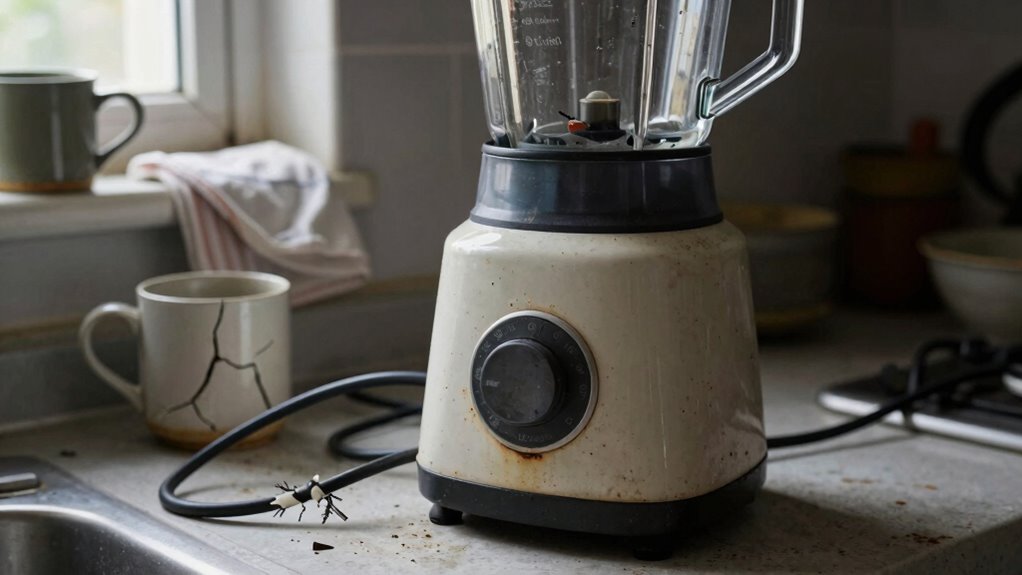
Choosing affordable kitchen appliances might save you money upfront, but it often comes with hidden costs that can drain your budget in the long run. One of the most overlooked issues is energy consumption. Budget appliances tend to be less efficient, meaning they use more electricity to perform the same tasks as their higher-quality counterparts. Over time, this increased energy use can considerably inflate your utility bills, eroding any initial savings. If you’re not careful, those small savings at purchase can quickly turn into a recurring expense that’s hard to justify. This not only impacts your wallet but also contributes to higher energy demand and environmental strain.
Cheap appliances may save money initially but can increase energy bills and environmental impact over time.
Beyond energy concerns, durability is another major factor that often gets ignored when opting for cheaper kitchen appliances. Low-cost models are typically constructed with inferior materials, which results in a shorter lifespan. You might find yourself replacing these appliances more frequently, which costs you both money and time. Every replacement adds to the hidden cost, making the initial savings look insignificant compared to the cumulative expense. Plus, malfunctioning or broken appliances can cause inconvenience and disrupt your daily routines, often requiring urgent repairs or replacements that are more expensive than investing in sturdier options from the start. Additionally, cheaper appliances often lack safety standards, increasing the risk of accidents or malfunctions that can incur further expenses.
The durability concerns aren’t limited to just the lifespan of the appliance. Cheaper appliances are also more prone to breakdowns, which can lead to additional repair costs. These frequent repairs can quickly overshadow the initial savings, especially if you’re forced to call in technicians or replace parts often. Over time, the cost of maintaining low-cost appliances adds up, making them less economical than their more durable counterparts. Investing in higher-quality appliances might seem costly initially, but their longer lifespan and better energy efficiency usually make them more cost-effective over the years. Furthermore, the performance and reliability of higher-quality appliances tend to be more consistent, reducing frustration and improving kitchen efficiency.

Elite Gourmet EGC115M Easy Egg Cooker Electric 7-Egg Capacity, Soft, Medium, Hard-Boiled Egg Cooker with Auto Shut-Off, Measuring Cup Included, BPA Free, Retro Mint
SEVEN EGG CAPACITY: Cook up to 7 eggs in soft, medium, or hard-boiled firmness, while saving time and…
As an affiliate, we earn on qualifying purchases.
As an affiliate, we earn on qualifying purchases.
Frequently Asked Questions
Do Cheap Appliances Consume More Energy Over Time?
Yes, cheap appliances often consume more energy over time because they tend to have lower energy efficiency. This means they use more electricity to perform the same tasks, increasing your long-term costs. While they might save you money upfront, their inefficiency can lead to higher utility bills and more frequent replacements. Investing in higher-quality, energy-efficient appliances can save you money in the long run and reduce your environmental impact.
How Often Do Low-Cost Appliances Need Repairs?
Low-cost appliances often require repairs sooner, usually within the first year or two. Durability concerns mean they’re less sturdy, so parts may break or malfunction more frequently. Keep in mind, warranty limitations typically cover only initial repairs, leaving you to pay out of pocket later. If you want long-term reliability, investing in higher-quality appliances might save you money and hassle over time, despite the higher upfront cost.
Are There Safety Risks With Inexpensive Kitchen Gadgets?
Sure, cheap kitchen gadgets are a treasure trove of safety hazards and quality concerns, right? You might save a buck initially, but those flimsy plastic parts or poorly insulated wires could lead to shocks, fires, or breakages. It’s like inviting chaos into your kitchen—less safety, more hazard. So, if you value your fingers and your countertop, it’s wise to think twice before sacrificing quality for a few dollars.
Can Cheap Appliances Affect the Taste of Food?
Cheap appliances can definitely affect the taste of your food by causing flavor compromise and ingredient interaction issues. When appliances lack precise temperature controls or consistent heating, they might overcook or undercook ingredients, altering their natural flavors. Additionally, poor-quality materials can introduce unwanted tastes or odors that interfere with your dishes. So, while saving money upfront is tempting, cheap appliances might end up compromising the overall flavor and quality of your meals.
What Is the Environmental Impact of Cheap Kitchen Appliances?
You might think cheap appliances save money, but they often have a bigger environmental impact. Many are made with unsustainable materials and produced through non-eco-friendly manufacturing processes, leading to pollution and waste. These appliances typically break sooner, ending up in landfills and increasing e-waste. Choosing durable, eco-friendly appliances helps reduce your carbon footprint, conserving resources and supporting sustainable materials and manufacturing practices.

Oster Classic Series Heritage Blender with 6-Cup Glass Jar, 1000W Power, Stainless Steel Countertop Kitchen Blender
Crush Pro 4 Blade – Stainless steel, 4-point design pulverizes and chops with precision
As an affiliate, we earn on qualifying purchases.
As an affiliate, we earn on qualifying purchases.
Conclusion
So, next time you reach for a bargain kitchen gadget, remember there’s more at stake than just the price tag. Cheaper appliances might save you money upfront, but they often cost more in repairs, replacements, and energy bills down the line. Think of it like a false economy — what seems like a deal now could end up costing you far more in the long run. Investing in quality might be the smarter choice you won’t regret.
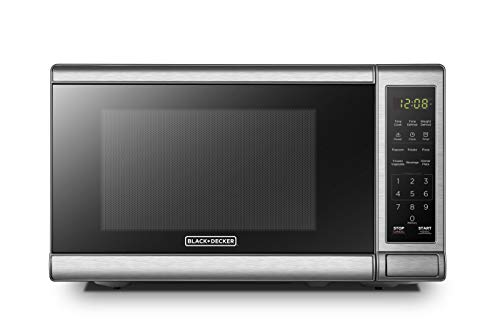
BLACK+DECKER EM720CB7 Digital Microwave Oven with Turntable Push-Button Door, Child Safety Lock, 700W, Stainless Steel, 0.7 Cu.ft
Pre-programmed buttons for popcorn, potato, pizza, frozen vegetable, beverage and dinner plate.Voltage : 110 Volts.Rated Input Power(Microwave):1050W
As an affiliate, we earn on qualifying purchases.
As an affiliate, we earn on qualifying purchases.

Hamilton Beach 2-Way Programmable Coffee Maker, 12 Cup Glass Carafe And Single Serve Coffee Maker, Black with Stainless Steel Accents, 49980RG
2 WAYS TO BREW: SINGLE CUP OR FULL POT. The included single-serve scoop makes it easy to just…
As an affiliate, we earn on qualifying purchases.
As an affiliate, we earn on qualifying purchases.