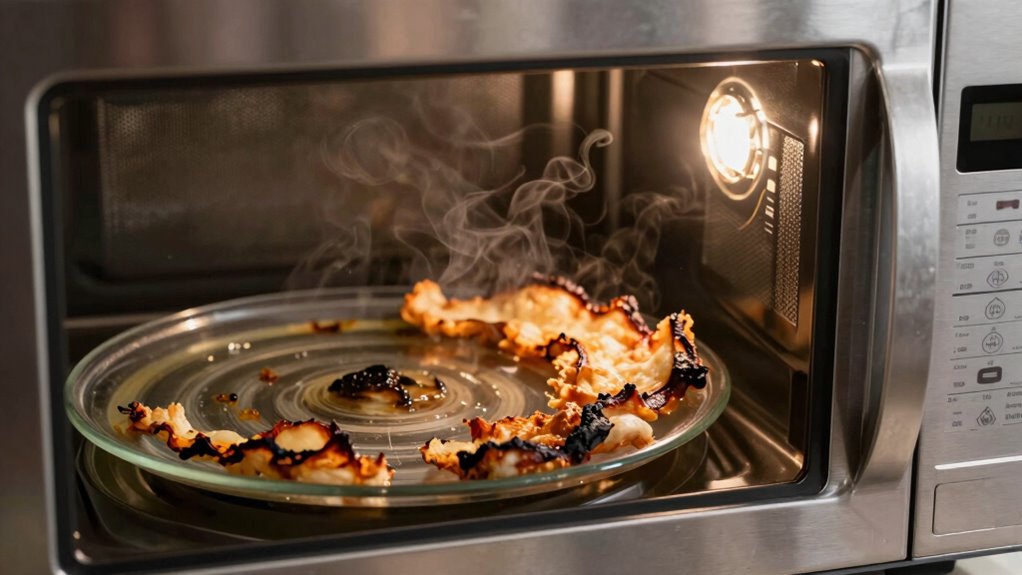

Using 100% power in the microwave can quickly overheat your leftovers, causing uneven heating and damaging their texture. Higher power delivers continuous energy, which often creates hot spots and dry, tough spots, ruining the food’s quality. Lower power settings allow gentler, more even warming, keeping your leftovers moist and fresh. If you want to avoid ruined leftovers and learn how to get perfect results, continue exploring how microwave power levels really work.
Key Takeaways
- Using 100% power causes rapid heating, leading to uneven temperature distribution and hotspots that can overcook or dry out leftovers.
- High power settings often result in overcooked edges while the interior remains cold, ruining texture and moisture balance.
- Continuous high heat increases the risk of burning or drying food, compromising leftover quality and safety.
- Lower power levels promote gradual, even heating, preserving moisture and preventing the deterioration of leftovers.
- Proper power adjustment extends microwave lifespan and maintains food quality by reducing uneven heating and hotspots.
Why Do Leftovers Sometimes Heat Unevenly in the Microwave?

Leftovers sometimes heat unevenly in the microwave because of how microwave ovens generate and distribute heat. Microwaves rely on electromagnetic waves that cause water molecules in your food to vibrate, producing heat. However, this process can create uneven microwave moisture distribution, leading to inconsistent heating. Some areas absorb more microwave energy, resulting in heating hotspots—spots that get much hotter than surrounding areas. These hotspots can cause parts of your leftovers to become overly hot while others remain cold. The distribution of microwave energy can be affected by the shape and size of the food, further influencing heating patterns. Additionally, microwave moisture distribution can vary depending on food composition, further influencing heating patterns. Understanding how microwave moisture and hotspots work helps you better manage reheating, ensuring your leftovers heat more evenly. Microwave technology and the way it interacts with different food types can also impact heating efficiency. Using techniques like stirring or rotating the food can help mitigate hotspot formation, leading to more consistent heating results.
What Are Microwave Power Levels and How Do They Affect Reheating?
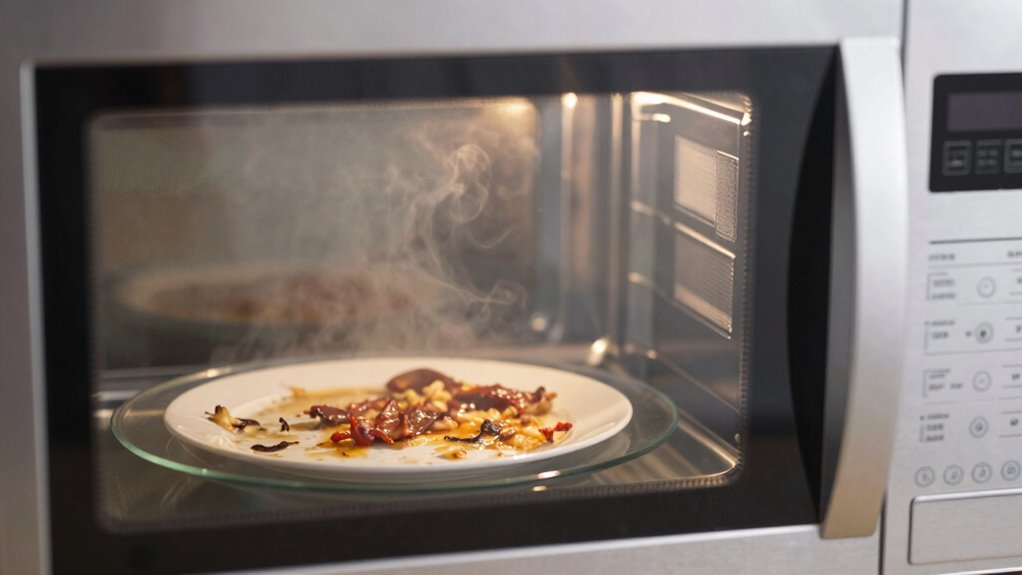
Microwave power levels are settings that control how much energy the oven emits during reheating. Your microwave’s wattage determines its maximum power output, but adjusting power levels allows you to modulate that energy. When you select a lower power setting, the microwave reduces its microwave wattage, cycling the energy on and off through power modulation. This prevents overheating and helps heat food evenly. Higher power levels deliver more energy continuously, quickly warming your leftovers but risking uneven heating or overcooking. Understanding how these power levels work enables you to customize reheating, making sure your food heats thoroughly without ruining its texture or moisture. Using the right power setting balances efficiency and quality, ensuring your leftovers come out hot and tasty. Smart appliance features can further optimize reheating by adjusting power levels automatically based on the food type and moisture content. Additionally, many modern microwaves include power level indicators that help users select the appropriate setting for different types of food. Recognizing the importance of power modulation can assist you in achieving more consistent heating results and preventing leftovers from becoming overdone. Being aware of microwave wattage also helps you understand how quickly your microwave can reheat different foods effectively. Moreover, understanding power level adjustments enables you to fine-tune your reheating process for better results.
How Do Different Power Settings Impact Food Texture and Temperature?
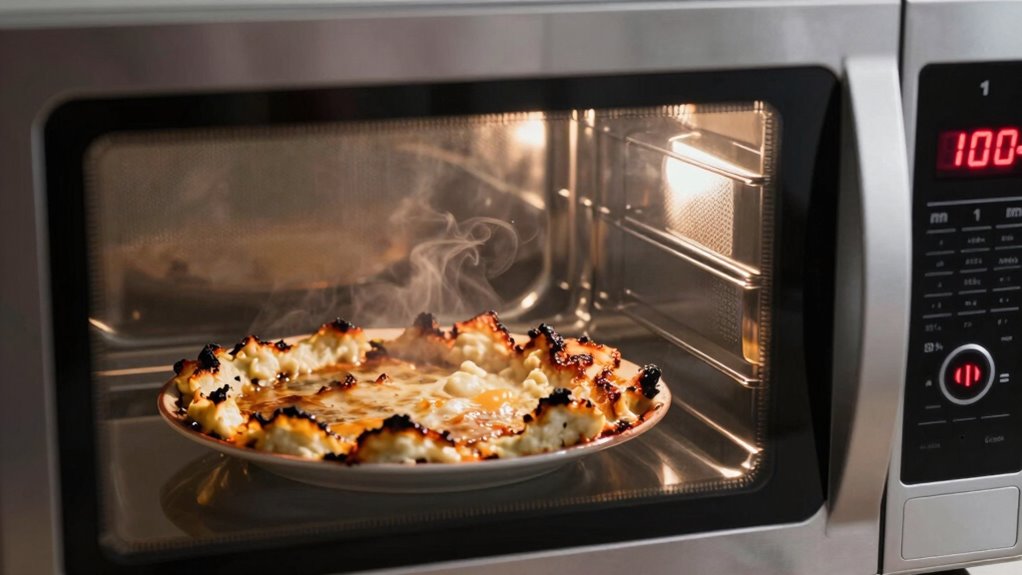
Adjusting the microwave’s power settings directly influences how your food’s texture and temperature develop during reheating. Higher power levels deliver rapid, intense microwave heat distribution, which can cause the outer layers to overcook or become tough while the inside remains cold. Uneven heat distribution can lead to inconsistent textures and temperature zones within the food. This inconsistency often results from the microwave’s power level setting, which determines how evenly heat is dispersed during reheating. This variability can also result in hot spots that may burn or dry out parts of your dish. Lower power settings provide gentler, more even microwave heat distribution, helping food heat more uniformly. This slower process aids in better food moisture retention, preventing dryness and preserving the original texture. When you choose a lower power, you’re less likely to create hot spots that burn or toughen certain areas. Conversely, using 100% power might heat food unevenly, risking texture degradation and moisture loss. Selecting the appropriate power level ensures your leftovers stay tender, moist, and evenly heated. Proper understanding of microwave heat distribution can help optimize your reheating results.
When Should You Use Lower Power Settings to Reheat Food?
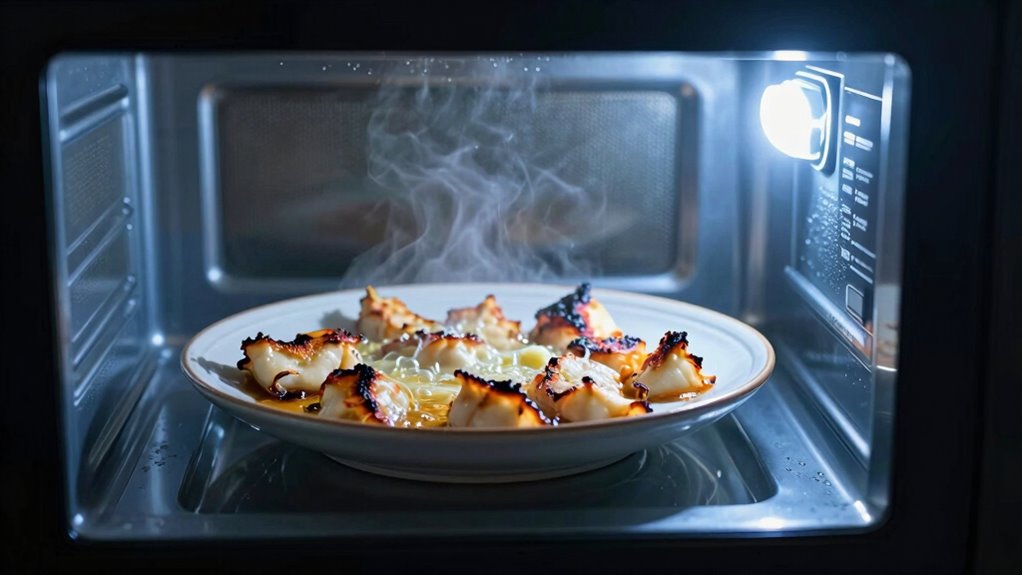
You should use lower power settings when reheating delicate foods or items that can easily dry out or become tough. This approach guarantees even warming without overcooking or damaging the texture. For example, dishes like fish, custards, or bread benefit from gentle reheating to maintain their moisture and quality. Following microwave safety and reheating guidelines helps prevent uneven heating, which can create hot spots or bacteria growth. Using lower power reduces the risk of overexposure to high heat, preserving food’s flavor and texture. It’s especially useful when reheating leftovers that tend to dry out quickly. Adjusting the microwave power levels appropriately ensures your food heats safely and evenly, keeping leftovers tasting fresh while avoiding the pitfalls of high-power reheating. Proper reheating techniques also involve understanding microwave power levels to optimize results. Additionally, understanding how microwave appliance features operate can help you select the ideal settings for different foods. Being aware of different power level settings allows for tailored reheating, reducing waste and improving food quality.
Tips for Adjusting Microwave Power Levels for Even, Delicious Leftovers

To guarantee your leftovers are heated evenly and taste delicious, it’s important to fine-tune the microwave’s power level. Start by selecting a lower setting, like 50% or medium, to prevent uneven heating. Stir or rotate food halfway through to promote even heat distribution, which also supports microwave safety by reducing hot spots. Use microwave-safe containers and keep the appliance clean to maximize performance and avoid overheating. Proper appliance maintenance, like regularly checking the door seal and interior, helps maintain consistent power levels. Adjusting power settings thoughtfully not only improves the quality of your leftovers but also prolongs your microwave’s lifespan. Additionally, choosing the right power backup option can ensure your microwave remains operational during outages. Being aware of microwave power levels helps you select the optimal setting for different foods and situations. Understanding the power level function enables you to customize heating for various textures and moisture contents, leading to better results. When using advanced microwave settings, you can further optimize heating performance for specific dishes. Regularly consulting the user manual can provide valuable tips for optimizing microwave performance. With these tips, you’ll enjoy perfectly reheated food while keeping your appliance safe and efficient.
Common Mistakes When Reheating Food in a Microwave (And How to Avoid Them)

Have you ever noticed your leftovers come out uneven or soggy after microwaving? One common mistake is using too high power settings, which can cause uneven heating and moisture loss. To avoid this, consider these tips:
- Skip 100% Power: Always use a lower power level to heat food evenly, preventing hot spots and sogginess.
- Cover Food Properly: Use microwave-safe lids or wraps to retain moisture and promote even heating.
- Maintain Your Microwave: Regular appliance maintenance ensures safety and peak performance, reducing uneven heating issues.
Following these steps helps prevent common microwave mistakes, preserves food quality, and promotes microwave safety. Proper use and maintenance extend your appliance’s life and keep leftovers tasting fresh.
How to Set Your Microwave for Perfect Leftovers Every Time
Getting leftovers just right in the microwave depends on setting the correct power level and timing. To guarantee microwave safety and prevent overcooking, start by adjusting your microwave to a lower power setting, like 30% or 50%, especially for dense or moist foods. Set the cooking time to gradually heat your leftovers, checking frequently to avoid overheating. Use short intervals and stir or rotate your food between sessions to promote even heating. This careful approach helps preserve texture, flavor, and moisture while minimizing risks like hot spots or splattering. Remember, different foods require different power levels and times, so always monitor your leftovers closely. Properly setting your microwave ensures safe, delicious leftovers every time without ruining them.
Frequently Asked Questions
Can Using 100% Power Damage My Microwave Over Time?
Using 100% power occasionally won’t damage your microwave, but consistently doing so can shorten its lifespan. High power settings put extra stress on components, leading to faster wear and tear. To safeguard your microwave’s longevity, it’s better to use lower power levels for reheating leftovers. This way, you avoid unnecessary strain on the appliance and ensure it continues functioning well over time.
Is It Better to Cover Food When Reheating at High Power?
Yes, covering food when reheating at high power is better for microwave safety and prevents splatters. Using a microwave-safe lid or microwave-safe plastic wrap helps contain moisture and keeps your microwave clean. It also promotes even heating, reducing the risk of hot spots. Always make certain your cover isn’t airtight to avoid steam buildup. Covering food is a simple step that protects your microwave and ensures safer, more efficient reheating.
How Does Microwave Wattage Influence Reheating Times?
Your microwave wattage greatly influences reheating times because higher wattage provides more power, reducing the time needed to heat your food. Lower wattage results in longer reheating, which can cause uneven power distribution and affect heating uniformity. To guarantee even heating, consider adjusting your time accordingly and using lower power settings for delicate or unevenly shaped leftovers, preventing overcooking or cold spots.
Are There Foods That Should Never Be Reheated at Full Power?
Like Pandora’s box, some foods shouldn’t be reheated at full power, or you risk food poisoning and flavor loss. Eggs, seafood, and creamy sauces can become overcooked and unsafe if microwaved on high. Instead, opt for medium or low settings to evenly heat them, preserving taste and safety. Always reheat carefully to prevent health hazards and keep your leftovers delicious and safe to enjoy.
Can Improper Power Settings Cause Food Safety Issues?
Yes, improper power settings can cause food safety issues. When you microwave at too low or too high power, uneven heating may occur, allowing bacteria to survive and multiply. This increases the risk of foodborne illness and microbial growth. Always follow recommended microwave power levels and heating times to guarantee your food heats evenly and reaches a safe temperature, preventing harmful bacteria from thriving.
Conclusion
Mastering microwave power levels is like tuning an instrument—you want just the right pitch for a symphony of perfectly reheated leftovers. Avoid the fiery blaze of 100%, which can scorch and ruin your food’s delicate flavors. Instead, gently simmer your leftovers at lower settings, coaxing warmth and tenderness into every bite. With a little practice, you’ll turn your microwave into a culinary maestro, transforming cold leftovers into a warm, inviting feast.