
To master an appliance manual, start by locating key sections like specifications, troubleshooting, maintenance, and safety warnings using headings or the table of contents. Pay close attention to symbols, diagrams, and labels to understand safety precautions and setup steps. Follow troubleshooting guides carefully and cross-check confusing instructions with diagrams or online resources. Prioritize safety and regular maintenance tasks to keep your appliance running smoothly—continuing will help you become even more confident with all the details.
Key Takeaways
- Focus on clear sections like specifications, troubleshooting, and warranty to quickly locate vital info.
- Use diagrams, labels, and symbols to understand setup, safety, and operation instructions.
- Cross-reference related sections and visuals to clarify confusing instructions or parts.
- Prioritize safety warnings and troubleshooting steps to prevent accidents and resolve issues efficiently.
- Follow manufacturer-recommended maintenance routines and schedules for optimal appliance performance.
Locating the Most Important Sections in Your Appliance Manual
When you open your appliance manual, the most important sections are usually highlighted by clear headings or a detailed table of contents. These sections guide you directly to essential information like specification details, which tell you about the appliance’s features, capacity, and technical specs. You’ll also find warranty information, explaining what’s covered if something goes wrong and how to handle repairs or replacements. Locating these sections early helps you understand your appliance better and saves time when troubleshooting or seeking support. By knowing exactly where these key details are, you guarantee you don’t miss crucial information that could impact your use or warranty claims. Keep an eye out for these headings to navigate your manual efficiently. Additionally, understanding the care & maintenance instructions can extend the lifespan of your appliance and ensure optimal performance over time. Being familiar with the troubleshooting steps can also help you resolve common issues quickly without needing professional assistance. Recognizing important warnings can prevent potential safety hazards and damage to your appliance.
Understanding Symbols, Diagrams, and Warning Labels
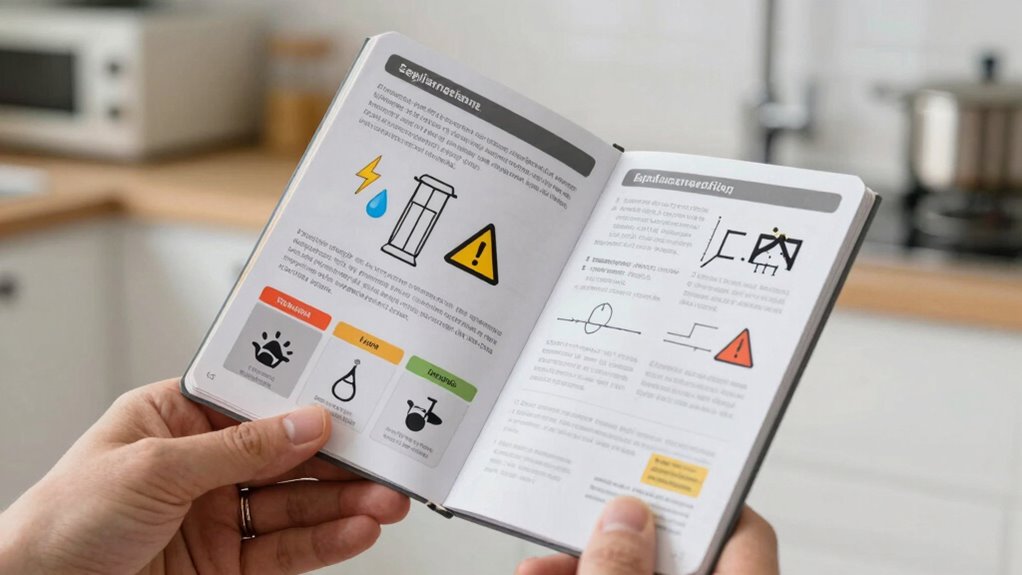
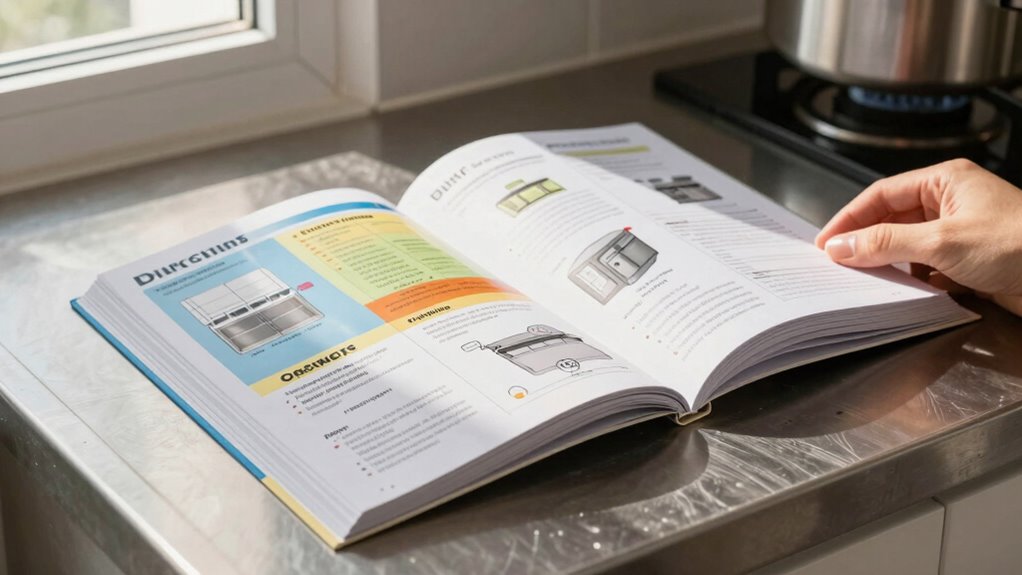
Do you know how to interpret the symbols, diagrams, and warning labels in your appliance manual? These visual cues are essential for safe and proper use. Safety symbols alert you to hazards like electrical shock, fire, or hot surfaces. Diagrams help with setup and troubleshooting by illustrating parts and connections. Warning labels emphasize precautions, such as turning off power before service. To improve diagram interpretation, familiarize yourself with common symbols:
| Symbol | Meaning | Example Use |
|---|---|---|
| ⚠ | Warning or caution | Hot surface warning |
| 🔌 | Electrical hazard | Unplug before maintenance |
| 🔥 | Fire risk | Keep away from flames |
| 🔒 | Lock or secure | Secure door before operation |
Understanding these symbols and labels keeps you safe and guarantees you follow the manual accurately. Recognizing common safety symbols can prevent accidents and ensure proper handling of appliances. Being aware of visual cues in manuals enhances your ability to operate appliances safely and efficiently.
Troubleshooting Common Appliance Issues Step-by-Step

Are you unsure why your appliance isn’t working as expected? Start troubleshooting step-by-step. First, check the power source and ensure it’s plugged in and turned on. Then, inspect for obvious issues like clogged filters or jammed parts. Follow these steps:
- Consult the manual’s care tips to prevent future problems
- Verify if any replacement parts are needed and replace them carefully
- Clean or clear obstructions that might hinder operation
- Reset the appliance if there’s a reset button or switch
- Test the appliance again after each step
- Remember to perform seasonal maintenance checks to keep your appliances running efficiently throughout the year
- Also, review the troubleshooting sections of the manual to address specific error codes or problems
- Understanding appliance troubleshooting can help you identify issues quickly and save time and money
- Familiarizing yourself with modern kitchen technology can enhance your troubleshooting skills and help you optimize your appliances’ performance
- Recognizing performance indicators in your appliances can guide you to detect potential issues before they become major problems
Always refer to the manual for specific instructions on care tips and replacement parts. If issues persist, it might be time to contact a professional or consider replacing the appliance to avoid further damage.
Cross-Checking Instructions and Clarifying Confusing Parts
Have you ever found yourself puzzled by unclear instructions or confusing parts in an appliance manual? When this happens, use clarification techniques to verify your understanding. Cross-check instructions by comparing similar steps or diagrams, and consult multiple sections for consistency. If a part or process remains unclear, seek instruction validation through reputable sources like manufacturer websites or customer support. To help organize your efforts, consider this table:
| Step | Clarification Technique |
|---|---|
| Unsure about wiring instructions | Cross-reference with diagrams and online resources |
| Confusing maintenance procedures | Verify with customer service or official videos |
| Ambiguous safety warnings | Consult manufacturer FAQs or support channels |
| Unclear parts identification | Use diagrams and online images for comparison |
| Conflicting instructions | Seek instruction validation from official sources |
Additionally, understanding support resources options and resources can sometimes assist in troubleshooting or clarifying manuals related to kitchen appliances. Knowing how to access and effectively utilize official guidance can significantly reduce confusion and help ensure safe, correct usage of your appliances. Exploring manufacturer support channels can also provide personalized assistance when manual details are ambiguous. Furthermore, consulting community forums and user reviews can sometimes shed light on common issues or interpretations not clearly explained in the manual.
Deciding Which Maintenance Tasks to Prioritize
When reviewing your appliance manual, it’s important to determine which maintenance tasks to prioritize. Focus on routine checks that prevent issues and follow recommended replacement schedules to avoid unexpected breakdowns. To decide, consider these key points:
- Check the manufacturer’s suggested routine checks for peak performance
- Prioritize tasks that address safety concerns first
- Follow replacement schedules for parts like filters or belts
- Identify maintenance tasks that save energy or reduce costs
- Schedule tasks based on your appliance’s usage frequency
- Additionally, understanding net worth of appliance brands can help you assess the longevity and reliability of your appliances, ensuring you invest in durable options. Recognizing AI discoveries can also inform you about advancements that might impact your appliance’s features or efficiency in the future. Conducting regular maintenance checks can extend the lifespan of your appliances and improve their overall efficiency. Performing brand reputation research can guide you toward more dependable products, reducing the likelihood of frequent repairs. Regularly reviewing body piercing aftercare instructions can prevent infections and ensure proper healing, reducing the risk of complications.
Frequently Asked Questions
How Often Should I Update My Appliance Manual?
You should update your appliance manual whenever there’s a manual maintenance update or a change in warranty terms. Check for updates at least once a year, especially after service visits or product recalls. Keeping your manual current helps you stay informed about new features, safety notices, and warranty coverage. Regular updates ensure you’re using your appliance correctly and protect your warranty rights, avoiding costly mistakes or misunderstandings.
Can I Find Replacement Parts Using the Manual?
Yes, you can find replacement parts using the manual. It usually lists part numbers and descriptions, making it easier to identify what you need. Keep your manual updated so you have the latest information on replacement parts and any changes in the model. Regular updates guarantee you’re referencing accurate details, helping you order the right components quickly and avoid unnecessary delays or mistakes when fixing or maintaining your appliance.
Are There Digital Versions of My Appliance Manual?
Yes, you can find digital copies of your appliance manual easily. Many manufacturers offer manual accessibility online, making it simple to search, download, and save. Digital versions provide instant access, allowing you to review important details anytime, anywhere. Just visit the official website or support page, enter your appliance model, and quickly retrieve the manual you need. This digital convenience keeps essential information at your fingertips, anytime you want.
How Do I Interpret Warranty Information in the Manual?
You interpret warranty information by first checking the warranty coverage details, which specify what’s protected and for how long. Then, look for claim procedures, which guide you on how to report issues and submit necessary documents. Make sure you understand any exclusions or conditions. If you’re unsure, contact customer service for clarification. This way, you’ll know exactly what steps to take if your appliance needs repairs under warranty.
What Safety Precautions Are Often Overlooked in Manuals?
You often overlook electrical safety and handling precautions in manuals. Always check for warnings about electrical hazards and ensure the appliance is unplugged before maintenance. Follow handling precautions carefully, like using gloves or proper lifting techniques, to prevent injuries. Don’t ignore safety icons or notes—these are vital for safe operation. Paying close attention to these details helps you avoid accidents and keeps you safe while using or servicing appliances.
Conclusion
By mastering how to read your appliance manual, you unveil its secrets like a treasure map—guiding you to safety, efficiency, and peace of mind. Remember, every symbol, instruction, and warning is a piece of the puzzle that keeps your appliance running smoothly. So, don’t just skim the surface; dive deep and become the expert your home deserves. After all, isn’t it better to be the hero of your household than to face unexpected surprises?