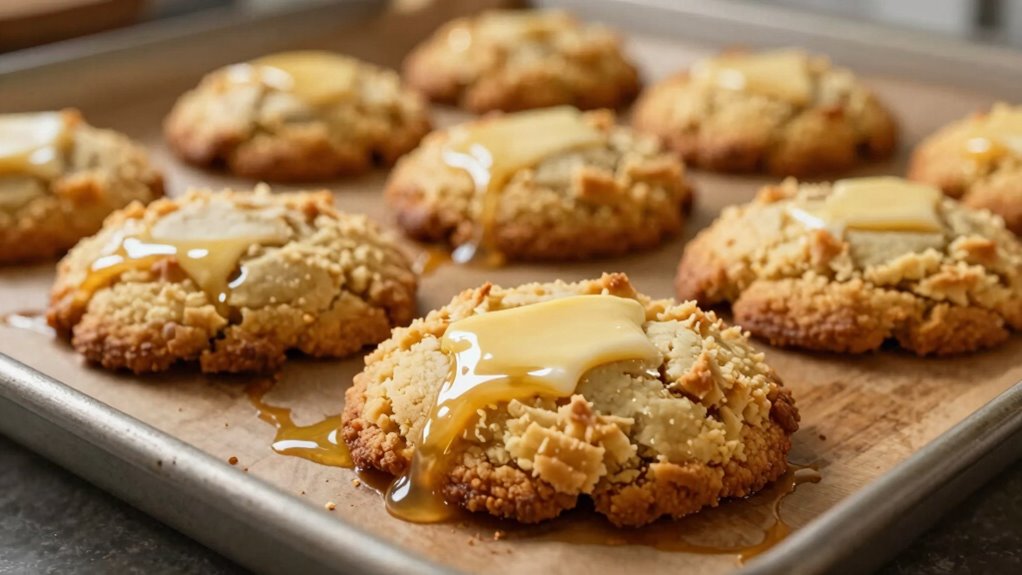

Cookies spread too much mainly because your butter isn’t at the ideal temperature. If it’s too warm, it melts quickly and causes flat, greasy cookies. Soft butter around 65°F to 70°F is best for maintaining dough structure and preventing excessive spreading. Using colder or warmer butter can lead to problems. To keep your cookies thick and chewy, make certain your butter is just right, and discover more tips to perfect your baking results.
Key Takeaways
- Butter’s moisture content and temperature significantly affect how much cookies spread during baking.
- Softened butter around 65°F to 70°F helps control spreading and achieves the desired cookie texture.
- Warm or melted butter causes excessive spreading by increasing fat liquidity and moisture release.
- Overmixing dough activates gluten, leading to flatter, more spread-out cookies.
- Chilling dough before baking firms up fats, reduces spreading, and maintains cookie thickness.
Why Does Cookie Spread Too Much? The Butter Connection
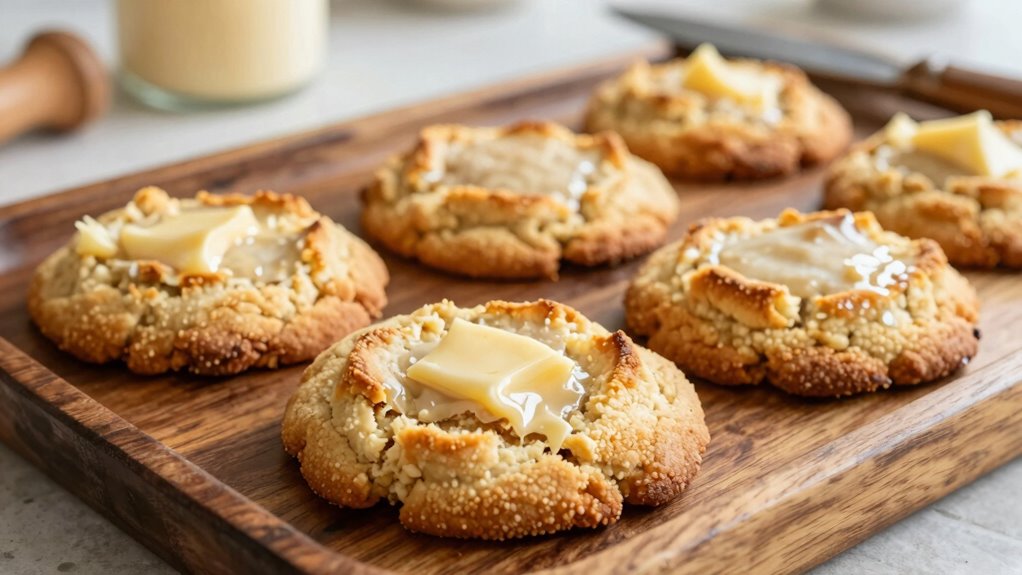
One of the main reasons cookies spread too much is because of the butter you use in the dough. Butter composition plays a critical role in cookie chemistry. When butter contains a high water content, the water turns to steam during baking, causing the dough to spread more quickly. Additionally, the type of fat in the butter affects how the dough holds its shape; softer butters with higher moisture levels tend to produce flatter cookies. The fat’s structure influences how it melts and interacts with other ingredients, impacting cookie spread. Understanding your butter’s makeup helps control spread. Butter composition is a key factor in determining how much cookies will spread during baking. Keep in mind, variations in butter composition can change how your cookies behave in the oven, making it essential to select the right type for the desired cookie texture. Heat distribution also plays a role in how evenly cookies bake and spread during the process. Recognizing how different fats affect melting behavior can further help in managing cookie consistency. Moreover, the properties of fats influence how quickly they melt and contribute to spreading, emphasizing the importance of choosing the appropriate butter for your recipe. Additionally, water content in butter directly impacts the amount of steam produced, significantly influencing cookie spread during baking.
What’s the Ideal Butter Temperature for Thick, Chewy Cookies?
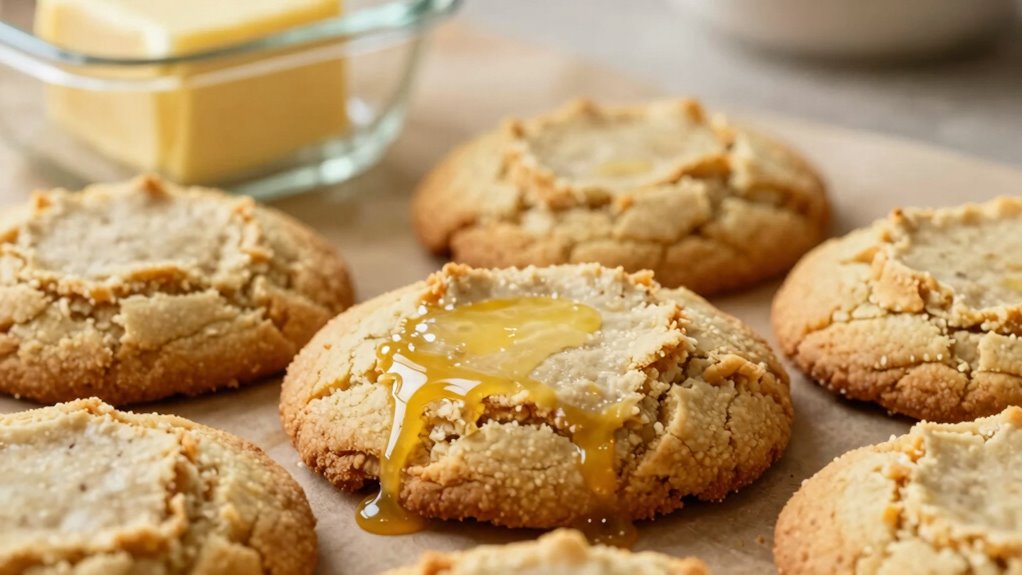
To achieve thick, chewy cookies, maintaining the right butter temperature is essential. Ideally, your butter should be softened to a temperature of about 65°F to 70°F (18°C to 21°C). This butter consistency creates the perfect balance, ensuring the cookie dough isn’t too runny or too stiff, which directly influences cookie texture. Too cold, and the butter won’t cream well; too warm, and the cookies will spread excessively. Use the table below to compare butter states:
| Butter Temperature | Cookie Texture |
|---|---|
| 60°F (15°C) | Stiffer, less spread |
| 70°F (21°C) | Soft, ideal for chewy cookies |
| 80°F (27°C) | Too warm, spreads too much |
| 90°F (32°C) | Melty, causes flat cookies |
Achieving the correct butter temperature is crucial for consistent cookie quality, ensuring your baked goods turn out just right. Proper butter preparation can significantly influence the final outcome of your cookies, especially considering how the butter’s temperature impacts the overall baking process.
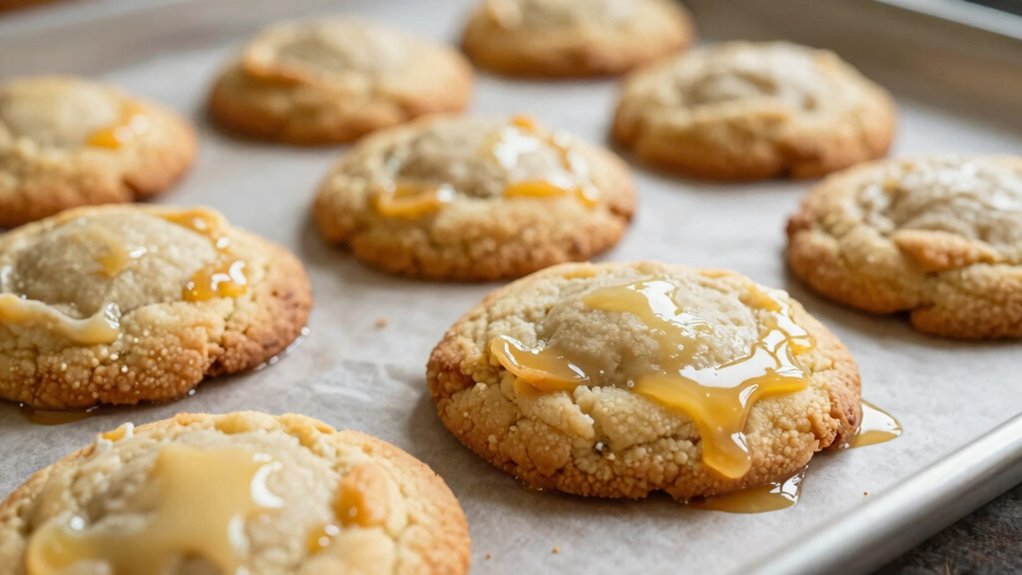
When butter is too warm, it melts quickly during baking, causing your cookies to spread out flat and lose their shape. This happens because the butter’s consistency becomes too soft, making it less effective at holding the dough together. The excessive melting allows the fats to ooze out, especially in high oven humidity, which accelerates spreading. To fix this, start by chilling your dough before baking to firm up the butter. Also, consider these tips:
Warm butter causes cookies to spread and lose shape during baking.
- Use butter at the right temperature to ensure proper consistency.
- Adjust your oven humidity if possible, as moisture levels influence spreading.
- Incorporate ingredients or techniques that help the dough hold its shape better.
- Be mindful of butter temperature during preparation, as it significantly impacts dough structure. Proper baking environment control can further prevent excess spreading. Maintaining a consistent dough temperature can also help achieve better cookie shapes.
Controlling butter temperature and oven conditions helps maintain cookie thickness and prevents flattening.
Other Factors That Influence Cookie Thickness, Like Dough Chilling

Chilling your cookie dough before baking is a crucial step to help control the final thickness of your cookies. Dough chilling slows down the spread by firming up the fats, preventing excessive flattening. It also allows flavors to meld and enhances ingredient freshness, resulting in a better-tasting cookie. When you chill the dough, gluten development stabilizes, giving the cookies more structure and thickness. Additionally, chilled dough resists spreading during baking, keeping your cookies puffier and more uniform. Using freshly prepared ingredients ensures ideal dough consistency, making chilling even more effective. Remember, the longer you chill, up to a point, the better your control over cookie thickness. So, don’t skip this step if you want cookies that stay thick, chewy, and perfectly shaped.
How to Test and Adjust Butter Temperature Before Baking
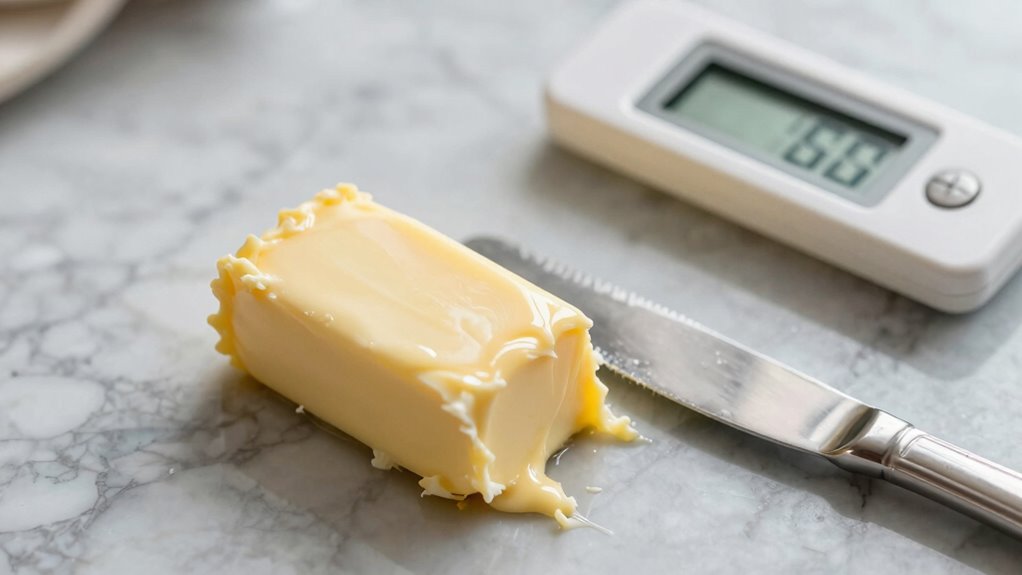
Testing and adjusting your butter temperature before baking guarantees your cookies spread just right and maintain their desired thickness. Proper temperature testing ensures the butter’s consistency is ideal—neither too soft nor too firm—for excellent cookie texture. To test butter, press gently with your finger; if it leaves an indent but doesn’t sink in, it’s ready. For softer butter, chill briefly; for firmer butter, warm slightly. Remember, butter’s temperature affects spread more than other factors. Keep these tips in mind:
- Use a thermometer for precise temperature readings
- Aim for butter that’s cool but pliable (around 65°F or 18°C)
- Adjust based on your recipe and baking environment
- Monitoring butter temperature helps prevent over-spreading and ensures consistent results. Properly managing butter consistency can also reduce uneven cookie spreading and improve overall texture and appearance. Being aware of body temperature can also inform adjustments to your butter if you’re in a warm environment. Maintaining the right oil viscosity for your ingredients can further help control how much your cookies spread during baking.
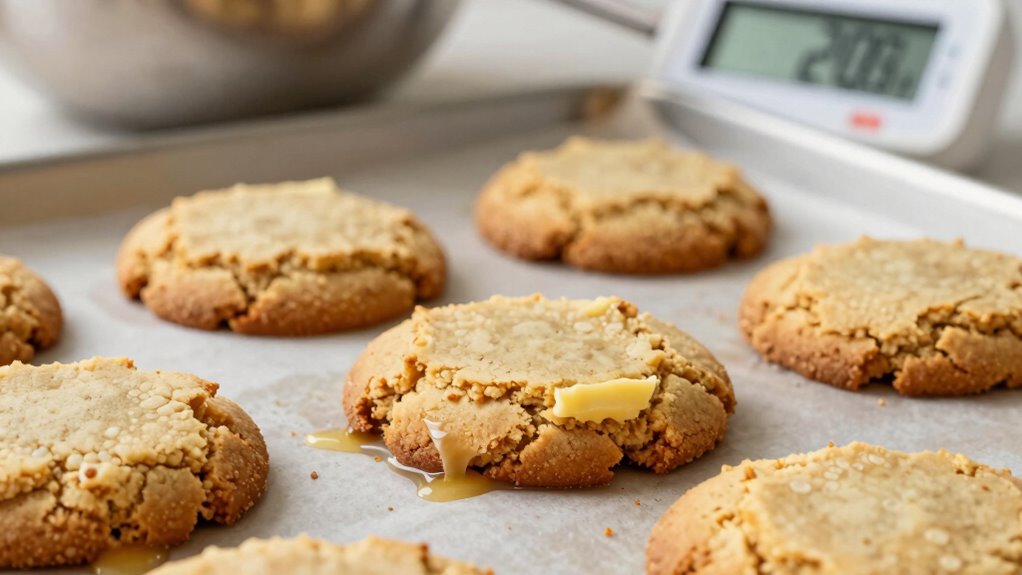
One common mistake is overmixing your batter, which can weaken the dough’s structure and cause flat cookies. Another issue is baking at the wrong oven temperature, either too high or too low, leading to uneven spreading. To prevent these problems, pay attention to mixing times and always double-check your oven’s temperature before baking. Additionally, using ingredients like butter at the correct temperature can significantly influence how your cookies spread during baking. Properly measuring and understanding how ingredient temperature affects dough consistency is essential for achieving the perfect cookie shape. Being aware of baking best practices can help you troubleshoot and improve your cookie results. For example, understanding how butter temperature impacts spreading can help you decide whether to soften or chill your dough before baking. Recognizing the importance of oven calibration ensures your baking environment is consistent, leading to better controlled results.
Overmixing Batter Properly
Overmixing the batter might seem harmless, but it’s a common mistake that can cause your cookies to turn out flat and spread too much. When you overmix, you activate gluten in the flour, which can make cookies dense or overly spread. Pay attention to your mixing techniques—stop as soon as ingredients are combined. Be mindful of ingredient addition; adding dry ingredients gradually helps prevent overmixing. Additionally, understanding how sound quality affects your baking environment can help you better control your process and outcomes. To avoid flat cookies:
- Mix just until ingredients are incorporated
- Use gentle folding instead of vigorous stirring
- Add flour gradually, mixing minimally afterward
Incorrect Oven Temperature
Incorrect oven temperature is a common culprit behind flat, spread-out cookies. If your oven isn’t properly calibrated, it may run too hot or too cold, causing uneven baking. An oven hot spot can also lead to inconsistent heat distribution, making cookies spread more than they should. Use an oven thermometer to verify your oven’s actual temperature and adjust the calibration if needed. Avoid relying solely on the oven’s built-in thermometer, which can be inaccurate. Preheat thoroughly before baking, and consider rotating your baking sheet halfway through. Proper oven temperature ensures your cookies bake evenly, helping them hold their shape and preventing excessive spreading caused by uneven heat.
Quick and Long-Term Fixes for Over-Spreading Cookies

When cookies spread too much during baking, quick fixes can help contain the problem immediately, but long-term solutions guarantee better results in future batches. For immediate relief, try chilling the dough before baking to prevent rapid spreading or adjusting oven rack placement to a higher position for better heat control. To prevent over-spreading long-term, consider butter substitution with cooler fats like shortening or margarine, which have lower melting points. Also, make certain your oven temperature is accurate and consistent. Proper oven rack placement ensures even heat distribution, reducing the risk of excessive spreading.
- Chill dough for at least 30 minutes before baking
- Use shortening instead of butter for more stability
- Position oven rack in the middle or upper third for better heat control
Frequently Asked Questions
Can Using Margarine Instead of Butter Affect Cookie Spread?
Using margarine instead of butter can definitely affect your cookie’s spread consistency. Margarine often has a higher water content, which causes cookies to spread more or less unpredictably. Unlike butter, margarine doesn’t provide the same structure, so your cookies might turn out flatter or more uneven. If you want consistent spread, stick with butter or choose margarine specifically formulated for baking, and adjust your recipe accordingly.
How Does Humidity Influence Cookie Spread During Baking?
Did you know that a 10% increase in humidity can cause cookies to spread up to 15% more? Humidity impact is significant because higher moisture levels in the air make cookie dough more flexible, causing it to spread during baking. When moisture levels are high, your cookies might turn out flatter and thinner, so adjusting your recipe or baking environment can help control that spread and get perfect cookies every time.
Does the Type of Flour Impact How Much Cookies Spread?
Yes, the type of flour impacts how much cookies spread. Higher gluten development in bread flour makes the dough more elastic, reducing spread, while lower gluten in cake flour allows for more spreading. Dough hydration also plays a role; wetter dough tends to spread more during baking. So, choosing a flour with the right gluten content and adjusting hydration helps control cookie spread for your perfect batch.
Are There Specific Baking Pans That Promote Less Spreading?
Think of your baking surface as a stage—some get more spotlight, causing cookies to spread. Non-stick, heavy-duty pans promote less spreading because they distribute heat evenly. Using parchment paper creates a barrier that helps control spread and prevents sticking. I’ve found that switching to a thicker, dark-colored pan reduces spreading, making cookies more uniform. So, choose your baking surface wisely to keep your cookies perfectly shaped!
How Does Resting Dough Before Baking Influence Spreading?
Resting your dough before baking helps control spreading by allowing the dough to firm up and the flavors to meld. During the resting period, the dough’s temperature stabilizes, reducing the chances of butter melting too quickly. This process results in cookies with better shape and texture. Keep your dough cool and give it enough time to rest, typically 30 minutes to an hour, for ideal spreading control and improved cookie quality.
Conclusion
Just like Icarus flew too close to the sun with wings of wax, your cookies can over-spread when butter’s too warm. By mastering the art of butter temperature and mindful techniques, you control the flight of your cookies, ensuring they don’t melt into oblivion. Remember, precision in your baking process is your guiding star—so stay vigilant, and your cookies will soar perfectly, balancing on the fine line between delight and disaster.