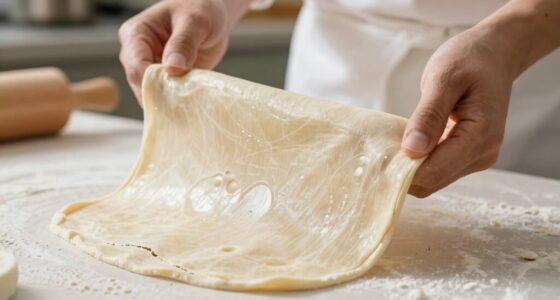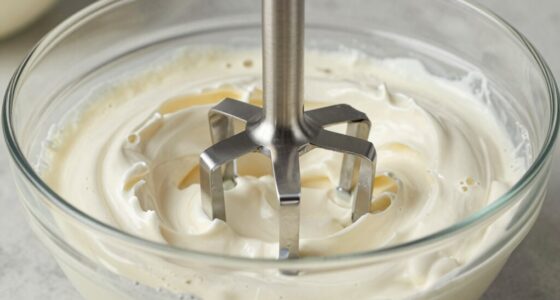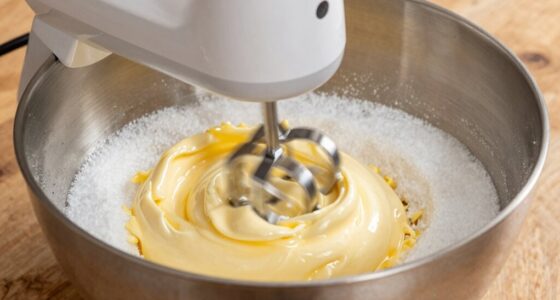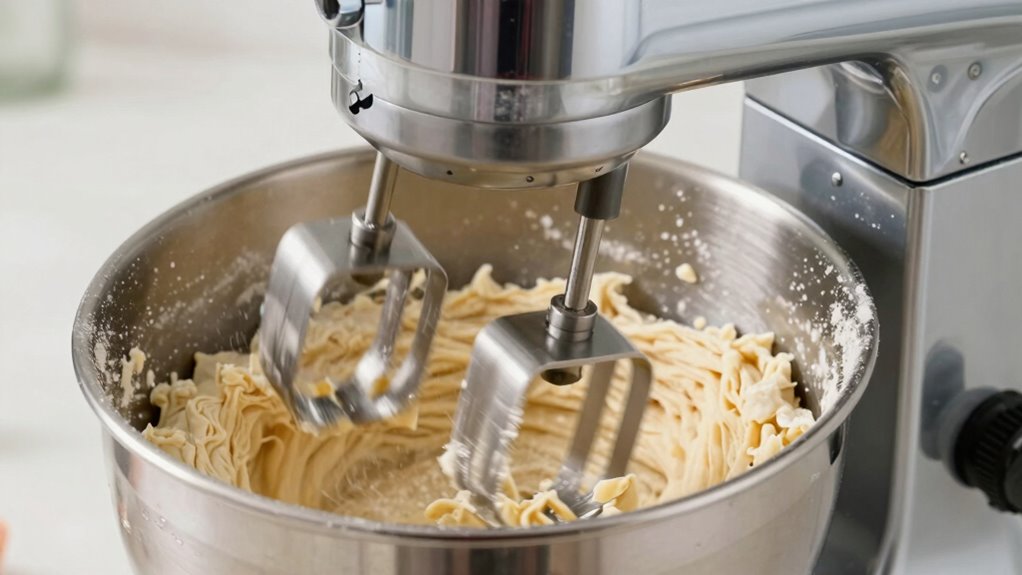

If your cookies turn out tough, the most common culprit is using too high a mixer speed, which overdevelops gluten in the dough. This makes cookies dense and chewy instead of tender. To avoid this, start mixing at a low or moderate speed, especially when combining butter and sugar, and only increase speed when necessary. Keep in mind, the way you mix can make all the difference—continue exploring for more tips to perfect your cookies.
Key Takeaways
- Mixing at high speeds overdevelops gluten, leading to tougher cookies.
- Overmixing dough after ingredients are combined can activate gluten excessively.
- Starting the mixer at high speed with cold ingredients can cause improper blending and toughness.
- Not adjusting mixer speed based on ingredient temperature and response can result in dense cookies.
- Using the wrong mixer speed disrupts the balance of moisture and structure, making cookies hard.
Why Are My Cookies Tough? Common Causes and Fixes
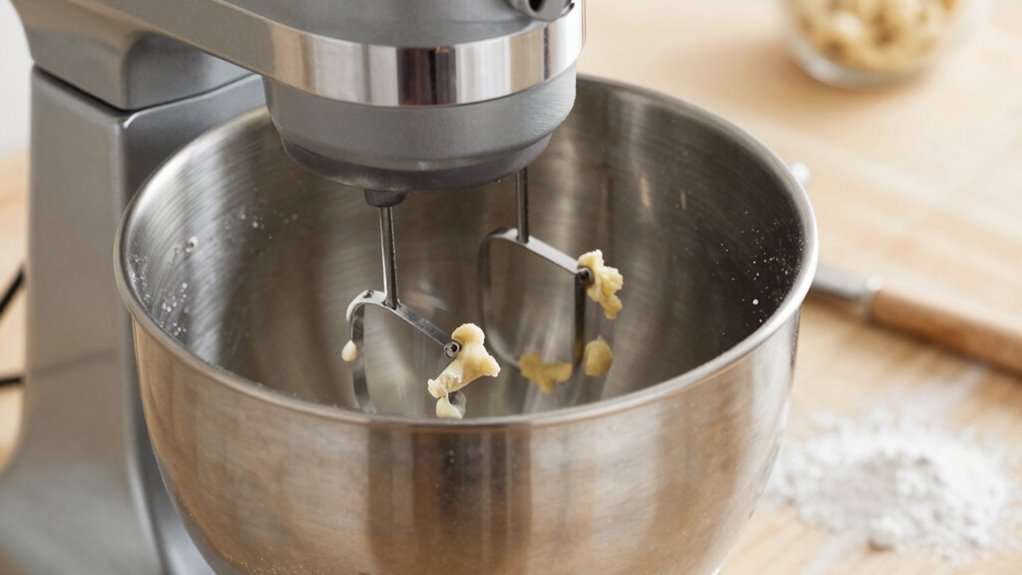
If your cookies turn out tough, several common factors could be to blame. One key issue is ingredient substitutions; using too much flour or substituting ingredients improperly can lead to dense, hard cookies. Be sure to measure ingredients accurately and avoid overmixing, which can develop gluten and toughen the texture. Additionally, oven temperature plays an essential role. Baking at too high a temperature causes cookies to set quickly and become hard, while too low might result in undercooked centers. Check your oven’s calibration regularly and consider using an oven thermometer. Proper baking techniques are crucial for achieving the perfect cookie texture. For example, understanding how ingredient ratios influence dough consistency can help prevent toughness. Adjusting these elements—proper ingredient ratios and correct oven temperature—can considerably improve your cookie’s softness and overall texture. Small tweaks make a big difference in achieving perfect, tender cookies.
How Mixer Speed Affects Cookie Chewiness and Softness
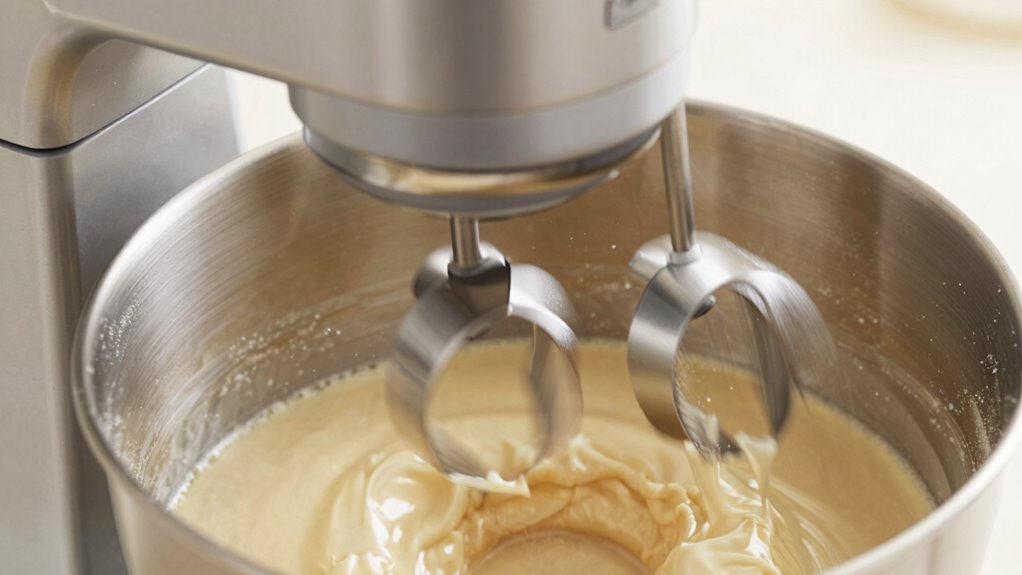
The speed at which you mix your cookie dough directly influences its final texture, especially in regards to chewiness and softness. Using the right mixing techniques ensures ingredients blend properly without overworking the dough. Mixing at too high a speed can develop gluten excessively, resulting in tougher cookies, while too slow may not fully incorporate ingredients, affecting texture. Ingredient temperature also plays a role; softened butter and room temperature eggs mix more evenly at moderate speeds, creating a tender crumb. When you mix too quickly, the butter can break down, leading to denser cookies. Additionally, understanding the importance of consistent mixing ensures your dough is uniform, which contributes to the ideal cookie texture. Properly monitoring mixer speed helps prevent overmixing and preserves the desired softness. Being mindful of mixing duration can also help avoid overworking the dough, maintaining the perfect balance between chewiness and tenderness. Adjusting your mixer speed based on your ingredients and following proper mixing techniques helps control cookie chewiness and softness, giving you a more desirable final product. Furthermore, paying attention to ingredient ratios during mixing can influence how well the dough comes together and affects the final cookie texture. Incorporating the right mixing techniques can also prevent over-activation of gluten, ensuring your cookies stay tender.
Choosing the Right Mixer Speed for Perfect Cookies
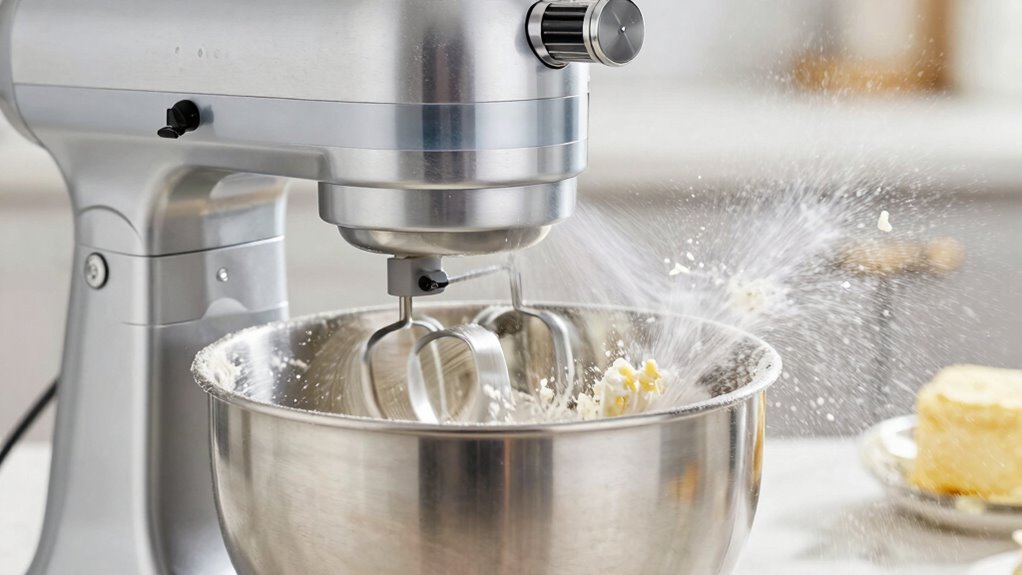
Choosing the right mixer speed is vital for achieving perfect cookies. The mixer blade design influences how evenly ingredients combine, so select a speed that guarantees thorough mixing without overworking the dough. Too high a speed can incorporate excess air, leading to tough cookies, while too low may result in uneven blending. Additionally, ingredient temperature plays an important role; cold butter or eggs can resist mixing at higher speeds, so start slow until the ingredients begin to combine smoothly. As you increase speed, observe how the dough responds—aim for a consistent, well-blended mixture without overmixing. Adjusting the mixer speed thoughtfully helps you control the texture, preventing toughness caused by overmixing or improper incorporation.
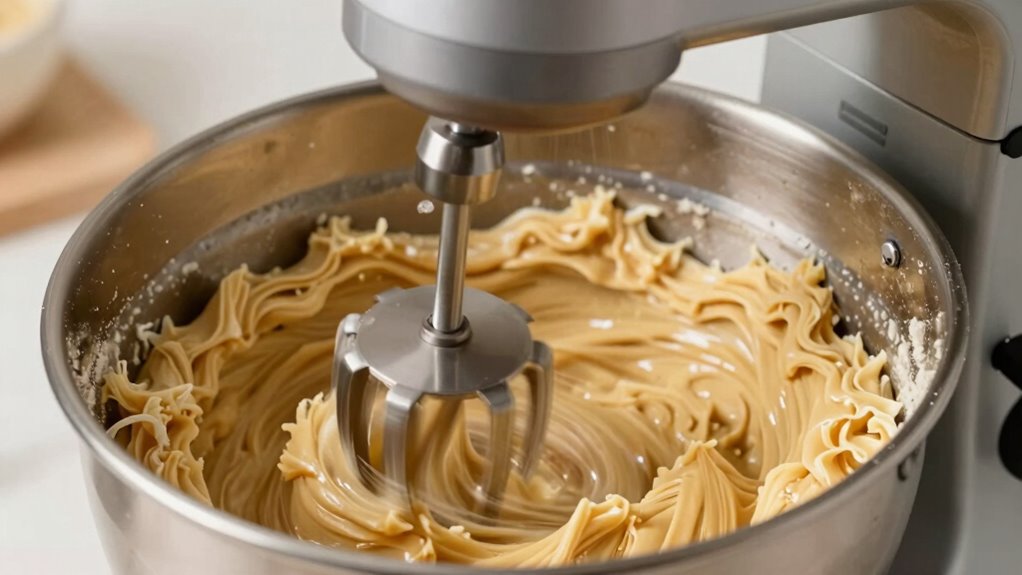
Many common baking mistakes can lead to tough cookies, but understanding and avoiding them can make a big difference. One frequent error is overmixing the dough, which activates gluten and results in a dense, chewy cookie texture. Additionally, ingredient substitutions can unintentionally alter texture; for example, using too much flour or replacing butter with margarine can make cookies tougher. Be mindful of measurements and stick to the recipe when possible. Using cold ingredients or skipping proper creaming can also impact cookie softness. Avoid mixing at high speeds once ingredients are combined, as it can develop gluten too much. By paying attention to mixing techniques and ingredient choices, you can prevent your cookies from turning out tough and achieve the tender, flavorful texture you desire.
Extra Tips for Chewy, Tender Cookies
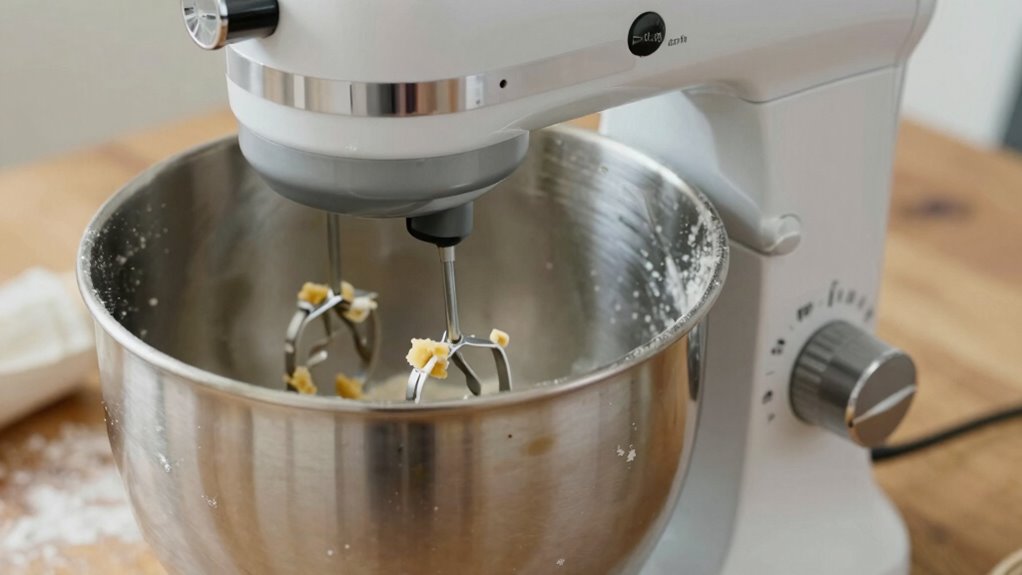
To achieve irresistibly chewy and tender cookies, focus on balancing your ingredients and mastering your technique. Understanding cookie chemistry helps you select the right amounts of fats, sugars, and liquids to encourage moisture retention and elasticity. Using ingredient quality ensures your cookies have the best flavor and texture; fresh butter and high-quality flour make a noticeable difference. Avoid overmixing, which can develop gluten and toughen your cookies. Instead, mix just until ingredients are combined to keep the dough tender. Incorporating ingredients like brown sugar for moisture and chewiness, and consider adding a touch of honey or corn syrup for extra tenderness. Paying attention to cookie chemistry can help you fine-tune your recipes for optimal results. Additionally, controlling your mixer speed during mixing is crucial to prevent overdeveloping gluten and achieving the desired cookie texture. Properly managing your mixing technique can help ensure consistent, perfect cookies every time. With attention to ingredient quality and proper mixing techniques, you’ll create cookies that are irresistibly chewy and tender every time.
Frequently Asked Questions
Can Overmixing at Any Speed Cause Tough Cookies?
Yes, overmixing at any speed can cause tough cookies. When you mix too vigorously or for too long, the gluten in the flour develops more than necessary, leading to a dense, chewy texture. The mixing speed plays a role—high speeds increase overmixing risks. To keep your cookies tender, mix just until ingredients are combined and avoid overdoing it, regardless of the speed you choose.
Does Ingredient Temperature Impact Cookie Texture?
Your ingredient temperature can make or break your cookie texture! If your butter or eggs are too cold, your cookie dough becomes stubborn and crumbly, leading to tough cookies. Conversely, warm ingredients create a smooth, pliable dough that spreads perfectly. Always check ingredient temperature to achieve the ideal cookie dough consistency. When your ingredients are just right, your cookies turn out tender, chewy, and irresistibly delicious—no more surprises in the oven!
Are There Specific Mixer Brands That Produce Better Results?
You’ll find that certain mixer brands, like KitchenAid or Cuisinart, tend to produce better baking results thanks to their durability and power. High-quality baking equipment helps you mix ingredients evenly without overworking the dough, which can lead to tough cookies. Investing in a reliable mixer brand guarantees consistent results, making your baking process smoother and your cookies perfectly tender and delicious every time.
How Does Adding Extra Flour Influence Cookie Toughness?
Ever wonder if adding extra flour makes your cookies tougher? It does, because increasing flour quantity changes dough consistency, making it drier and more prone to becoming tough. When you add too much, your cookies lose their tender texture and become crumbly. Are you sacrificing perfect cookies by over-flouring? Stick to the recommended measurements to keep your dough just right — soft, chewy, and delicious every time.
Is It Better to Use a Stand Mixer or Hand Mixer for Cookies?
Using a stand mixer is generally better for cookies because it offers consistent mixing at various speeds, helping you control the mixing speed precisely. Hand mixers are convenient but can be harder to manage, especially when mixing at different speeds. For ideal results, choose your equipment based on the recipe and make sure to adjust the mixing speed accordingly to prevent overmixing, which can make your cookies tough.
Conclusion
By paying attention to your mixer speed, you can avoid tough cookies and achieve that perfect, tender bite. Think of it like a well-tuned orchestra—each setting plays a part in harmony. Remember, rushing it like a hurried scribe in a crowded café won’t get you the soft, chewy cookies you crave. So, take your time, choose the right speed, and soon you’ll be baking treats fit for a modern-day feast—no more tough surprises!