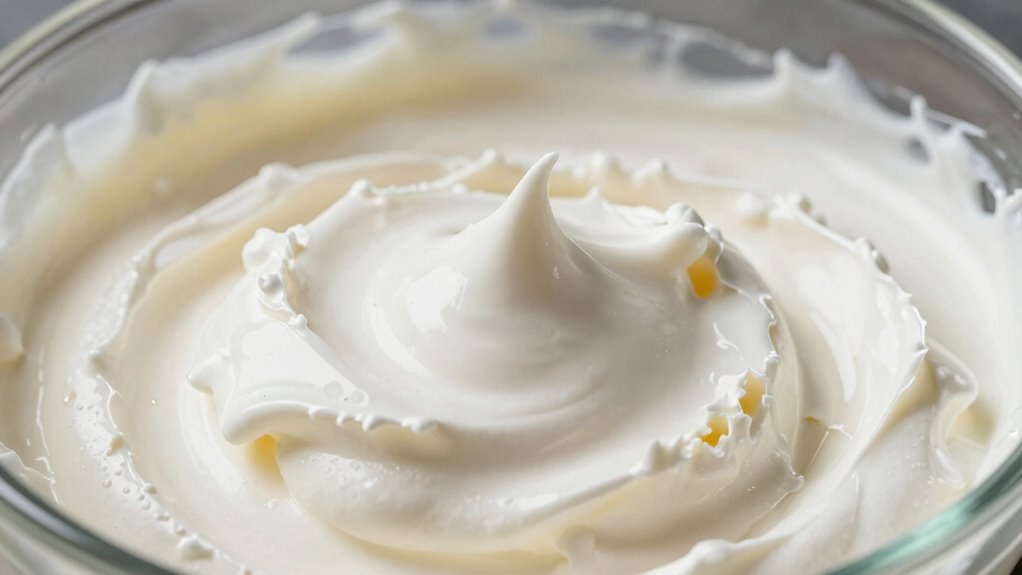

If your whipped cream becomes overbeaten and starts to look grainy or separates, adding cold, unwhipped heavy cream can help rescue it. Gently fold in small amounts of the cold cream, using a spatula, until the texture smooths out. This technique rehydrates the structure and restores its fluffiness without further overmixing. Want to master this quick fix and keep your whipped cream perfect? Keep exploring the best methods ahead.

Get kitchen staples and gadgets delivered free — and shop member deals
- Fast, free delivery on millions of items
- Access to Prime Big Deal Days deals on October 6–7
- Prime Video, Amazon Music and more included
Key Takeaways
- Overbeaten whipped cream becomes grainy or separated, losing its smooth, fluffy texture.
- Adding small amounts of cold, unwhipped cream helps rehydrate and restore the overmixed mixture.
- Gently fold the cold cream into the overbeaten cream using a spatula to prevent further overmixing.
- Continue folding until the mixture regains a smooth, creamy consistency and desired volume.
- This quick fix is effective for salvaging overbeaten cream and can be combined with stabilizers for future prevention.
As an affiliate, we earn on qualifying purchases.
Why Does Whipped Cream Overbeat, and How Can You Tell?
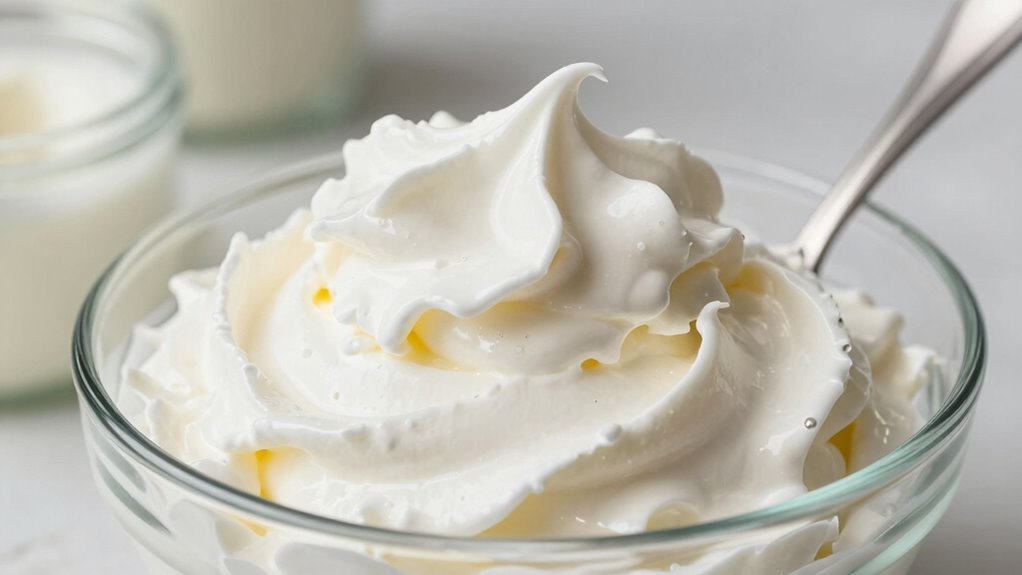
Whipped cream overbeating happens when you beat it too long or too vigorously, causing the fat molecules to break down and separate. This affects cream stability, making the texture grainy or greasy instead of smooth and fluffy. To spot overwhipping signs, look for stiff peaks that are dry or clumpy, and notice if the cream starts to look lumpy or separated into butter and liquid. When you overwhip, the fat begins to release from the structure, losing its ability to hold air. The key to preventing overbeating is stopping as soon as you see firm peaks forming. If you notice the signs early, you can often fix the problem or avoid ruining your whipped cream entirely. Understanding these clues helps you maintain perfect cream consistency and avoid common kitchen pitfalls, such as overwhipping. Additionally, using a properly chilled bowl and cream can help control the whipping process and prevent overbeating. Moreover, choosing the right whipping tools can make a significant difference in achieving the ideal texture. Being aware of the correct whipping speed can also help you monitor the process more precisely and prevent going past the perfect peak stage. Some professionals also recommend using modern kitchen appliances designed for consistent whipping to reduce the risk of overbeating.
As an affiliate, we earn on qualifying purchases.
Quick Fix: How Cold Cream Can Save Overbeaten Whipped Cream
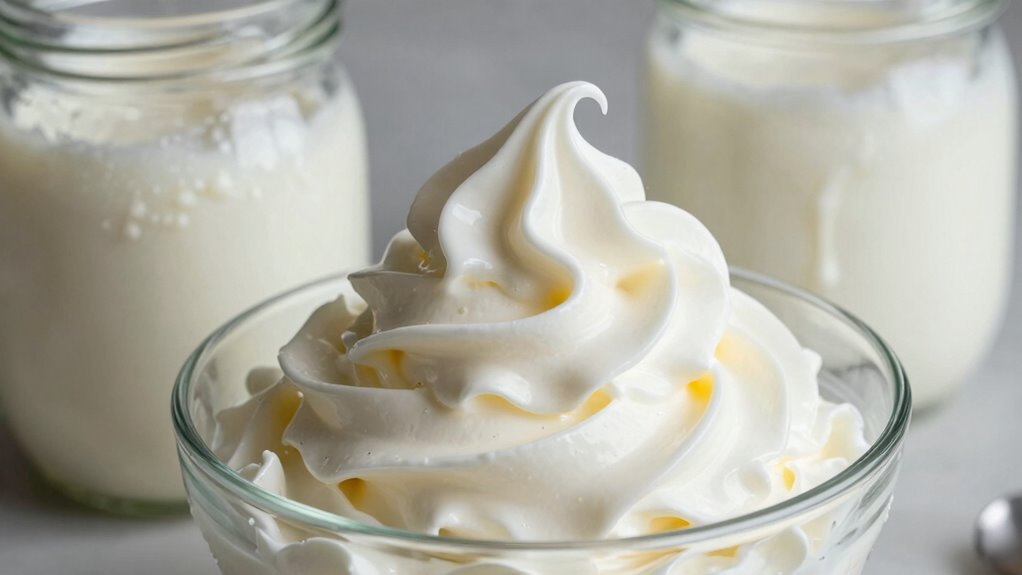
When your whipped cream becomes overbeaten and starts to look grainy or separated, chilling it quickly can sometimes rescue its texture. Adding cold cream helps lower the overall cream temperature, slowing down the overmixing process and restoring smoothness. Use gentle mixing techniques to incorporate a small spoonful of cold cream at a time, avoiding aggressive stirring that worsens separation. This method works best when the cream is only slightly overbeaten. Incorporating sound healing science principles, such as gentle vibrations, can further enhance the calming effect on the mixture. Additionally, understanding the emulsion stability of the cream can help prevent overbeating in the first place. Recognizing the fat content of the cream can also influence how easily it becomes overbeaten and how best to correct it. Being mindful of stabilizers present in some creams can also aid in maintaining perfect texture during whipping. Moreover, controlling the whipping speed can significantly reduce the risk of overbeating from the start.
spatula for folding whipped cream
As an affiliate, we earn on qualifying purchases.
As an affiliate, we earn on qualifying purchases.
How to Fix Overbeaten Cream Step-by-Step Using Cold Cream
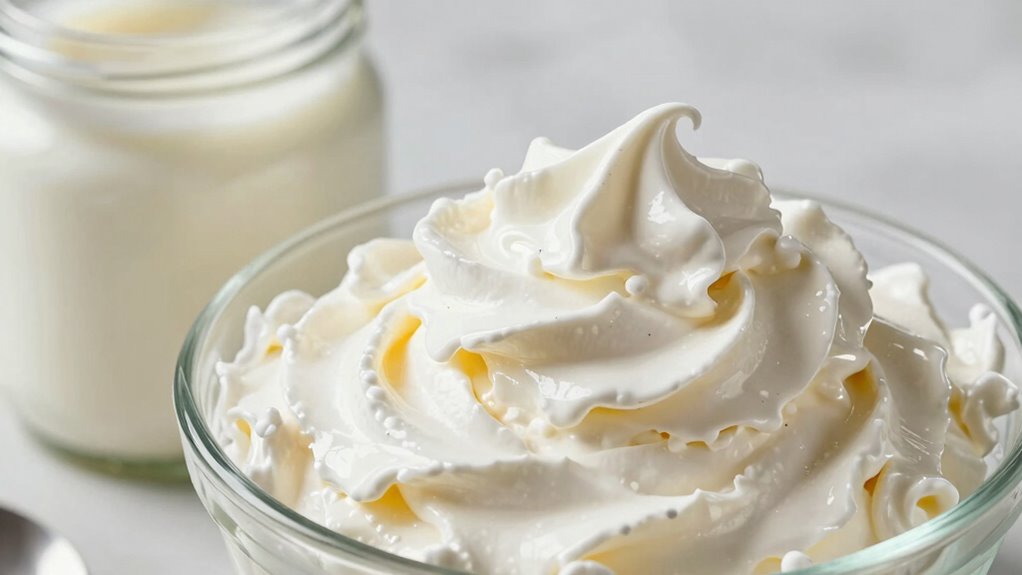
If your whipped cream has become overbeaten and looks grainy, don’t worry—there’s a simple fix using cold cream. This technique helps restore cream stability and improves texture. Follow these steps:
- Add a small amount of cold, unwhipped heavy cream—about 1-2 tablespoons.
- Gently fold the cold cream into your overbeaten mixture using a spatula, maintaining slow, gentle movements. Proper folding techniques are essential to avoid further overmixing and to evenly incorporate the cream.
- Continue folding until the texture becomes smooth and creamy again. Incorporating proper mixing techniques can help prevent overbeating in the future. Understanding whipped cream chemistry can also improve your results.
- To further enhance stability, consider adding appropriate stabilizers such as gelatin or cornstarch in future batches to prevent overbeating. Proper stabilizer use can significantly improve the texture and firmness of whipped cream. Additionally, keeping the cream very cold and avoiding overwhipping are key factors supported by culinary science to achieve optimal results.
This process helps rehydrate the overbeaten cream, restoring its original fluffy consistency. Be cautious not to overmix once the cold cream is added, as this could cause further overbeating. With patience, you’ll achieve a stable, velvety whipped cream perfect for toppings or desserts.
As an affiliate, we earn on qualifying purchases.
Tips to Prevent Overbeating and Make Perfect, Fluffy Whipped Cream
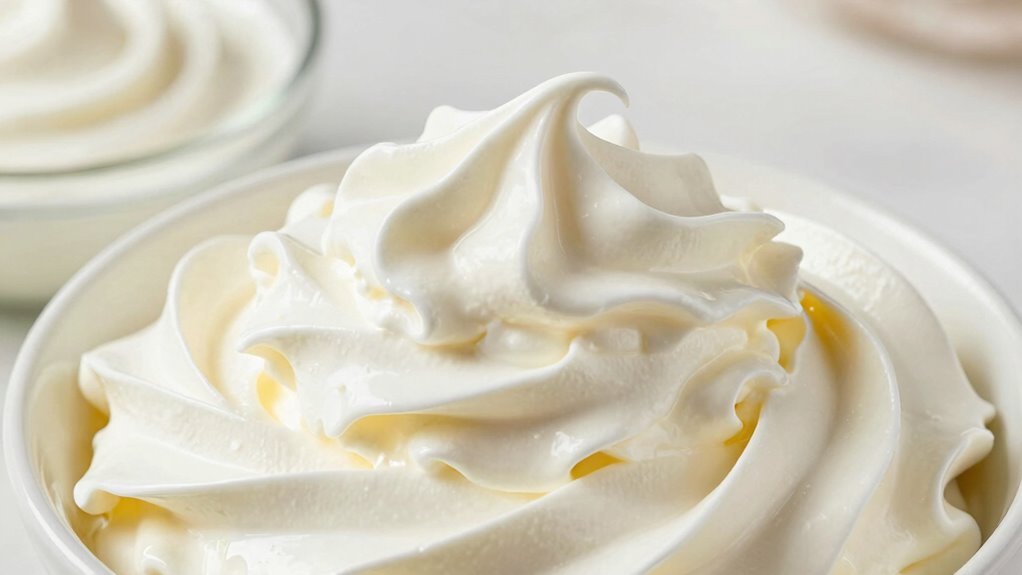
To prevent overbeating and achieve perfectly fluffy whipped cream, paying attention to your mixing techniques and ingredients is key. Use the right whipping speed—start slow, then increase gradually. Incorporate cream stabilizers to maintain texture and prevent overrunning. Monitor closely as the cream thickens, stopping as soon as soft peaks form. Keep tools chilled and work in a cool environment to avoid premature overbeating. Here’s a quick comparison:
| Technique | Effect | Tip |
|---|---|---|
| Slow whipping | Gentle aeration, control over peaks | Begin at low speed, increase gradually |
| Using stabilizers | Longer-lasting, stable structure | Add before whipping begins |
| Monitoring closely | Prevents overbeating | Stop when desired consistency is reached |
| Chilled tools | Keeps cream cold, aerates better | Refrigerate bowls and beaters prior to use |
These tips help you craft perfect, fluffy whipped cream every time.
Common Mistakes When Fixing or Whipping Cream and How to Avoid Them
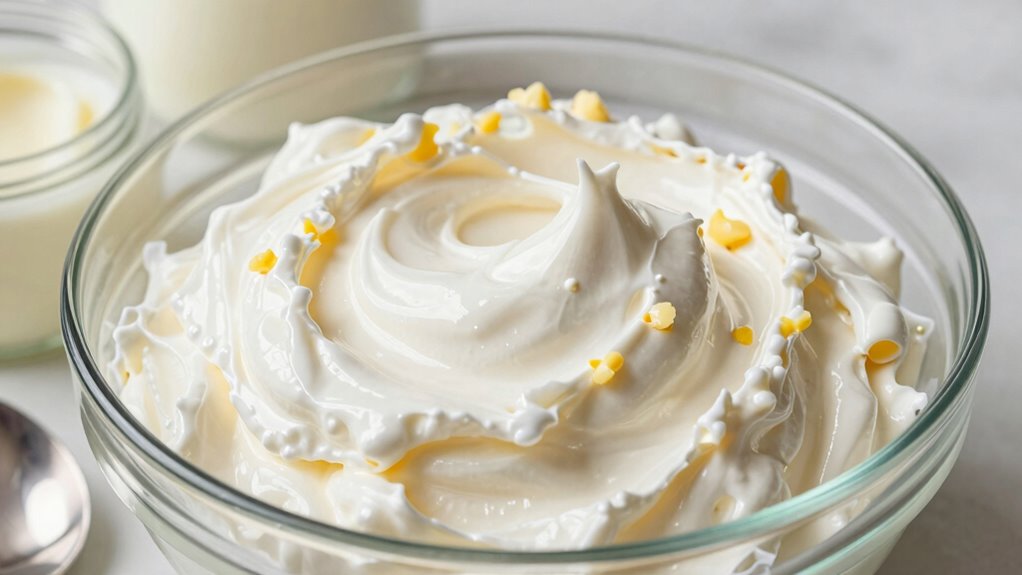
One common mistake when whipping or fixing whipped cream is overbeating, which quickly turns the cream into butter rather than maintaining its fluffy texture. To avoid this, focus on proper techniques. First, guarantee you incorporate sugar gradually to achieve even sugar incorporation, preventing graininess and helping with cream stabilization. Second, monitor the cream closely and stop as soon as soft or stiff peaks form—overwhipping leads to overbeaten cream. Third, if overbeaten occurs, add cold cream to rescue it, but for future prevention, keep your mixing bowl chilled and use the right speed. Additionally, using the correct technique for whipping ensures better control and prevents overwhipping. Implementing these precision techniques can significantly enhance your results and reduce the risk of overbeating. These steps help maintain cream stability and prevent overwhipping, ensuring your whipped cream stays light, airy, and perfect every time. Proper piercing care and hygiene also play a crucial role in preventing irritation that could affect your preparation process. Remember, using appropriate tools like a chilled bowl and whisk can further help prevent overwhipping. Incorporating exfoliation methods like glycolic acid in skin care routines can also improve skin texture, similar to how precise whipping techniques improve cream consistency.
Frequently Asked Questions
Can Overbeaten Whipped Cream Be Reused for Other Recipes?
You can reuse overbeaten whipped cream for alternative uses like making creamy frosting, adding flavor variations to desserts, or incorporating into milkshakes. While it may not be perfect for topping, it still adds richness and texture to recipes. Just whisk it gently to smooth out the texture, and experiment with flavors. Overbeaten whipped cream is versatile and can enhance many dishes, preventing waste and boosting flavor in creative ways.
Does Adding Cold Cream Affect the Taste or Texture?
Adding cold cream to overbeaten whipped cream can help rescue it, but it may slightly affect the taste and texture. You might notice a subtle change in the smoothness and richness, making it less fluffy but still usable. The taste impact is minimal, though the texture may become a bit denser. This method works best for recipes where perfect fluffiness isn’t critical, allowing you to salvage your whipped cream effectively.
How Long Does It Take for Cold Cream to Reverse Overbeating?
You might wonder how long cold cream takes to fix overmixing signs. Usually, it takes just a minute or two of gentle folding to stabilize the cream. Cold cream acts as a rescue by rebalancing the texture, preventing further overbeating. It’s effective for cream stabilization, especially when you notice overmixing signs. Just add a spoonful of cold cream and gently fold until the whipped cream reaches your desired consistency.
Is There a Specific Type of Cream Better for Rescuing Overbeaten Cream?
For rescuing overbeaten cream, choose heavy cream with high fat content, as it provides better cream stabilization. Dairy selection matters—opt for fresh, high-quality dairy to guarantee the best results. Using a specific type like ultra-pasteurized cream can sometimes hinder whipping, so stick with regular heavy cream. When overbeaten, adding cold cream helps restore the right texture, and selecting the right dairy makes this rescue more effective.
Can Overbeaten Whipped Cream Be Frozen for Later Use?
Think of freezing overbeaten whipped cream like a knight’s armor—protective but not invincible. You can freeze it, but the texture changes. Use proper freezing techniques to preserve the cream consistency, sealing it tightly in an airtight container. When you’re ready, thaw it slowly in the fridge. Be aware, it may not regain its original fluffiness, but it’s still good for toppings or recipes.
Conclusion
Remember, even the best bakers hit a snag sometimes—think of overbeaten cream as a stumble on your culinary journey. With the simple trick of adding cold cream, you can turn a shaky situation into smooth, fluffy perfection. Keep your cool, stay patient, and avoid rushing the process. Like a gentle breeze restoring calm, this technique brings your whipped cream back to life, ensuring your desserts stay light, airy, and truly irresistible.
NFL season / tailgating Picks
team gear
As an affiliate, we earn on qualifying purchases.