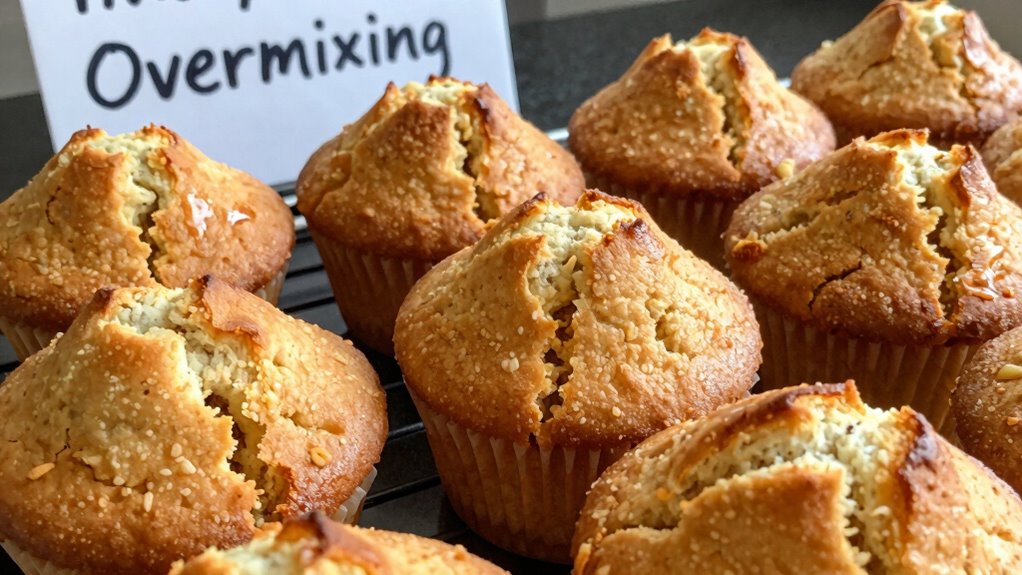

If your muffins develop tunnels, it’s a clear sign of overmixing the batter. Vigorous stirring or mixing after adding wet and dry ingredients causes gluten to develop excessively, trapping uneven air pockets that result in voids and tunnels. To prevent this, mix just until ingredients are barely combined and avoid overworking the batter. Want to learn how to perfect your technique and avoid tunnels? Keep going for expert tips and tricks.
Key Takeaways
- Visible tunnels and irregular holes in the muffin crumb indicate overmixing of the batter.
- A shiny, smooth batter with tunnels shows gluten overdevelopment from vigorous stirring.
- Dense, heavy crumb texture is a sign that the batter was overmixed, trapping excess gluten.
- Overmixed batter often feels rubbery and chewy, reflecting excessive gluten formation.
- Tunnels are more likely when the batter is overmixed after combining ingredients, causing uneven air pockets.
Why Overmixing Causes Tunnels in Muffins

Overmixing muffin batter can lead to tunnels because it develops too much gluten and creates uneven air pockets. When you mix too quickly or vigorously, the gluten in the flour becomes overly developed, resulting in a tougher batter. This gluten development traps air unevenly, causing large air pockets that form tunnels during baking. Additionally, overmixing can cause the batter to become dense and less tender, affecting the overall texture of your muffins. Maintaining a moderate mixing speed helps prevent this, as it allows you to combine ingredients without overstimulating gluten formation. The key is to mix just enough to incorporate the dry and wet ingredients smoothly, stopping as soon as you see no dry flour. Controlling your mixing speed and avoiding excessive agitation helps prevent tunnel formation. Proper mixing techniques are essential to achieving a tender, evenly textured muffin. By controlling your mixing speed and avoiding excessive agitation, you reduce the risk of creating tunnels and achieve a tender, evenly textured muffin. Being aware of gluten development can help you better understand how overmixing affects your batter’s structure. Moreover, practicing gentle mixing methods can enhance your baking results and help maintain batter integrity.
How to Recognize Tunnels and Other Signs of Overmixed Batter
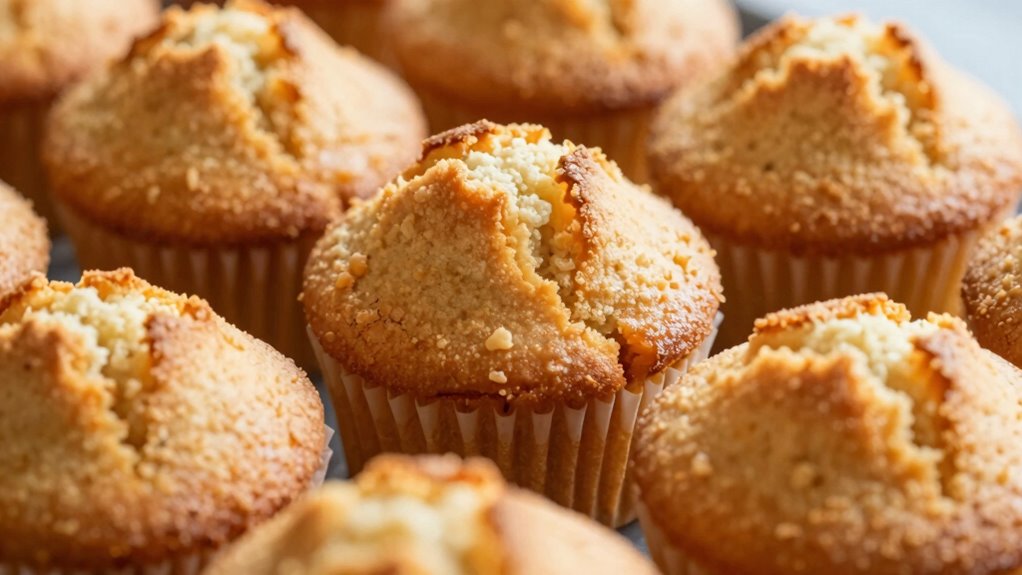
When inspecting your muffins, look for visible tunnels and voids that indicate overmixing. Feel the texture—overmixed batter often results in a dense crumb and less tender crumb. Recognizing these signs helps you adjust your mixing technique for better muffins every time. Additionally, understanding the importance of proper mixing can prevent issues like Free Floating in your batter, ensuring a more consistent and enjoyable bake. Being aware of passive voice detection can also improve your overall writing clarity and effectiveness. Proper mixing techniques are also crucial to avoid overmixing, which can lead to undesirable textures in your baked goods. Using the correct mixing method can help prevent tunnels and voids, leading to a lighter, more uniform muffin crumb. Paying attention to batter consistency during mixing can further help you achieve the perfect muffin texture every time.
Visible Tunnels and Voids
Visible tunnels and voids in your muffin batter are clear signs that it has been overmixed. These muffin tunnels indicate that the batter’s structure has been compromised, creating large air pockets within the muffins. When you see these tunnels, it means you’ve stirred too vigorously or for too long, causing the gluten to develop excessively. Instead of a smooth, uniform batter, you’ll notice irregular holes and a chaotic appearance. This disrupts the batter’s ability to hold a consistent rise, leading to muffins with uneven texture and dense spots. Recognizing tunnel formation helps you stop mixing early enough to maintain a proper batter structure. Keeping an eye out for these signs ensures your muffins turn out light, tender, and evenly textured.
Texture and Crumb Density
Recognizing the texture and crumb density of your muffins is key to knowing if the batter has been overmixed. Overmixing encourages excessive gluten development, resulting in a dense, rubbery crumb structure. Properly mixed batter should feel tender and light, with a moist, open crumb. To visualize, consider this:
| Texture Aspect | Ideal Outcome | Overmixed Clues |
|---|---|---|
| Crumb Density | Light, airy, with open holes | Tight, heavy, and compact |
| Gluten Development | Minimal, resulting in tender crumb | Excessive, leading to toughness |
| Surface Appearance | Slightly glossy, smooth | Shiny, with tunnels or peaks |
| Mouthfeel | Soft and moist | Chewy or rubbery |
Being aware of mixing techniques can help you avoid overmixing and preserve your muffins’ delicate crumb structure. Additionally, understanding batter consistency can guide you in achieving the perfect texture. Moreover, paying attention to ingredient ratios can significantly influence the final crumb quality.
How Mixing Technique Affects Muffin Texture and Tunnels
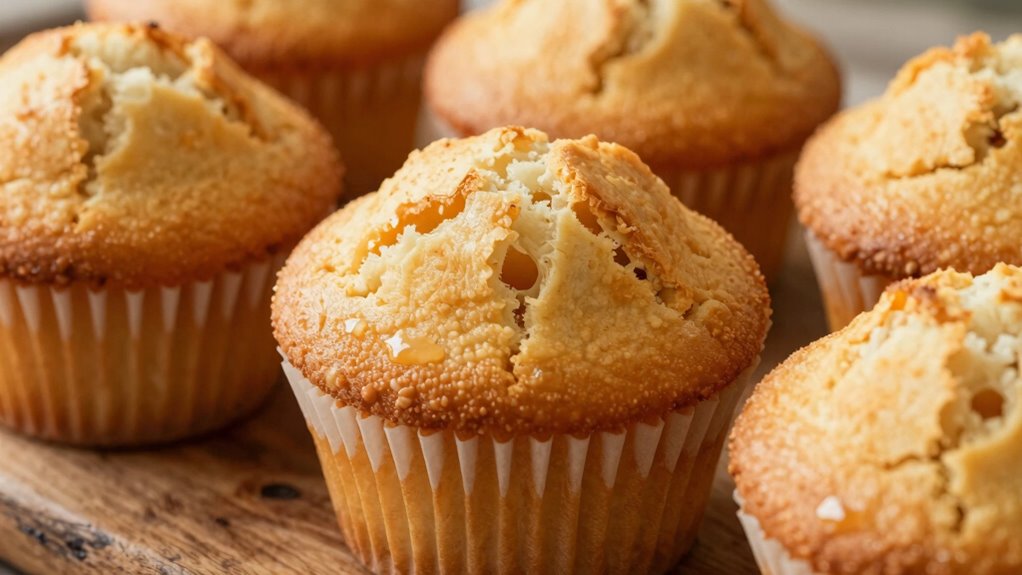
Your mixing technique directly influences the muffin’s texture and the formation of tunnels. Overmixing develops gluten, making muffins dense and resulting in fewer tunnels, while under-mixing can create uneven gaps. Gentle mixing helps maintain structure, balancing the texture and encouraging the tunnel formation you desire. Additionally, understanding the role of AI in food technology can lead to innovations in baking techniques and recipe optimization. Employing advanced sensors and data analysis in commercial bakeries can further refine mixing times and methods for consistent results. Integrating smart kitchen appliances with AI capabilities can also assist home bakers in achieving optimal mixing and baking outcomes. Recognizing how mixing speed and duration impact dough development can empower bakers to adjust their techniques for perfect muffins every time. Furthermore, automated monitoring systems can provide real-time feedback on mixing progress, helping bakers fine-tune their techniques for ideal texture and tunnel formation.
Overmixing Develops Gluten
When you overmix muffin batter, gluten development occurs more than necessary, which can make the texture tough and chewy. As you mix, the flour’s proteins form gluten strands, giving structure to baked goods. If you stir too vigorously or for too long, these strands become overly developed, resulting in a dense, rubbery crumb. Pay attention to batter consistency—aim for a lumpy, slightly streaky mixture rather than a smooth, uniform one. Overmixing causes the batter to lose its lightness and can promote tunnel formation. To avoid this, mix just until the ingredients are combined; a few lumps are okay. Proper mixing ensures the gluten stays minimal, keeping your muffins tender, moist, and free of unwanted tunnels. Additionally, understanding the power output of electric bikes can help you appreciate how different models perform, much like controlling mixing speed is crucial for baking. Recognizing the importance of body piercing in body modification can also be compared to how gluten development impacts the structure of baked goods. Being mindful of exfoliation benefits can help you better grasp how gentle mixing preserves the delicate texture of muffins. Moreover, using the right credit card security practices during baking, such as safeguarding your recipes, can help prevent mishaps in your kitchen.
Under-mixing Creates Gaps
If you don’t mix the batter enough, gaps can form in your muffins, leading to uneven texture and unwanted tunnels. Under-mixing prevents proper gluten development and limits batter aeration, which are essential for a uniform crumb. When you skip thorough mixing, pockets of unincorporated ingredients remain, causing air to escape during baking and creating gaps. These gaps can turn into tunnels as the muffin buffs up unevenly. To visualize this, consider the following:
| Proper Mixing | Insufficient Mixing |
|---|---|
| Even crumb, smooth | Gaps, uneven texture |
| Good gluten structure | Weak gluten, tunnels |
| Uniform batter aeration | Poor aeration |
Mixing just enough ensures your muffins are dense and tender, not riddled with tunnels.
Gentle Mixing Maintains Structure
Gentle mixing is key to preserving the muffin’s delicate structure and preventing tunnels. When you mix at a slow, steady mixing speed, you maintain a smooth batter consistency, avoiding over-activation of the gluten. Overmixing can lead to a dense, tough crumb and large tunnels, but gentle mixing keeps the batter just combined. Use a light hand to fold ingredients together, stopping as soon as the dry and wet ingredients are incorporated. This approach ensures even distribution without developing excess gluten, which can cause tunnels or uneven texture. By controlling your mixing speed and handling the batter gently, you help create muffins that are tender, evenly textured, and free of unwanted tunnels.
How to Mix Muffin Batter Properly to Prevent Tunnels
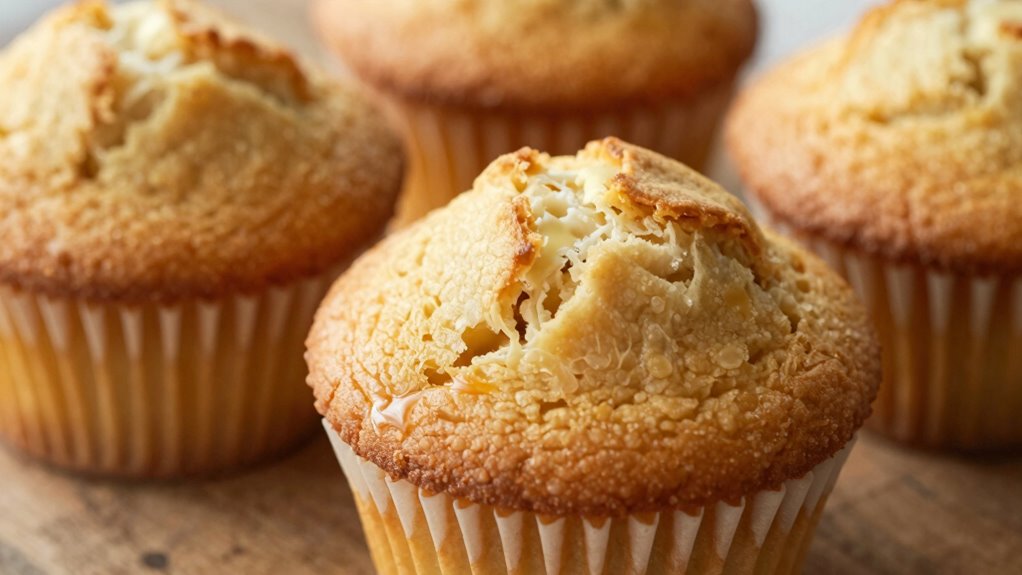
To prevent tunnels from forming in your muffins, you need to mix the batter just enough to combine the ingredients without overworking it. Proper mixing techniques ensure a uniform muffin batter, reducing air pockets that cause tunnels. Use a gentle folding motion or mix with a spatula until ingredients are barely combined. Avoid vigorous whisking or beating. Here’s a quick guide:
| Technique | Description | Result |
|---|---|---|
| Gentle Folding | Fold dry into wet ingredients softly | Even texture, fewer tunnels |
| Stirring with Spatula | Mix until just combined, don’t overdo it | Light, airy muffins |
| No Overmixing | Stop mixing once ingredients are incorporated | Prevents tunnels |
| Minimal Handling | Handle batter gently, avoid squeezing or overmixing | Consistent crumb |
| Resting Batter | Let batter sit briefly before baking | Even distribution of air |
Common Mistakes That Lead to Overmixing and How to Avoid Them
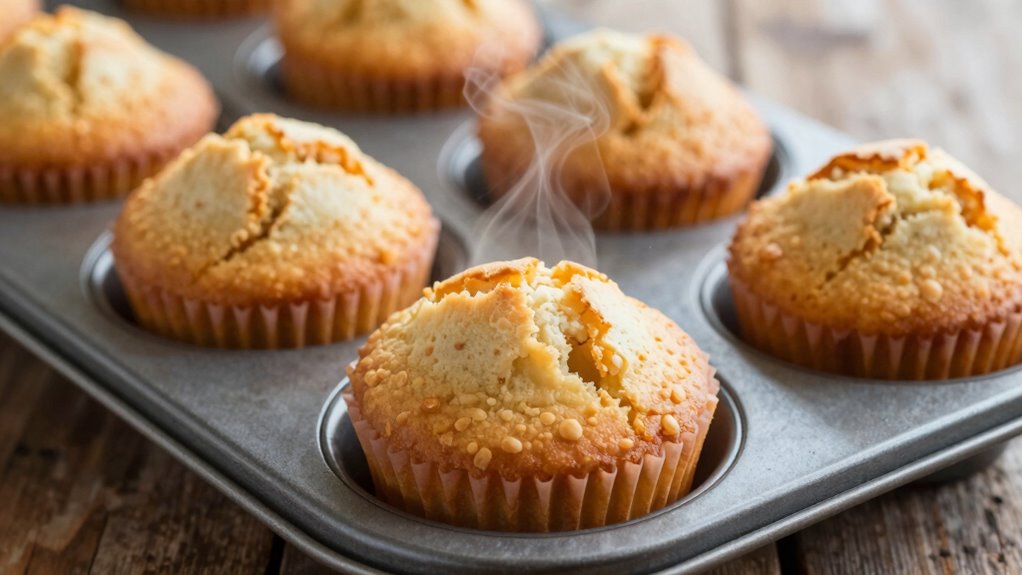
One common mistake that leads to overmixing is stirring the batter too vigorously or for too long, which can develop gluten and create tunnels in your muffins. To avoid this, don’t make ingredient substitutions that alter the batter’s consistency, as they can tempt you to overmix. Using the right baking equipment matters too; a gentle spatula or spoon helps you fold ingredients without overworking the batter. Resist the urge to beat or stir aggressively, especially once dry and wet ingredients are combined. Overmixing often happens when you try to compensate for uneven ingredients or use improper tools. Focus on just mixing until ingredients are combined; this prevents gluten formation and minimizes tunnels, ensuring a better muffin texture.
Tips for Baking Fluffy, Tunnelless Muffins Every Time
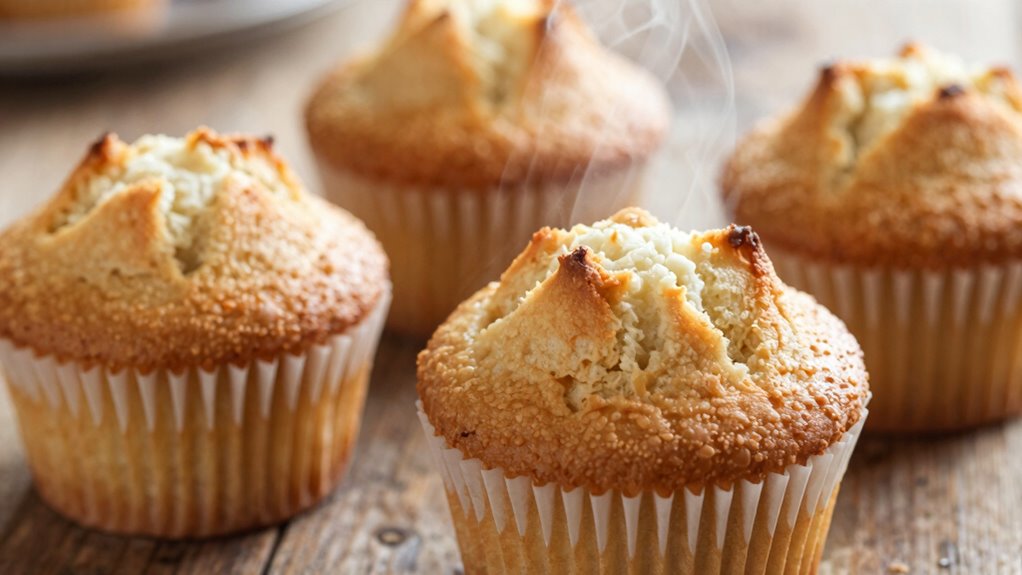
Achieving fluffy, tunnelless muffins starts with precise mixing techniques and proper ingredient handling. Use a gentle hand when combining ingredients, mixing just until the flour is incorporated to maintain a tender crumb. To enhance muffin flavor, consider subtle ingredient substitutions like vanilla extract or citrus zest, which add depth without compromising texture. Be mindful of your ingredient ratios—too much liquid can cause tunnels, while too little can make muffins dense. For a consistent rise, avoid overmixing after adding the wet and dry components. Sifting dry ingredients helps prevent clumps and promotes even mixing. Remember, the key is to keep the batter light and avoid overworking it. These tips will help you bake muffins that are fluffy, flavorful, and free of tunnels every time.
What to Do If Your Muffins Develop Tunnels During Baking
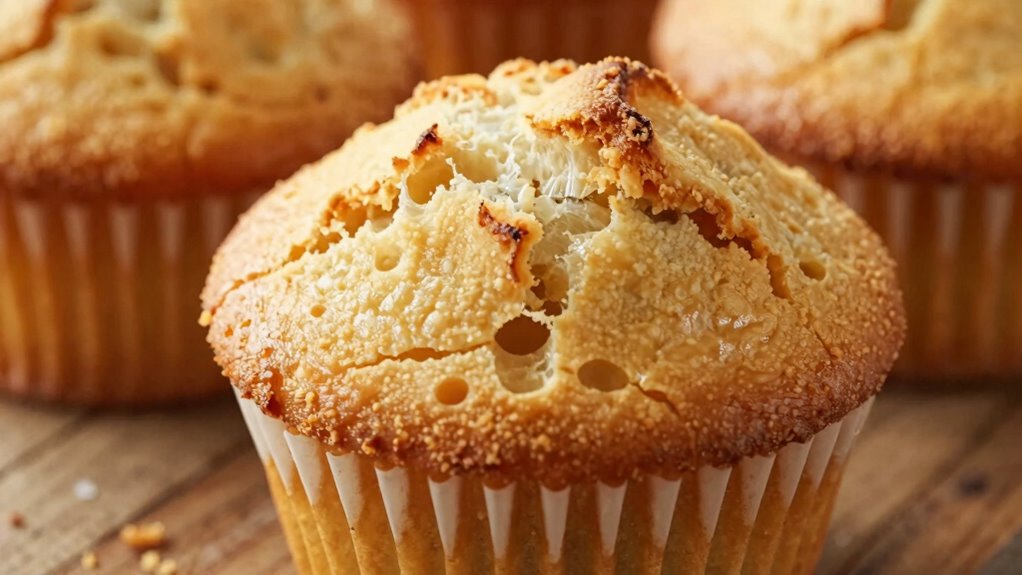
When muffins develop tunnels during baking, it usually means the batter was overmixed or the leavening wasn’t evenly distributed. To improve muffin aesthetics and prevent tunnels, start by gently folding ingredients to avoid overworking the batter. Ensuring even distribution of baking soda or powder is vital, so sift dry ingredients thoroughly. If tunnels still form, consider reducing mixing time in future batches to preserve the muffin’s structure. Incorporate baking science principles by measuring ingredients precisely and avoiding excessive stirring. Also, check oven temperature accuracy, as uneven heat can cause inconsistent rising. If tunnels appear after baking, don’t panic—these are mostly aesthetic concerns. Focus on proper mixing techniques and ingredient balance to achieve muffins with a uniform, appealing crumb in future batches.
Troubleshooting Other Muffin Texture Problems
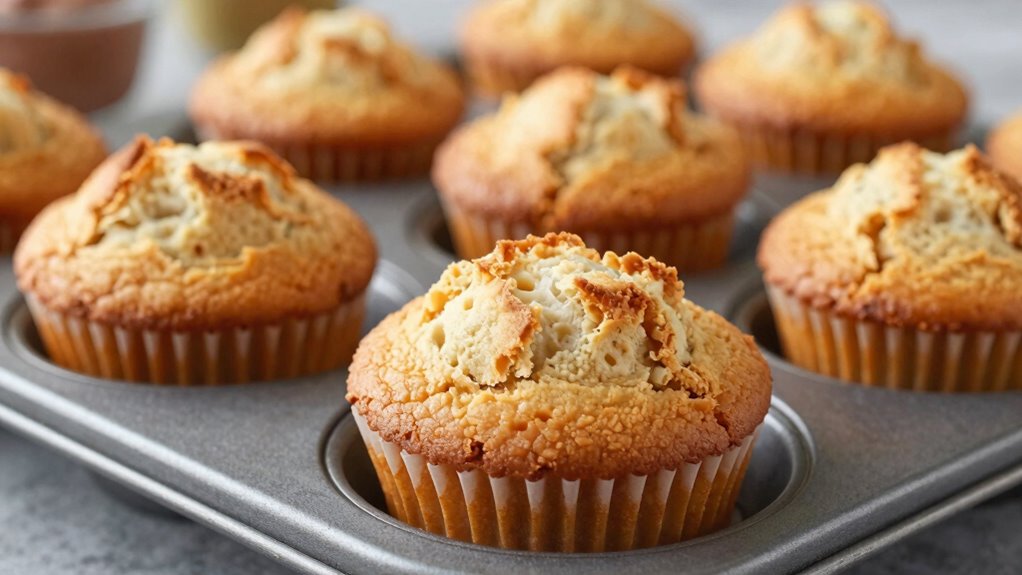
If your muffins turn out dense, dry, or crumbly, it’s often due to ingredient imbalances or overbaking. These issues can also affect muffin flavor and baking temperature. To troubleshoot, consider the following:
| Problem | Possible Cause | Solution |
|---|---|---|
| Dense texture | Too much flour or undermixing | Measure ingredients precisely |
| Dry muffins | Overbaking or too much sugar | Adjust baking temperature and time |
| Crumbly consistency | Excessive fat or leavening | Balance ingredients carefully |
Best Practices for Different Muffin Recipes
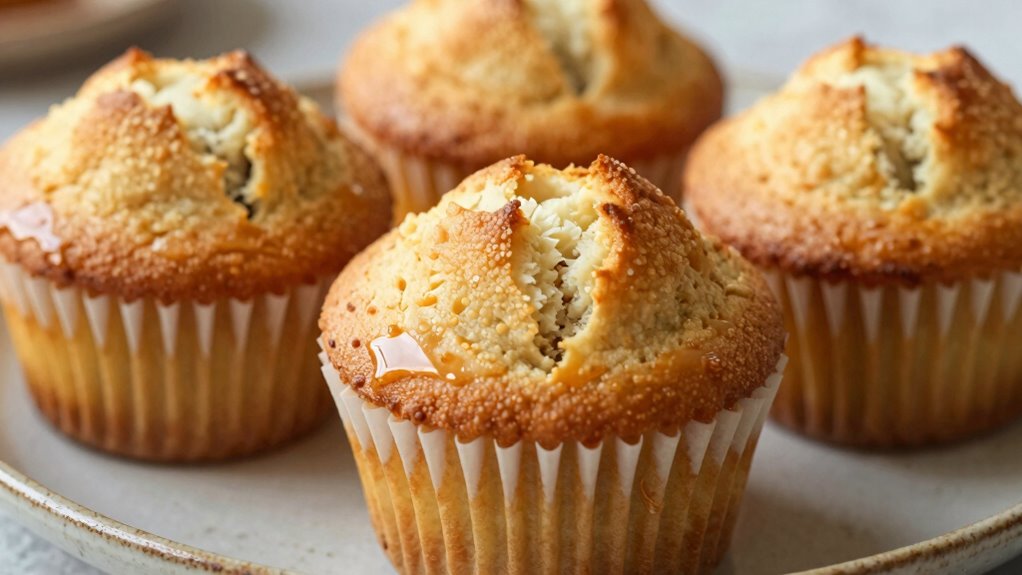
Different muffin recipes benefit from tailored techniques and ingredient adjustments to guarantee the best results. To enhance muffin flavor, you can tweak ingredient proportions or add mix-ins like fruit, nuts, or spices. When experimenting with ingredient substitutions, consider how they affect moisture and structure; for example, swapping oil for butter changes richness, while using yogurt adds moisture. Adjust mixing methods based on the recipe—some may require gentle folding to preserve tenderness, while others benefit from a slightly more vigorous mix to develop texture. Keep in mind that different recipes might call for unique baking times and temperatures. By customizing techniques and ingredients, you ensure your muffins turn out perfectly, whether you’re aiming for a light, crumbly texture or a denser, flavorful treat.
Frequently Asked Questions
Can Overmixing Affect Muffin Flavor as Well as Texture?
Overmixing can definitely affect both muffin flavor and texture. When you overmix, you disrupt the delicate mixing techniques needed, which can lead to tunnels and a dense crumb. This process also impacts flavor preservation, as overworked batter may develop a bland taste or uneven flavor distribution. To keep your muffins light and flavorful, mix just until the ingredients are combined, avoiding overmixing at all costs.
Are Certain Muffin Recipes More Prone to Tunnels?
Yes, certain muffin recipes are more prone to tunnels, especially those with high baking temperatures or ingredient substitutions that alter batter consistency. When you overmix, gluten develops unevenly, causing tunnels. To prevent this, mix just until ingredients are combined. Adjust baking temperature carefully, as too hot can cause rapid rising and tunnels. Using original ingredients instead of substitutions also helps maintain a consistent texture and avoid tunnels.
How Does Altitude Influence Overmixing and Tunnel Formation?
Altitude effects can definitely increase the risk of overmixing and tunnel formation in muffins. Higher altitudes cause lower air pressure, which makes batter rise faster and more unevenly. To prevent overmixing, you should modify your mixing technique by gently folding ingredients and reducing leavening agents. This helps control rise and minimizes tunnels. Adjusting recipes for altitude is essential to achieve a consistent, tunnel-free muffin texture.
Can Using Different Types of Flour Impact Tunnel Development?
Using different types of flour can impact tunnel development because of variations in gluten development and flour protein content. High-protein flours, like bread flour, create stronger gluten networks, which can trap gases and lead to tunnels if overmixed. Conversely, lower-protein flours, such as cake flour, produce weaker gluten, reducing tunnel risk. Choose the right flour for your recipe, mix gently, and you’ll prevent unwanted tunnels and achieve a tender crumb.
Is There a Way to Fix Tunnels After Muffins Are Baked?
You can’t fully fix tunnels after baking, but you can try muffin decoration tricks like filling or frosting to hide them. For future muffins, avoid overmixing to prevent tunnel development. If tunnels are minor, gently slicing and filling with jam or cream can improve appearance and taste. Remember, overmixing causes tunnels, so mix just until ingredients are combined to keep your muffins tender and smooth.
Conclusion
Remember, mastering muffin perfection is like tending a delicate garden—you must nurture with care, avoiding overmixing that can create unwanted tunnels. By paying attention to your batter’s texture and mixing just enough, you’ll produce muffins that rise beautifully and stay tender. Think of each batch as a blank canvas—gentle strokes lead to a masterpiece, while overworking risks ruining it. With patience and practice, you’ll bake muffins as flawless as a quiet sunrise, every time.