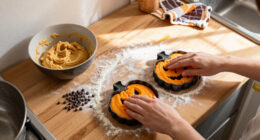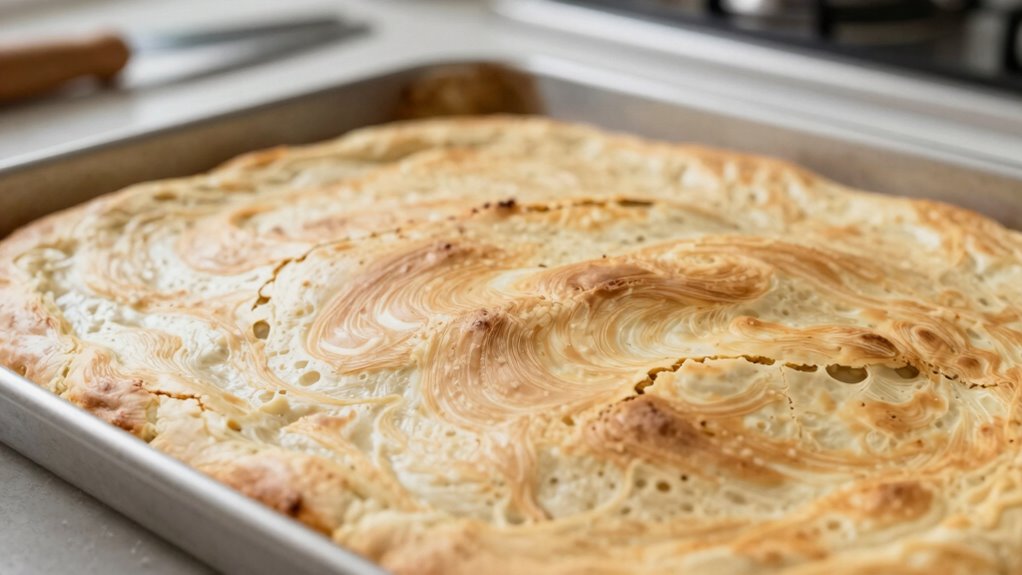

Before a bake fails, you’ll notice your batter becomes resistant and elastic during mixing, indicating overdeveloped gluten. It pulls away from the bowl sides and feels thick or tough on tools. You might see streaks or unmixed flour, and the batter looks uneven or glossy. These signs show you’re stirring too vigorously or at high speed. If you’re curious about more subtle cues and how to avoid them, keep exploring the details below.

Get kitchen staples and gadgets delivered free — and shop member deals
- Fast, free delivery on millions of items
- Access to Prime Big Deal Days deals on October 6–7
- Prime Video, Amazon Music and more included
Key Takeaways
- Batter becomes thick, elastic, and pulls away from the sides of the bowl.
- Air bubbles quickly pop or disappear, reducing batter’s fluffiness and glossiness.
- Mixture appears streaky or uneven, with unmixed flour or dry pockets.
- Texture shows stiffness or pastiness before baking, indicating overmixing.
- Batter resists mixing tools and feels resistant or resistant to further blending.

If you’ve ever baked bread or mixed batter, you’ve probably noticed how overmixing can lead to unexpected results. It’s a common mistake that can cause your baked goods to turn out dense, tough, or unevenly textured. Understanding the signs that appear before a bake fails due to overmixing starts with paying close attention to your mixing techniques and the batter consistency. When you’re mixing, your goal should be to combine ingredients just enough to create a uniform mixture, not to develop gluten or activate reactions that will make the final product stubborn or chewy.
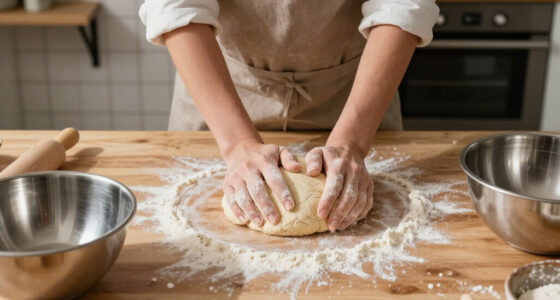
One of the clearest signs that overmixing is happening is a batter that becomes noticeably thick, tough, or elastic. This change in batter consistency isn’t what you’re aiming for when you start blending your ingredients. Instead of a smooth, pourable mixture, you might notice it starts to pull away from the sides of your bowl or feels denser and heavier in your mixing spoon or whisk. This indicates that gluten strands are developing excessively, which can lead to baked goods that are overly chewy or rubbery. Recognizing batter elasticity as a sign of overmixing can help you catch the issue early before it affects the final product.
Another sign to watch for is the appearance of air bubbles that quickly pop or disappear. When you overmix, the batter often loses its lightness because the air incorporated during mixing is being deflated. If your batter looks glossy or stiff, that’s a clear signal you’ve gone too far with your mixing technique. Proper batter consistency for most baked goods should be just combined—smooth but still somewhat fluid. When you see it turning stiff or pasty, it’s time to stop. Additionally, overmixing can lead to the formation of tougher gluten structures, which further impacts the texture of your baked goods. It’s also important to understand how batter stability can be compromised by excessive mixing, affecting the overall quality of your final product.
You may also notice that the mixture starts to look uneven or streaky, especially if you’re mixing ingredients by hand or with a mixer set to high speed. Overmixing can cause the flour to develop gluten prematurely, leading to a tougher crumb once baked. If you’re seeing streaks of unmixed flour or pockets of dry ingredients, it’s a sign you should slow down or halt your mixing. Additionally, understanding the importance of batter consistency can help you better identify these signs early on. Paying attention to these cues and adjusting your technique accordingly is key to avoiding overmixing.
As an affiliate, we earn on qualifying purchases.
Frequently Asked Questions
Can Overmixing Affect Different Types of Baked Goods Equally?
Overmixing affects different baked goods differently due to varying mixing techniques and ingredient sensitivities. For example, cakes and muffins are more prone to overmixing, which can lead to dense textures, while bread doughs tolerate more mixing. You need to adjust your mixing techniques based on the recipe and ingredients; overmixing can weaken gluten in some baked goods, causing undesirable results, so be mindful of each recipe’s specific needs.
How Can I Prevent Overmixing During the Mixing Process?
To prevent overmixing, pay close attention to your mixing techniques—stir gently and avoid beating vigorously. Use short, controlled mixing bursts, especially after adding dry ingredients or ingredient substitutions, which can alter texture. Stop mixing as soon as ingredients are just combined; overmixing develops gluten and affects texture. Keep an eye on the batter’s consistency, and don’t rush the process to guarantee your baked goods turn out perfect.
Does Overmixing Impact the Flavor of the Baked Product?
Overmixing is like stirring a delicate painting too vigorously—you risk ruining its original beauty. When you overmix, it causes flavor alteration and texture change, often making baked goods dense or tough. The original flavor gets muddled, losing its subtlety, while the texture becomes less tender and more rubbery. So, yes, overmixing directly impacts both flavor and texture, diminishing the quality of your final baked masterpiece.
Are There Specific Tools That Help Avoid Overmixing?
Yes, certain tools can help you avoid overmixing. Use a silicone spatula for gentle mixing, which allows better control over mixing techniques. A stand mixer with speed controls can prevent excessive agitation if used carefully. Pay attention to ingredient ratios, as adding too much liquid or dry ingredients can lead to overmixing. These tools and techniques help you achieve perfect batter consistency without overworking the ingredients.
How Long Should I Mix to Avoid Overmixing?
You should mix just until the ingredients are combined, typically 30 seconds to a minute for most recipes. Use gentle, folding mixing techniques to prevent overmixing. Overmixing can lead to a dense, tough baked texture, so stop as soon as the batter is smooth and ingredients are evenly incorporated. Keep an eye on the consistency, and don’t overdo it—less mixing often results in a better, lighter bake.
As an affiliate, we earn on qualifying purchases.
Conclusion
Just like overworking dough makes it tough, overmixing your batter signals trouble ahead. I once watched a friend’s cake collapse because she kept stirring even after the ingredients combined. Remember, a gentle touch keeps your baked goods light and tender. Pay attention to that subtle sign—stop mixing before it’s too late. It’s a small step that can turn a good bake into a great one, saving you from a floury disaster.
As an affiliate, we earn on qualifying purchases.
baking batter consistency thermometer
As an affiliate, we earn on qualifying purchases.
As an affiliate, we earn on qualifying purchases.
Halloween Picks
halloween
As an affiliate, we earn on qualifying purchases.