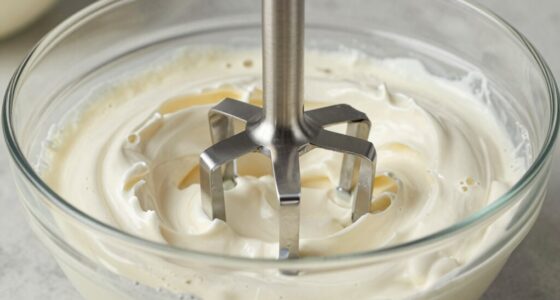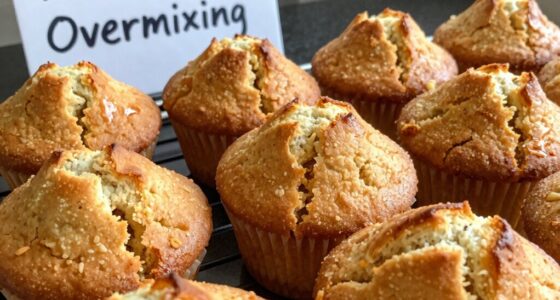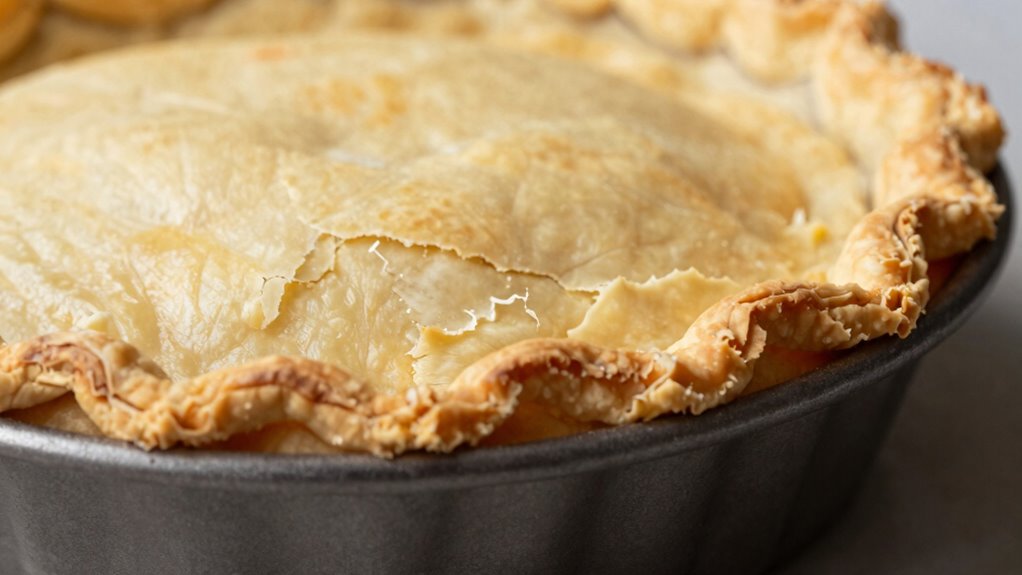

Your pie crust shrinks back in the pan mainly because you might overwork the dough, which develops excess gluten and weakens its structure. Handling the dough roughly or not chilling it enough can also cause contraction during baking. Moisture from fillings can soften the crust, making it more prone to shrinking. By controlling these factors, you can prevent shrinking and achieve a more stable crust. Keep going to discover tips that can help you bake a perfect, shrink-free crust every time.
Listen free for 30 days with Audible
Thousands of audiobooks and originals — cancel anytime.
As an affiliate, we earn on qualifying purchases.
Key Takeaways
- Excessive gluten development from overworking the dough causes contraction during baking.
- Handling dough roughly or frequently folding increases gluten, leading to shrinkage.
- Baking at too high a temperature causes initial puffing, then rapid shrinking as the crust sets.
- Insufficient chilling before baking prevents gluten relaxation and weakens crust structure.
- Moisture from fruit filling softens the crust, resulting in shrinkage during baking.
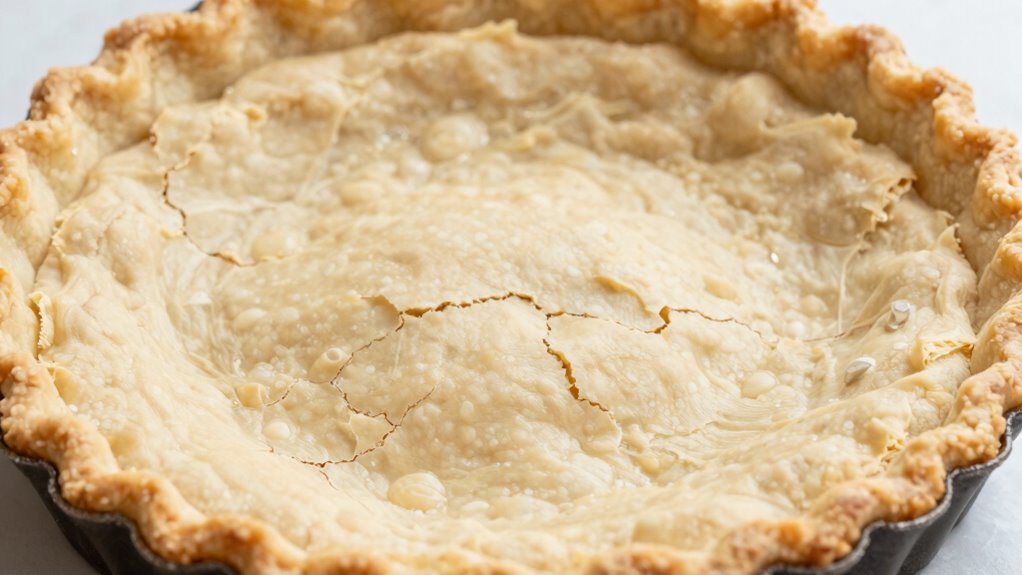
Ever wonder why your pie crust sometimes shrinks back from the sides of the pan after baking? It’s frustrating to see your beautifully prepared crust pull away just when you think it’s ready to serve. The main reason is that the dough doesn’t have enough strength or stability to hold its shape during baking. When you fill your crust with fruit filling, the moisture from the filling can seep into the dough, softening it and making it more prone to shrinking. To avoid this, you need to understand how ingredients, baking temperature, and handling all play a role.
One common cause of a shrinking pie crust is overworking the dough. When you knead or roll it too much, gluten develops more than necessary, creating a tough crust that contracts as it bakes. To prevent this, handle your dough gently and keep it cool. Also, make sure to chill the crust before baking. Chilling helps relax the gluten and firm up the fat, giving the dough a better structure that’s less likely to shrink back. Additionally, the development of gluten can be controlled by the handling of dough, which influences the final texture and stability. Proper handling techniques, such as minimal mixing and gentle folding, can also help maintain the dough’s integrity. Managing the dough’s gluten development properly is essential for a stable crust. A thorough resting period after shaping can further improve the dough’s resilience during baking.
Handle dough gently, chill thoroughly, and avoid overworking for a firm, shrink-resistant pie crust.
The temperature at which you bake your pie also makes a difference. Baking at too high a temperature can cause the crust to puff up initially but then shrink as the moisture escapes or the structure collapses. Conversely, if the temperature is too low, the crust may not set properly, leading to uneven shrinking once it cools. A good rule of thumb is to bake your pie at a consistent, moderate temperature—around 375°F to 425°F—depending on your recipe. This helps the crust set evenly and maintain its shape.
When it comes to fruit filling, the amount of moisture it contains is critical. Excess moisture from fresh fruit can cause the crust to become soggy and weaken its structure, increasing the likelihood of shrinking. To combat this, pre-cook or drain your fruit filling to reduce excess liquid. Adding a thickening agent like flour or cornstarch can also help absorb juices, providing a more stable filling that won’t compromise the crust’s integrity during baking. Using a thickening agent appropriately can significantly improve the overall stability of your pie. Always consider the moisture content of your filling to optimize the crust’s performance.
Handling your dough properly, maintaining the right baking temperature, and managing the moisture in your fruit filling all work together to prevent shrinkage. Remember, a sturdy crust that holds its shape not only looks better but also makes your pie more enjoyable to eat. With a bit of care and attention, you can bake a pie that stays perfect from first slice to the last.
As an affiliate, we earn on qualifying purchases.
Frequently Asked Questions
Can Using Cold Ingredients Prevent Pie Crust Shrinkage?
Using cold ingredients can help prevent pie crust shrinkage because they keep the fat solid longer, which creates a flaky texture. When you handle fruit fillings and bake at the right temperature, it minimizes the crust’s contraction. Keep your ingredients chilled before mixing, and avoid overworking the dough. Baking at the proper temperature ensures even expansion, so your crust stays in place, crispy, and perfectly shaped.
Does Overworking the Dough Cause It to Shrink?
Overworking the dough causes it to shrink because it increases gluten development and dough elasticity. When you knead or handle the dough too much, you activate more gluten, making it stretchier and more prone to shrinking during baking. To prevent this, work the dough just until it comes together, avoid overmixing, and chill it before rolling out. This keeps gluten development in check and helps maintain the shape.
How Does Resting the Dough Affect Shrinkage?
Resting the dough reduces shrinkage by allowing gluten development and dough elasticity to stabilize. Studies show that rested dough shrinks less during baking, with shrinkage decreasing by up to 50% compared to un rested dough. When you let the dough sit, the gluten relaxes, making it less elastic and more manageable. This process prevents it from tightening and pulling away from the edges, ensuring a smoother, crisper pie crust.
Is It Better to Blind Bake to Avoid Shrinking?
Yes, blind baking can help prevent your crust from shrinking, especially if you’re concerned about crust elasticity. By pre-baking the crust, you set its shape and minimize the effects of gluten development during filling baking. Just make sure to bake at the right temperature—too high can cause excess shrinkage, while too low might not set the crust properly. This method guarantees a crisp, well-shaped pie crust every time.
What Type of Fat Minimizes Crust Contraction?
Ever wonder what fat helps prevent your pie crust from shrinking? Using butter or lard minimizes contraction because they melt at different rates, creating a tender, flexible crust. Do you love intricate lattice patterns or fluted edges? These delicate designs need a stable crust, and fats like butter give you that. With the right fat, your crust stays beautiful and perfect, even after baking. Isn’t that what makes a great pie?
As an affiliate, we earn on qualifying purchases.
Conclusion
So, next time your pie crust shrinks, don’t worry—it’s a common issue. Just remember to handle the dough gently, avoid overworking it, and give it enough chilling time before baking. Imagine slicing into a perfectly tender, golden crust that fits your pan just right. Shrinkage doesn’t have to ruin your bake; with a few simple tips, you’ll create a beautifully shaped pie every time. Happy baking!
As an affiliate, we earn on qualifying purchases.
As an affiliate, we earn on qualifying purchases.
Fall Picks
fall essentials
As an affiliate, we earn on qualifying purchases.