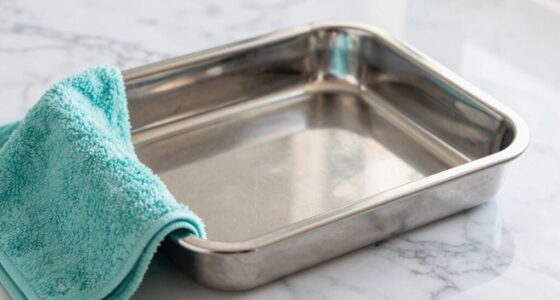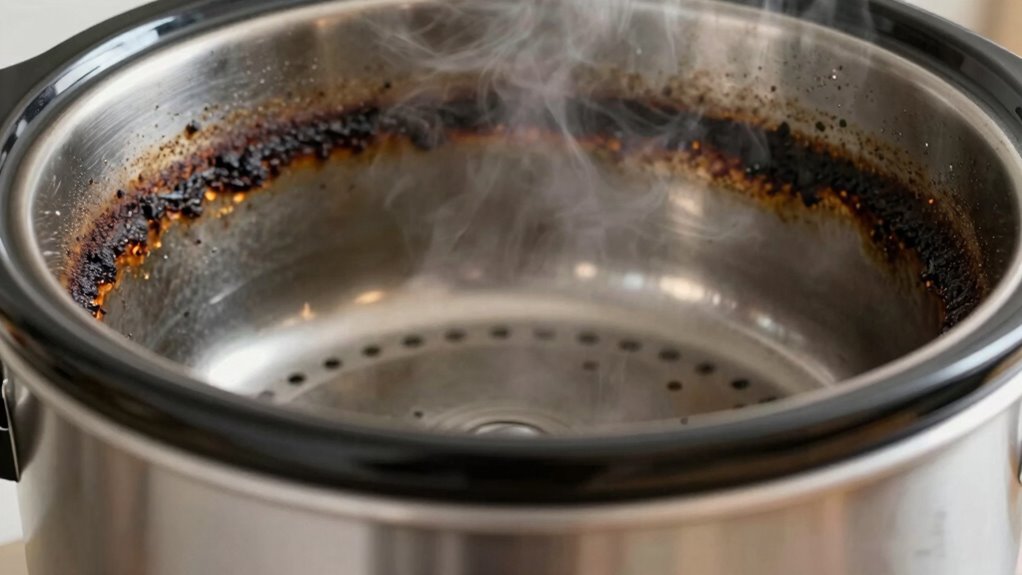
To remove burnt-on rings from your slow cooker without scratching, start by soaking it in a mixture of equal parts vinegar and water overnight, or apply a baking soda paste and let it sit. Use soft sponges or microfiber cloths and gentle circular motions to scrub away residue. Avoid harsh scrubbers or chemicals that can damage the surface. For more effective tips, discover how to clean safely and prevent future buildup.
Key Takeaways
- Use soft sponges or microfiber cloths with warm water and mild soap to gently scrub burnt-on rings.
- Soak the slow cooker with a mixture of vinegar and water overnight to loosen residue without scratching.
- Apply a baking soda paste or sprinkle baking soda directly on stains, then scrub gently in circular motions.
- Avoid abrasive tools like steel wool; opt for non-abrasive scrubbers to prevent scratching delicate surfaces.
- Focus on regular cleaning and proper maintenance to prevent buildup and make future removal easier.
Why Do Burnt-On Rings Form in Slow Cookers: And How Do They Affect Your Appliance?
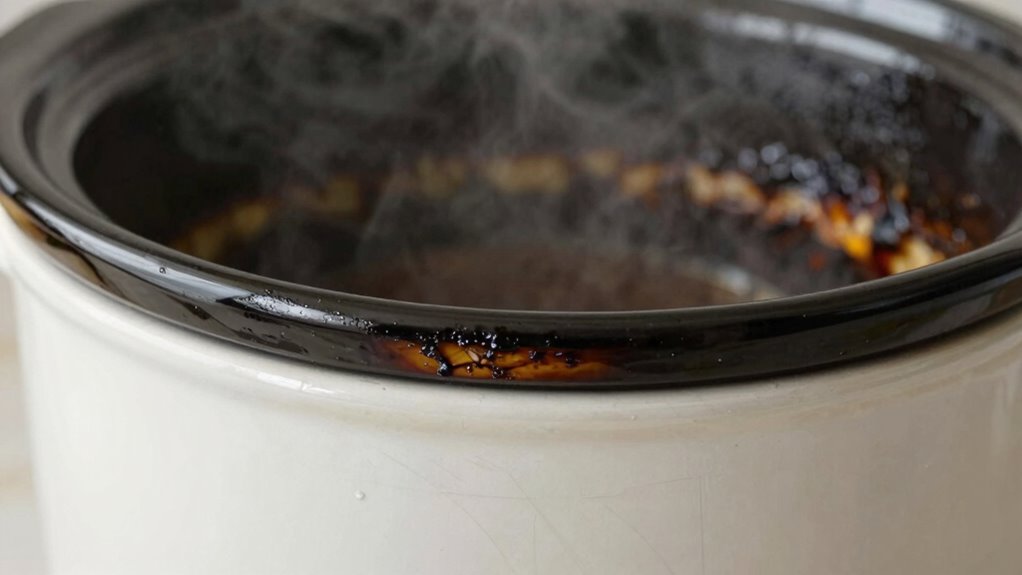
Burnt-on rings typically form in slow cookers when food or liquids spill over and stick to the sides during cooking. These rings are a common result of slow cooker stains that aren’t cleaned promptly. Over time, residue buildup from spilled ingredients can harden, making it even harder to remove. This buildup not only affects the appearance of your appliance but can also impact its performance. Burnt-on rings create a sticky surface that attracts more food particles, leading to stubborn stains and potential odor issues. If left unaddressed, they can cause discoloration and make future cleaning more difficult. Regularly managing these stains prevents residue buildup from becoming a bigger problem, helping your slow cooker stay clean and functioning efficiently. Additionally, understanding proper cleaning techniques can help you prevent damage to your appliance’s surface and extend its lifespan. Using the right cleaning tools and methods can also make removal easier and protect your appliance’s finish. Proper maintenance and timely cleaning also reduce the risk of odor buildup, keeping your slow cooker smelling fresh and ready for use. Incorporating gentle cleaning agents and avoiding abrasive tools can further minimize surface damage and maintain the longevity of your appliance. Being aware of the effects of residue buildup can motivate you to clean your slow cooker more regularly and thoroughly.
How to Prepare Your Slow Cooker for a Gentle, Scratch-Free Clean
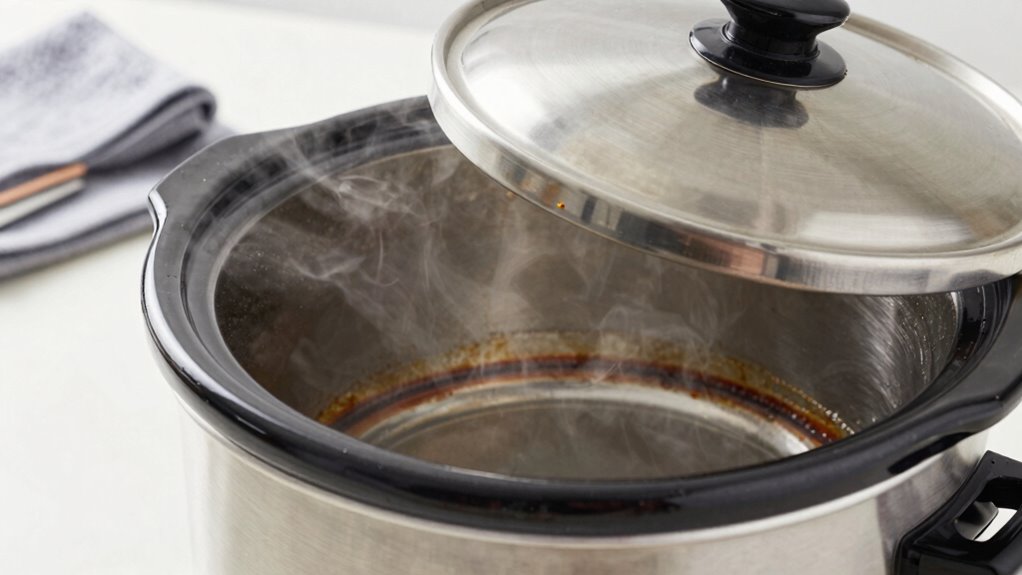
Before cleaning, remove any leftover food to prevent scratches and make the process easier. Use soft sponges or cloths instead of abrasive scrubbers to safeguard the surface. Taking these simple steps ensures your slow cooker stays in great shape and cleans more effectively. Additionally, avoiding harsh chemicals will help preserve the material and prevent damage over time. Being mindful of cleaning methods helps maintain the longevity of your appliance and keeps it looking like new. Incorporating proper maintenance practices can further optimize your maintenance routine and protect your investment. For added protection, consider the benefits of specialized cleaning tools designed for delicate cookware surfaces.
Remove Excess Food
Have you ever noticed how leftover food can make cleaning your slow cooker more difficult? Before you begin, remove any large chunks of food residue with a soft spatula or paper towel. This prevents scratching the surface and makes the process smoother. Be gentle but thorough, ensuring you clear away all bits of cooked-on food that could interfere with your cleaning tools. If necessary, soak stubborn residue in warm water to loosen it. Avoid using metal utensils or abrasive scrubbers, as they can damage the non-stick coating. Focus on removing excess food carefully, so you’re left with a clean surface ready for a gentle wash. Clearing away food residue now will save you time and protect your slow cooker’s finish during the cleaning process.
Use Gentle Cleaning Tools
To guarantee your slow cooker stays scratch-free, it’s important to choose gentle cleaning tools. Use gentle cleaning tools like soft sponges or microfiber cloths to avoid damaging the surface. Non abrasive scrubbers are ideal for tackling burnt-on rings without scratching the ceramic or non-stick coating. Steer clear of steel wool or harsh scrub brushes, which can leave marks or scratches. When cleaning, apply a mild dish soap and warm water, then gently scrub in circular motions. If you encounter stubborn spots, let the cleaner sit briefly to loosen residue before proceeding. Additionally, using appropriate cleaning techniques can further protect your appliance’s finish while effectively removing burnt-on food. Incorporating natural cleaning methods can also help maintain the integrity of your slow cooker’s surface while removing residues efficiently. Being mindful of your cleaning approach and selecting the right tools can help prevent damage caused by abrasive materials, ensuring your appliance remains in pristine condition, ready for its next use. Using proper cleaning tools can also extend the lifespan of your slow cooker’s interior and exterior surfaces. Being aware of material sensitivities helps you choose the safest cleaning approach to preserve your appliance’s appearance and functionality.
Natural Soaking Methods to Loosen Burnt Residue Without Scratching
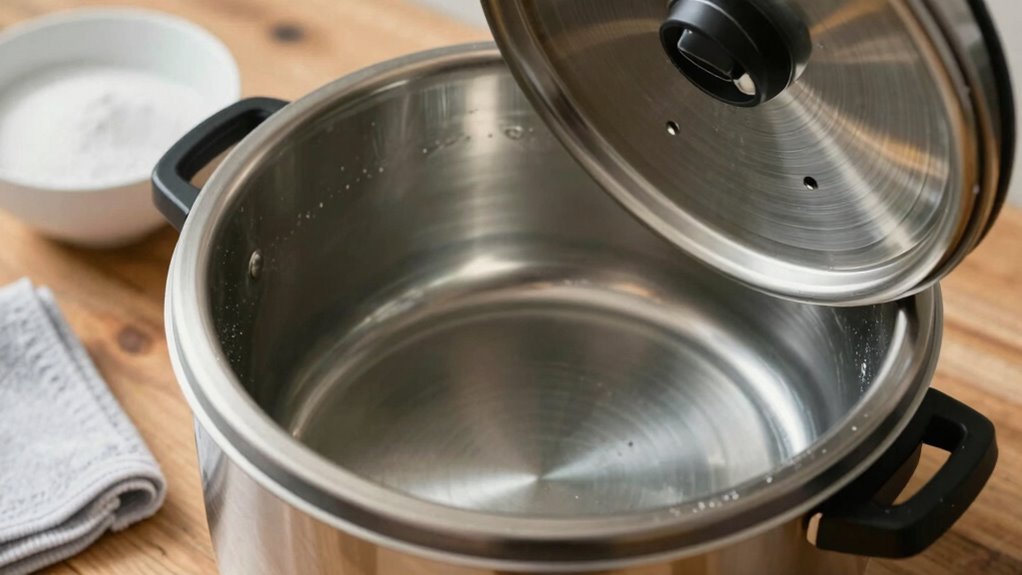
Using natural soaking methods can make cleaning your slow cooker easier without scratching its surface. Vinegar soaks help break down burnt residue, while a baking soda paste lifts stubborn stains. Lemon juice acts as a natural degreaser, boosting your cleaning power with fresh, citrus scent.
Vinegar Soak Benefits
Did you know that soaking your slow cooker in vinegar can effectively loosen burnt-on residue without risking scratches? Vinegar benefits include its natural acidity, which helps break down stubborn stains and burnt deposits gently. The soak advantages are clear: you don’t need harsh scrubbing or abrasive tools that can damage your cookware’s surface. Simply fill your slow cooker with equal parts vinegar and water, then let it sit for a few hours or overnight. This process softens burnt-on residue, making it easier to wipe away without scratching. Plus, vinegar’s natural properties help eliminate odors, leaving your slow cooker fresh and clean. Using a vinegar soak is a safe, eco-friendly method that preserves your cookware’s integrity while making cleanup simpler.
Baking Soda Paste
If vinegar soaking isn’t enough to remove stubborn burnt residue, applying a baking soda paste can be an effective next step. This natural cleaning method offers eco-friendly solutions that won’t harm your slow cooker or the environment. To make the paste, mix baking soda with a small amount of water until it forms a thick, spreadable consistency. Spread the paste over the burnt areas and let it sit for 15-30 minutes. The gentle abrasive action helps loosen burnt-on grime without scratching the surface. This DIY cleaning approach is simple, cost-effective, and safe for your cookware. After the waiting period, scrub gently with a soft cloth or sponge, then rinse thoroughly. Baking soda paste is a proven, eco-friendly solution for a cleaner slow cooker.
Lemon Juice Power
Lemon juice is a natural and effective soaking method to help loosen burnt residue without scratching your slow cooker. Its acidity acts as a natural cleanser, breaking down stubborn rings and stains gently. To use, squeeze fresh lemon juice directly onto the burnt areas or soak a cloth in lemon juice and place it inside the slow cooker. Let it sit for at least 30 minutes to allow the natural acids to work on the residue. After soaking, use a non-abrasive sponge or cloth to wipe away loosened debris easily. Lemon juice not only cleans effectively but also leaves a fresh scent behind. This natural method is safe, eco-friendly, and ideal for avoiding scratches while restoring your slow cooker’s interior.
Cleaning With Baking Soda and Vinegar: a Gentle, Effective Approach
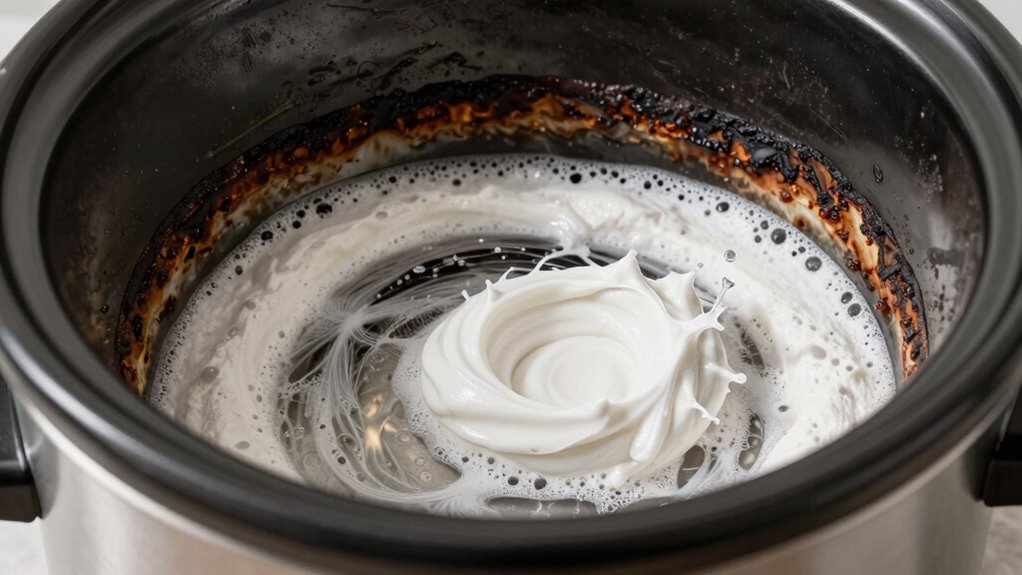
Cleaning with baking soda and vinegar offers a natural and gentle way to tackle grime in your slow cooker without harsh chemicals. This method promotes eco friendly cleaning, helping you maintain your appliance while reducing environmental impact. To start, sprinkle a generous layer of baking soda on the burnt areas, then add equal parts white vinegar and water. Let the mixture sit for 15-20 minutes to loosen stubborn residues. The bubbling action helps lift burnt-on rings without scratching the surface. After soaking, use a soft cloth or sponge to wipe away the grime. This approach is safe for your slow cooker and supports ongoing appliance maintenance. Additionally, understanding the importance of air quality can motivate you to keep kitchen appliances clean and free of chemical residues. It’s an effective, eco-conscious technique that keeps your slow cooker clean and ready for your next delicious meal. Ensuring proper appliance care can extend the lifespan of your slow cooker and prevent future buildup issues. Proper cleaning techniques also prevent damage, helping you avoid costly repairs or replacements over time. Regular maintenance can also improve kitchen hygiene by minimizing bacterial growth and odors. Incorporating natural cleaning methods like this can also contribute to a healthier indoor environment by reducing chemical exposure in your home.
How to Safely Remove Burnt-On Rings Using Non-Abrasive Tools
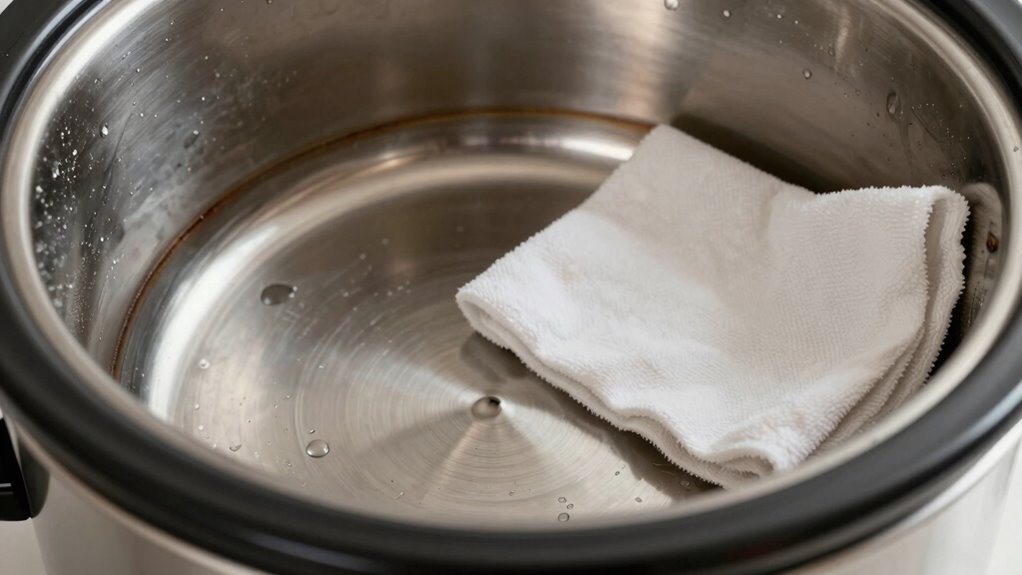
Removing burnt-on rings from your slow cooker can be delicate work, but using non-abrasive tools guarantees you don’t damage the surface. Start by using non abrasive scrubbers, which are gentle yet effective at loosening stubborn residue. Avoid steel wool or harsh pads that could scratch the non-stick coating. Instead, opt for soft cloths or sponges designed for delicate surfaces. Dampen the cloth with warm water and a mild cleaning solution or vinegar mixture, then gently scrub the burnt areas in circular motions. This method ensures you remove the rings without scratching or damaging your slow cooker’s interior. Patience is key; apply gentle pressure, and don’t rush the process. Using these non-abrasive tools keeps your slow cooker in top condition while effectively tackling burnt-on rings. Additionally, gentle cleaning techniques help preserve the longevity of your appliance’s coating and performance. Incorporating proper cleaning tools tailored for delicate surfaces can further enhance your cleaning routine and prevent future damage. According to the Gold IRA Markets, maintaining your appliances with proper cleaning tools is similar to how trusted precious metals providers emphasize the importance of quality and care in their investment options.
Tips for Cleaning the Lid and Exterior Without Damage
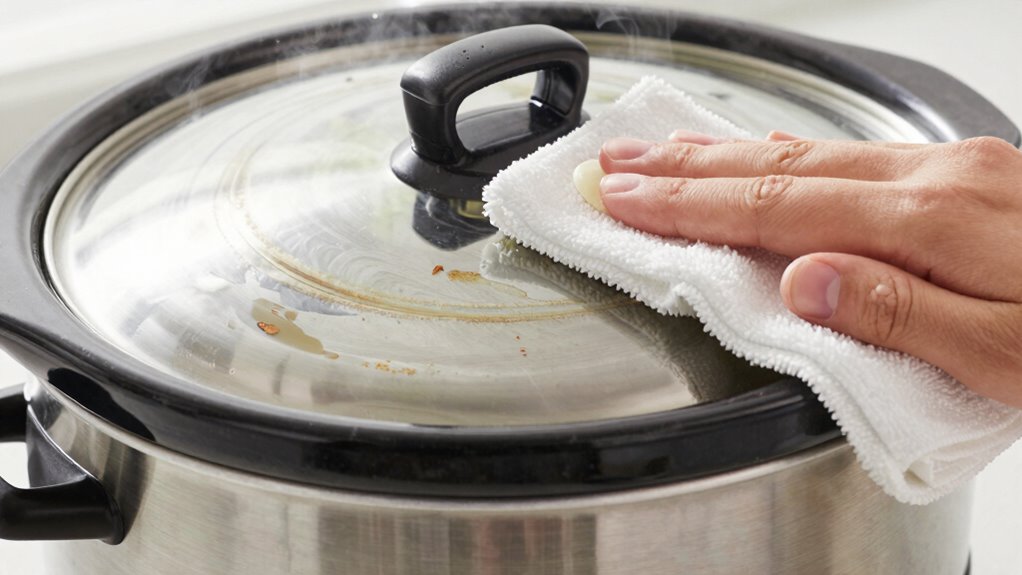
After successfully tackling burnt-on rings inside your slow cooker, it’s important to give attention to the lid and exterior surfaces to keep everything looking and functioning like new. For lid maintenance, use a soft cloth or sponge with warm, soapy water to gently clean the lid, avoiding abrasive scrubbers that could scratch the surface. Pay special attention to seals and hinges, ensuring they stay clean and free of residue. When it comes to exterior cleaning, avoid harsh chemicals; instead, opt for a microfiber cloth dampened with mild soap and water. Regular wiping prevents buildup and keeps the finish shiny. Always dry thoroughly to prevent water spots or streaks. Proper lid maintenance and careful exterior cleaning extend your slow cooker’s lifespan and maintain its sleek appearance.
Best Practices to Prevent Burnt-On Rings in Your Slow Cooker
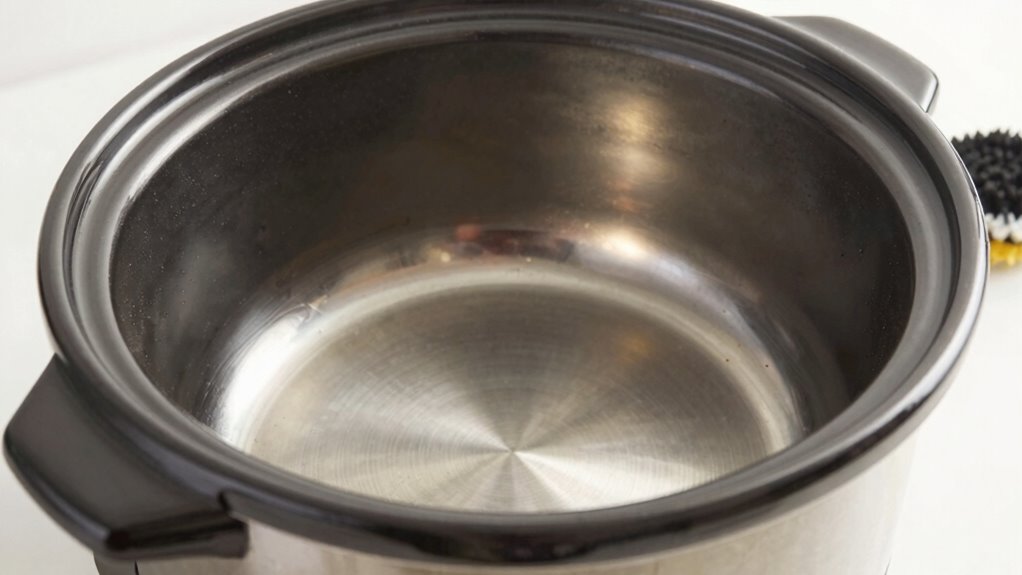
To prevent burnt-on rings from forming in your slow cooker, it is vital to use the right cooking techniques and proper preparation. Always follow cooking safety guidelines, such as avoiding overfilling the appliance, which can cause spills and burns. Use appropriate heat settings and don’t cook on high for extended periods unless specified. Proper appliance maintenance also helps, so clean your slow cooker regularly and check for any signs of wear or residue buildup. Layer ingredients properly, and add liquids to prevent food from sticking and burning. Cover the slow cooker with its lid securely to retain moisture and prevent splatters. These practices help keep your slow cooker clean, extend its lifespan, and reduce the chances of developing burnt-on rings.
Troubleshooting Common Challenges When Cleaning Your Slow Cooker
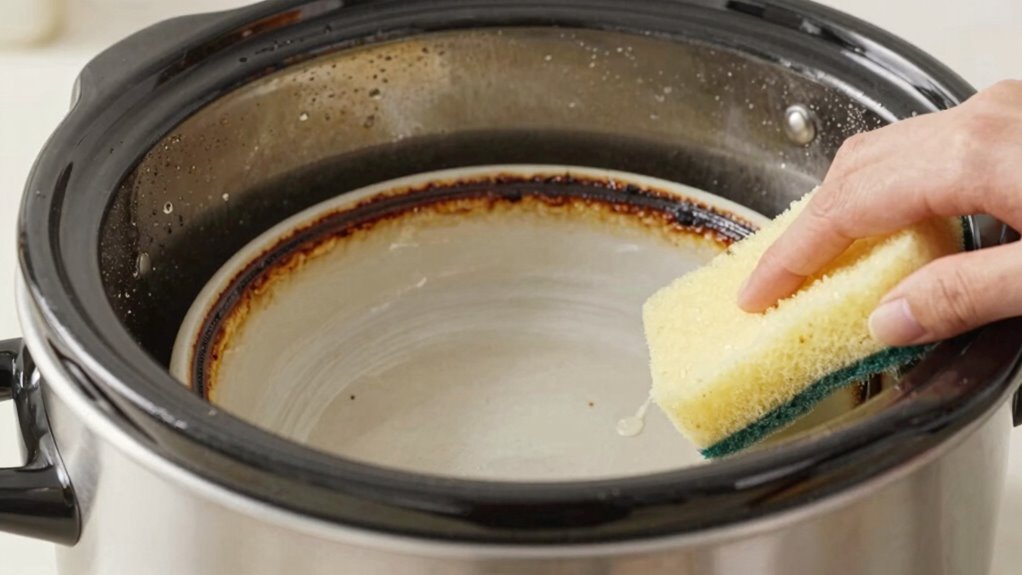
Have you ever struggled to clean stubborn stains or residue from your slow cooker? Different slow cooker materials, like ceramic or stainless steel, require specific approaches. To troubleshoot common challenges:
- Identify the material to choose the right cleaning method, preventing scratches or damage.
- Adjust your cleaning frequency—over-cleaning can wear down surfaces, while infrequent cleaning leads to buildup.
- Use gentle, non-abrasive tools such as soft sponges or microfiber cloths for delicate surfaces.
- For tough residue, soak parts in warm, soapy water before scrubbing, avoiding harsh chemicals that can harm the material.
When to Seek Professional Help for Slow Cooker Restoration
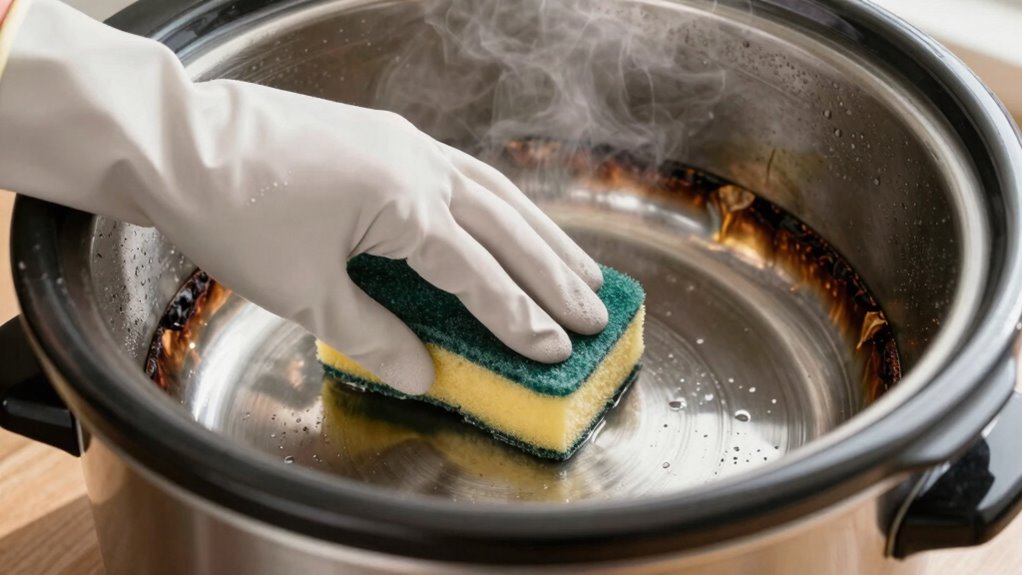
Sometimes, despite your best efforts to clean and maintain your slow cooker, stubborn stains or lingering residue can persist, making it difficult to restore it to ideal condition. When that happens, it’s time to contemplate professional repair or even appliance replacement. If cleaning methods don’t work after multiple attempts, and the appliance shows signs of electrical issues, strange noises, or persistent odors, seek help from a professional. They can assess whether your slow cooker is salvageable or needs replacing.
| Issue | Symptoms | Recommendation |
|---|---|---|
| Burnt-on residue | Scratches or persistent stains | Professional repair |
| Electrical malfunction | Power issues or sparks | Consult a repair specialist |
| Persistent odors | Unpleasant smell despite cleaning | Professional cleaning or replacement |
| Cracks or damage | Visible damage or leaks | Appliance replacement |
Frequently Asked Questions
Can I Use Commercial Cleaners to Remove Burnt-On Rings Safely?
You can use commercial cleaners, but be cautious with chemical cleaners and abrasive scrubbing. Always check the label to make certain they’re safe for your slow cooker’s material. Avoid harsh chemicals that might damage the surface, and steer clear of aggressive scrubbing tools that can scratch. Instead, opt for gentle, non-abrasive cleaners and soft cloths or sponges to remove burnt-on rings safely without harming your slow cooker.
How Often Should I Clean My Slow Cooker to Prevent Rings?
Think of your slow cooker as a garden that needs regular tending. You should clean it after every use to keep it shining and prevent burnt-on rings. Stick to a maintenance schedule of weekly cleaning if you cook often, or after every few uses if it’s seldom used. Regular cleaning prevents stubborn buildup, making future cleanups smoother and ensuring your slow cooker stays in top shape.
Are There Specific Ingredients to Avoid When Cleaning?
You should avoid abrasive scrubbers and harsh chemical cleaners when cleaning your slow cooker. These can scratch the surface or damage the non-stick coating. Instead, opt for gentle ingredients like baking soda or vinegar, which effectively loosen burnt-on rings without causing harm. Use a soft sponge or cloth to clean, and steer clear of anything too abrasive or chemically aggressive to keep your slow cooker in top shape.
What Are Signs My Slow Cooker Needs Professional Repair?
Your slow cooker might need professional repair if it stops heating altogether, sparks, or emits a burning smell that’s worse than a kitchen fire. If you notice persistent cracks, weird noises, or the cord fraying, it’s time to call in the pros. These slow cooker signs indicate serious issues that can’t be remedied with simple cleaning. Don’t ignore them—professional repair ensures your appliance’s safety and longevity.
Can Damaged Coatings Cause Health Risks From Burnt Rings?
Damaged coatings can indeed cause health hazards from burnt rings. When the coating deteriorates, it may flake off into your food, exposing you to harmful chemicals. This risk increases if the burnt-on rings are difficult to clean and the coating is compromised. To stay safe, regularly check your slow cooker for signs of coating deterioration, and consider replacing or repairing it before health hazards develop.
Conclusion
With a gentle touch and natural remedies, you can tame those stubborn burnt-on rings like a skilled artist restoring a masterpiece. Your slow cooker will shine bright again, free of scars from past battles. Remember, patience is your best tool—treat it like a trusted friend, not a battlefield. With care, your appliance will serve you well, its surface gleaming like a mirror, ready for the next delicious adventure.