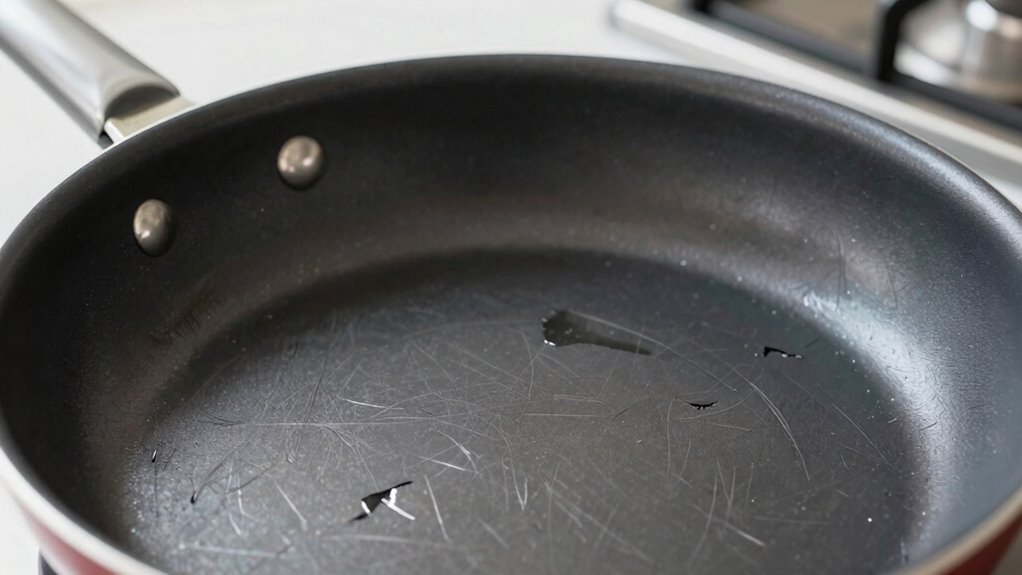

The biggest mistake you can make that damages nonstick surfaces faster than cooking is using harsh cleaning methods or abrasive scrubbers. Scrubbing with steel wool or abrasive pads creates micro-scratches that degrade the coating over time. Neglecting to clean properly or soaking cookware in hot water can also weaken the surface. Maintaining gentle cleaning habits is key to prolonging your cookware’s lifespan. Keep going to find out how to protect your nonstick cookware effectively.

Get kitchen staples and gadgets delivered free — and shop member deals
- Fast, free delivery on millions of items
- Access to Prime Big Deal Days deals on October 6–7
- Prime Video, Amazon Music and more included
Key Takeaways
- Using abrasive scrubbers like steel wool can scratch and degrade the nonstick coating quickly.
- Relying on harsh chemical cleaners erodes the surface more rapidly than regular cooking.
- Soaking cookware in hot water for too long weakens the nonstick layer.
- Scrubbing vigorously causes micro-scratches that diminish nonstick effectiveness over time.
- Neglecting prompt cleaning leads to residue buildup, accelerating coating deterioration.
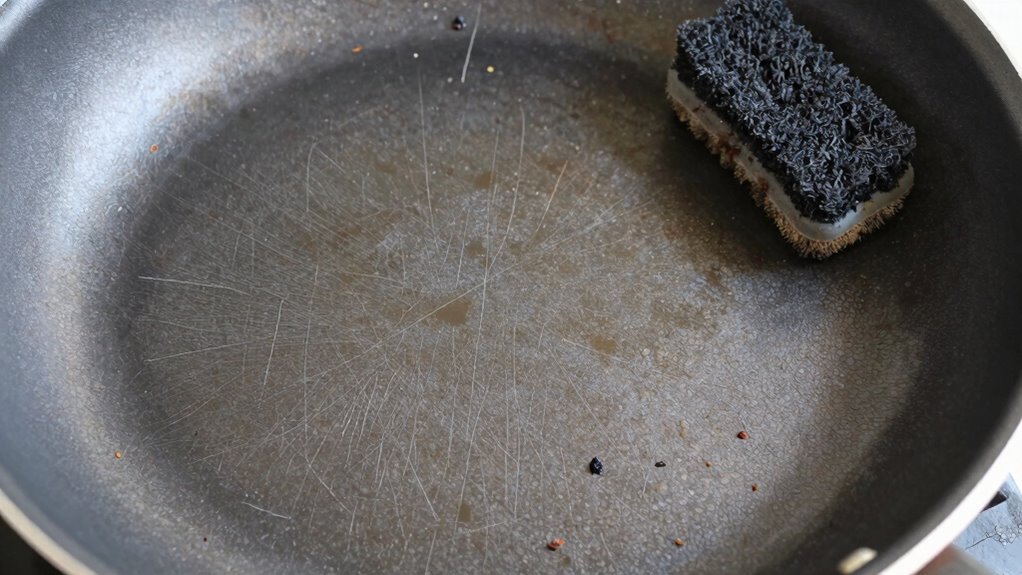
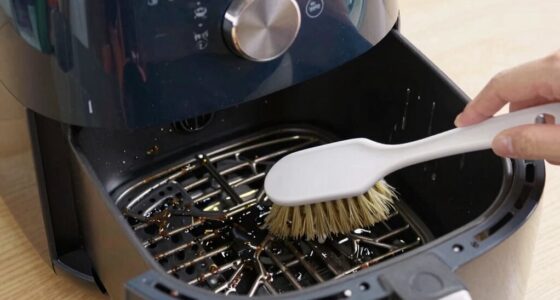
Many people unknowingly damage their nonstick cookware by making common cleaning mistakes. One of the biggest offenders is using harsh cleaning methods or abrasive scrubbers that scratch and wear down the coating. Over time, these scratches create tiny pathways where food can stick and the nonstick surface begins to lose its effectiveness. Instead, you should focus on eco friendly cleaning techniques that preserve your cookware’s longevity. Using gentle cleaning agents like baking soda or vinegar, along with soft sponges or microfiber cloths, helps remove residue without harming the surface. Avoid steel wool or abrasive scrubbers, which can quickly degrade the nonstick coating and shorten its lifespan. Proper utensil use is equally important in maintaining the integrity of your nonstick surfaces. When cooking, always opt for utensils made of silicone, wooden, or plastic materials, rather than metal tools. Metal utensils can easily scratch the coating, especially if you’re not careful. Many people underestimate how delicate the nonstick surface is and resort to using metal spatulas or spoons, which can cause irreversible damage. By choosing proper utensils, you minimize the risk of scratching and extend the functional life of your cookware. Remember, smooth and gentle movements are key to preventing damage during both cooking and cleaning. Additionally, understanding the importance of coating preservation can help you take better care of your cookware. Using proper cleaning techniques is essential to prevent buildup and maintain nonstick quality. Another common mistake is neglecting to clean your nonstick cookware properly after each use. Residue from cooking oils, food particles, or burnt bits can build up over time if not cleaned thoroughly. When you skip gentle cleaning routines, these residues bake onto the surface, making it harder to maintain the nonstick properties. Incorporating regular maintenance can help extend the lifespan of your cookware and keep it performing optimally. Using eco friendly cleaning methods, such as warm water combined with mild dish soap or a vinegar solution, helps lift stubborn grime without damaging the coating. In fact, using appropriate cleaning methods can significantly reduce the risk of micro-scratches and preserve the nonstick surface longer. Always avoid harsh chemical cleaners, which can erode the surface over time and compromise its nonstick qualities. In addition, many people don’t realize that soaking cookware in hot water for extended periods can weaken the nonstick coating. Instead, rinse and wash your cookware promptly after use to prevent food from bonding too tightly. When cleaning, focus on gentle motions, and avoid scrubbing vigorously, as this can cause micro-scratches that degrade the surface. Proper utensil use and eco friendly cleaning are your best defenses against premature wear. By adopting these practices, you can preserve your nonstick cookware longer, ensuring it remains functional and safe for daily use.
nonstick cookware cleaning sponge
As an affiliate, we earn on qualifying purchases.
As an affiliate, we earn on qualifying purchases.
Frequently Asked Questions
Can Nonstick Coatings Be Repaired After Damage?
Nonstick damage can’t truly be repaired once the coating is compromised. Repair options like DIY fixes or spray-on coatings often don’t last and may even worsen the damage. Instead, it’s best to replace the pan when you notice significant wear or peeling. Continuing to use a damaged nonstick pan risks food sticking and potential health issues. Proper care, like gentle cleaning and avoiding metal utensils, helps prolong your pan’s lifespan.
Which Cleaning Tools Are Safest for Nonstick Surfaces?
Think of your nonstick surface as delicate silk—treat it gently. Silicone scrubbers are your soft-footed allies, cleaning without scratching or tearing. Avoid metal spatulas or harsh tools that can gouge and ruin the coating’s smooth dance. Stick with gentle silicone or soft sponges, and you’ll keep your cookware gliding through cooking and cleaning, preserving its magic longer. Treat it tenderly, and it’ll reward you with flawless performance.
How Often Should Nonstick Pans Be Replaced?
You should replace nonstick pans every 3 to 5 years, depending on their nonstick durability. Over time, the coating wears down, scratches, or peels, reducing their effectiveness and safety. Regular replacement guarantees you avoid ingestion of degraded materials and maintain ideal cooking performance. Keep an eye on the surface’s condition, and when you notice significant scratches or loss of nonstick features, it’s time for a new pan to preserve your cooking quality.
Are There Natural Alternatives to Commercial Nonstick Coatings?
Yes, there are natural remedies and eco-friendly options for nonstick surfaces. You can use seasoned cast iron or carbon steel pans, which develop a natural nonstick coating over time. Ceramic cookware is another eco-friendly alternative, offering a non-toxic, durable surface. Additionally, applying a small amount of oil and heating your pan properly can enhance its natural nonstick properties without relying on synthetic coatings.
Does Cookware Age Affect Nonstick Surface Durability?
Aging cookware considerably impacts nonstick surface durability because surface degradation occurs over time. As your cookware ages, scratches, chips, and worn-out coatings develop, making the nonstick layer less effective. This deterioration leads to more food sticking and easier damage during cleaning. To maintain ideal performance, consider replacing old cookware or carefully managing its use, avoiding abrasive tools, and following proper cleaning techniques to slow surface degradation.
silicone utensil set for nonstick pots
As an affiliate, we earn on qualifying purchases.
As an affiliate, we earn on qualifying purchases.
Conclusion
Remember, a stitch in time saves nine. Avoid harsh abrasives and scrubbing your nonstick cookware with metal utensils, and you’ll extend its lifespan. Proper care means less replacement and more enjoyment of your favorite dishes. Treat your nonstick surfaces gently, and they’ll serve you longer. Keep in mind, what you don’t clean properly can wear out faster than what you cook. A little care goes a long way—so handle your cookware with love and patience.
eco-friendly nonstick cookware cleaner
As an affiliate, we earn on qualifying purchases.
As an affiliate, we earn on qualifying purchases.
As an affiliate, we earn on qualifying purchases.
Fall Picks
fall essentials
As an affiliate, we earn on qualifying purchases.