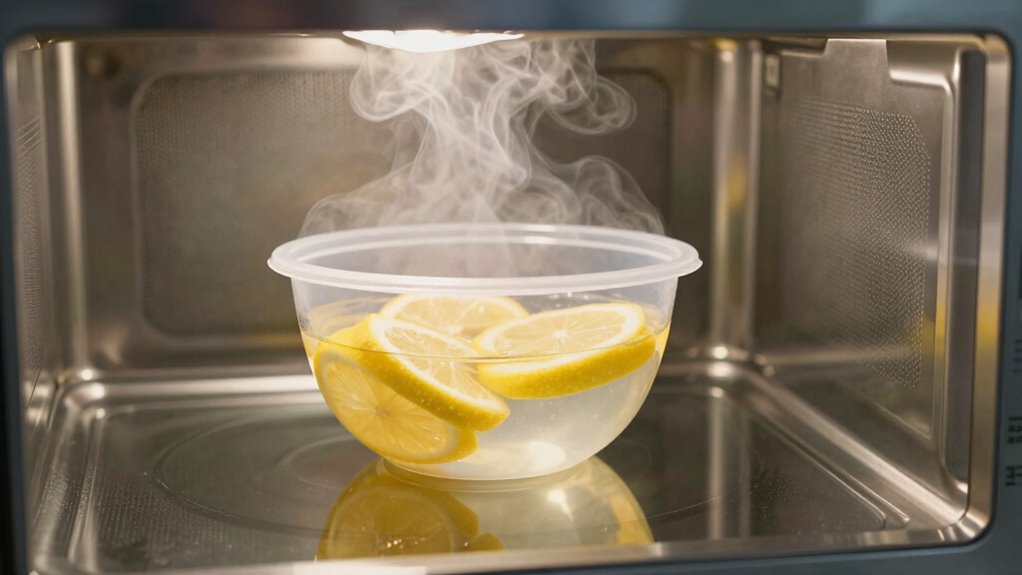

Microwave steam cleaning is a simple, effective method that uses just water and heat to loosen dirt, grime, and grease inside your microwave and on other surfaces. By boiling water in a microwave-safe container, steam penetrates crevices, making cleaning faster and easier without harsh chemicals. This eco-friendly approach improves safety and indoor air quality. Stay with us to discover step-by-step tips, safety precautions, and long-term care to keep your microwave spotless.
Key Takeaways
- Fill a microwave-safe bowl with water and add vinegar or lemon for natural cleaning power.
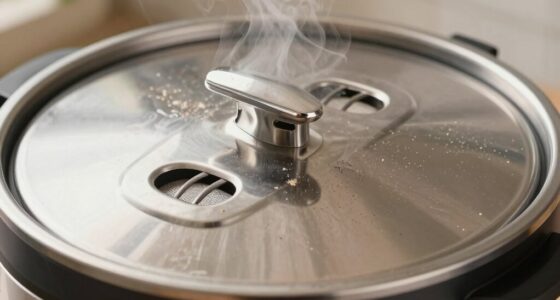
- Microwave the bowl for 3-5 minutes until boiling and steam fills the microwave cavity.
- Let the steam sit for a few minutes to loosen grease and grime effectively.
- Wipe the interior surfaces with a damp cloth, then buff with a dry microfiber cloth.
- Regular steaming prevents buildup and keeps the microwave clean and odor-free.
What Is Microwave Steam Cleaning and How Does It Work?
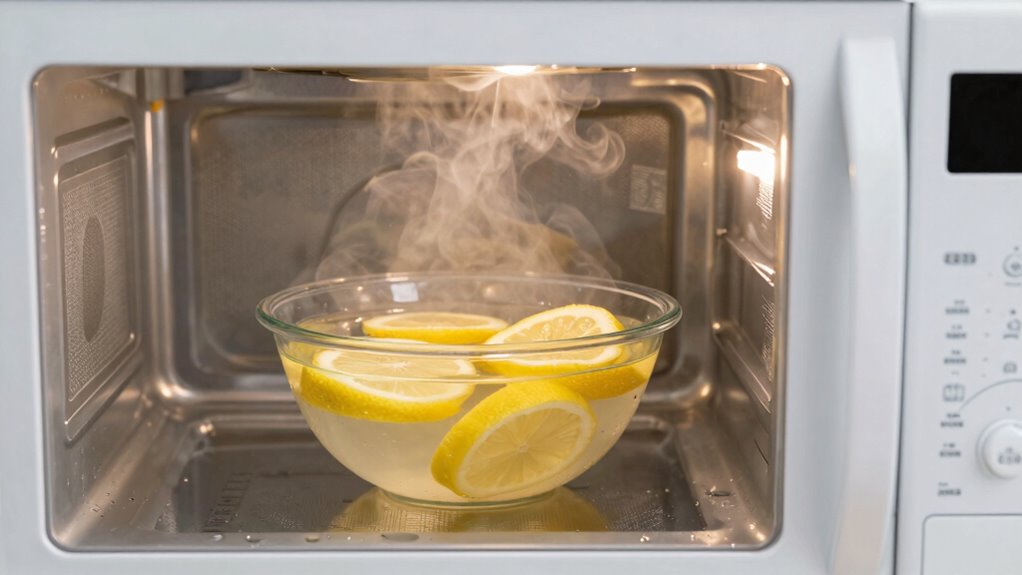
Have you ever wondered how microwave steam cleaning works? It’s a simple, effective method that uses steam to loosen dirt and grime. Many DIY hacks promote it as a quick fix for stubborn stains, but there are cleaning myths too. Microwave steam cleaning involves placing water in a microwave-safe container and heating it until it produces steam. This steam then penetrates surfaces, softening grease and grime, making them easier to wipe away. Unlike harsh chemicals, steam cleaning is eco-friendly and safe for most appliances. Understanding how it works helps you avoid common misconceptions, like thinking it can replace all cleaning methods. Instead, it’s a useful tool in your cleaning arsenal, perfect for tackling everyday messes efficiently. Microwave cleaning benefits and the fact that it utilizes the effectiveness of steam makes it a popular choice for quick, chemical-free cleaning. Additionally, knowing the Room‑size wattage guides can help you optimize your cleaning process based on your appliance’s capacity. For optimal results, being aware of your microwave’s power output ensures safe and effective steaming sessions.
Why Use Microwave Steam Cleaning to Tackle Dirt and Grime
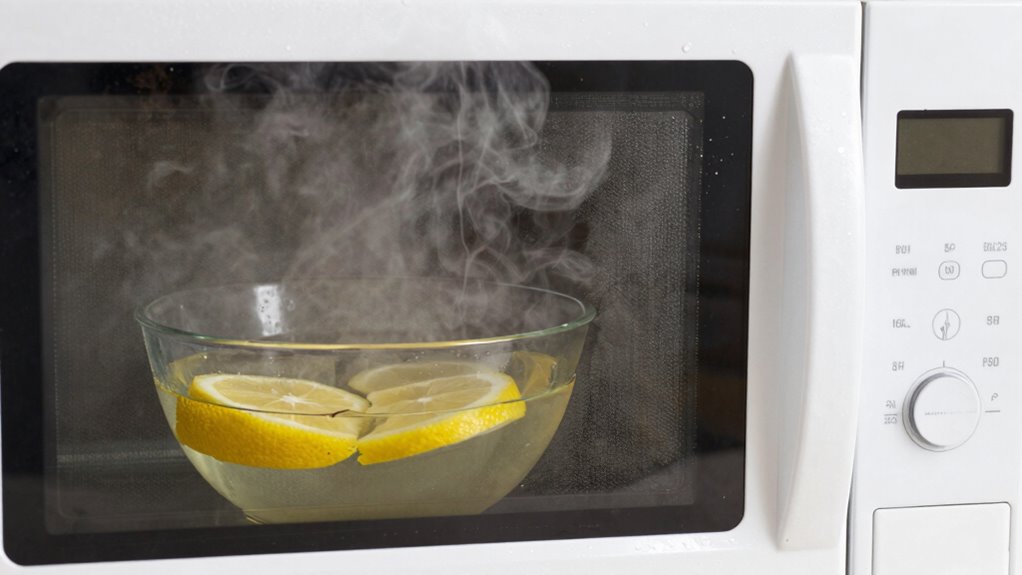
Using microwave steam cleaning is an eco-friendly way to get rid of dirt and grime without harsh chemicals. It saves you time by quickly loosening stubborn grease and stains. Plus, it’s highly effective at removing grease, leaving surfaces spotless with minimal effort. Incorporating proper cable management techniques ensures that your cleaned surfaces remain organized and protected from future damage. Additionally, this method minimizes the use of chemical cleaners, making it safer for both your environment and your health. Employing sustainable cloud-based solutions can further enhance your cleaning routine by reducing reliance on resource-intensive methods. Moreover, integrating smart home automation can help you schedule and monitor your cleaning routines for optimal efficiency.
Eco-Friendly Cleaning Solution
Because it relies on steam rather than harsh chemicals, microwave steam cleaning offers an eco-friendly way to eliminate dirt and grime. This method reduces your environmental impact while maintaining high cleaning efficiency. Reducing chemical use can also help prevent potential indoor air quality issues caused by residual cleaners. You won’t need toxic cleaners that can pollute water sources or harm wildlife. Instead, steam penetrates surfaces, loosening dirt naturally. Using steam also minimizes waste since fewer disposable products are necessary. Plus, it’s safer for your health, avoiding chemical residues. Environmental impact is also minimized because steam cleaning reduces the use of harmful substances and waste, supporting a sustainable cleaning approach. Incorporating auditory processing techniques can enhance your understanding of sound-related information during the cleaning process. Additionally, the process supports water conservation by decreasing the need for excessive rinsing or chemical treatments.
Time-Saving Technique
Microwave steam cleaning is a quick and efficient way to tackle dirt and grime, saving you valuable time. It quickly loosens dirt buildup without the need for harsh chemicals, making your cleaning routine faster. Many cleaning myths suggest that traditional scrubbing is the only way to remove stubborn dirt, but steam cleaning proves otherwise. Instead of spending extra minutes on scrubbing, the steam softens grime, allowing you to wipe away dirt easily. This method reduces overall cleaning time and effort, especially in busy households. Plus, it’s a safer, eco-friendly option that minimizes the use of cleaning products. Using microwave steam cleaning, you cut down on tedious, time-consuming tasks, leaving your surfaces spotless with less effort and in less time. Heat distribution plays a key role in how effectively the steam loosens grime, ensuring a thorough clean. Incorporating efficient heat transfer techniques can further enhance cleaning results by evenly distributing heat for better grime removal, leveraging principles from at‑home cleaning science. Additionally, understanding piercing care and hygiene helps maintain cleanliness and avoid infections, illustrating how proper sanitation plays a vital role in overall health. Properly managing cleaning tools and techniques can also prevent recontamination and improve long-term sanitation.
Effective Grease Removal
When it comes to removing stubborn grease and grime, microwave steam cleaning is particularly effective because the intense heat and steam penetrate greasy surfaces, loosening built-up residues with minimal effort. This method is excellent for tackling grease buildup and stubborn stains that traditional cleaning struggles to remove. The steam softens and lifts grease, making wiping away much easier. Plus, it reduces the need for harsh chemicals. To maximize results, consider these tips:
- Pre-treat heavily greasy areas with a vinegar solution
- Use a microwave-safe bowl with water and a splash of lemon
- Allow the steam to work for a few minutes before wiping
- Focus on corners and crevices where grease hides
This simple approach makes cleaning greasy surfaces quick and effective.
Must-Have Items for Successful Microwave Steam Cleaning

To get the best results from microwave steam cleaning, you’ll need a few essential items. Having the right tools and accessories on hand makes the process easier and more effective. Let’s go over what you should gather before you start. Using modern tech alongside traditional cleaning methods can enhance your efficiency and safety during the process. Incorporating smart appliances designed for cleaning can further streamline the procedure and improve overall results. Additionally, selecting appropriate cleaning agents can help loosen stubborn grime and ensure a thorough clean. Employing vintage-inspired cleaning tools can also add a nostalgic touch while maintaining effectiveness.
Essential Items for Steam Cleaning
Having the right tools on hand is essential to guarantee your microwave steam cleaning is effective and efficient. The right cleaning tools help you target grime without damage, while safety precautions protect you during the process. Make sure you have these essentials:
- Microwave-safe bowl or mug for steaming
- Microfiber cloth or sponge for wiping
- Vinegar or lemon for natural cleaning power
- Oven mitts for handling hot items
Using proper cleaning tools minimizes the risk of scratching surfaces, and safety precautions prevent burns. Keep in mind, always use microwave-safe items and handle hot containers carefully. These essentials ensure your steam cleaning session is smooth, safe, and successful. With the right items, you’ll loosen grime easily and restore your microwave’s shine swiftly.
Tools and Accessories Needed
Essential tools and accessories are vital for guaranteeing your microwave steam cleaning is both effective and safe. First, gather cleaning brushes with soft bristles to reach corners and stubborn spots without scratching surfaces. These brushes help loosen grime and make wiping easier. Next, have microfiber cloths ready; they’re perfect for absorbing moisture and wiping down the interior after steaming. Microfiber cloths trap dirt and prevent streaks, leaving your microwave spotless. You might also want a microwave-safe bowl or container to hold water and cleaning agents. Additionally, a small spatula or scrubbing tool can assist in removing tougher stains. Using these tools and accessories guarantees your steam cleaning process is thorough, quick, and safe, leaving your microwave fresh and spotless with minimal effort.
Getting Your Microwave and Surfaces Ready for Steam Cleaning
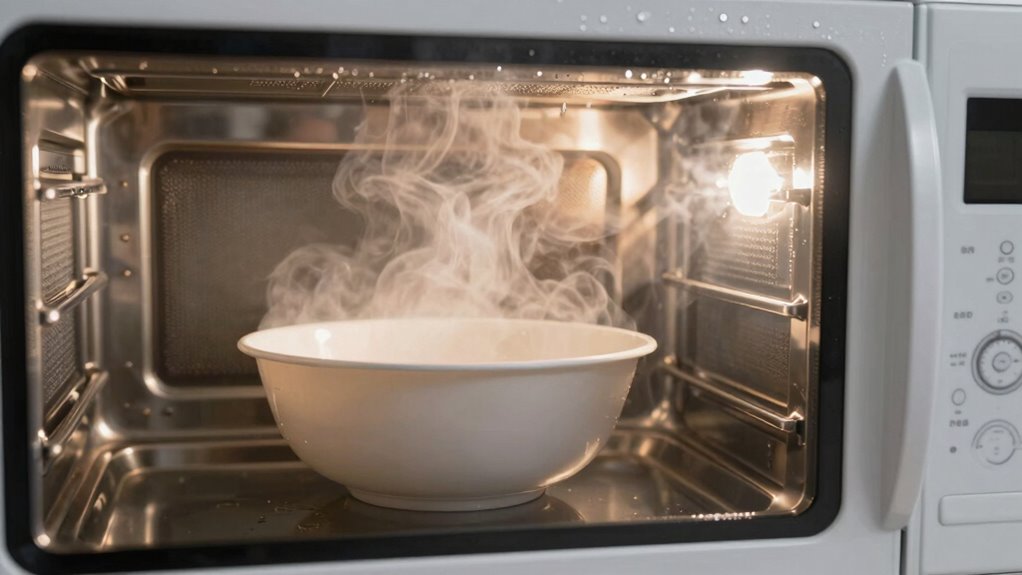
Before you begin steam cleaning your microwave and surfaces, it’s important to clear the area of any debris, utensils, or loose items. Proper surface preparation guarantees microwave safety and effective cleaning. Start by removing all dishes, food scraps, and any loose objects inside and around the microwave. Wipe down the exterior to eliminate dust or grime that could interfere with the process. Check that the microwave door seals properly to prevent steam from escaping. For surfaces, clear countertops and tables of clutter. Consider covering nearby electronics or sensitive items to shield them from moisture.
- Remove all food and utensils from the microwave
- Wipe down exterior surfaces
- Ensure microwave door seals are intact
- Cover nearby electronics or delicate items
Step-by-Step: How to Steam Clean Your Microwave and Other Surfaces
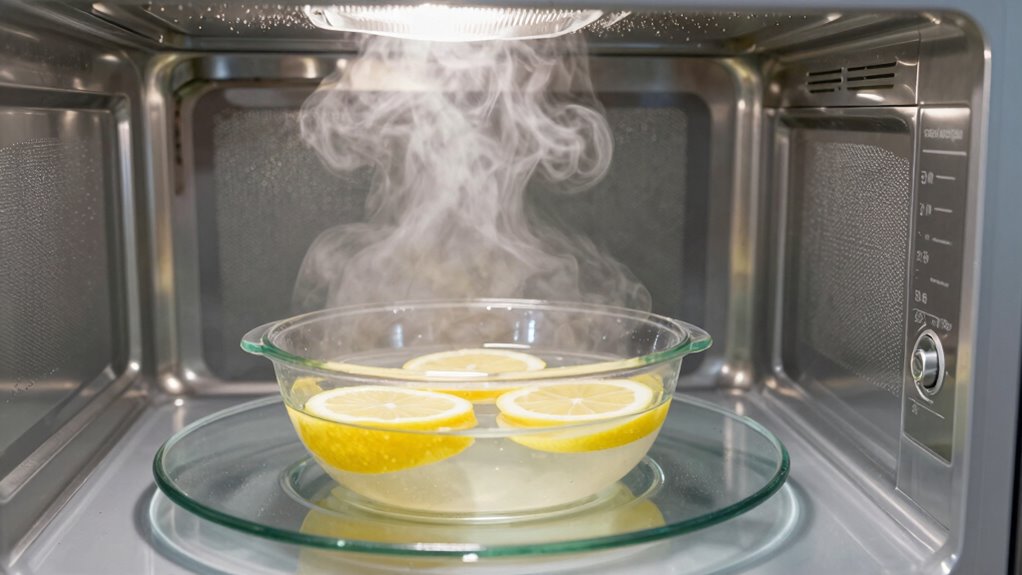
To effectively steam clean your microwave and other surfaces, start by preparing your equipment and cleaning area. Next, apply a steam solution to loosen grime and stains, making wiping easier. Finally, wipe down the surfaces thoroughly and finish with a clean, dry cloth for a spotless result.
Preparing the Microwave
Start by removing any loose debris or food crumbs from inside your microwave to make sure the steam cleaning process is effective. Ensuring your microwave is clean beforehand helps with microwave safety and prevents dirt from interfering with cleaning. Before starting, check your appliance for any damage or loose parts. It’s also a good idea to set a cleaning schedule to keep your microwave in top shape.
Consider these tips:
- Remove turntable and wipe it separately
- Use a damp cloth to wipe the interior surfaces
- Avoid using harsh chemicals that could damage the microwave
- Keep the microwave door open briefly after cleaning to air out
Preparing your microwave correctly guarantees a thorough, safe, and efficient steam cleaning process.
Applying Steam Solution
Once your microwave is clean and prepped, it’s time to apply the steam solution. To guarantee effective steam penetration and proper moisture control, place a microwave-safe bowl filled with water and a splash of vinegar or lemon juice inside. Turn on the microwave and heat for 3-5 minutes until the water boils and steam fills the cavity. This steam loosens grime and grease effortlessly. Use the following visual to imagine the process:
| Microwave Surface | Steam Coverage |
|---|---|
| Walls | Evenly coated with steam |
| Turntable | Softened residues |
| Ceiling | Moisture evenly dispersed |
| Door Seals | Loosen dirt and grime |
| Corners | Enhanced steam penetration |
This method guarantees ideal moisture control, making cleaning smoother and more effective.
Wiping and Finishing
After the steam has loosened dirt and grime, it’s time to wipe down your microwave and other surfaces. Use a clean, damp cloth to remove any remaining residue, ensuring a thorough clean. For a polished finish, buff the surface with a dry microfiber cloth to achieve surface polishing that leaves everything gleaming. Pay special attention to stubborn stains; apply a gentle stain removal solution if needed before wiping again. For best results, work in circular motions to evenly distribute pressure. Remember to clean vents and edges where grime can hide. Regular wiping prevents buildup, keeps surfaces shining, and maintains your microwave’s appearance. Proper finishing ensures your appliance looks new and functions efficiently, making steam cleaning a simple, effective maintenance routine.
Tips to Loosen Tough Dirt and Grease With Steam
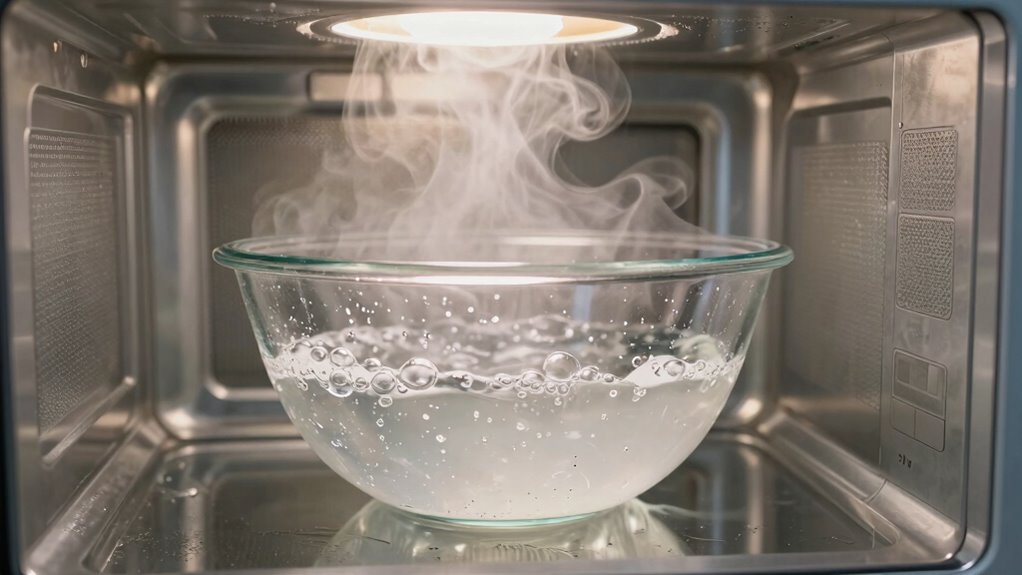
When dealing with stubborn dirt and greasy buildup, steam cleaning can be highly effective. To maximize dirt removal and grease loosening, start by heating water until it produces powerful steam. Hold the microwave-safe container with the steam cleaner close to the affected area, allowing the steam to penetrate the grime. For tough spots, let the steam sit for a few minutes to soften the dirt and grease. Use a microfiber cloth or scrub brush to gently loosen and lift residues after steaming. For best results, avoid rushing; patience helps the steam break down stubborn buildup more effectively. Remember, consistent application of steam makes dirt removal easier and helps loosen even the most stubborn grease without harsh chemicals.
How Often Should You Use Microwave Steam Cleaning?
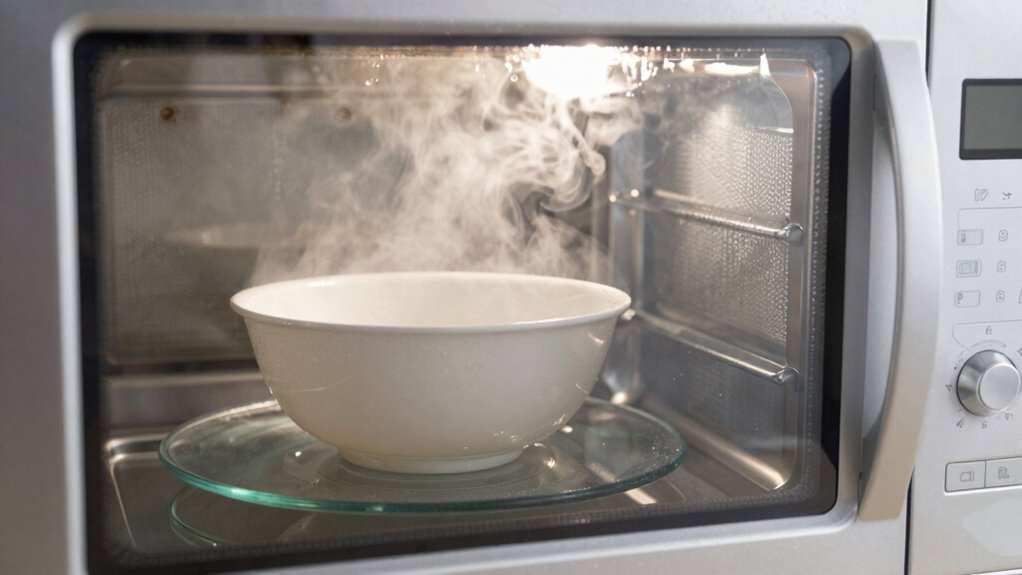
How often should you use microwave steam cleaning to maintain a spotless appliance? Regular steam cleaning helps keep your microwave fresh and ensures better appliance maintenance. For ideal kitchen organization, aim to do it weekly if you cook frequently, or biweekly if you use it less often. This frequency prevents stubborn buildup and prolongs the life of your microwave.
Aim to steam clean your microwave weekly or biweekly to prevent buildup and extend its lifespan.
Consider these tips:
- Clean after heavy cooking sessions to prevent grease buildup
- Use steam cleaning as part of your routine appliance maintenance
- Adjust frequency based on your kitchen organization habits
- Don’t wait for visible messes—regular cleaning keeps everything in check
Sticking to a consistent schedule makes steam cleaning simple and effective, ensuring your microwave stays clean and functional.
Troubleshooting Common Microwave Steam Cleaning Problems
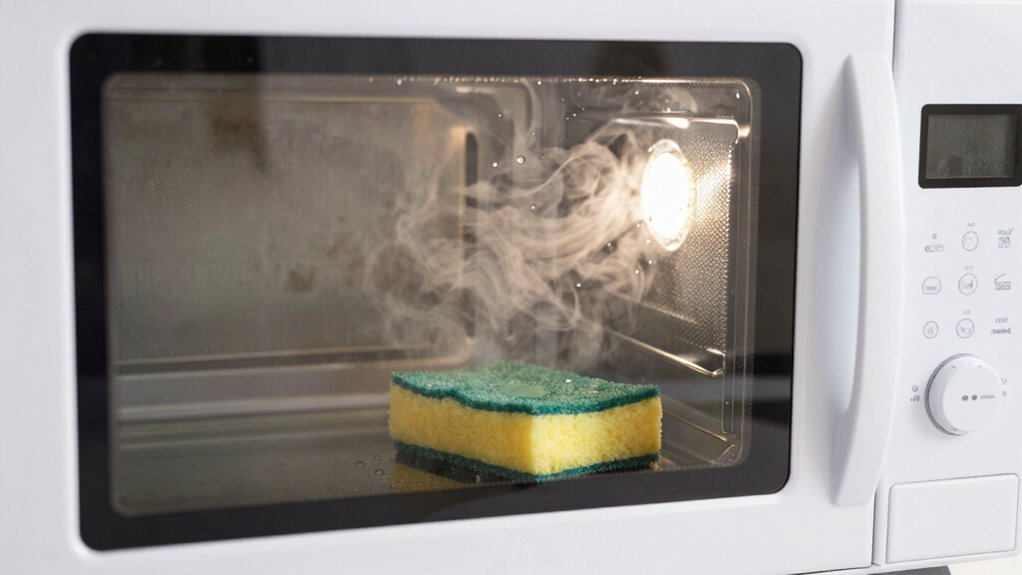
Even with a regular cleaning schedule, you might encounter common issues that hinder the effectiveness of microwave steam cleaning. Some problems stem from misconceptions like microwave cleaning myths, such as expecting instant results or relying solely on steam cleaning vs. traditional methods. If steam doesn’t loosen grime, check if the water wasn’t heated long enough or if the container wasn’t sealed properly.
| Issue | Possible Cause | Solution |
|---|---|---|
| Steam not forming | Insufficient water or coverage | Add more water, cover tightly |
| Lingering odors | Bacterial buildup | Use natural deodorizer |
| Surface residue not removed | Heavy buildup or improper technique | Increase steaming time |
Address these issues to optimize your microwave steam cleaning results.
Benefits of Microwave Steam Cleaning Over Chemical Methods
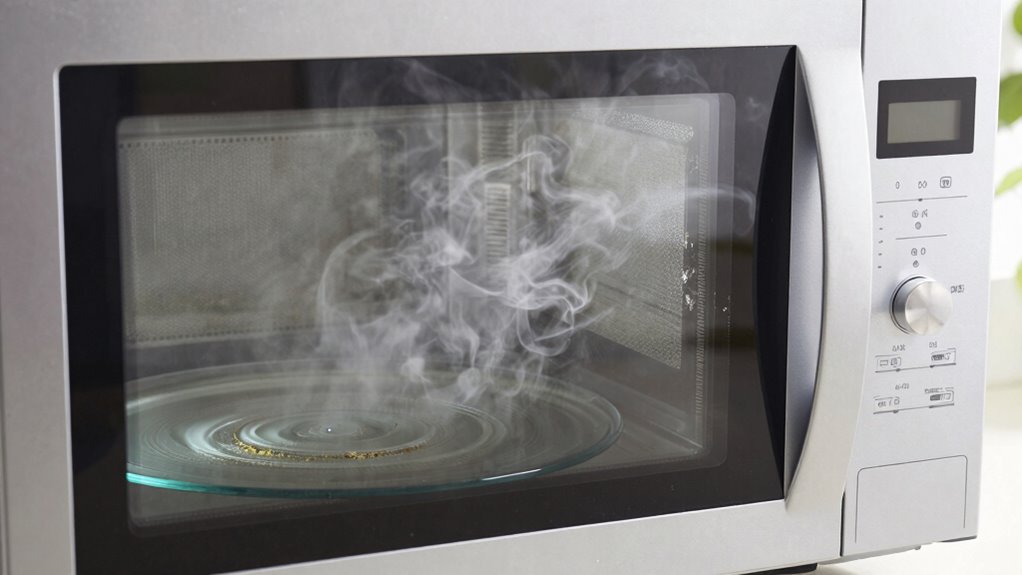
Using microwave steam cleaning offers a safer and more environmentally friendly alternative to chemical methods. Unlike harsh cleaners, it avoids exposing you and your family to toxic fumes and residues. This method is a natural chemical alternative that effectively loosens grime without harmful ingredients, making it safer for sensitive skin and indoor air quality. Additionally, it provides significant environmental benefits by reducing chemical runoff and waste. You’ll also save money since steam cleaning requires minimal supplies. Plus, it’s quick and easy, with no need for lengthy scrubbing or waiting for chemicals to work. Overall, microwave steam cleaning is a smart choice for those seeking a cleaner home that’s gentle on the planet. It’s effective, eco-conscious, and safer for everyday use.
Safety Tips and Caring for Your Microwave Long-Term

To guarantee your microwave stays safe and functions efficiently over time, it’s important to follow proper maintenance and safety practices. Regularly clean the interior using gentle methods, like steam cleaning, to prevent buildup that could affect appliance longevity. Always unplug your microwave before cleaning or performing repairs to avoid electrical hazards. Use microwave-safe containers and avoid metal or aluminum foil to prevent sparks and damage. Keep the vent areas clear to ensure proper airflow. Additionally, follow safety precautions when heating liquids—stand back to prevent steam burns. By caring for your microwave properly, you reduce the risk of malfunctions and extend its lifespan. Consistent maintenance and safety awareness help keep your appliance reliable, safe, and in top condition for years to come.
Frequently Asked Questions
Can I Use Microwave Steam Cleaning on All Types of Microwave Surfaces?
You can’t use microwave steam cleaning on all microwave surfaces. Always check microwave surface compatibility first, as some surfaces like painted or damaged interiors might not withstand the moisture or heat. This cleaning method has limitations, especially with delicate or electronic parts. To avoid damage, follow manufacturer instructions and test a small area first. If unsure, opt for gentle cleaning methods suited to your microwave’s specific surface.
Is Microwave Steam Cleaning Effective for Removing Mold or Bacteria?
Yes, microwave steam cleaning is effective for mold removal and bacteria elimination. The steam penetrates crevices and surfaces, loosening mold spores and bacteria, making it easier to wipe away dirt and germs. You should verify the microwave is thoroughly cleaned afterward to prevent mold or bacteria from returning. Regular steam cleaning keeps your microwave hygienic, reducing health risks and maintaining a fresh, safe cooking environment.
What Are the Best Natural Cleaning Agents to Use With Steam Cleaning?
Imagine your surfaces as a battlefield, and natural disinfectants as your eco-friendly warriors. You should use vinegar, baking soda, or lemon juice with steam cleaning—these natural agents act like gentle yet powerful forces that banish germs without harsh chemicals. Their natural properties make them eco-friendly solutions, perfect for a thorough clean. With steam enhancing their effects, you’ll achieve a sparkling, sanitized space that’s safe for everyone.
How Long Does a Typical Microwave Steam Cleaning Session Take?
A typical microwave steam cleaning session takes about 10 to 15 minutes, giving you enough time for effective cleaning. The duration estimate depends on how dirty your microwave is, but generally, this method boosts cleaning efficiency by loosening grime quickly. You should run the steam cycle for 5 to 8 minutes, then let the microwave sit for a few minutes before wiping. This quick process leaves your microwave fresh and spotless.
Can Microwave Steam Cleaning Damage Electronic Components Inside the Microwave?
No, microwave steam cleaning typically won’t damage electrical components if you follow safety guidelines. Electrical safety is essential, so avoid using excessive water or submerging parts. Steam loosens grime without harming delicate electronics, but neglecting precautions could lead to component damage. Keep vents and openings clear, and make sure the microwave is unplugged before cleaning. When done properly, steam cleaning is safe and effective without risking electrical safety or damaging internal components.
Conclusion
Microwave steam cleaning is like giving your appliance a invigorating shower, effortlessly loosening dirt and grime. With just a few simple steps, you can keep your microwave sparkling and extend its lifespan. Regular use prevents buildup and keeps your kitchen smelling fresh. Think of it as a gentle, natural way to care for your microwave—like tending to a beloved plant. Embrace this easy method, and your microwave will thank you with every clean, shining turn.