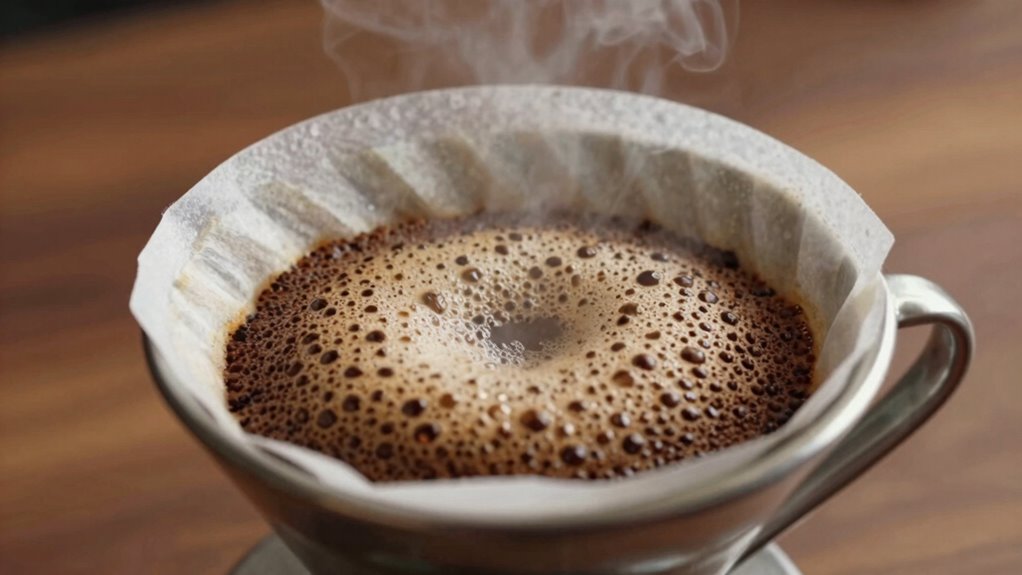
For pour-over coffee, a good bloom lasts about 30 to 45 seconds. Pour your water slowly over the grounds to release trapped CO₂ and watch for bubbling. If the bloom is too short, your coffee might taste flat; too long and it could be sour or over-extracted. Adjust according to your grind size and bean freshness for the best flavor. Keep exploring to master the perfect bloom every time.
Key Takeaways
- Aim for a bloom duration of 30 to 45 seconds for optimal aroma and flavor extraction.
- Use water around 200°F (93°C) with a slow, concentric pour to ensure even saturation.
- Adjust bloom time based on roast level and grind size; fresher beans may require slightly longer blooming.
- Watch for vigorous bubbling; sparse bubbles indicate under-blooming, while prolonged bubbling suggests over-blooming.
- Proper blooming enhances overall extraction and flavor, so avoid rushing or skipping this step.
What Is Coffee Blooming and Why Does It Matter?
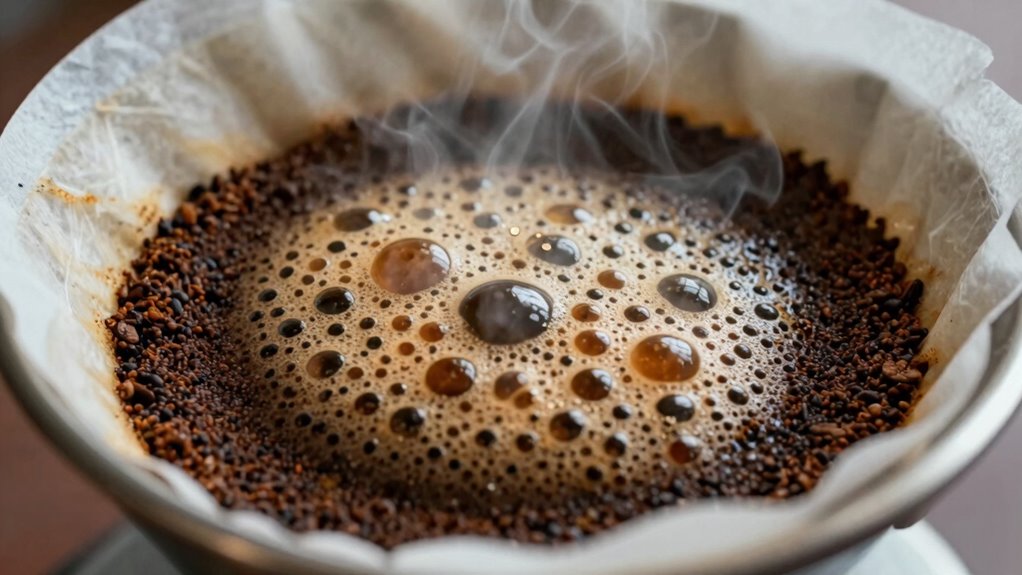
Have you ever noticed a sudden bubbling or swelling when pouring hot water over your coffee grounds? That’s coffee blooming. This process releases trapped gases, primarily carbon dioxide, which results in the lively bloom visuals you see. Blooming is essential because it kickstarts aroma extraction, allowing flavors to develop fully. When you pour water over the grounds, the initial agitation causes gas to escape, creating a visible expansion. This step ensures your coffee isn’t under-extracted and that you maximize flavor. Skipping or rushing through the bloom can lead to dull, flat-tasting coffee. So, paying attention to these bloom visuals helps you gauge the freshness of your beans and ensures a richer, more aromatic cup every time. Additionally, understanding the contrast ratio of your brewing equipment can influence how well you perceive the depth and clarity of your coffee’s flavor notes. Proper bloom timing also plays a crucial role in achieving optimal extraction and flavor balance in pour-over brewing. To optimize your brewing process, consider using a timer to precisely control the bloom duration, ensuring consistent and flavorful results. Developing a consistent pouring technique can also help improve brewing consistency and overall flavor extraction.
How Long Should You Bloom Your Coffee for the Best Flavor?
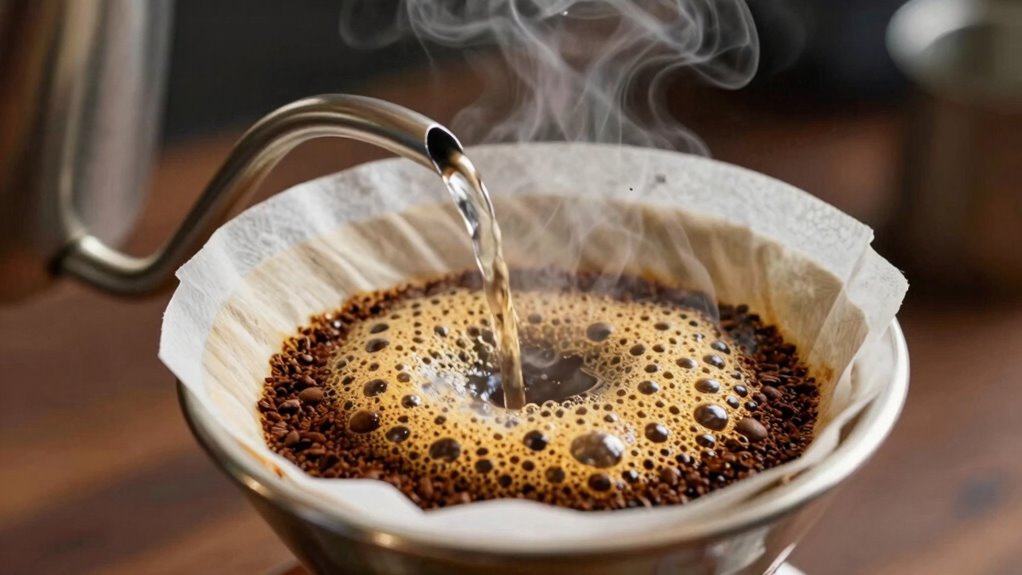
The duration of your coffee bloom can markedly influence the final flavor of your pour-over. Generally, a bloom lasting 30 to 45 seconds works well, allowing gases to escape without over-extracting. Using water at about 200°F (93°C) helps guarantee proper expansion. The choice of brewing vessel also impacts bloom time: a narrower vessel may trap gases longer, requiring a slightly longer bloom. For optimal results, consider the best coffee grounds to use, as they can enhance the overall extraction process and flavor profile.
What Factors Affect Your Coffee’s Bloom Time?
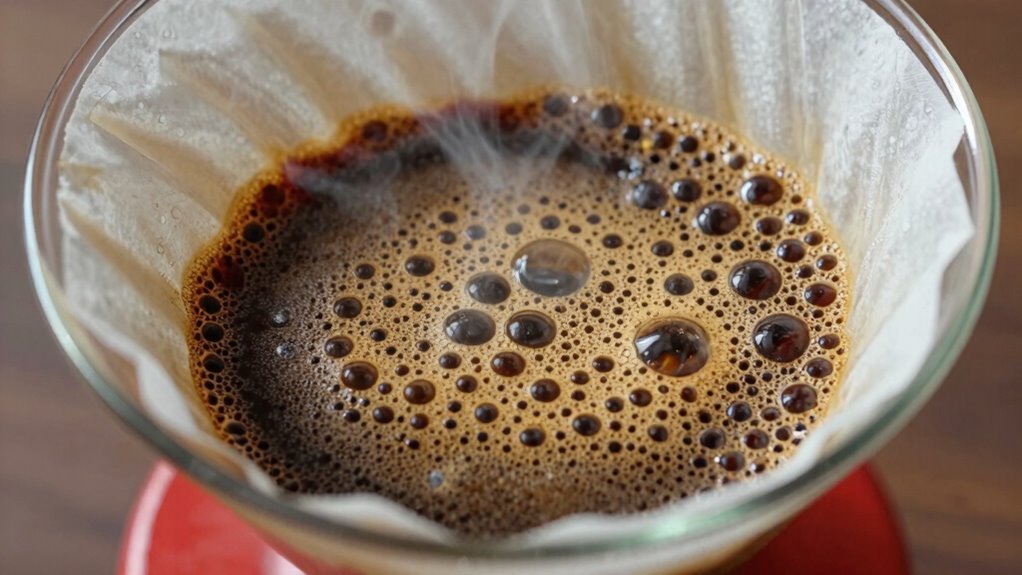
Several factors influence how long your coffee needs to bloom, and understanding them can help you achieve the best flavor. Key elements include water temperature, coffee freshness, grind size, and coffee roast level. Hotter water speeds up the release of gases, shortening bloom time, while cooler water prolongs it. Freshly roasted coffee tends to release gases more vigorously, requiring a different bloom duration than older beans. The grind size also matters; a coarser grind may need a longer bloom, while a finer grind releases gases quickly. Additionally, darker roasts tend to be more degassed, affecting bloom. Being aware of these factors allows you to adjust your pour-over process for ideal extraction and flavor. Incorporating professional voice techniques can also enhance your brewing experience and improve the clarity of your coffee. For example, understanding the degassing process can help you time your bloom for optimal results. Recognizing the chemical composition of your beans can further refine your brewing technique for better flavor extraction, especially when considering how different gases are released during the bloom phase. Moreover, the market trends in coffee roasting often influence how fresh beans are processed, which can impact your bloom time and overall cup quality.
How to Tell if You’ve Bloomed Too Long or Not Long Enough
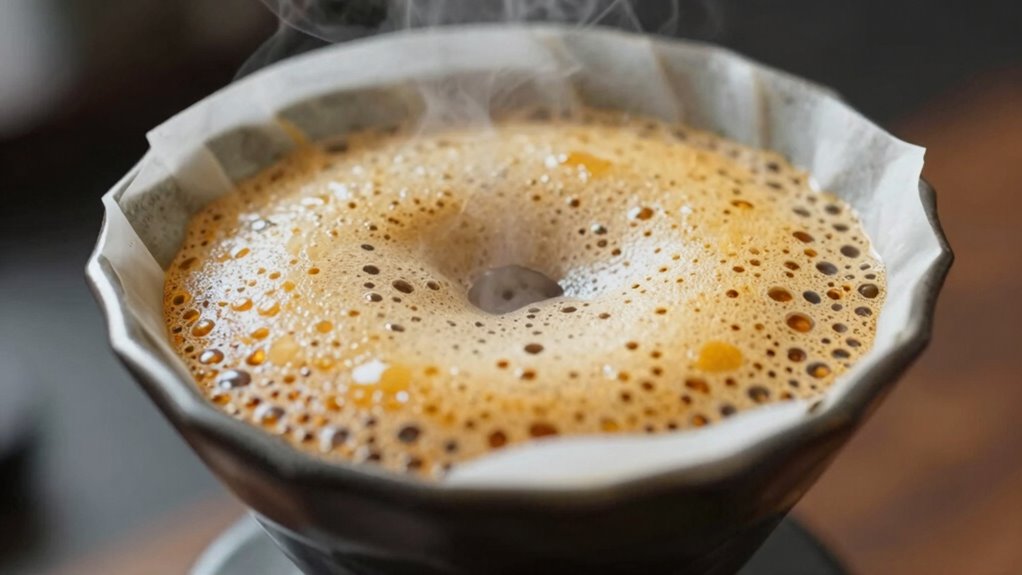
If you’ve overdone or underdone your bloom, it becomes noticeable in your pour-over. One sign of overblooming is a prolonged release of gases, which can cause over-extraction and a sour taste. Underblooming, on the other hand, results in insufficient gas release, leading to under-extraction and weak flavor. Temperature control is key—water that’s too hot can accelerate blooming, while too cool may hinder it. Water quality also matters; impurities or minerals can affect gas release and overall extraction. Pay attention to how your coffee responds during bloom: if bubbles are slow or sparse, you might need to adjust your bloom time. Additionally, understanding the effects of water temperature can help you fine-tune your process for the perfect balance. Using a quality grinder ensures uniform coffee grounds, which promotes consistent blooming and extraction. Consistently monitoring these signs helps you fine-tune your process for the perfect balance, and being aware of proper bloom duration can prevent over- or under-extraction.
Tips for Achieving the Perfect Bloom Every Time
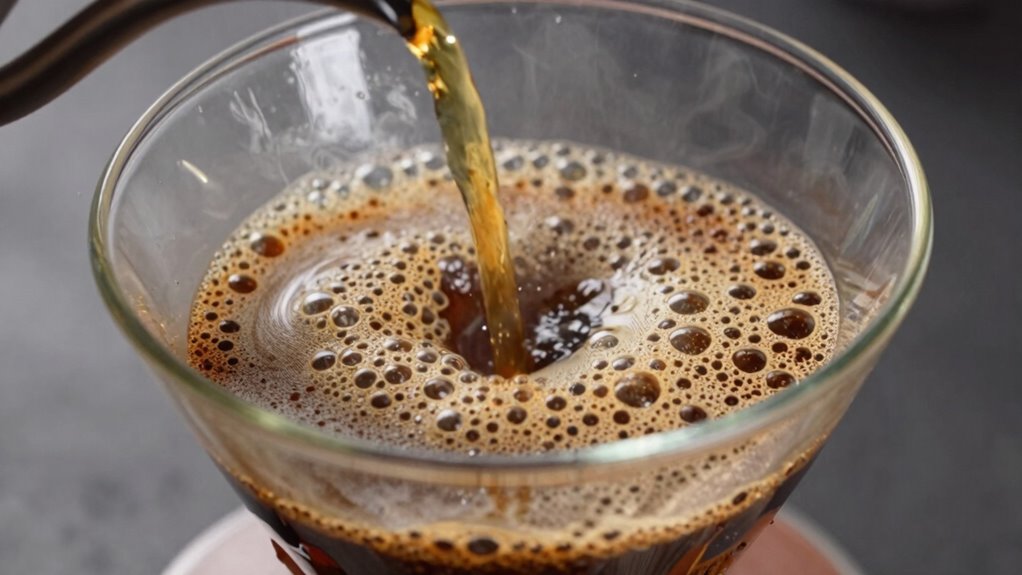
Achieving the perfect bloom starts with paying close attention to your technique and variables. To maximize flavor extraction and aroma enhancement, focus on consistent pouring and proper grind size. Use just enough water to cover the grounds evenly, allowing gases to escape and release vibrant aromas. Timing is key: aim for a bloom of about 30-45 seconds to fully develop the coffee’s aromatic profile. Adjust your pouring speed and water temperature for better control.
- Use a fine, even grind for ideal gas release
- Pour slowly in concentric circles to ensure uniform wetting
- Keep water temperature steady around 200°F (93°C)
- Monitor bloom duration to balance aroma and flavor extraction
Common Mistakes When Blooming and How to Fix Them
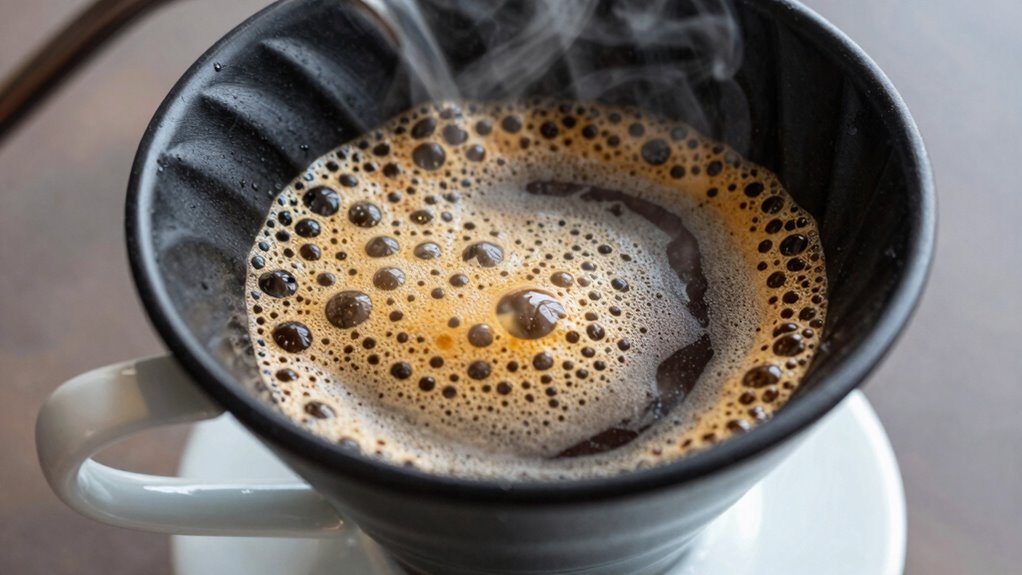
One common mistake is overwatering, which can dilute the coffee’s flavor and weaken the bloom. Uneven pouring techniques also lead to inconsistent extraction, affecting taste and aroma. Additionally, ignoring the ideal bloom time can result in under- or over-extraction, so paying attention to timing is vital for a perfect pour-over.
Overwatering Causes Dilution
Overwatering during the bloom stage can lead to dilution of the coffee’s flavors, resulting in a weak and under-extracted brew. When you pour too much water, it washes out the coffee’s natural oils and compounds, reducing the coffee’s acidity and impairing flavor extraction. This makes your cup taste flat and lacking in complexity. To avoid this, focus on pouring just enough to evenly saturate the grounds without overdoing it. Keep in mind that a proper bloom enhances coffee’s bright notes and overall balance.
- Excess water dilutes coffee oils, dulling acidity and flavor
- Overwatering can cause uneven extraction
- Weak blooms lead to flat, lifeless taste
- Precise pouring helps maximize flavor extraction and brightness
Uneven Pouring Techniques
Uneven pouring during the bloom stage is a common mistake that can compromise the quality of your brew. When you pour unevenly, some grounds may over-extract while others remain under-extracted, leading to inconsistent flavor. To fix this, aim for a steady, circular pour, maintaining a consistent flow. Avoid rushing or pouring unevenly, which can affect the bloom and subsequent pours. Proper coffee storage helps preserve freshness, ensuring your beans respond well to even pouring. Additionally, milk frothing techniques should be consistent to avoid disrupting the brewing process.
| Issue | Solution |
|---|---|
| Uneven pouring speed | Use a gooseneck kettle for control |
| Inconsistent flow rate | Practice slow, steady pours |
| Uneven saturation of grounds | Pour in small, circular motions |
| Poor coffee freshness | Store beans properly to maintain even extraction |
Ignoring Blooming Time
Ignoring the recommended blooming time can substantially impact the flavor and aroma of your coffee. When you skip or rush this step, you risk uneven flavor extraction, resulting in a dull or overly acidic cup. Proper blooming allows carbon dioxide to escape, promoting consistent extraction during brewing. Without it, your brew may lack balance and complexity. To fix this common mistake, focus on giving your coffee enough time to bloom fully, usually 30-45 seconds, and avoid rushing the process.
- Inconsistent flavor profiles
- Poor brewing consistency
- Underdeveloped aromas
- Overly bitter or sour notes
How to Adjust Your Bloom Time for Different Coffees and Equipment
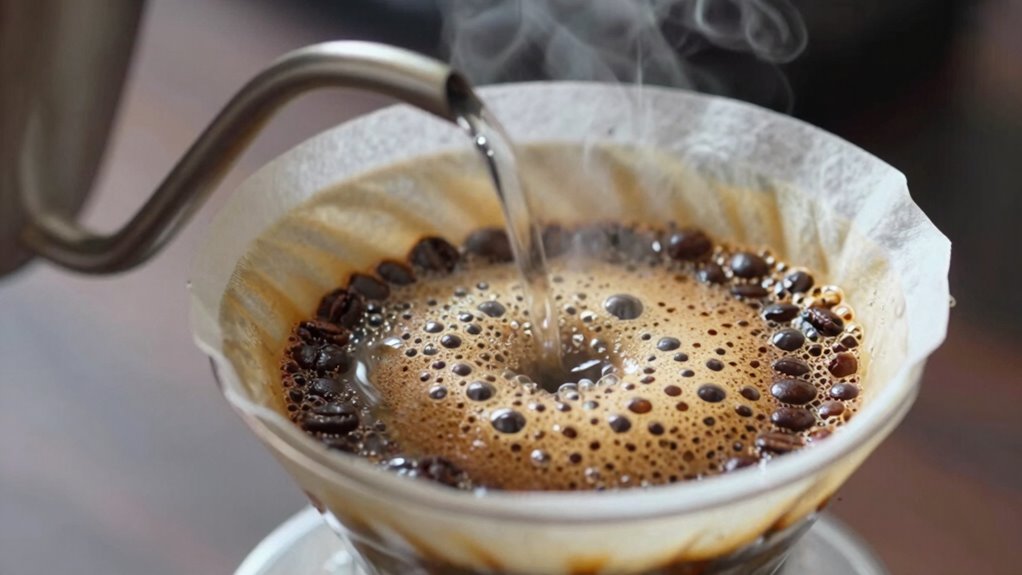
Your bloom time should change based on the coffee’s roast level, as darker roasts often need a shorter bloom, while lighter roasts benefit from a longer one. The grind size also impacts blooming—finer grinds may require adjusting the bloom duration to prevent over-extraction. Additionally, different equipment can affect how quickly water interacts with the coffee, so you might need to tweak your bloom time accordingly. For optimal results, understanding the science behind extraction can help you fine-tune your bloom for the best flavor. Considering brew method variations can also influence the ideal bloom time, as some methods promote faster extraction than others. Being aware of extraction balance can further help you achieve a well-rounded cup. Adjusting your bloom time based on coffee freshness can also enhance flavor clarity and aroma. Furthermore, paying attention to the cultural significance of traditional brewing techniques can inspire adjustments that respect brewing heritage.
Coffee Roast Level Effects
The roast level of your coffee considerably influences how it reacts during the bloom phase, so adjusting your bloom time accordingly can enhance extraction. Light roasts, with higher coffee acidity, tend to release more gas and benefit from a slightly longer bloom to allow degassing. Dark roasts, with a lower acidity and more solubilized compounds, often need a shorter bloom to prevent over-extraction. Understanding your roast level helps optimize flavor development and clarity. Additionally, the culinary traditions of different regions may influence how you approach bloom times, especially when considering unique flavor profiles. Medium roasts strike a balance, needing moderate bloom adjustments. Equipment type can influence how roast level impacts blooming efficiency.
Grind Size Influence
Grind size plays a crucial role in how your coffee responds during the bloom phase because it affects the surface area exposed to water and the rate at which gases are released. A finer grind increases surface area, leading to a quicker release of trapped gases and a more vigorous bloom, while a coarser grind results in a slower, gentler expansion. Maintaining grind consistency ensures predictable bloom times, as uneven grounds can cause irregular gas release. Additionally, brew temperature influences gas expansion; higher temperatures promote faster gas release and may shorten bloom duration. Understanding coffee chemistry can further help you optimize your brewing process by revealing how different variables interact. For example, extraction balance is important for achieving optimal flavor, which can be affected by bloom time. Adjusting your grind size based on these factors helps optimize bloom time, ensuring better flavor extraction and aroma. Experimentation with different grind sizes in relation to your equipment and water temperature will help you find the ideal bloom period for your coffee. Incorporating water chemistry considerations can also enhance the overall extraction and flavor profile of your brew.
Equipment Variability
Different coffee brewing equipment can considerably impact how you should approach the bloom phase. Variations in temperature control and water quality influence how quickly gases release and how the coffee reacts. For instance, a gooseneck kettle with precise temperature control lets you adjust pour rates, affecting bloom duration. Soft water enhances extraction, possibly shortening bloom time, while hard water may require a longer bloom. Consider these factors:
- Precise temperature control allows for tailored bloom times.
- Water quality impacts gas release and extraction efficiency.
- Equipment with a narrow spout offers more control over pour speed.
- Different grind sizes may need adjustments based on your equipment’s flow rate.
Adjust your bloom time accordingly to optimize flavor and gas release, considering your specific setup.
Frequently Asked Questions
Can Blooming Improve the Overall Taste of My Coffee?
Yes, blooming can improve the overall taste of your coffee. By allowing the coffee to bloom, you enhance flavor extraction and aroma development, making each cup more vibrant and flavorful. When you give the coffee a short bloom, it releases gases and preps the grounds for better extraction. This results in a richer, more aromatic brew, elevating your coffee experience and highlighting the nuanced flavors you’re aiming for.
Is There a Standard Bloom Time for All Coffee Types?
Did you know that most baristas recommend a bloom time of about 30 seconds? While there’s no strict standard, it largely depends on your coffee’s freshness and brewing equipment. Fresh coffee releases more gases, so a longer bloom can enhance flavor. For different coffee types, experiment around 30 seconds to 1 minute. Adjust based on your taste and equipment, and you’ll find the perfect bloom time for your brew.
How Does Water Temperature Influence the Blooming Process?
Water temperature directly impacts the blooming process by affecting extraction quality. When you use water that’s too hot, it can cause over-extraction, leading to bitterness, while cooler water might under-extract, resulting in weak flavors. Ideal temperature, around 195-205°F (90-96°C), ensures proper blooming, releasing gases and enhancing flavor. Adjusting your water temperature helps you regulate extraction quality, giving you a richer, well-balanced pour-over coffee.
Should I Stir the Coffee During Blooming?
Sure, stir away like a mad scientist during bloom to guarantee even extraction. Stirring techniques can break the surface tension, helping gases escape faster and potentially shortening bloom duration. But beware, over-stirring might turn your delicate bloom into a chaotic whirlpool, ruining the process. Keep it gentle—your coffee isn’t a stormy sea—just enough to keep gases moving and bloom beautifully.
Does the Grind Size Affect the Ideal Bloom Duration?
Yes, grind size impacts the ideal bloom duration. Finer grinds increase surface area, releasing gases faster and possibly shortening the bloom time, while coarser grinds may need a longer bloom. Your grind consistency also matters; uneven grind sizes can cause uneven gas release, affecting bloom agitation. Adjust your bloom time based on your grind size, aiming for about 30-45 seconds, and stir gently if needed to promote even blooming.
Conclusion
So, next time you’re obsessing over the perfect bloom time, remember—it’s just coffee, not rocket science. Spend hours debating seconds, and you might miss the joy in that first, glorious sip. After all, if your brew’s good enough to start your day, who cares if you bloomed a little too long or not long enough? Sometimes, the best coffee is the one that learns to forgive your perfectionism. Cheers to imperfection!