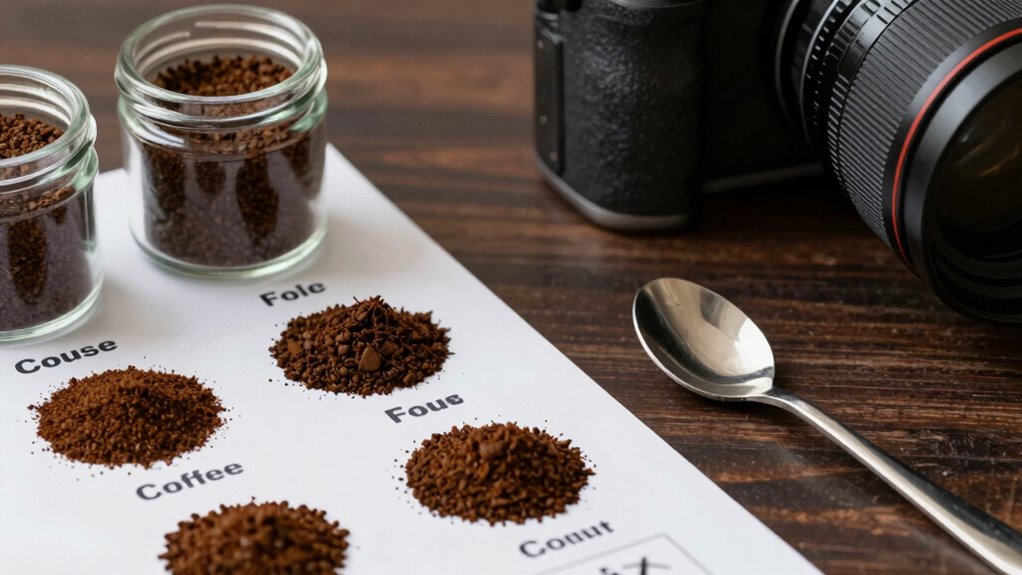
If your coffee tastes sour, it’s likely due to a coarse grind causing under-extraction; try making the grind finer and increasing brew time while keeping water between 195-205°F. If it’s bitter, a too-fine grind may be over-extracting flavors; coarsen your grind slightly and check for uniform particles. Adjusting grind size based on brew method and monitoring taste can quickly fix these issues. Stay tuned to learn more easy tricks to perfect your coffee every time.

Get kitchen staples and gadgets delivered free — and shop member deals
- Fast, free delivery on millions of items
- Access to Prime Big Deal Days deals on October 6–7
- Prime Video, Amazon Music and more included
Key Takeaways
- Adjust grind size finer to fix sourness caused by under-extraction and coarser to reduce bitterness from over-extraction.
- Match grind size with brew time: finer for shorter brews, coarser for longer ones to control extraction speed.
- Maintain water temperature between 195-205°F to prevent flavor imbalance and ensure proper extraction.
- Check grind uniformity—consistent, powdery grounds for fine, chunky for coarse—to optimize flavor and extraction.
- Taste and tweak grind size incrementally, noting changes to quickly balance sour or bitter flavors.
coffee grinder with adjustable grind size
As an affiliate, we earn on qualifying purchases.
As an affiliate, we earn on qualifying purchases.
Why Your Coffee Tastes Sour or Bitter : Quick Fixes

Have you ever wondered why your coffee sometimes tastes sour or bitter? The answer often lies in the coffee bean origin and brewing temperature. Different regions produce beans with unique acidity levels, which can influence sourness if not balanced properly. Additionally, brewing temperature plays a vital role—if it’s too hot, you risk extracting bitter compounds; too cold, and the coffee may taste flat or sour. To fix this quickly, adjust your brewing temperature to around 195-205°F, the ideal range for most beans. Also, consider the origin of your beans: beans from certain regions might require slight tweaks in brewing parameters. Proper temperature control can help prevent over-extraction or under-extraction, ensuring a balanced flavor. Using freshly ground coffee can also make a significant difference in achieving the desired taste. Maintaining consistent brew strength is essential to avoid unwanted sour or bitter flavors, and understanding how different variables interact can help you enjoy a smoother cup. Incorporating brew timing adjustments based on bean type can further refine your results.
burr coffee grinder for precise grind control
As an affiliate, we earn on qualifying purchases.
As an affiliate, we earn on qualifying purchases.
How Grind Size Affects Coffee Flavor and How to Spot the Difference
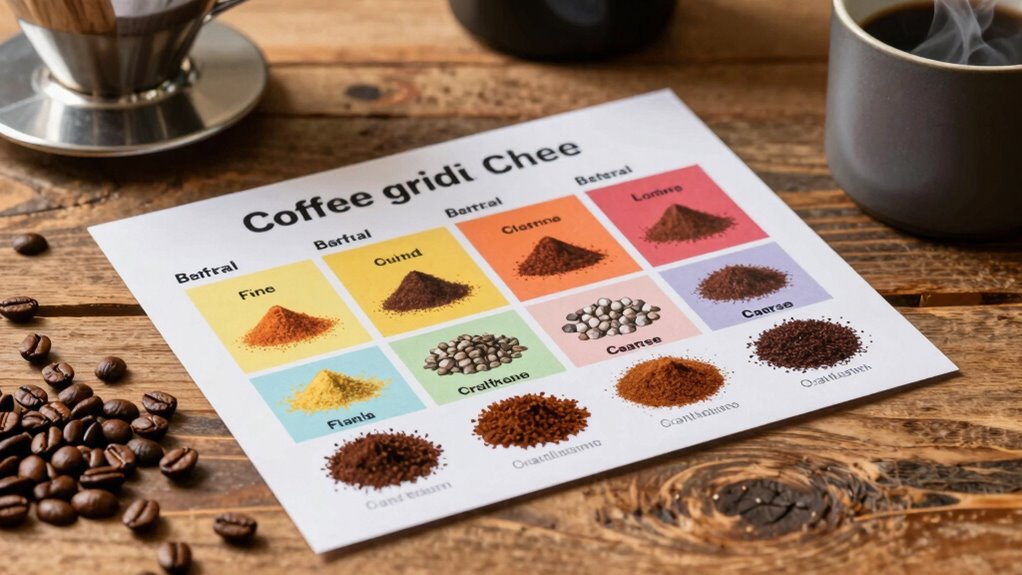
Your grind size directly impacts how quickly your coffee extracts and its resulting flavor. Smaller grinds tend to produce a richer, more intense taste, while larger grinds can lead to a lighter, more delicate brew. You can often spot the difference by examining the coffee’s appearance and feeling its texture—these cues reveal how extraction speed influences flavor. Additionally, choosing the right grind size supports energy-efficient cloud solutions, aligning your brewing process with sustainable practices. Understanding proper grind size can also help prevent waste and optimize your overall coffee experience.
Extraction Speed and Flavor
The size of your coffee grind directly influences how quickly flavors are extracted during brewing, which in turn affects the taste profile. When the grind is fine, extraction happens faster, releasing a strong coffee aroma but risking over-extraction and bitterness if brewing time isn’t guaranteed. Conversely, coarser grounds slow down extraction, often resulting in a sour taste due to under-extraction. To spot the difference, consider these points:
- Fine grind produces a richer aroma but can lead to bitter flavors if over-extracted.
- Coarse grind tends to yield a duller aroma and sour notes if under-extracted.
- Adjusting brewing temperature impacts extraction speed; higher temps increase extraction rate.
- Matching grind size with brewing method ensures proper flavor balance and aroma development.
Visual and Tactile Cues
Visual and tactile cues offer quick ways to identify grind size and predict flavor outcomes. For visual cues, look at the consistency of the coffee grounds—finer grinds appear powdery and uniform, while coarser grounds look chunky and rough. Tactile feedback helps as well; rub a small amount between your fingers. Fine grinds feel smooth and soft, whereas coarse grinds are gritty and coarse to touch. These cues give you immediate insight into how your coffee will extract. If your brew tastes sour, your grind might be too coarse, leading to under-extraction. If it’s bitter, the grind could be too fine, causing over-extraction. Relying on visual cues and tactile feedback lets you adjust grind size quickly, ensuring better flavor control.
As an affiliate, we earn on qualifying purchases.
Why Sour Coffee Usually Means a Coarse Grind : How to Fix It Fast
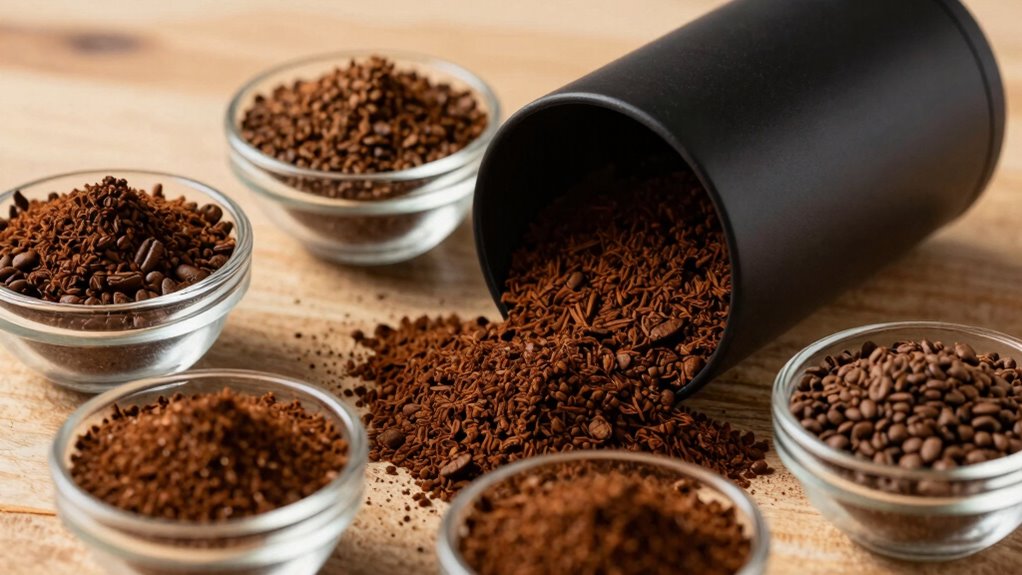
If your coffee tastes sour, it’s often a sign your grind is too coarse. Adjusting the grind size to be finer can help extract more flavor quickly. You might also need to tweak your brewing time to achieve a balanced, rich taste. Additionally, understanding water chemistry can influence extraction and flavor, so ensuring proper water quality can further improve your coffee.
Grind Coarseness Adjustment
When your coffee tastes sour, it often points to a grind that’s too coarse for your brewing method. To fix this fast, focus on adjusting your grind coarseness. A finer grind promotes better extraction during the blooming process, ensuring flavors develop fully. Here are key steps:
- Gradually make your grind finer, testing after each adjustment.
- Ensure grind uniformity so water flows evenly through the coffee.
- Avoid overly fine grounds, which can cause over-extraction and bitterness.
- Use consistent grind size to maintain predictable extraction and flavor.
Brewing Time Optimization
A common reason your coffee tastes sour is that the brewing time is too short, often caused by a grind that’s too coarse. When your grind is coarse, water flows through too quickly, not extracting enough flavor, especially acids that give sourness. To fix this fast, adjust your brew time by letting it steep longer. Also, pay attention to water temperature—aim for around 195-205°F. Hotter water helps extract more flavor without overdoing bitterness. If your brew is too quick, increase the brew time gradually until the sourness diminishes. Consistency is key: keep water temperature steady and extend your brewing duration to allow proper extraction. This way, you’ll balance the flavors, reducing sourness and achieving a richer, more rounded cup.
As an affiliate, we earn on qualifying purchases.
Why Bitter Coffee Often Means a Fine Grind : Easy Solutions
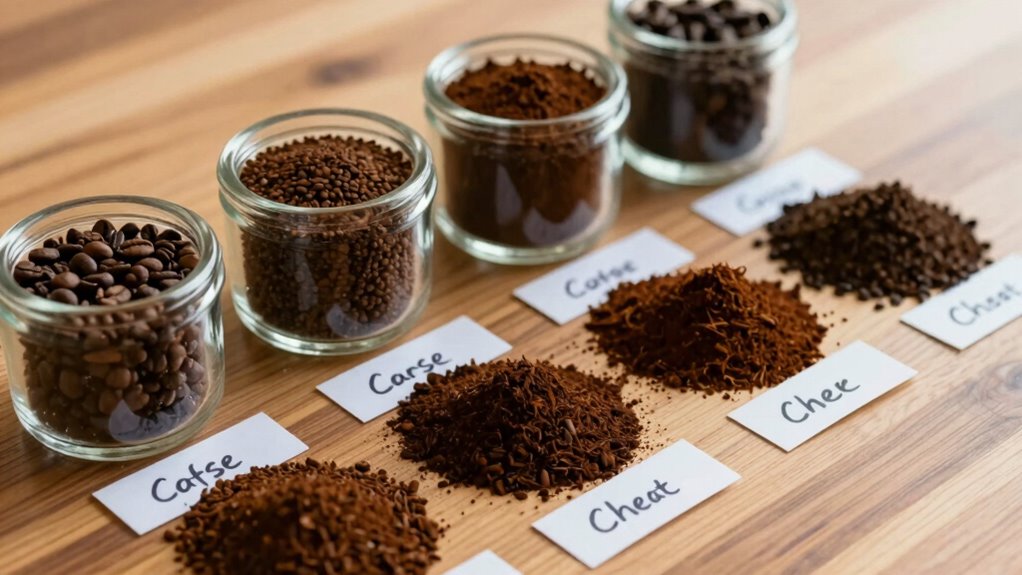
Bitter coffee often results from using a grind that’s too fine because it extracts more bitter compounds quickly during brewing. When your grind isn’t uniform, some particles become overextracted, amplifying bitterness. Moisture effects can also influence extraction, as damp beans or grounds may lead to uneven brewing. To fix this, consider these easy solutions:
- Use a consistent grind size for uniform extraction.
- Adjust your grinder to a slightly coarser setting.
- Ensure grounds are dry before brewing to prevent moisture-related overextraction.
- Check grind uniformity regularly to maintain even particle sizes.
- Maintain proper storage to keep beans and grounds dry and preserve optimal flavor curiosity.
These steps help you control extraction, reduce bitterness, and improve overall flavor. Remember, small adjustments make a big difference in balancing your coffee’s taste.
Adjust Your Coffee Grind Based on Brewing Method for the Best Flavor
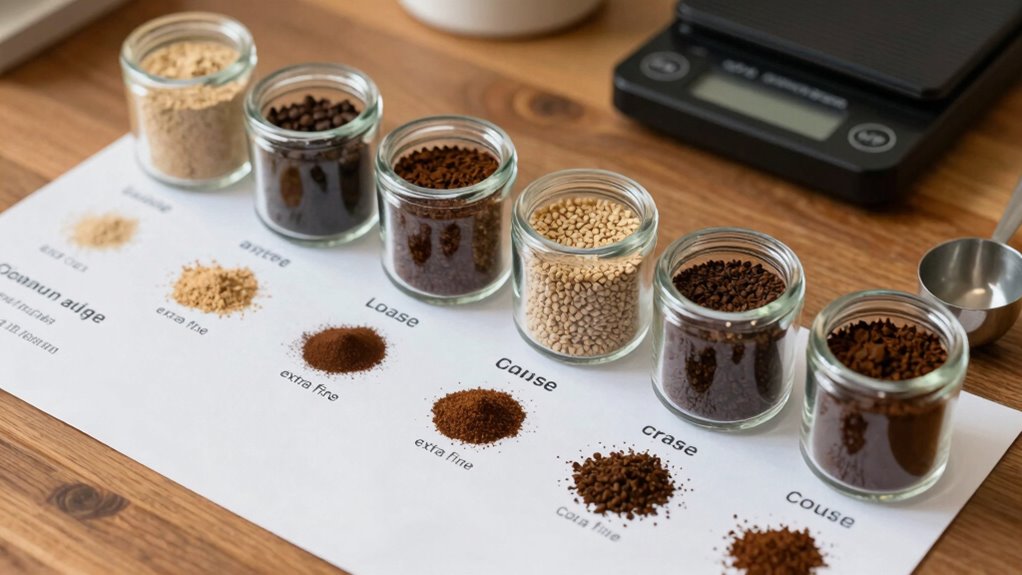
Choosing the right grind size for your brewing method directly impacts the flavor and clarity of your coffee. For a balanced coffee aroma and optimal extraction, match your grind consistency to your brewing technique. For example, use a coarse grind for French press to prevent over-extraction and maintain clarity, while a medium grind works best for drip coffee to ensure proper flow and flavor. Espresso requires a fine grind to maximize surface area and produce a rich crema. Adjusting your grind size guarantees your coffee’s aroma is vibrant and flavors are well-developed. Remember, inconsistent grind sizes can lead to uneven extraction, causing sourness or bitterness. Proper grind consistency is essential for achieving optimal flavor and avoiding common brewing issues. By tailoring your grind to your brewing method, you unlock the full potential of your coffee and enjoy a more satisfying cup every time. Additionally, understanding how brew time interacts with grind size can help you troubleshoot and refine your process for the best results, especially since extraction plays a crucial role in flavor development.
Simple Tests to Find and Dial in Your Perfect Coffee Grind
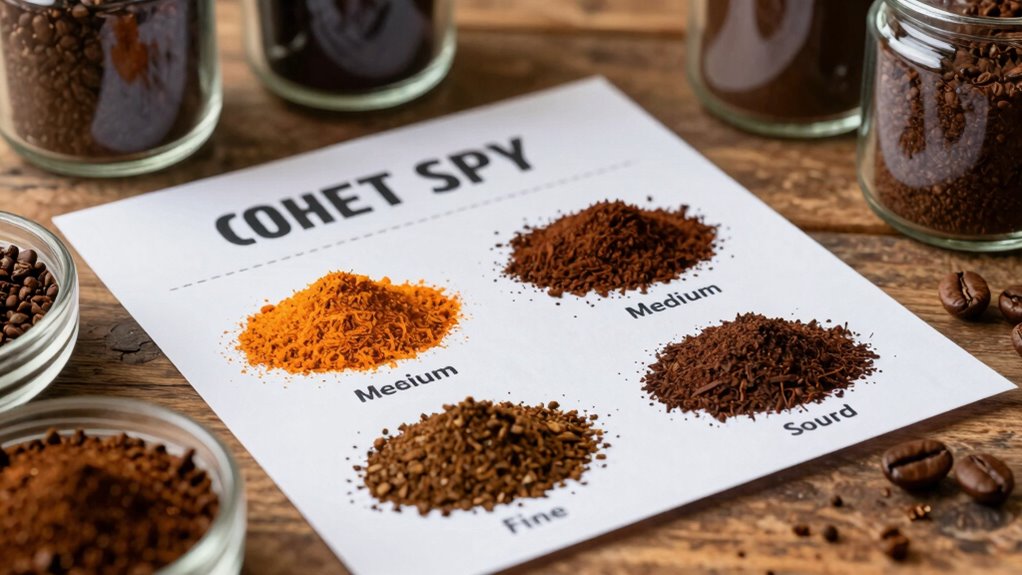
Finding the right grind size often involves simple, practical tests that you can do at home. First, start with quality coffee bean selection to guarantee consistent results. Then, use these tests to dial in your perfect grind:
- Brew and taste: Brew a small batch, then evaluate if it’s too sour or bitter. Adjust the grind finer for more extraction or coarser to reduce it.
- Squeeze and feel: Check the grind’s consistency—uniform particles brew more evenly.
- Water temperature: Use the recommended water temperature for your brewing method; too hot or cold can skew results.
- Time your brew: Keep track of extraction time; too short or long can impact flavor, guiding your grind adjustments.
These simple tests help fine-tune your grind, ensuring ideal flavor.
Common Mistakes That Worsen Sour or Bitter Coffee and How to Avoid Them
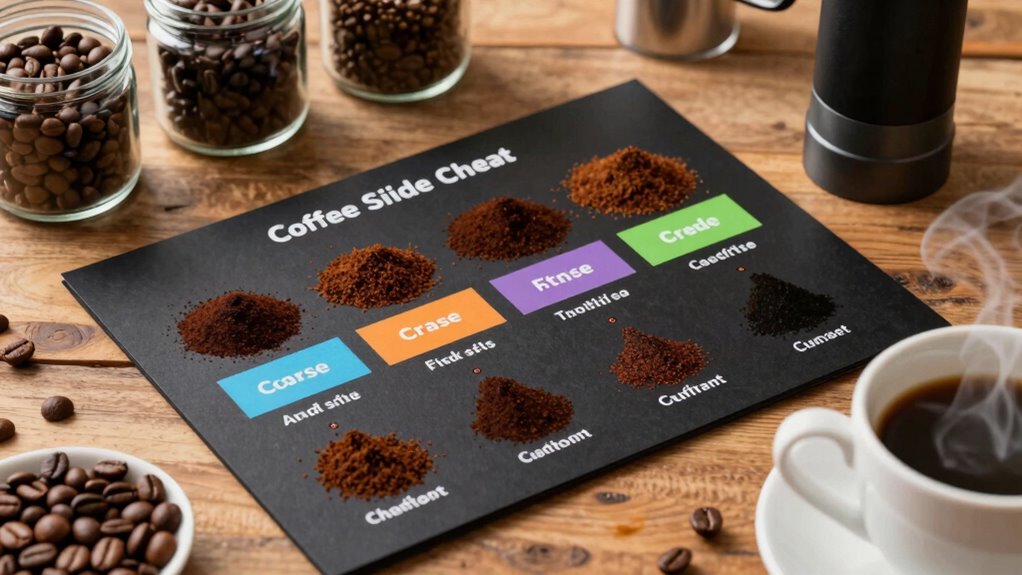
Many common mistakes can turn your coffee sour or bitter, undermining all your brewing efforts. One mistake is poor coffee storage, which exposes beans to moisture and air, degrading flavor. Always store coffee in an airtight container away from heat and light. Another mistake is using incorrect water temperature; water that’s too hot extracts bitter compounds, while too cold results in sourness. Aim for water around 195-205°F for balanced extraction. Also, neglecting grind consistency or adjusting it improperly can worsen taste issues. Here’s a quick guide:
| Mistake | How to Avoid |
|---|---|
| Poor coffee storage | Use airtight containers, keep away from heat |
| Incorrect water temperature | Use a thermometer, stay within 195-205°F |
| Inconsistent grind size | Use a quality grinder for uniformity |
| Over-brewing or under-brewing | Follow recommended brew times |
| Ignoring taste adjustments | Regularly taste and tweak grind or brew time |
Additionally, understanding the importance of proper grind size can significantly improve your coffee’s flavor profile.
When and How to Re-Adjust Your Grind During Brewing
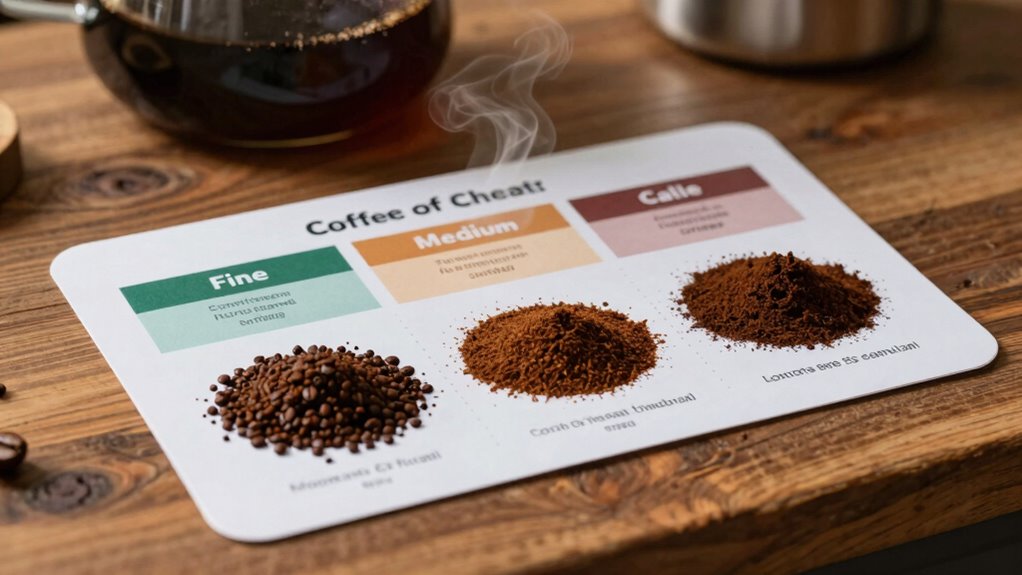
Sometimes, despite your best efforts, the grind size needs quick adjustment mid-brew to achieve the perfect flavor. Monitoring your coffee as it brews helps identify issues with grind consistency or extraction pace. Here’s when and how to re-adjust:
- Taste test early; if sour, grind finer or check grinder calibration.
- If bitter, try a coarser grind or recalibrate your grinder for better consistency.
- Adjust in small increments to prevent overcorrection.
- Keep a mental note of changes to refine your process faster next time.
Re-adjusting during brewing can save under-extraction or over-extraction, but it requires careful attention. Ensuring your grinder maintains proper calibration and consistent grind size helps you avoid frequent mid-brew tweaks and achieves a balanced flavor profile.
Frequently Asked Questions
Can Changing Grind Size Instantly Improve My Coffee’s Taste?
Yes, changing your grind size can instantly improve your coffee’s taste. When you adjust the grind, you influence extraction, which affects flavor. For the best results, make sure your coffee is fresh and your grind is uniform; inconsistent particles can cause sourness or bitterness. By fine-tuning your grind, you help extract the right flavors, making your coffee taste better without waiting for a new brew.
How Does Brewing Time Influence Perceived Sourness or Bitterness?
Ever wondered how brew time impacts your coffee’s flavor profile? Longer brewing times tend to extract more bitterness, while shorter times can leave it sour. Adjusting brew time helps balance these flavors, so you get a smoother, more enjoyable cup. If your coffee tastes sour, try increasing the brew time; if it’s bitter, reduce it. Experimenting with brew time lets you craft the perfect flavor profile just for you.
Are There Specific Coffee Beans Better Suited for Certain Grind Sizes?
Yes, certain beans are better suited for specific grind sizes. Single origin beans often shine with a finer grind to highlight their unique flavors, while blends benefit from a consistent grind size to ensure balanced extraction. You’ll find that adjusting your grind based on bean type helps optimize taste, reducing sourness or bitterness. Experiment with different grind sizes for your beans to discover what best enhances their natural qualities and maintains blend consistency.
How Do Ambient Temperature and Humidity Affect Grind Consistency?
Ambient temperature and humidity greatly impact your grind consistency. High humidity increases moisture absorption, causing your beans to clump or become unevenly ground, while fluctuations in temperature can affect the grinder’s motor performance. To maintain temperature stability, store your beans in a cool, dry place, and consider using a grinder with moisture control features. This helps guarantee your grind size stays consistent, leading to better-tasting coffee every time.
What Equipment Should I Use to Achieve the Perfect Grind at Home?
Coincidentally, choosing the right equipment makes all the difference in achieving perfect grind consistency. Invest in a high-quality burr grinder—manual or electric—to guarantee uniform particles and precise control. Regularly clean and maintain your grinder to prevent clogs and uneven grind size. This way, you’ll enjoy consistent results, better flavor extraction, and a smoother coffee experience at home. Proper equipment and maintenance are key to brewing excellence every time.
Conclusion
Now that you know how grind size impacts your coffee’s flavor, aren’t you ready to perfect your brew? Adjusting your grind can quickly fix sour or bitter tastes, saving you time and frustration. Remember, small tweaks make a big difference. So, next time your coffee’s off, ask yourself: are you using the right grind? With these simple tips, you’ll enjoy consistently delicious coffee every time.
NFL season / tailgating Picks
team gear
As an affiliate, we earn on qualifying purchases.