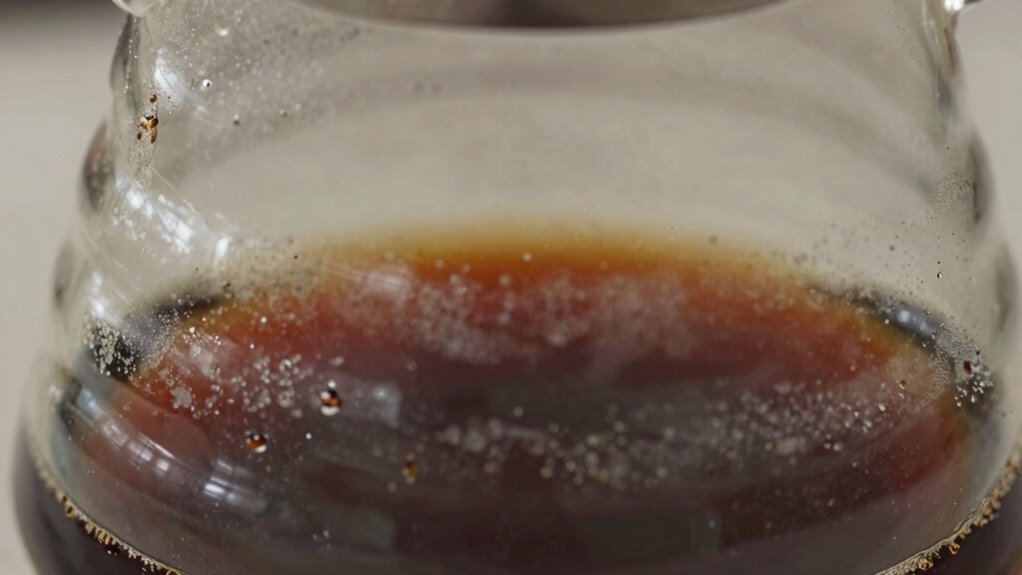

If your coffee tastes old or stale, it’s likely due to residue buildup inside your carafe. Over time, oils, mineral deposits, and stubborn stains cling to the glass, affecting the flavor of your brew. Regularly cleaning with natural solutions like baking soda and vinegar, or using abrasive scrubs, can help remove these deposits. Rinsing thoroughly after each wash guarantees no residues taint your coffee. To keep your brew fresh, it’s important to follow proper cleaning habits—learn more about effective techniques below.
Key Takeaways
- Residue buildup from oils and mineral deposits causes dull, stale coffee flavor over time.
- Inadequate cleaning allows residues to embed, contaminating the taste of fresh brews.
- Regular deep cleaning removes hidden deposits that traditional rinsing misses.
- Using abrasive methods like rice or salt helps dislodge stubborn residues affecting flavor.
- Thorough rinsing after cleaning prevents chemical or residue taint in brewed coffee.
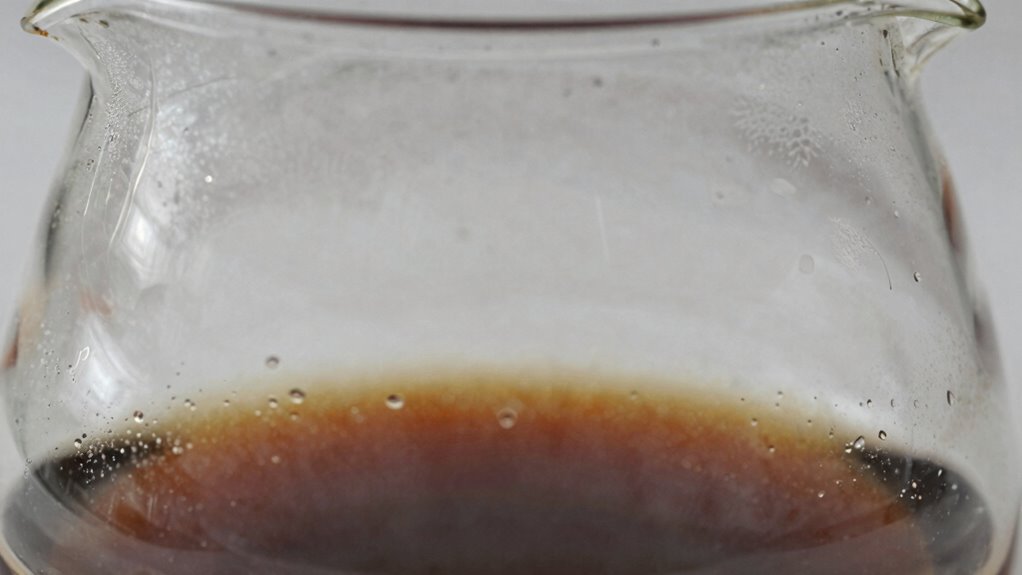
Cleaning a carafe can be surprisingly challenging, especially when stubborn stains or residue refuse to come off with regular washing. Over time, leftover oils and mineral deposits build up inside, subtly altering the coffee flavor you experience with each brew. Instead of enjoying fresh, vibrant coffee, you might notice a dull, stale taste that just won’t go away. This is often caused by residue clinging to the interior surfaces, which traditional rinsing or dishwashing can’t fully remove. To keep your coffee tasting its best, you need to understand the right cleaning techniques that target these hidden deposits.
The first step is to recognize that standard dish soap may not be enough to eliminate all the oils and mineral buildup. You should consider using a mixture of baking soda and white vinegar, which acts as a natural cleaning agent. Fill the carafe with hot water, add a couple of tablespoons of baking soda, then pour in a cup of white vinegar. As the mixture fizzles, it breaks down grease and mineral deposits, making them easier to scrub away. Let this sit for 15-20 minutes to allow the solution to work on stubborn stains. Afterwards, scrub the interior gently with a long-handled brush or sponge, focusing on areas where residue is visible or feels sticky. Regular cleaning with these effective methods can prevent the accumulation of buildup.
For more effective cleaning, some baristas and coffee enthusiasts swear by using rice or coarse salt as an abrasive scrub. Add a small handful into the carafe along with warm water and a splash of dish soap. Swirl vigorously to dislodge any residual oils or deposits stuck to the surfaces. This technique is particularly helpful if you’re concerned about maintaining the purity of your coffee flavor. The less residue left behind, the more your coffee’s true taste can shine through with each brew. Incorporating proper cleaning practices into your routine can significantly reduce the risk of flavor contamination. Regularly deep cleaning your carafe—at least once a week—can prevent buildup from interfering with your coffee’s flavor. Additionally, using appropriate cleaning methods ensures thorough removal of deposits that might otherwise be hidden in hard-to-reach areas.
It’s also important to rinse the carafe thoroughly after cleaning, ensuring no cleaning agents remain that could taint the next batch of coffee. Residue can embed deep into the glass over time, making it impossible to fully eliminate and therefore affecting the taste. Keeping your carafe spotless with the right cleaning techniques ensures each cup of coffee is fresh, flavorful, and free from that unwanted “old” taste.
As an affiliate, we earn on qualifying purchases.
Frequently Asked Questions
How Often Should I Clean My Coffee Carafe?
You should clean your coffee carafe every day if you use it daily, especially if it’s made of glass or stainless steel. For less frequent use, aim to clean it after every few uses to prevent buildup. Regular cleaning, including rinsing and occasional deep cleaning with vinegar or baking soda, helps avoid stale tastes and keeps your coffee fresh. Proper cleaning frequency depends on your carafe material and how often you brew.
Can Using Vinegar Damage My Coffee Carafe?
Using vinegar on your coffee carafe won’t damage it if you follow proper cleaning steps. Vinegar effectively cuts through stubborn coffee residue and prevents carafe discoloration, saving you from a kitchen catastrophe that feels like a disaster movie. Just dilute the vinegar properly, scrub gently, and rinse thoroughly. This way, you keep your carafe sparkling, free of residue, and looking brand new without risking any damage.
What’s the Best Method to Remove Coffee Stains?
To remove coffee stains effectively, start by filling your carafe with warm water and a few drops of dish soap. Add a mixture of baking soda or a denture cleaning tablet for stain removal, then let it sit for 15-30 minutes. Use a bottle brush or sponge to scrub away coffee residue, focusing on stained areas. Rinse thoroughly with clean water to guarantee all residue and cleaning agents are gone.
Are There Specific Cleaning Products for Coffee Carafes?
Yes, there are cleaning products specifically designed for coffee carafes! These products target stubborn coffee residue and eliminate carafe odors that can make your brew taste old and flat. Using a dedicated coffee carafe cleaner guarantees you break down built-up stains and freshen your container without harsh chemicals. Regular use keeps your coffee tasting fresh, preserves the carafe’s clarity, and prevents that dreaded aftertaste from lingering.
How Can I Prevent Build-Up in My Carafe Long-Term?
To prevent build-up long-term, you should regularly clean your carafe based on its material—stainless steel or glass—using appropriate cleaning methods. Maintain a consistent cleaning frequency, ideally after every use or daily, to stop residue from accumulating. Rinse thoroughly, use a mild detergent or vinegar solution, and dry well. This routine keeps your carafe fresh, ensuring your coffee tastes great and prevents stubborn build-up.
As an affiliate, we earn on qualifying purchases.
Conclusion
To keep your coffee tasting fresh, don’t let the carafe become a breeding ground for old flavors. Think of it as the heart of your brew—if it’s dirty, the entire experience suffers. Regular cleaning is your secret weapon, wiping away stubborn residues like a fresh breeze scattering away the stale. Stay vigilant, and your mornings will always start with a cup as vibrant as a sunrise, not a ghost of yesterday’s brew lingering in the shadows.
As an affiliate, we earn on qualifying purchases.
long-handled coffee carafe scrubber
As an affiliate, we earn on qualifying purchases.
As an affiliate, we earn on qualifying purchases.