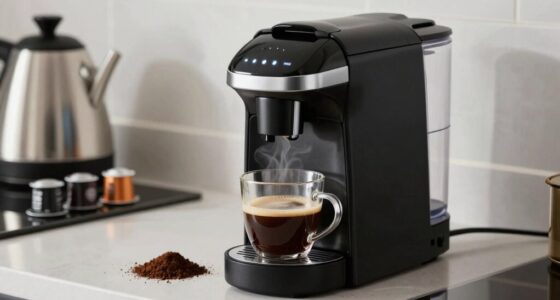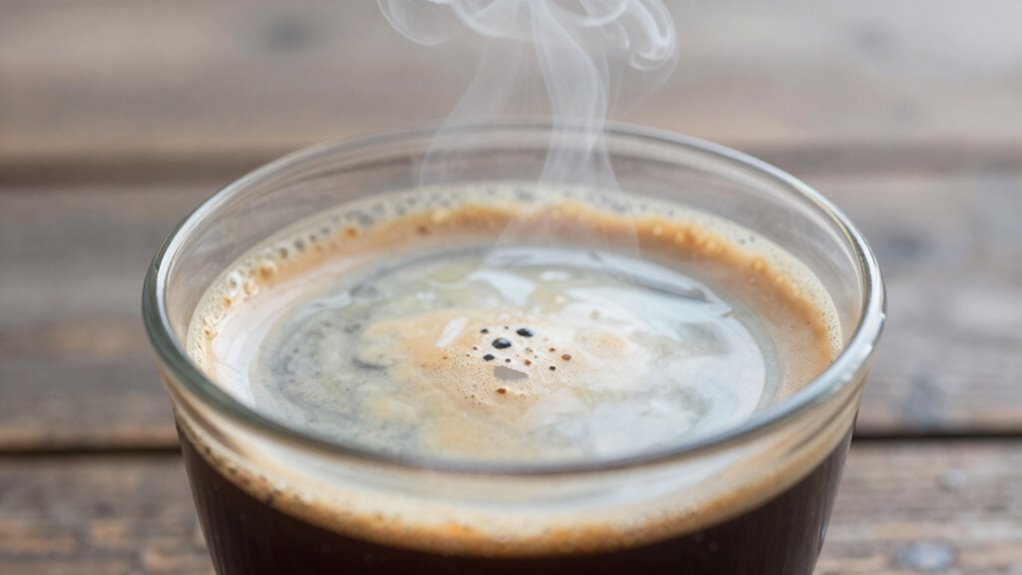

If your coffee tastes weak and flavorless, under-extraction is likely the culprit. This happens when water doesn’t spend enough time dissolving enough soluble compounds, leaving the brew flat, sour, or watery. Coarse grind, low temperature, or short brew time often cause this. Adjusting your grind finer, controlling water temperature, or extending brewing time can fix it. To uncover more tips for perfect extraction, keep exploring how to improve your brew process.

Get kitchen staples and gadgets delivered free — and shop member deals
- Fast, free delivery on millions of items
- Access to Prime Big Deal Days deals on October 6–7
- Prime Video, Amazon Music and more included
Key Takeaways
- Under-extraction often causes weak, watery coffee with dull aroma and flavor imbalance.
- Using a coarse grind size reduces contact time, leading to insufficient solute extraction.
- Brewing too quickly or with low water temperature prevents full flavor development.
- Short brew times and improper pouring techniques hinder proper extraction of soluble compounds.
- Regularly monitoring and adjusting grind size, temperature, and brew time can prevent under-extraction and weak flavor.
coffee grinder with adjustable grind size
As an affiliate, we earn on qualifying purchases.
As an affiliate, we earn on qualifying purchases.
What Is Under-Extraction and Why Does It Make Coffee Weak?
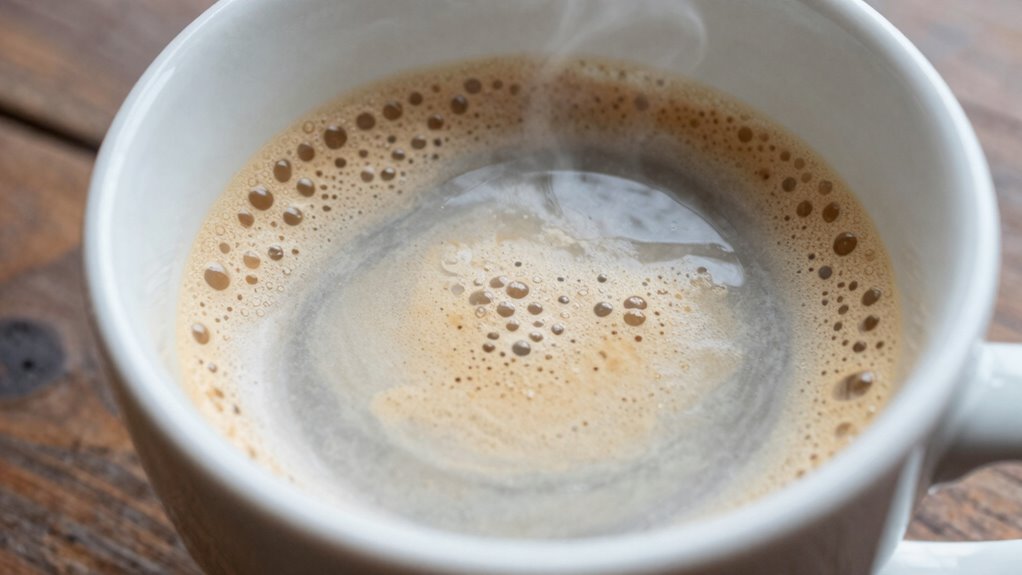
Under-extraction occurs when your coffee doesn’t brew long enough or isn’t dissolved properly, resulting in a weak and bland flavor. This process causes a flavor imbalance, where the desirable rich, complex notes are missing, leaving behind a dull taste. You’ll notice a significant aroma loss because the essential volatile compounds haven’t been fully extracted, which diminishes the coffee’s inviting smell. When under-extracted, the water hasn’t had enough contact with the coffee grounds to pull out the full range of flavors and aromatic oils. Proper extraction is essential for unlocking the full potential of your coffee beans, ensuring a balanced flavor profile and robust aroma. As a result, your brewed coffee ends up flat, with a watery taste and little depth. To fix this, you need to adjust your brewing time or grind size, ensuring Proper extraction for a more balanced flavor and full aroma. Additionally, using consistent grind size can help improve extraction by providing uniform contact with water.
As an affiliate, we earn on qualifying purchases.
How Can You Tell if Your Coffee Is Under-Extracted?

If your coffee tastes weak and lacks vibrancy, it’s likely a sign that the extraction process didn’t go as planned. You might notice a flavor imbalance, with sour or grassy notes dominating instead of rich, balanced tastes. Aroma loss is another clue—your coffee may smell flat or dull, lacking the inviting complexity of a properly extracted brew. To identify under-extraction, pay attention to these signs:
| Sign | Description | Effect on Coffee |
|---|---|---|
| Weak flavor | Thin, watery taste | Insufficient solubles extracted |
| Sour or grassy | Unbalanced, sharp notes | Incomplete extraction |
| Dull aroma | Lack of fragrant complexity | Aroma loss |
| Flat mouthfeel | No body or richness in the sip | Poor extraction process |
Additionally, understanding the extraction process can help you fine-tune your brewing method for better results.
As an affiliate, we earn on qualifying purchases.
What Causes Under-Extraction in Coffee?
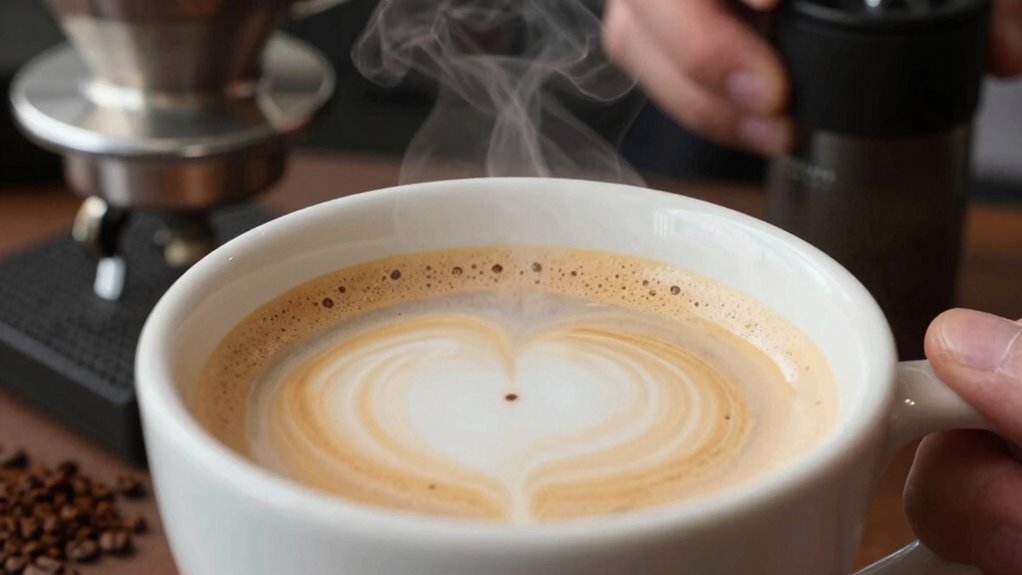
You might experience under-extraction if your grind is too coarse, preventing water from extracting enough flavor. Water temperature that’s too low or too high can also lead to weak-tasting coffee, as extraction relies on the right heat. Additionally, brewing for too short a time means the water doesn’t have enough contact with the grounds to develop full flavor. Ensuring proper breathing space during healing can also influence how well flavors develop in the coffee, much like how proper aftercare influences healing in piercings.
Grind Size Too Coarse
When the grind size is too coarse, the water flows through the coffee too quickly, preventing proper extraction of flavors. This results in weak, underwhelming coffee and compromised coffee strength. You might notice your brew lacking depth and richness because the larger particles don’t allow enough contact time for flavors to develop fully. To fix this, make sure your grind size matches your brewing method—finer for espresso, coarser for French press.
Consider these points:
- Coarse grind causes rapid water flow
- Under-extraction leads to weak coffee flavor
- Larger particles reduce surface area for extraction
- Proper grind size improves coffee strength
- Adjusting grind size enhances overall flavor profile
Water Temperature Issues
Even with the perfect grind size, using water that’s too cool can lead to under-extraction, making your coffee taste weak and flat. Water temperature directly impacts brewing consistency and extraction efficiency. If the water isn’t hot enough—ideally between 195°F and 205°F—it won’t fully dissolve the solubles in your coffee grounds. This results in a brew lacking in flavor complexity and body. Too low a temperature prevents proper extraction of aromatic oils and soluble compounds, leaving behind the bitter and sweet notes. Maintaining consistent water temperature throughout the brewing process guarantees even extraction. Using a thermometer or a reliable brewing method can help you keep your water at the ideal temperature, enabling a richer, more balanced cup every time. Proper water temperature is key to revealing your coffee’s full potential. Additionally, understanding the water temperature required for optimal brewing can help prevent issues like under-extraction and ensure a more flavorful cup.
Inadequate Brew Time
A brew that’s too quick often results in under-extraction, leaving your coffee weak and lacking depth. When the brewing duration is too short, the extraction balance is off because the water doesn’t have enough time to dissolve all the desirable flavors. This can happen if you rush the process or use too fine a grind. To improve, ensure your brewing time matches your method, allowing proper extraction. Consider these factors:
- Using a coarser grind can extend brewing duration
- Adjusting pour speed for pour-over methods
- Choosing a brewing method with longer contact time
- Avoiding overly fine grounds that clog filters
- Monitoring steep time in immersion brews
- Being mindful of Free Floating techniques that can influence overall extraction quality
- Paying attention to Extraction Time to ensure a balanced flavor profile
- Additionally, understanding the role of Sound Healing Science can help optimize your brewing environment for better consistency.
- Moreover, being aware of Texture and Tactile Feedback can guide you in recognizing when your brew is reaching optimal extraction.
As an affiliate, we earn on qualifying purchases.
How to Fix Under-Extracted Coffee
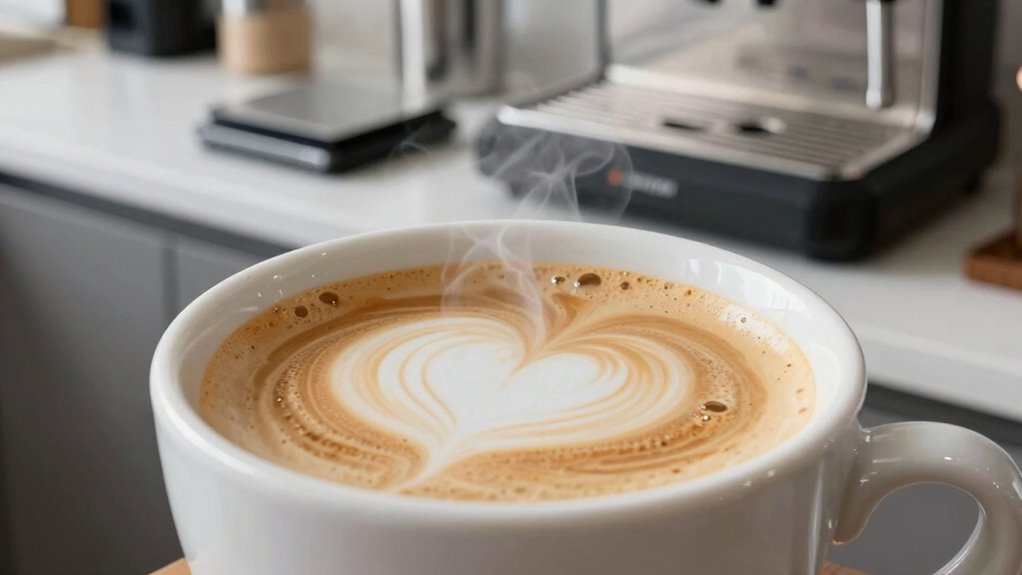
If your coffee tastes weak or sour, it’s likely under-extracted, meaning the water hasn’t pulled enough flavor from the grounds. To fix this, focus on improving flavor balance and brewing consistency. Start by adjusting your grind size to a slightly finer setting, which increases extraction. Ensure your water temperature is around 195-205°F, as too cool water hampers extraction. Use a consistent pour rate and evenly distribute the water over the grounds to promote even extraction. Avoid rushing the process; a steady, controlled pour helps extract more flavor. Additionally, use fresh, quality coffee beans and measure your coffee and water accurately. Regularly inspecting your brewing equipment can help maintain optimal extraction conditions, leading to a more balanced flavor profile and consistent extraction, reducing under-extraction and improving your overall brew. Remember that extraction is influenced by multiple factors working together, so taking a comprehensive approach can make a significant difference. Properly managing brew consistency can also prevent under-extraction issues over time. Incorporating techniques for precise pouring can further enhance your extraction process, ensuring a richer and more balanced cup. Also, paying attention to consistent grind size can greatly improve your chances of achieving ideal extraction levels.
Troubleshooting Tips for Better Coffee Extraction
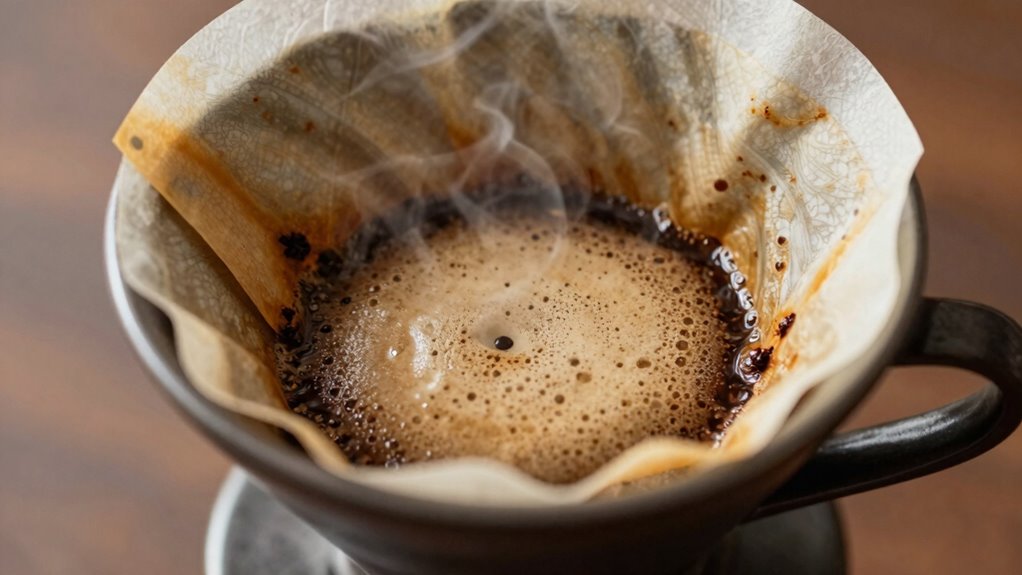
To troubleshoot common issues and improve your coffee extraction, start by examining your brewing process carefully. Consistent brewing helps achieve better flavor balance and avoids weak or bitter tastes. Check these key areas:
- Use the correct grind size to prevent under- or over-extraction.
- Maintain a stable water temperature around 195-205°F for ideal extraction.
- Ensure your coffee-to-water ratio is precise for balanced flavor.
- Stir or agitate during brewing to promote even extraction.
- Clean your equipment regularly to prevent residue buildup that hampers brewing consistency.
- Incorporate precision brewing techniques that leverage modern connected appliances to enhance control over your extraction process. Using brew monitoring technology can provide real-time feedback and help you fine-tune your method more effectively. Additionally, understanding extraction theory can help you identify subtle issues affecting flavor quality. Paying attention to your grind consistency also ensures uniform extraction and better flavor clarity. Implementing digital displays on brewing devices can help you monitor parameters closely and maintain ideal conditions.
Addressing these points helps you identify and fix extraction issues, resulting in a more flavorful, balanced cup. Consistency in your method guarantees each brew delivers the desired strength and flavor profile, steering clear of weak or under-extracted coffee.
Tests to Confirm Your Coffee Is Properly Extracted
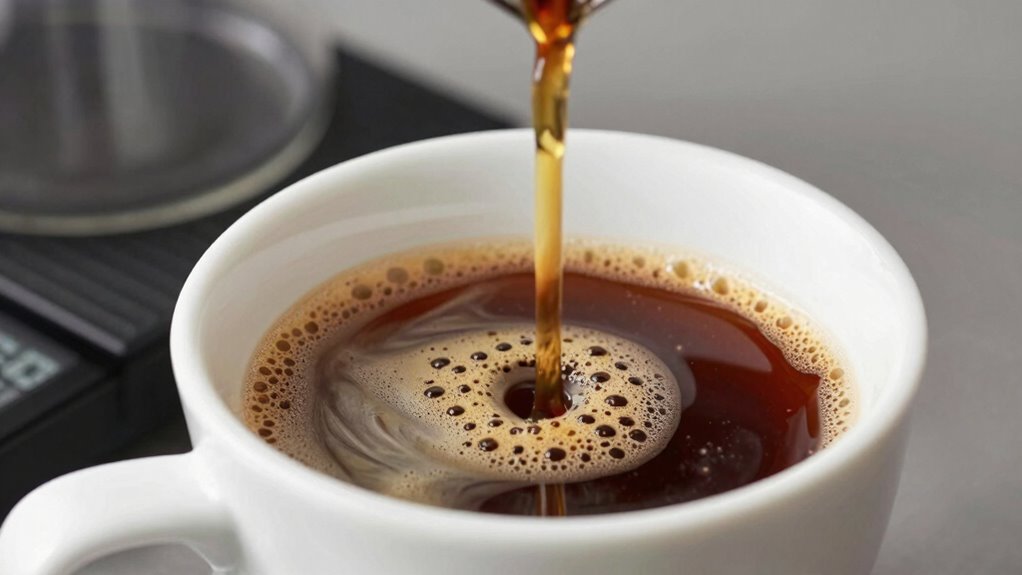
You can confirm your coffee is properly extracted by paying close attention to its flavor and appearance. Proper extraction results in a balanced flavor profile and preserved aroma. To test this, observe the coffee’s color, aroma, and taste. If it’s too weak or sour, it may be under-extracted; if bitter or overly intense, over-extracted. Use this quick guide:
| Test Aspect | What to Look For | Ideal Result |
|---|---|---|
| Flavor Balance | Smooth, well-rounded taste | Balanced, no overpowering notes |
| Aroma Preservation | Rich, inviting aroma | Strong, intact aroma |
| Appearance | Consistent color and clarity | Even extraction, no cloudiness |
These tests help guarantee your extraction retains flavor balance and aroma preservation.
Frequently Asked Questions
Can Under-Extraction Affect the Coffee’s Flavor Profile?
Yes, under-extraction can considerably affect your coffee’s flavor profile. When you under-extract, the coffee lacks proper flavor balance, often resulting in sour, flat, or weak tastes. It also hampers aroma development, making your brew less fragrant and vibrant. To fix this, adjust your grind size, extraction time, or water temperature so you extract the right flavors, achieving better aroma and a more balanced, enjoyable coffee experience.
Does Grind Size Influence Under-Extraction?
Think of your grind size as a garden’s soil. If it’s uneven, with inconsistent particle distribution, water struggles to flow evenly, leading to under-extraction. Fine grounds can clog, while coarse ones let water pass too quickly. To avoid this, maintain grind consistency. When you do, you create a balanced flow, ensuring water extracts the rich flavors properly, preventing weak, under-extracted coffee.
How Does Brewing Time Impact Extraction Levels?
Your brew time directly impacts extraction levels, influencing the flavor balance in your coffee. If you brew too short, you risk under-extraction, resulting in weak, sour flavors. Conversely, too long brew time can lead to over-extraction, making your coffee bitter. To achieve ideal extraction balance, aim for the right brew time based on your method, ensuring your coffee’s flavor is rich, balanced, and satisfying without being overly bitter or sour.
Are Certain Coffee Beans More Prone to Under-Extraction?
Certain coffee beans, especially lighter roasts and those from complex origins, are more prone to under-extraction. You might notice this with delicate beans from specific regions or beans that haven’t been roasted enough. The bright, nuanced flavors can vanish if your brewing time isn’t adjusted. So, pay attention to bean origin and roasting level—these factors influence how easily a bean under-extracts, affecting the strength and flavor of your coffee.
Can Water Temperature Cause Under-Extraction Issues?
Yes, water temperature can cause under-extraction issues. If your water isn’t hot enough, it won’t dissolve the coffee’s flavors properly, leading to weak, sour tastes. To improve extraction consistency, make sure your water is between 195-205°F, balancing water chemistry for ideal flavor extraction. Consistent water temperature helps you avoid under-extraction, so your coffee’s full profile shines through with richer, more balanced flavors.
Conclusion
Now that you know the signs of under-extraction, aren’t you enthusiastic to improve your brew? With a few simple tweaks, you can transform weak, bland coffee into a rich, flavorful cup. Just remember, coffee perfection isn’t about luck — it’s about paying attention to the details. So, why settle for a dull brew when you can master the art of extraction and enjoy every sip to the fullest?
NFL season / tailgating Picks
team gear
As an affiliate, we earn on qualifying purchases.