
To avoid beginner mistakes with your electric gooseneck kettle, start by setting the correct water temperature for your brew—too hot can scorch the coffee, too cold won’t extract flavor properly. Pour slowly and steadily in a controlled spiral to promote even saturation, and use the kettle’s flow control features. Don’t rush or pour from too high, as this can disrupt the process. Keep practicing these fundamentals to guarantee your drinks turn out great every time; there’s more to perfecting your technique ahead.

Get kitchen staples and gadgets delivered free — and shop member deals
- Fast, free delivery on millions of items
- Access to Prime Big Deal Days deals on October 6–7
- Prime Video, Amazon Music and more included
Key Takeaways
- Always set the correct water temperature for your beverage to prevent over- or under-extraction.
- Avoid rushing the pour; use slow, controlled, spiral motions for even saturation.
- Use the kettle’s temperature control feature and let the water sit briefly before pouring.
- Keep the pour steady and close to the vessel to prevent splashing and uneven flow.
- Practice proper hand positioning for a smooth, continuous pour to maximize flavor extraction.
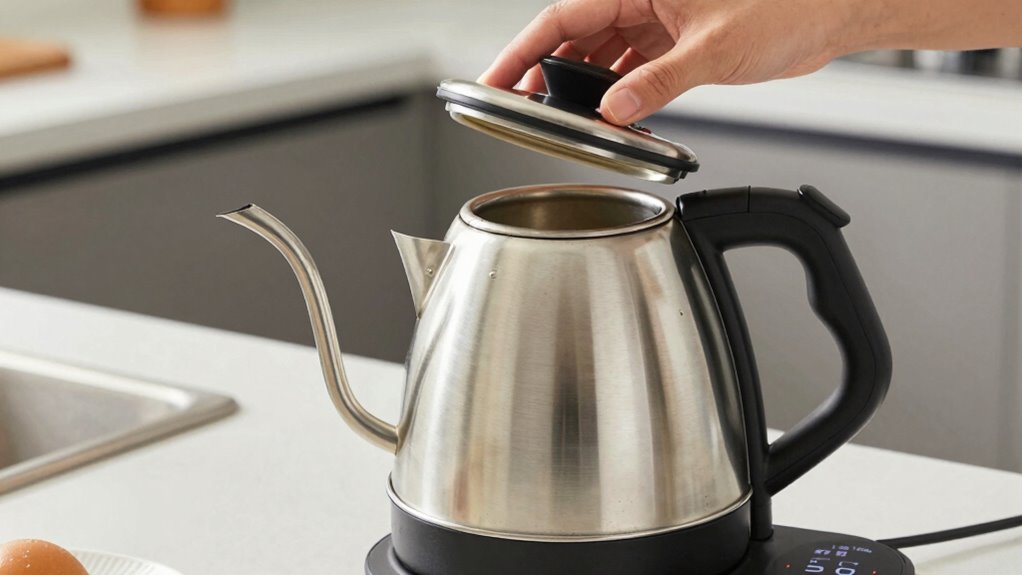
If you’re new to using an electric gooseneck kettle, it’s easy to make some common mistakes that can affect your brewing experience. One of the most important aspects is getting the water temperature right. Many beginners assume that boiling water is always ideal, but for delicate brews like pour-over coffee or certain teas, the correct temperature varies. For example, coffee often tastes best between 195°F and 205°F, while green teas might need slightly cooler water. Using water that’s too hot can scorch your coffee or tea, leading to bitter flavors, whereas water that’s not hot enough can result in under-extraction, making your brew weak and flat. To avoid this, use your kettle’s temperature control feature if it has one, or heat the water to the recommended range and then let it sit briefly before pouring. This precision guarantees you extract the best flavors from your ingredients. Additionally, understanding the ideal brewing temperature can help you improve your results consistently.
Getting water temperature right is key for perfect pour-over coffee and tea.
Another common mistake relates to pour technique. Even if your water temperature is spot-on, the way you pour can dramatically impact the final taste. A slow, controlled pour allows water to evenly saturate the coffee grounds or tea leaves, promoting full extraction. Many beginners tend to pour too quickly or unevenly, which can cause channeling or uneven extraction. To improve, practice a steady, spiral pour starting from the center and moving outward in a circular motion, then back toward the middle. Keep the kettle close to the brewing vessel to minimize splashing and control the flow rate, ideally aiming for a thin, steady stream. This approach guarantees consistent contact between water and the material inside, maximizing flavor extraction and avoiding over- or under-extraction.
It’s also essential to pay attention to your pour technique when using your electric gooseneck kettle. Its design makes it easier to control the flow, but only if you use it properly. Rushing the pour or pouring from too high above the vessel can disturb the coffee or tea bed, leading to uneven brewing. Instead, maintain a gentle, continuous pour, adjusting your hand to keep a smooth, consistent stream. This control helps you manage the water contact time and flow rate, which are vital for achieving a balanced flavor.
In short, mastering water temperature and pour technique early on will greatly improve your brewing process. These small adjustments prevent common pitfalls like over-extraction or under-extraction, which compromise flavor. With patience and practice, you’ll learn how to fine-tune your water temperature and pour style, making your coffee or tea taste just right. The investment in getting these fundamentals correct is worth it, especially when it elevates your overall brewing experience and the quality of your drinks.
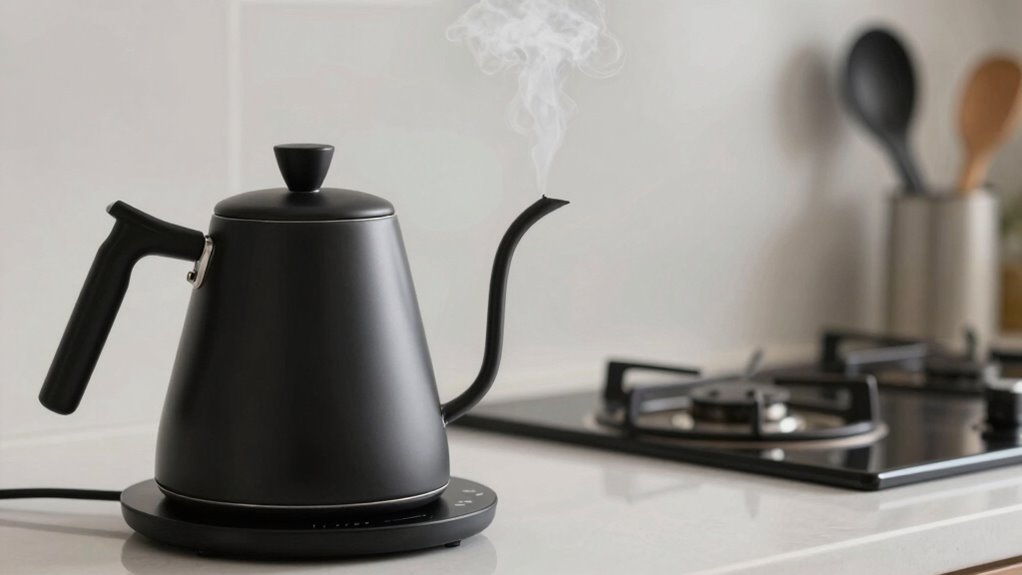
electric gooseneck kettle with temperature control
As an affiliate, we earn on qualifying purchases.
As an affiliate, we earn on qualifying purchases.
Frequently Asked Questions
How Often Should I Descale My Electric Gooseneck Kettle?
You should descale your electric gooseneck kettle every 4 to 8 weeks, depending on your water quality. Hard water with high mineral content builds up faster, so more frequent descaling is necessary. Regularly check for mineral deposits or a cloudy interior, and adjust your descaling frequency accordingly. Proper maintenance guarantees your kettle performs well and helps prevent damage, keeping your coffee or tea tasting fresh every time.
Can I Use Any Type of Water in the Kettle?
You shouldn’t use any type of water in your kettle; instead, opt for filtered or soft water to protect your kettle’s material and guarantee good water quality. Hard water can cause mineral buildup, damaging your kettle and affecting taste. Always check your kettle’s material—stainless steel, glass, or plastic—to see what water types are best. Using the right water helps prolong your kettle’s lifespan and improves your tea or coffee flavor.
Is It Safe to Leave Water in the Kettle Overnight?
You shouldn’t leave water in your kettle overnight because water evaporation can occur, which might cause mineral build-up or damage. Plus, it could pose electrical safety risks if the kettle isn’t properly dried or maintained. Always empty and dry your kettle after use, especially if you won’t be using it soon. This helps prevent mineral deposits, keeps your kettle functioning well, and guarantees electrical safety for future use.
How Do I Prevent Mineral Buildup Inside the Kettle?
To prevent mineral buildup inside your kettle, regularly descaling it with a mixture of equal parts water and white vinegar. This helps remove calcium deposits caused by water hardness. You should also use filtered or soft water to reduce mineral content. After descaling, rinse your kettle thoroughly to eliminate vinegar residue. Doing this weekly keeps mineral buildup at bay, ensuring your kettle stays efficient and your drinks taste fresh.
Are There Specific Cleaning Tools Recommended for Maintenance?
Ever wondered what tools best maintain your kettle? You should use cleaning brushes designed for small appliances and descaling solutions to keep it spotless. These brushes help reach tricky corners, while descaling solutions effectively eliminate mineral buildup. Do you really want to jeopardize your water’s taste or the kettle’s performance? Regular maintenance with these tools ensures your kettle stays in top shape, making every pour perfect and prolonging its lifespan.
As an affiliate, we earn on qualifying purchases.
Conclusion
So, next time you’re using your electric gooseneck kettle, remember these tips. It’s funny how a small mistake can change your entire coffee or tea experience—like accidentally overheating water or ignoring the pour technique. But don’t worry, once you get the hang of it, you’ll wonder how you ever brewed without these simple tricks. Sometimes, the best brews come from just paying attention and learning as you go. Happy brewing!
precision tea kettle for brewing
As an affiliate, we earn on qualifying purchases.
As an affiliate, we earn on qualifying purchases.
electric kettle for pour-over coffee
As an affiliate, we earn on qualifying purchases.
As an affiliate, we earn on qualifying purchases.
NFL season / tailgating Picks
team gear
As an affiliate, we earn on qualifying purchases.