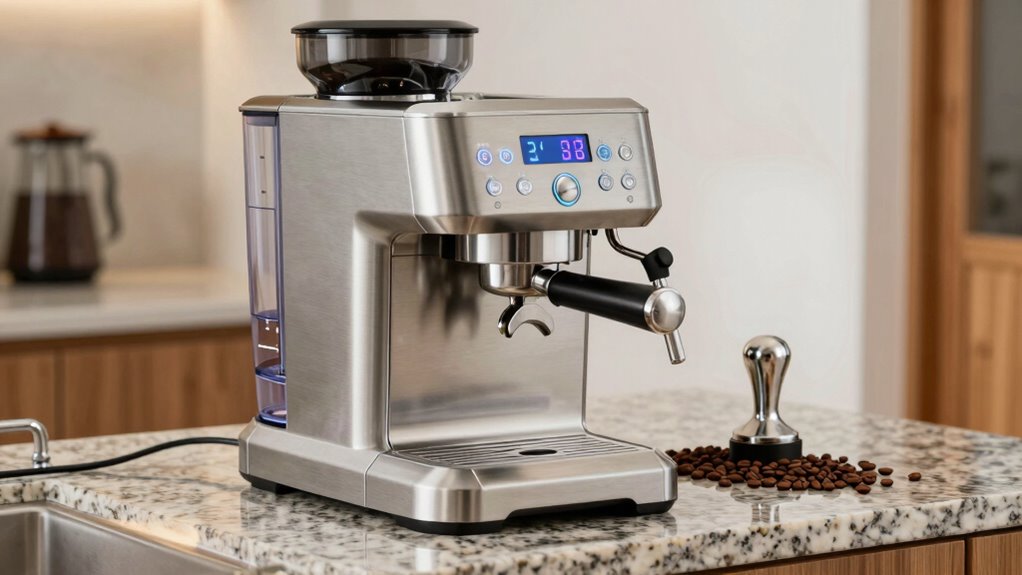
Before spending over $1,000 on an espresso machine, check these essential specs: water temperature stability between 195°F and 205°F, precise control with PID controllers, boiler pressure around 9 bars, and consistent regulation of both temperature and pressure. Also, consider build quality, with durable materials like stainless steel or brass, and features like dual boilers or heat exchangers. Knowing these details helps make sure you get a machine that delivers quality, reliability, and great espresso every time—keep exploring to learn more.
Key Takeaways
- Ensure the machine maintains a stable water temperature between 195°F and 205°F, preferably with a PID controller.
- Check that the boiler pressure is around 9 bars for optimal espresso extraction.
- Verify the machine has precise temperature control features, such as dual boilers or heat exchangers.
- Confirm internal components are made of durable materials like stainless steel or brass for long-term stability.
- Look for consistent pressure regulation and gauges to prevent fluctuations that affect shot quality.

Choosing the right espresso machine begins with understanding its key specifications. When you’re spending over $1,000, you’re investing in quality, so it’s essential to pay close attention to features like water temperature and boiler pressure. These factors directly influence the consistency, flavor, and overall success of your espresso shots. Water temperature is indispensable because espresso is best extracted at around 195°F to 205°F. If the machine can’t reach or maintain this range, your coffee will taste flat or bitter. Many budget machines under $1,000 struggle to keep a stable temperature, which leads to uneven extraction. Look for machines with precise temperature control or PID (Proportional-Integral-Derivative) controllers, which help guarantee water stays within that ideal range, giving you better-tasting espresso shot after shot.
In addition, Free Floating technology in some high-end models allows for more consistent temperature regulation during brewing, ensuring better extraction quality. Boiler pressure is another fundamental specification to evaluate. Ideally, you want a machine with a boiler pressure around 9 bars, as this level is standard for proper extraction. Too low, and your espresso will be under-extracted, resulting in weak flavor and a watery consistency. Too high, and you risk over-extraction or damaging the machine’s internal components. Many professional machines maintain a steady pressure, but some less expensive models under $1,000 might have inconsistent or insufficient boiler pressure. Always check whether the machine’s specifications mention stable pressure control and whether it has a gauge to monitor it during operation or if it relies on automatic pressure regulation.
Beyond these specs, consider how the machine manages water temperature and boiler pressure simultaneously. A high-quality espresso machine maintains consistent temperature and pressure throughout the brewing process, which is essential for repeatable results. Some machines feature dual boilers or heat exchangers, allowing you to brew espresso and steam milk at the same time without sacrificing temperature stability. This can be a significant advantage if you want café-quality drinks at home.
Lastly, don’t overlook the build quality and materials used in the boiler and internal components. Durable materials like stainless steel or brass are better at maintaining consistent temperature and pressure over time, which is why they tend to be found in higher-end models. When shopping for an espresso machine over $1,000, prioritize those with precise control over water temperature and boiler pressure, as these specifications directly impact your ability to craft great espresso consistently. Remember, investing in a machine with solid specs guarantees you’ll enjoy superior coffee and avoid the frustration of subpar results.
Frequently Asked Questions
How Important Is Brand Reputation for Espresso Machines Under $1000?
Brand reputation matters a lot when choosing an espresso machine under $1000. You should look for brands known for reliability, as this indicates quality and durability. Check customer feedback to see if users report consistent performance and good support. A reputable brand often offers better warranties and service, giving you peace of mind. Don’t overlook reputation; it helps guarantee your investment delivers satisfying espresso shots over time.
Can Budget Espresso Machines Make Latte Art?
You might find budget espresso machines can create latte art, but it’s often a delicate dance. With proper milk frothing and steady pressure stability, you’ll be able to craft beautiful designs. Keep in mind, lower-priced models may struggle with consistent pressure or frothing quality, making intricate art harder. Still, with patience and practice, your home barista skills can shine, turning simple machines into creative tools for stunning coffee art.
What Maintenance Is Required for High-End Espresso Machines?
High-end espresso machines require regular maintenance, including daily cleaning of the group heads and steam wands to prevent buildup. You should also perform regular descaling to remove mineral deposits, ideally every 2-3 months depending on your water hardness. Additionally, check the seals and gaskets periodically and replace them when worn. Proper maintenance guarantees your machine runs smoothly, produces great espresso, and extends its lifespan.
Are There Energy Efficiency Differences Among Models in This Price Range?
Did you know that high-end espresso machines can vary in energy saving by up to 30%? In this price range, models with advanced insulation and energy-efficient heating elements consume less power, helping you save on electricity bills. Look for machines with features like automatic shut-off and eco modes, which reduce power consumption without sacrificing performance. Choosing an energy-efficient model not only benefits your wallet but also supports eco-friendly living.
Do Warranty Options Vary Significantly Between Brands?
Warranty differences often vary considerably between brands, impacting your long-term satisfaction. You’ll find that some brands offer extended coverage or better support, reflecting their reliability. When choosing an espresso machine, consider brand reliability and the warranty options they provide. A solid warranty ensures you’re protected against defects or issues, giving you peace of mind. Always compare warranty terms carefully, especially if you want a durable, dependable machine that lasts.
Conclusion
Before you splurge on an espresso machine under $1000, make sure to check these 7 specs to get the best value. Did you know that espresso machines with higher boiler capacity often produce better steam pressure, resulting in richer crema? Investing wisely can save you money and improve your coffee experience. Remember, understanding these key features helps you avoid costly mistakes and enjoy barista-quality brews right at home. Happy brewing!