If your espresso runs too fast or too slow, the first thing to adjust is your grind size. A finer grind increases resistance and slows extraction, while a coarser grind speeds it up. Changing the grind size is the most effective way to fix flow issues because it directly influences water resistance. Once you get this right, you can fine-tune other variables for perfect shots—keep exploring to learn more.
Key Takeaways
- Check the shot timing; if it’s under 25 seconds, the espresso is running too fast, indicating the need for grind fineness adjustment.
- If the shot takes longer than 30 seconds, it’s running too slow, and coarsening the grind can help increase flow rate.
- Adjust the grind size first, as it directly controls resistance and flow speed, before modifying other variables.
- Ensure tamping pressure is consistent; uneven tamping can cause flow inconsistencies, so standardize tamping technique first.
- Maintain stable brew temperature and water pressure to support predictable flow; temperature fluctuations often influence flow speed.
How Do I Know If My Espresso Is Coming Out Too Fast or Too Slow?
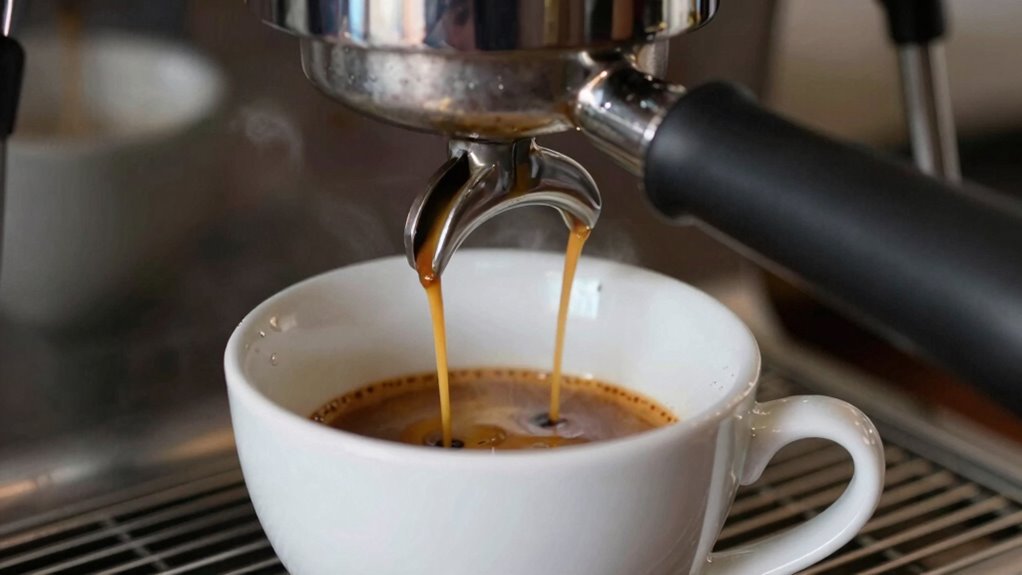
How can you tell if your espresso is coming out too fast or too slow? The key clues are brew temperature and shot timing. If your espresso pours out too quickly, it might be under-extracted, often caused by too low a brew temperature or a shot that’s too short. This results in a weak, sour flavor. Conversely, if it drips too slowly or drips excessively, it could be over-extracted, possibly due to too high a brew temperature or overly long shot timing. Keep an eye on how long your shot takes—ideal shot timing typically ranges from 25 to 30 seconds. Adjusting your brew temperature and paying attention to shot timing helps you gauge whether your espresso’s extraction speed is on point.
Why Flow Rate Is Key to Great Espresso Extraction

Controlling your flow rate is essential for achieving consistent espresso extraction. When you optimize it, you guarantee each shot develops the right flavors and strength. Maintaining a steady flow helps you time your pulls perfectly and produce top-quality espresso every time. Proper maintenance of your equipment can also help in maintaining optimal flow rates over time. Additionally, understanding the flow rate can be influenced by factors such as tamping pressure and grind size, which are crucial for consistency. Being aware of equipment maintenance can ensure your machine operates smoothly and maintains proper flow. Recognizing the role of energy-efficient cloud servers can inspire better management of your brewing setup, ensuring reliable performance and sustainability.
Optimizing Flow Rate
Ever wondered why some espresso shots taste richer and more balanced than others? It all comes down to optimizing your flow rate. Your brew method and equipment maintenance play vital roles here. If your machine isn’t well-maintained, it can cause inconsistent flow, leading to under-extraction or over-extraction. To improve, start by adjusting your grind size—finer for slower flow, coarser for faster. Make certain your portafilter is tamped evenly to prevent channeling. Regularly clean your equipment to maintain consistent water pressure and flow. When your flow rate is just right, the water extracts the coffee’s full flavor without bitterness or sourness. Fine-tuning this variable will give you a more balanced, richer espresso shot every time. Additionally, understanding flow rate can help you troubleshoot common extraction issues more effectively.
Consistent Extraction Timing
Maintaining consistent extraction timing is essential because it guarantees you extract the ideal flavors from your coffee every time. To do this, focus on controlling brew temperature and water pressure. If your brew temperature is too high or too low, it affects how quickly or slowly the water extracts compounds from the coffee, disrupting timing. Similarly, inconsistent water pressure can cause fluctuations in flow rate, leading to uneven extraction. By ensuring your machine maintains steady brew temperature and pressure, you help keep the flow rate stable. This consistency allows you to hit the perfect extraction window, capturing the desired acidity, sweetness, and body. Remember, small adjustments in temperature or pressure can substantially impact timing, so dial them in carefully for the best espresso.
What’s the Main Factor That Affects Espresso Flow Rate?
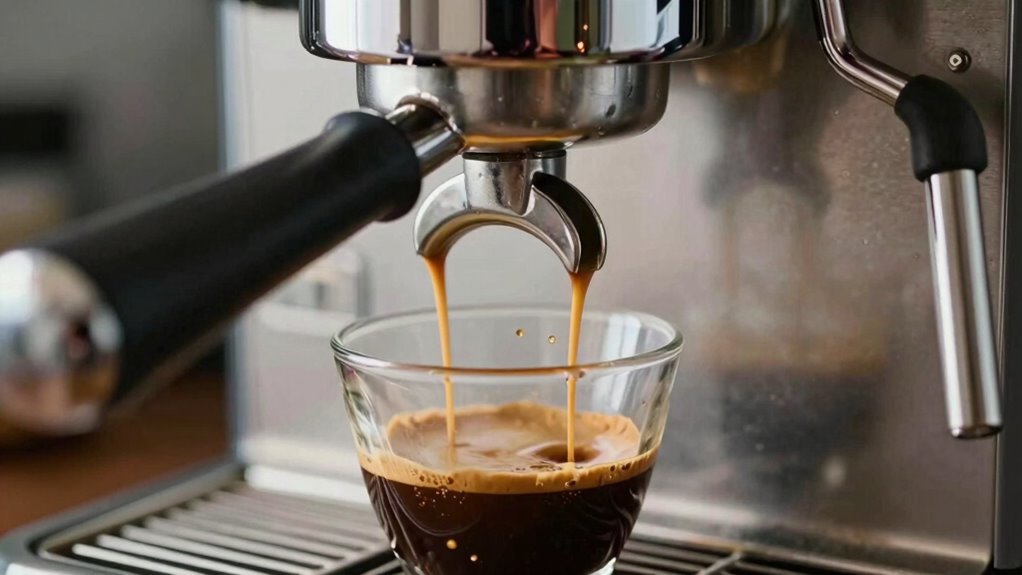
The main factor that influences your espresso flow rate is how you prepare your coffee. Your grind size, tamp pressure, and machine temperature all play vital roles in controlling the shot’s speed. Adjusting these elements carefully helps you achieve the perfect extraction. Using a high-quality airless paint sprayer can also ensure a smooth and consistent application when painting, much like how precise adjustments in espresso making lead to a better shot. Paying attention to piercing aftercare and maintaining proper hygiene can prevent complications and ensure your body heals properly, highlighting the importance of meticulous preparation in both areas.
Coffee Grind Size
Have you ever wondered what primarily determines the flow rate of your espresso? The key factor is coffee grind size. A finer grind creates more resistance, slowing the flow, while a coarser grind speeds it up. Your coffee bean origin also influences how fine or coarse you should grind, as different beans have varying densities and extraction characteristics. Additionally, espresso machine brands can impact how sensitive they are to grind size adjustments. Some machines require a very precise grind, while others are more forgiving. Adjusting the grind size is the first step to controlling flow rate because it directly affects how water interacts with the coffee grounds. Grind size is a crucial factor because it influences extraction efficiency and overall flavor profile. Getting this right guarantees a balanced extraction and consistent espresso shot. Moreover, understanding how machine sensitivity varies can help you fine-tune your grind for optimal brewing results.
Tamp Pressure Consistency
Ever wonder what primarily influences the flow rate of your espresso aside from grind size? It’s tamp pressure, specifically pressure consistency during tamping. When you apply even, steady tamp pressure, you ensure uniform extraction and a predictable flow rate. Inconsistent tamp pressure creates uneven resistance, causing your espresso to run too fast or too slow. To achieve pressure consistency, use a tamper with a firm, controlled motion and avoid pressing too hard or too lightly each time. Practicing a consistent technique helps maintain uniform tamping force, which directly impacts flow rate stability. Remember, the goal is to create even resistance across the coffee bed, so your espresso extracts properly without rushing or stalling. Pressure consistency is key to dialing in the perfect shot.
Machine Temperature Settings
Machine temperature settings play a crucial role in controlling your espresso’s flow rate because heat directly affects the viscosity of water and the extraction process. If the brew temperature is too low, the water won’t extract enough solubles, resulting in a slow flow and weak crema. Conversely, a high brew temperature can cause over-extraction, leading to a fast flow and a loss of crema stability. Adjusting your machine’s temperature ensures the water flows at the ideal rate, balancing extraction and crema formation. Maintaining the right temperature helps produce a consistent shot with rich crema and proper flavor. Always aim for a stable brew temperature to avoid flow rate issues, so your espresso achieves the perfect balance of speed, clarity, and crema quality.
How to Fix Espresso Flow by Adjusting Grind Size
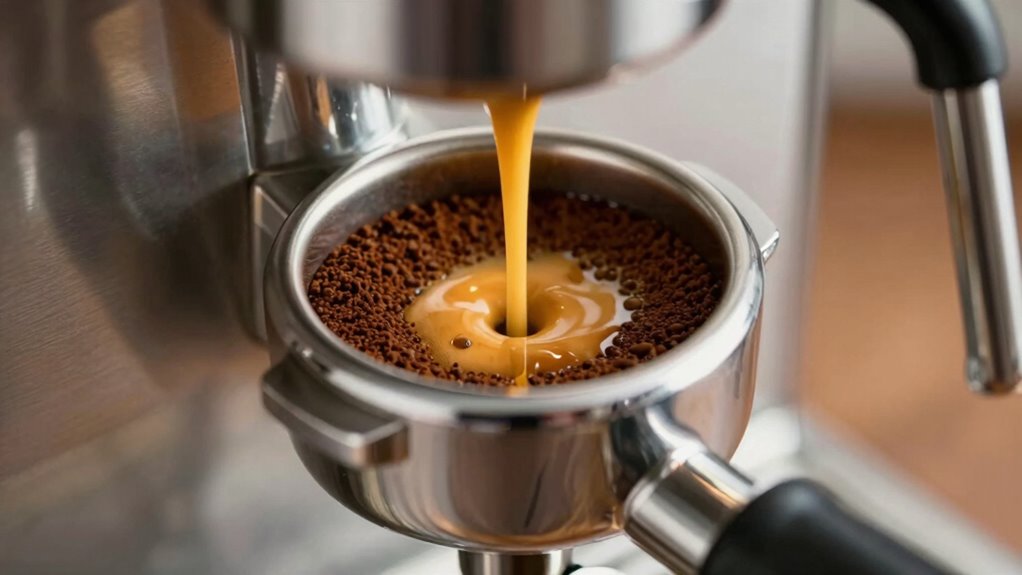
When your espresso flow is too slow or too fast, adjusting the grind size is often the most effective fix. The grind size directly influences flow control because it determines how easily water passes through the coffee bed. If your shot pours too quickly, the grind is too coarse; you need to make it finer to increase resistance. Conversely, if the flow is sluggish or stops, the grind is too fine, and you should coarsen it slightly. Making small adjustments allows you to fine-tune the extraction process without overcorrecting. Remember, a consistent, even grind helps maintain steady flow control. Regularly inspecting and adjusting your grinding equipment ensures you maintain optimal performance over time. Additionally, using proper tamping techniques helps ensure even water distribution and consistent extraction. Proper filter maintenance can also prevent clogs that affect flow rate, contributing to better control. Paying attention to water temperature can further influence flow and extraction quality. Experiment with gradual changes until you achieve the desired flow rate—neither rushing nor dragging—resulting in a balanced, flavorful espresso. Incorporating consistent grind size practices can further enhance your ability to control flow and optimize extraction.
What Happens When You Make Your Grind Finer or Coarser?
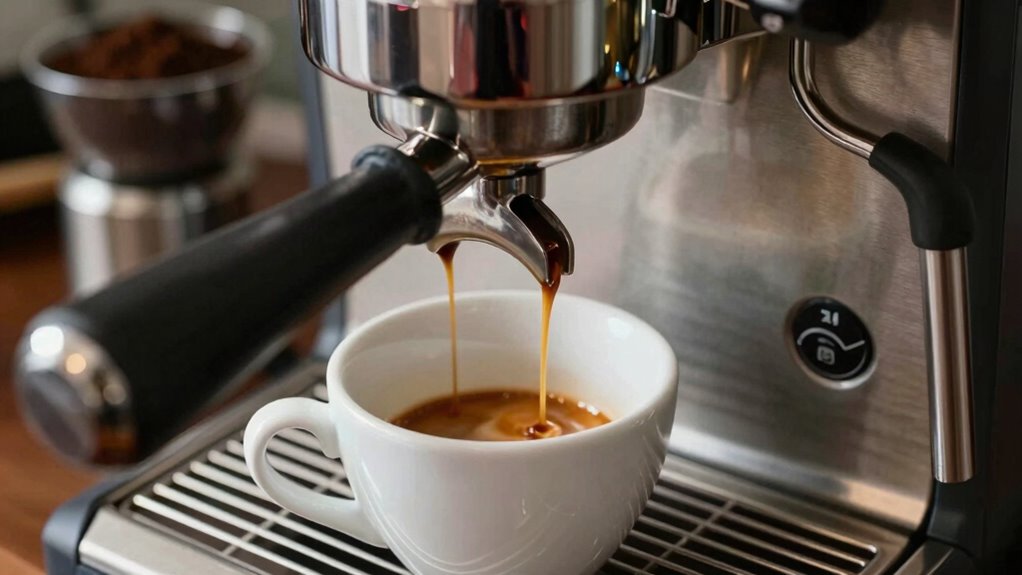
Adjusting your grind size directly impacts how water moves through the coffee bed, affecting your brew time. When you make the grind finer, the particles are smaller, increasing resistance and slowing water flow. This typically results in a longer brew time, which can improve extraction and flavor. Conversely, coarser grinds create larger particles, reducing resistance and allowing water to pass through more quickly. This shortens the brew time and can lead to under-extraction if too coarse. Your grind adjustment fundamentally controls the pace at which water interacts with the coffee, affecting espresso speed. Fine-tuning the grind size helps you hit the ideal brew time, ensuring your espresso isn’t too fast or too slow, and ultimately, more balanced.
Other Factors That Affect Espresso Flow Rate (Tamping, Dose, Temperature)
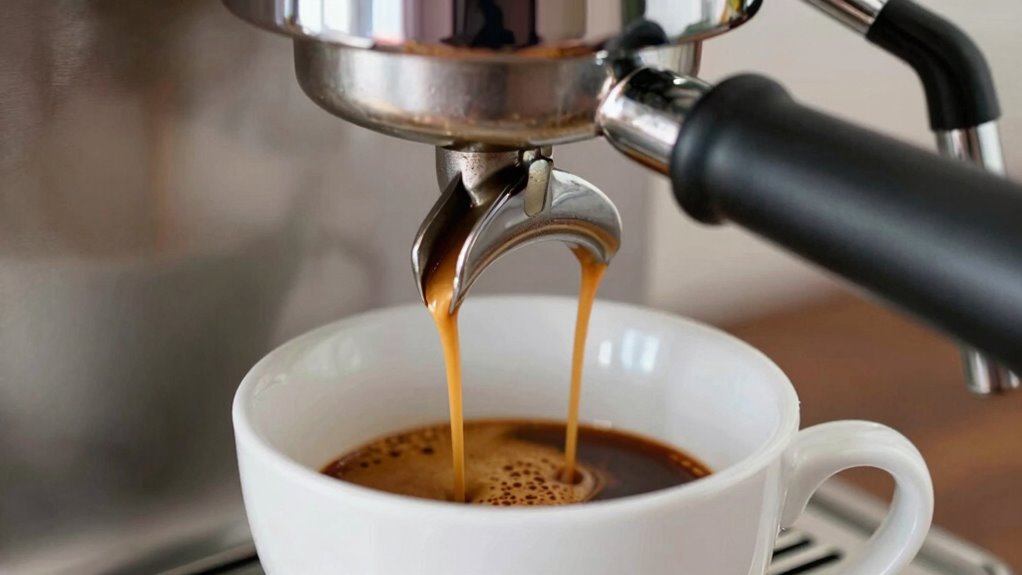
Besides grind size, tamping pressure, dose, and temperature play crucial roles in controlling espresso flow rate. Tamping pressure influences how compact the coffee bed becomes; too much tamping can slow flow, while too little speeds it up. Consistent tamping ensures even extraction and predictable flow. Additionally, consistent tamping techniques help maintain uniformity in each shot. Proper coffee bed density is essential for achieving the desired flow rate and extraction quality. The dose, or amount of coffee used, also impacts flow; a higher dose creates more resistance, slowing the espresso, while a lower dose speeds it up. Brew temperature affects viscosity; if the brew temp is too low, the espresso flows too slowly, and if it’s too high, it flows too quickly. Temperature stability is important for fine-tuning your shot and preventing fluctuations. Adjusting these factors helps fine-tune your shot. Maintaining proper tamping pressure and stable brew temperature is essential for consistent espresso flow and extraction quality. Modern brewing techniques can also help optimize flow by utilizing advanced equipment and automation to achieve predictable results.
Common Flow Rate Problems and How to Solve Them
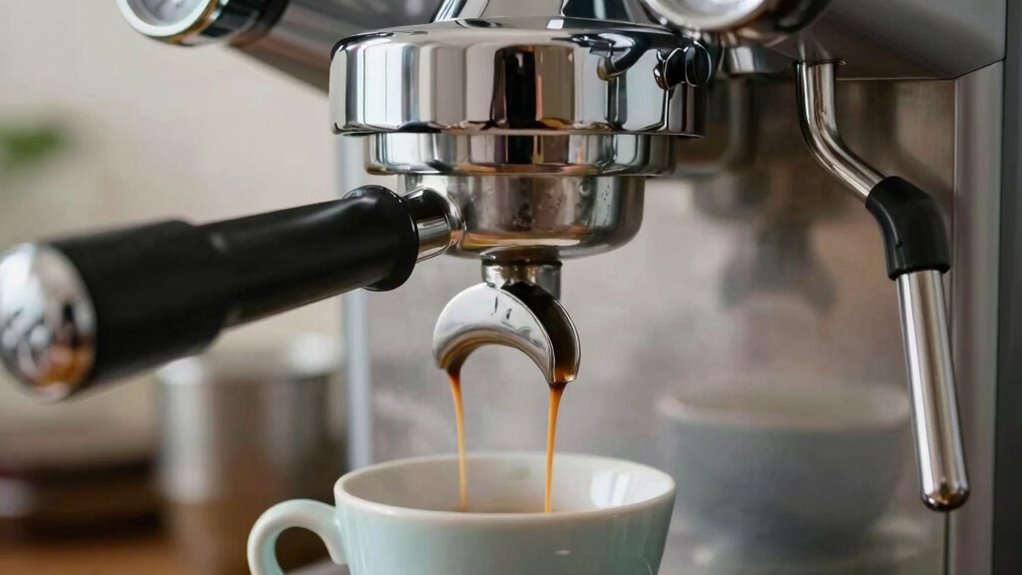
Flow rate issues are common in espresso brewing and can considerably impact the quality of your shot. If your espresso runs too fast or too slow, it’s often due to flow rate problems related to your brew method or water quality. To fix this:
Flow rate problems can ruin your espresso—adjust grind, tamp, and water quality to fix.
- Check your grind size—finer for slow shots, coarser for fast ones.
- Adjust tamping pressure to control resistance.
- Use filtered water to avoid mineral buildup that affects flow.
- Make certain your espresso machine’s basket and shower screen are clean to prevent blockages.
Tips for Maintaining Consistent Flow During Multiple Shots
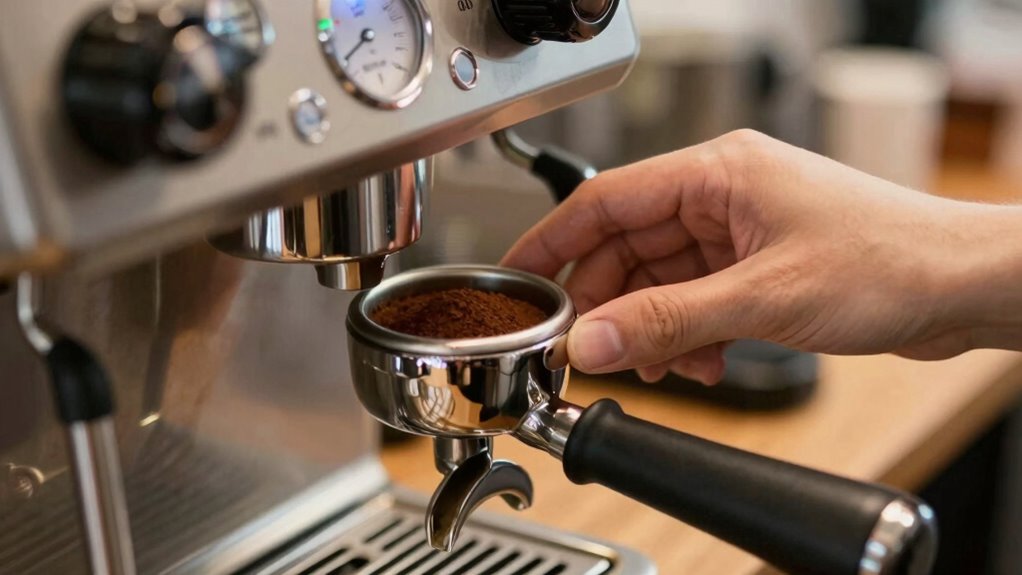
Maintaining consistent flow during multiple espresso shots can be challenging, but with the right techniques, you can guarantee each shot turns out reliably. Focus on controlling your brew temperature, as fluctuations can lead to inconsistent extraction rates. Keep your machine’s temperature stable to ensure uniform flow. Monitoring water pressure is equally important; too high or too low pressure affects flow rate and shot quality. Use a consistent pressure setting and avoid sudden changes during brewing sessions. Preheat your equipment thoroughly to minimize temperature shifts. Regularly check and calibrate your grinder to maintain consistent grind size, which directly impacts water pressure and flow. Properly managing your equipment’s safety and maintenance ensures optimal performance. By keeping both brew temperature and water pressure stable, you ensure each shot maintains a steady flow, delivering consistent espresso quality over multiple pulls.
Final Tips: When and How to Fine-Tune Other Variables
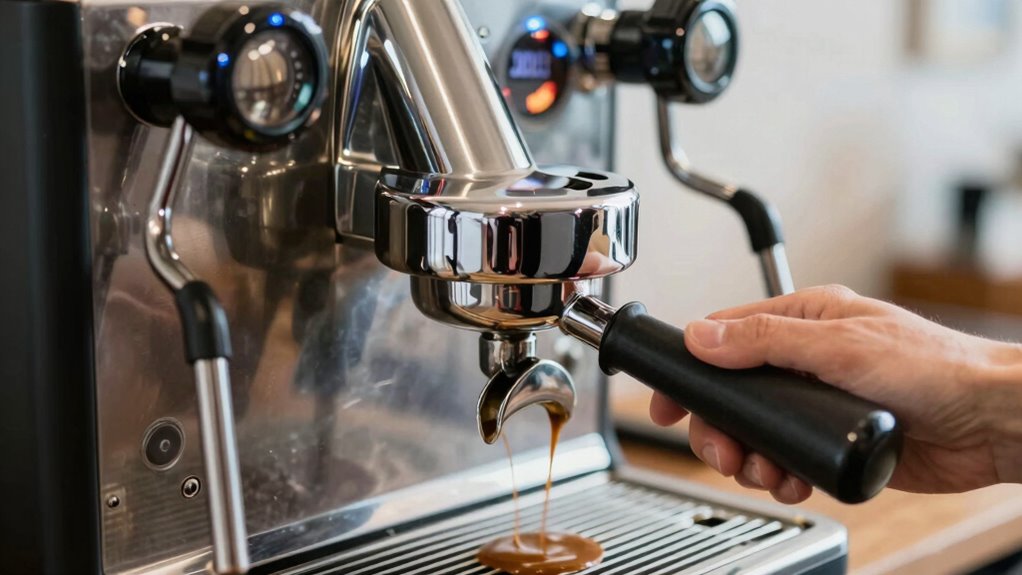
Once you’ve stabilized temperature and pressure, the next step is knowing when and how to fine-tune other variables to perfect your espresso shots. Here are key tips:
Fine-tune variables gradually after stabilizing temperature and pressure for perfect espresso extraction.
- Adjust brew temperature if your shot is too fast or slow, ensuring the temperature aligns with your coffee’s needs.
- Check filter compatibility; using the right filter can influence flow rate and extraction consistency.
- Experiment with grind size and tamp pressure to optimize flow without over-extraction or under-extraction.
- Observe shot timing and adjust variables gradually to avoid overcorrecting, maintaining balance and flavor.
- Regularly detect passive voice in your writing to improve clarity and engagement, just as fine-tuning your espresso enhances flavor.
Fine-tuning these elements helps you achieve ideal extraction, resulting in a balanced, flavorful espresso every time.
Frequently Asked Questions
How Does Ambient Humidity Affect Espresso Flow Rate?
Ambient humidity impacts your espresso flow rate by altering the grind and extraction process. Higher humidity increases ambient moisture, causing coffee grounds to clump and resist water flow, which can slow down extraction. Conversely, low humidity keeps grounds dry and free-flowing, potentially speeding up the flow rate. To maintain consistent espresso, adjust your grind size or dose when humidity levels change, ensuring your shot stays balanced despite humidity impact.
Can Water Mineral Content Influence Extraction Speed?
You might not realize it, but water mineral content can secretly influence your espresso’s extraction speed. Hard water, rich in minerals, increases water hardness and can slow down extraction, while softer water speeds it up. This mineral influence affects flow rate and flavor, so pay attention to your water quality. Adjusting mineral levels can help you control your espresso’s timing, revealing that perfect shot every time.
Does Espresso Machine Age Impact Flow Consistency?
Yes, your espresso machine’s age can impact flow consistency. Over time, machine calibration can drift, causing uneven water flow. A worn burr grinder may also produce inconsistent grounds, affecting extraction. Regularly check and recalibrate your machine, and replace or service your burr grinder when needed. These steps help maintain steady flow, ensuring your espresso’s quality stays consistent regardless of your machine’s age.
How Does Machine Pressure Setting Alter Flow Rate?
Adjusting your machine’s pressure setting directly impacts flow rate. For example, if your espresso flows too quickly, increasing the pressure on the pressure gauge can slow it down by improving flow regulation. Conversely, lowering pressure speeds up extraction. You’ll want to experiment with small changes, observing how the flow rate responds. Proper pressure adjustment guarantees consistent extraction and a balanced flavor profile.
What Role Does Portafilter Design Play in Flow Control?
Your portafilter design influences flow control considerably. The shape of the portafilter affects how water distributes through the coffee, impacting extraction and flow rate. Additionally, the basket material, such as stainless steel or plastic, can alter heat retention and pressure, further influencing flow. By choosing a portafilter with an appropriate shape and basket material, you can better manage flow consistency and brewing quality.
Conclusion
Think of your espresso as a delicate dance—if one step is off, the whole rhythm falters. When I first started, I struggled with inconsistent shots until I realized adjusting my grind size was like tuning an instrument. Just as a guitar string needs the right tension, your grind determines flow rate. Focus there first, and you’ll find your espresso flowing smoothly, delivering that perfect extraction every time. Consistency begins with mastering that one key variable.