To avoid bitterness, heat your green tea water between 150°F and 180°F, but stay closer to 150°F for a delicate flavor, while black tea requires near-boiling water at 200°F to 212°F for full extraction. Too hot green tea extracts bitter compounds, while insufficient heat for black tea can weaken flavor. Mastering these temperatures helps you brew better—continue exploring to perfect your tea’s taste and aroma.
Key Takeaways
- Green tea should be brewed between 150°F–180°F (65°C–80°C) to avoid bitterness and preserve delicate flavors.
- Black tea requires higher temperatures, typically 200°F–212°F (93°C–100°C), for full flavor extraction without becoming bitter.
- Using water hotter than recommended for green tea increases tannin extraction, leading to a bitter taste.
- Slightly under or over the ideal temperature ranges for each tea type can cause over-extraction or under-extraction, affecting bitterness.
- Proper temperature control minimizes bitterness, ensuring green tea remains smooth, while black tea achieves bold, rich flavor.
Why Water Temperature Is Key to Perfect Green and Black Tea
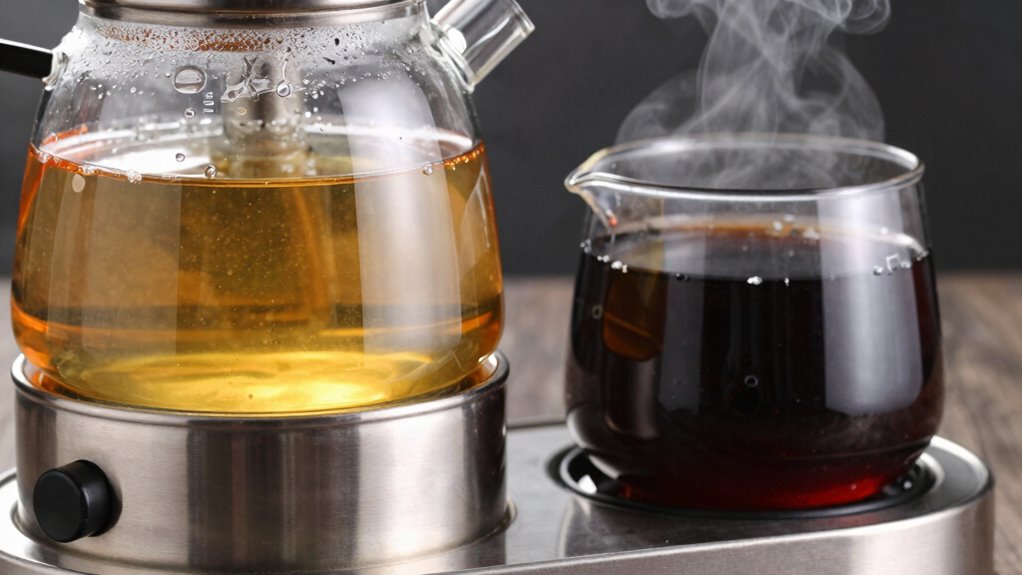
Water temperature is crucial because it directly affects the flavor and aroma of your tea. When you use the right temperature, you enhance the tea’s natural qualities, making the flavor more vibrant and balanced. Cooler water can highlight delicate notes, while hotter water brings out deeper, bolder flavors. Additionally, water clarity plays a role; clean, clear water ensures that impurities don’t interfere with the tea’s taste and aroma. If your water isn’t at the proper temperature, the tea may taste flat or overly bitter, diminishing your overall experience. Proper temperature control helps you extract the best possible tea flavor while maintaining water clarity, so every sip delivers the intended aroma and taste. Using quality water also ensures that your tea’s subtle nuances are preserved, enhancing your overall brewing experience. Moreover, selecting the right water temperature is essential for avoiding excessive bitterness, especially in green teas.
What’s the Best Water Temperature for Green Tea to Avoid Bitterness?

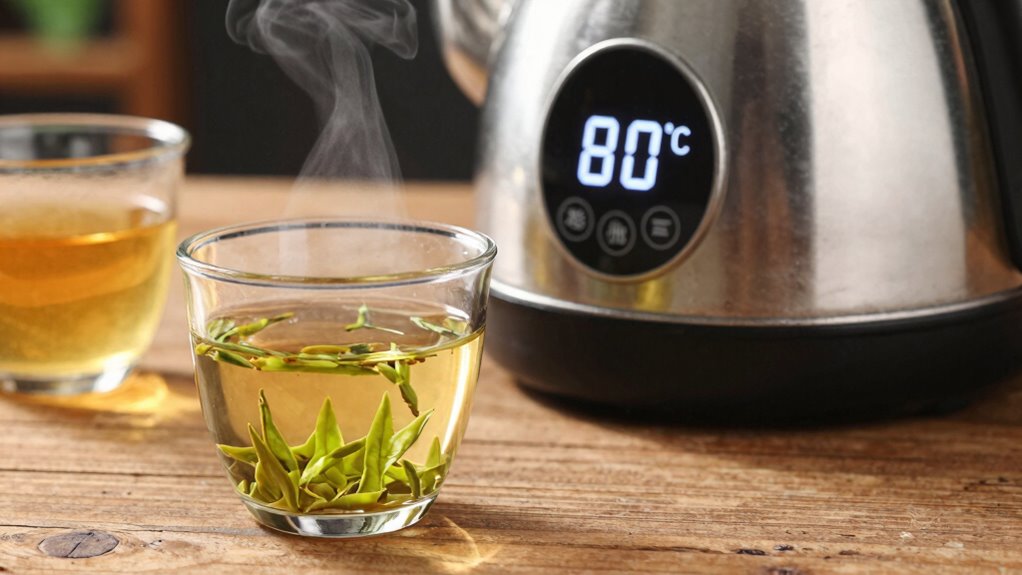
To prevent green tea from turning bitter, it’s essential to use the right water temperature. Generally, the ideal water temperature for green tea ranges between 150°F and 180°F (65°C to 80°C). Using water that’s too hot can extract bitter compounds, overpowering the delicate flavors. For a smoother, more balanced taste, aim for the lower end of this range, around 150°F to 160°F (65°C to 70°C). If you prefer a slightly stronger brew, you can go up to 180°F (80°C), but avoid boiling water. Adjusting the water temperature helps preserve green tea’s fresh, grassy notes while minimizing bitterness. Controlling temperature is essential to prevent over-extraction and bitterness. Proper temperature management ensures you access the best flavor and enjoy green tea without harshness. Additionally, understanding the steeping time can further influence the tea’s flavor profile and bitterness levels. Being aware of the water quality is also important, as mineral content can impact extraction and taste. Incorporating appropriate tools like a thermometer can help maintain precise temperature control for optimal brewing.
How Hot Should Black Tea Be to Unlock Full Flavor?

For black tea to reach its full, rich flavor, you need to brew it at the right temperature—typically between 200°F and 212°F (93°C to 100°C). Proper tea steeping at this temperature ensures maximum flavor extraction without bitterness. If the water’s too hot, you risk over-extracting tannins, making your tea taste harsh. Too cool, and you won’t *unlock* the full depth of flavors. To optimize your brewing:
- Use near-boiling water for a full-bodied taste
- Adjust steeping time based on tea type
- Avoid water that’s slightly under boiling, which can weaken flavor extraction
- Maintaining the correct water temperature is crucial for avoiding bitterness and achieving the desired flavor profile
- A suitable temperature control device can help ensure consistent brewing results
- Considering sound healing science, maintaining precise temperature control can be likened to tuning an instrument for optimal harmony in flavor extraction
- Additionally, paying attention to water quality can further enhance the overall taste of your tea.
- Being mindful of water temperature stability throughout the brewing process ensures consistent results and prevents flavor loss.
Getting the temperature right ensuresyour black tea is balanced, flavorful, and satisfying.
How to Measure Your Kettle’s Water Temperature With a Thermometer
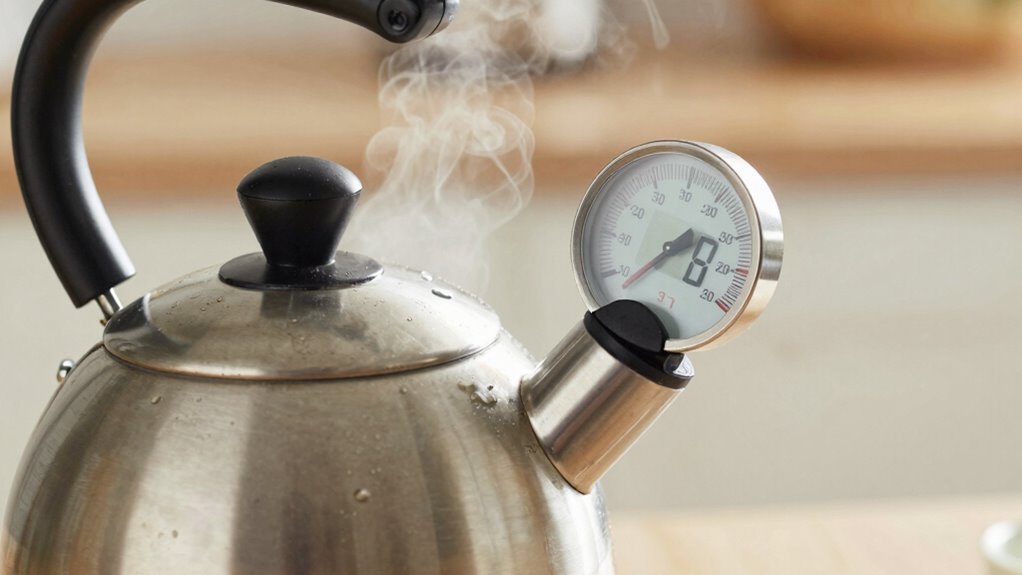
To get accurate water temperatures, you need the right thermometer. Make sure you choose one suitable for boiling water and calibrate it properly for consistent readings. When measuring, read the temperature carefully to guarantee your tea steeps at the perfect heat. Additionally, consider the wave and wind conditions that may affect your kettle’s temperature stability during outdoor brewing.
Choosing the Right Thermometer
Choosing the right thermometer is essential for accurately measuring your kettle’s water temperature. The type of thermometer you select depends on your kettle material and how you store your tea. For example, digital thermometers provide quick, precise readings and are suitable for most kettle materials. Infrared thermometers are non-contact and ideal if you want to avoid touching hot surfaces. Analog dial thermometers work well with glass or metal kettles but require careful placement. When considering tea storage, confirm your thermometer can handle high temperatures without damage. Also, choose one with easy-to-read displays and durable materials to withstand frequent use. Picking the right thermometer ensures you maintain optimal water temperature for perfect green or black tea, preventing bitterness and maximizing flavor.
Properly Calibrating Equipment
Accurately measuring your kettle’s water temperature requires proper calibration of your thermometer. To do this, start by cleaning your thermometer regularly to guarantee accurate readings. Before calibrating, check your tea storage; proper storage helps maintain consistent water quality, which affects temperature accuracy. Use a pot of boiling water and insert the thermometer, noting the reading. If it doesn’t read 212°F (100°C), adjust your thermometer according to the manufacturer’s instructions or replace it if necessary. Consistent kettle maintenance, like descaling and cleaning, also helps keep your thermometer functioning correctly. Regular calibration ensures your temperature readings are precise, allowing you to brew green or black tea at the ideal temperature without bitterness or weak flavor. Understanding Free Floating is essential for maintaining accurate measurements and achieving perfect tea brewing conditions. Proper calibration is essential for tea brewing perfection, as measurement accuracy directly impacts the taste and quality of your tea. Additionally, incorporating temperature consistency practices helps prevent fluctuations that could compromise your brew’s flavor profile.
Reading Temperature Accurately
Once your thermometer is properly calibrated, you can confidently measure your kettle’s water temperature. Accurate reading is essential for ideal tea infusion and precise temperature control. To get the most reliable results:
- Immerse the thermometer tip into the water without touching the kettle’s sides or bottom.
- Wait a few seconds until the reading stabilizes before noting the temperature.
- Make sure the thermometer is clean and free of residue for accurate measurements.
- Keep in mind that proper home charging practices can help ensure your kettle and other appliances operate safely and efficiently. Additionally, understanding industry trends can help you stay updated on the latest in kettle technology and temperature control options.
How to Adjust Your Kettle Settings for Better Tea Results
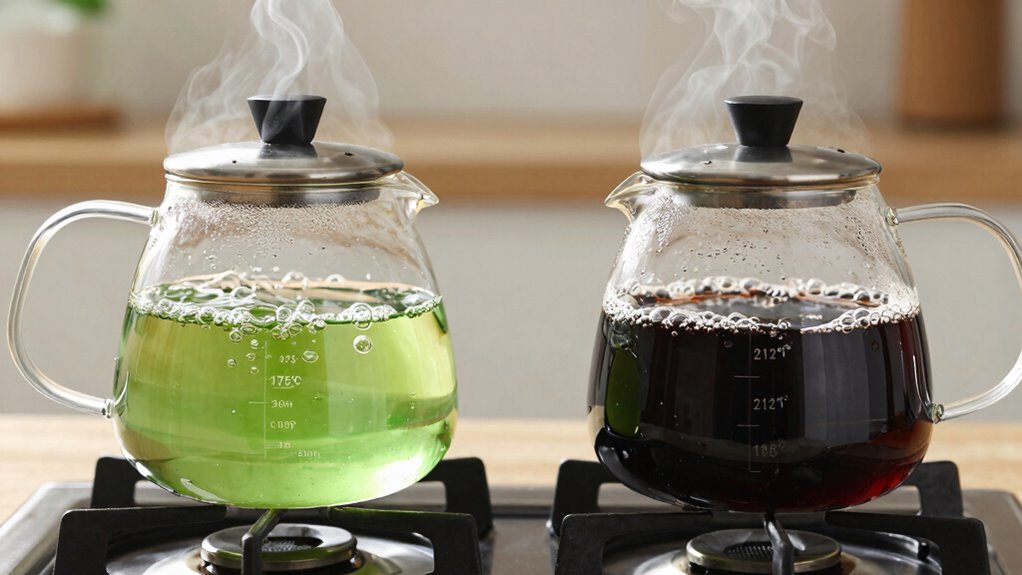
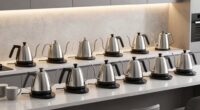
To improve your tea’s flavor, start by adjusting your kettle’s temperature settings based on the type of tea you’re brewing. For green tea, use a lower temperature—around 150-180°F—to prevent bitterness, while black tea benefits from higher temps, near boiling. Consider your kettle material; electric kettles with precise temperature controls make adjustments easier, whereas stovetop kettles may require monitoring. Proper tea storage is essential, as exposure to air or humidity can alter tea quality and affect brewing results. If your kettle has multiple settings, select the one closest to the recommended temperature for your tea type. Always preheat your kettle if possible, and avoid overheating. Fine-tuning your kettle settings based on tea type and material guarantees a better, more consistent brewing experience. Additionally, being aware of AI-powered virtual reality in e-learning can help you find innovative ways to learn about tea brewing techniques and improve your skills. Incorporating temperature control features into your kettle helps maintain precise brewing conditions, ensuring optimal flavor extraction.
Common Mistakes That Make Green or Black Tea Taste Bitter
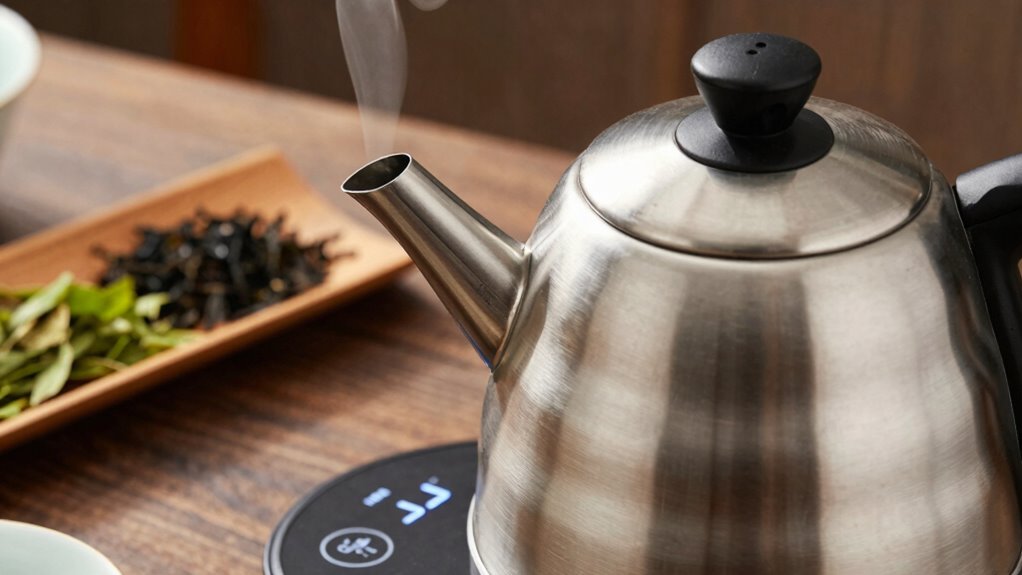
One common mistake is oversteeping your tea, which releases too many tannins and makes it bitter. Using water that’s too hot or not adjusting for the type of tea can also cause unwanted flavors. Additionally, poor-quality tea leaves will often taste bitter regardless of your brewing technique.
Oversteeping Consequences
Oversteeping your green or black tea can easily lead to a bitter taste that masks the tea’s natural flavors. When you leave tea to brew too long, the tannins and polyphenols become overextracted, resulting in unwanted bitterness. To avoid this, pay attention to your brewing duration and how you store your tea. Improper tea storage can also cause the tea to lose freshness, making it easier to overbrew or develop off-flavors. Be mindful of these common mistakes:
- Ignoring recommended brewing times
- Storing tea in warm, humid areas
- Overextending steeping beyond ideal duration
Sticking to proper brewing durations helps prevent bitterness, and storing your tea properly preserves its flavor profile. Oversteeping may seem minor, but it profoundly impacts the taste of your tea.
Water Temperature Errors
Using the wrong water temperature can turn a good cup of green or black tea into a bitter disappointment. If your tea’s bitterness increases, it might be due to poor water temperature control. Always consider your tea’s ideal steeping temperature—too hot, and you’ll extract bitter compounds; too cold, and flavor suffers. Additionally, water quality plays a key role. Using water that’s been stored improperly or contains impurities can alter the taste, intensifying bitterness. Proper tea storage ensures freshness and prevents absorbing odors that could interfere with flavor. When preparing your tea, use fresh, filtered water heated to the right temperature. Avoid heating water beyond the recommended range, as this can cause over-extraction of tannins and bitter compounds. Paying attention to both water temperature and quality prevents bitterness and enhances your tea-drinking experience.
Poor Tea Quality
Poor quality tea leaves are a common mistake that can lead to bitter-tasting green or black tea. Low-quality leaves often contain stems, dust, or broken pieces, which release tannins more readily and cause bitterness. Proper tea storage is essential; exposure to air, moisture, or sunlight degrades leaf quality and intensifies bitterness. When tea leaves aren’t stored correctly, they lose freshness, leading to a dull flavor and increased bitterness. To avoid this, always keep tea in airtight containers away from heat and light. Additionally, choose high-quality leaves for a smoother, more balanced brew. Poor leaf quality directly impacts your tea’s flavor, making it harsher and more bitter than it should be. Investing in good tea leaves and proper storage dramatically improves your brewing experience.
Do Different Green and Black Teas Need Different Temperatures?
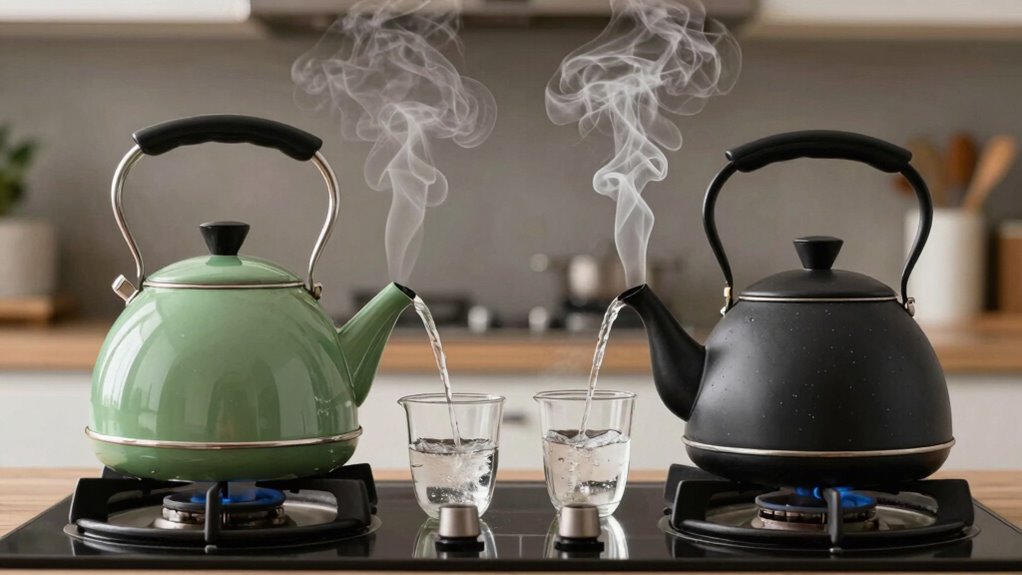
Different green and black teas often require varying brewing temperatures to bring out their best flavors. The specific tea leaf varieties influence the ideal temperature, as more delicate green teas generally need lower temperatures to avoid bitterness, while robust black teas can handle higher heat. Water mineral content also plays a role; hard water with high mineral levels can impact extraction, making precise temperature control even more important. For green teas, brewing between 150°F and 180°F helps preserve subtle notes and prevent bitterness. Black teas usually benefit from water at 200°F or slightly higher to fully extract their rich flavors. Adjusting temperature based on tea type and water quality guarantees you maximize taste without sacrificing aroma or introducing unwanted bitterness.
Can You Brew Multiple Cups at Different Temperatures?
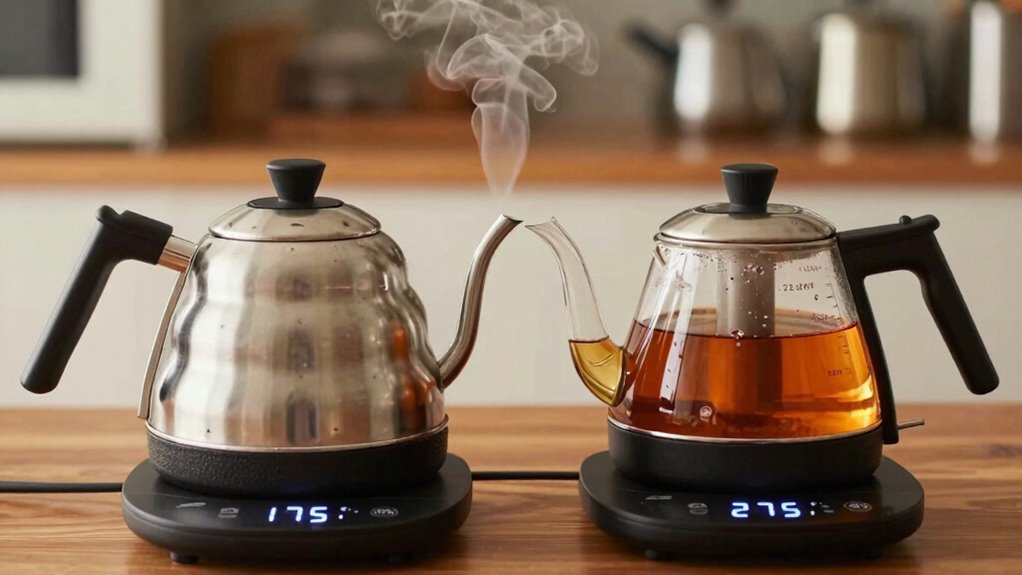
Brewing multiple cups at different temperatures is entirely possible, but it requires careful planning to guarantee each tea reaches its ideal flavor. If you want to prepare multiple cups with varying temperature requirements, consider these tips:
- Use a kettle with precise temperature control to set each cup’s specific needs.
- Brew each tea separately to avoid cross-flavor contamination.
- Keep hot water in separate containers or thermoses to maintain temperature variation during brewing.
What to Do When Your Tea Tastes Bitter: Troubleshooting Tips
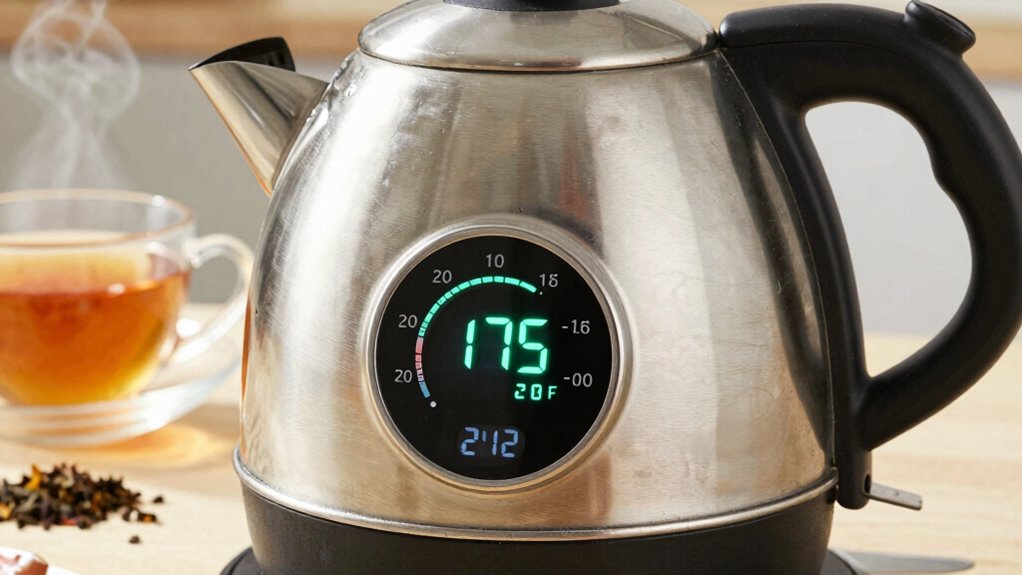
When your tea tastes bitter, it’s often a sign that something in the brewing process needs adjustment. To restore flavor balance, start by reducing the brewing duration; over-steeping releases excessive tannins that cause bitterness. Check your water temperature—if it’s too hot, especially for green tea, it can extract bitter compounds. Consider lowering the temperature or shortening your steeping time to prevent this. Using fresh, quality tea leaves also helps, as stale leaves tend to produce a harsher taste. Finally, experiment with shorter brewing times and slightly cooler water until you find the right balance. By paying attention to brewing duration and temperature, you can prevent bitterness and enjoy a smoother, more flavorful cup every time.
Frequently Asked Questions
Can I Reuse Water Heated at Different Temperatures for Brewing?
Yes, you can reuse water heated at different temperatures for brewing, but be mindful of water reuse and temperature stability. Reusing water may slightly dilute your tea’s flavor and affect temperature consistency, so it’s best to reheat to the proper temperature each time. To guarantee ideal brewing, maintain steady temperatures and avoid reheating several times, which could compromise flavor and make your tea taste less fresh.
How Does Altitude Affect Ideal Tea Brewing Temperatures?
Altitude effects can lower boiling points, so you might need to adjust your brewing temperatures for better precision. At higher elevations, water boils at a lower temperature, making it tricky to reach the ideal steeping warmth for different teas. To guarantee the best flavor, use a thermometer or adjust your heat source accordingly. This way, you maintain brewing precision and avoid under- or over-extracting your tea, regardless of altitude.
Do Different Kettle Materials Influence Water Temperature Accuracy?
In the age of dial-up internet, your kettle material can impact temperature accuracy. Stainless steel kettles tend to heat evenly, maintaining consistent water temps, while glass or ceramic ones may fluctuate due to material properties. Choose a kettle with good insulation and precise temperature controls to guarantee your tea reaches the perfect brew. Remember, the right kettle material helps you avoid over- or under-heating, giving you ideal flavor every time.
Is It Better to Preheat My Kettle Before Boiling for Tea?
Preheating your kettle offers several benefits, including improved temperature consistency and faster boiling times. By preheating, you guarantee the water reaches the ideal temperature more accurately, which is essential for brewing perfect green or black tea. This step helps maintain stable temperatures throughout the process, reducing the risk of bitterness or weak flavors, so your tea turns out just right every time.
How Long Should I Steep Green or Black Tea at Optimal Temperatures?
Imagine a gentle swirl of steam rising as you steep your tea. For green tea, keep it at 175°F and steep for 2-3 minutes to maximize flavor without bitterness. Black tea benefits from slightly higher temperatures, around 200°F, steeped for 3-5 minutes. These steeping times ensure ideal flavor extraction, balancing strength and aroma. Adjust slightly based on your taste, but avoid oversteeping to prevent bitterness.
Conclusion
Getting your water temperature just right is the secret to brewing perfect green and black tea. Don’t let bitterness spoil your experience—think of it as finding the sweet spot where flavors blossom, not burn out. With a thermometer and some adjustments, you’ll turn your kettle into a tea-making powerhouse. Remember, practice makes perfect, and soon enough, you’ll be brewing cups that hit the nail on the head every time.