To avoid ruining your bread, start with high-quality, fresh ingredients and measure them precisely. Clear any residual dough from your bread maker and check that all parts, like the kneading paddle and bread pan, are clean and in good condition. Learn your machine’s features and settings to select the right program for your bread. Establish good habits, like regular maintenance, to guarantee consistent results. Keep going, and you’ll discover even more tips for perfect bread every time.
Key Takeaways
- Use fresh, high-quality ingredients and check expiration dates to ensure proper rising and good flavor.
- Measure ingredients precisely to prevent issues like dense bread or poor texture.
- Clean the kneading paddle and inspect the bread pan regularly for buildup or damage.
- Familiarize yourself with your machine’s features and settings to select the right program for each bread type.
- Develop good baking habits by maintaining ingredients and equipment, ensuring consistent, successful results.
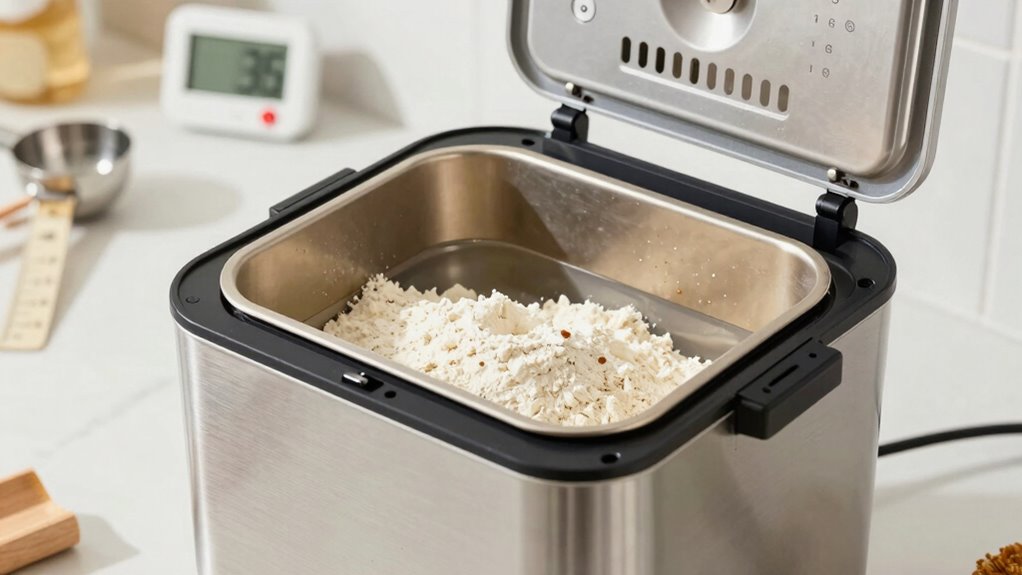
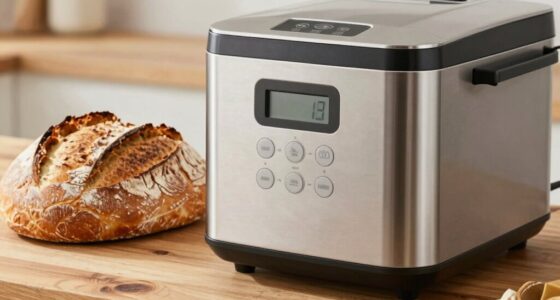
Getting started with a bread maker can be exciting, but beginners often make common mistakes that affect the final result. One of the most vital factors is paying attention to ingredients quality. Using fresh, high-quality ingredients makes a significant difference in the taste and texture of your bread. Low-quality flour or old yeast can lead to dense, flat loaves or bread that doesn’t rise properly. Always check expiration dates and store your ingredients correctly — flour in a cool, dry place and yeast in an airtight container in the fridge. When measuring ingredients, be precise; too much salt or sugar can interfere with yeast activity, while too little can result in bland bread. Stick to the recipe’s recommended quantities to guarantee consistent results.
Use fresh, high-quality ingredients and measure precisely for perfect bread results.
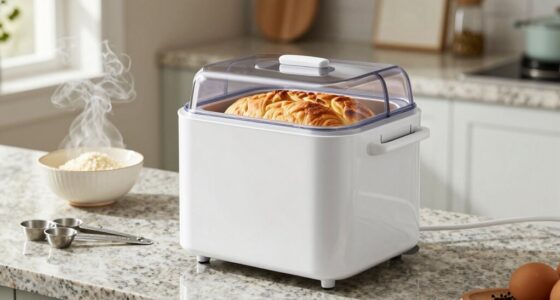
Another common mistake beginners make is neglecting machine maintenance. Your bread maker isn’t just a set-it-and-forget-it appliance — it needs regular upkeep to perform well. Before each use, guarantee the kneading paddle is clean and free of residual dough or flour, which can hinder proper kneading. Periodically, check the bread pan for any buildup or wear, replacing parts as needed. After use, wipe down the interior and exterior to prevent crumbs or residue from accumulating, which could cause mold or odors over time. Proper maintenance preserves your machine’s functionality and extends its lifespan, ensuring every loaf comes out perfect. Additionally, understanding your bread maker’s specific features and settings can help you achieve better results and troubleshoot issues more effectively.
Getting the basics right from the start saves you frustration and wasted ingredients. When you select ingredients of high quality, you lay a solid foundation for good bread. Avoid shortcuts like using expired yeast or old flour, which can sabotage your baking efforts. Similarly, taking care of your bread maker by cleaning it regularly and inspecting parts prevents breakdowns and ensures consistent performance. It’s tempting to rush through these steps, but they’re vital for achieving reliable results and improving your baking skills. As you get more comfortable, you’ll better understand how ingredient quality and machine upkeep influence your bread’s texture, flavor, and rise.
In short, paying close attention to ingredient quality and maintaining your bread maker are essential first steps. They help you avoid common pitfalls and set you up for success. Quality ingredients ensure your bread tastes great and rises properly, while diligent machine maintenance keeps your appliance working smoothly. When you combine these practices, you’ll notice a marked improvement in your baking and enjoy the process more. Remember, good bread starts with good habits — from selecting fresh ingredients to caring for your machine. Mastering these basics early on will save you time, money, and disappointment, making your bread-making experience more enjoyable and rewarding.
Frequently Asked Questions
Can I Substitute Ingredients Without Affecting Bread Quality?
Yes, you can substitute ingredients, but it may affect bread quality and flavor variations. When making ingredient substitutions, use small amounts first to test how they impact texture and taste. Keep in mind that replacing flour types or sweeteners can change the bread’s consistency. Experiment carefully, and note that some substitutions work better than others, so adjust quantities as needed to achieve the desired result.
How Often Should I Clean My Bread Maker?
You should clean your bread maker after every use to keep it in top shape. Follow a regular maintenance schedule, including wiping down the pan and kneading paddle and checking for crumbs or residue. This prevents buildup that could affect bread quality. Deep cleaning once a month is also recommended to maintain hygiene and guarantee the machine functions smoothly, reducing the risk of malfunctions or flavor contamination.
What’s the Best Way to Store Leftover Bread?
Did you know that over 60% of bread is wasted because people don’t store it properly? To keep your leftover bread fresh, store it in an airtight container or a bread box at room temperature for a few days. For longer storage, wrap it tightly and freeze. Proper bread storage prevents mold and keeps your bread tasting great longer. Just be sure to consume it within a week if refrigerated.
Are There Specific Recipes for Gluten-Free Bread?
Yes, there are specific recipes for gluten-free bread. You should use gluten-free flours like rice, almond, or tapioca, and make recipe adjustments such as adding xanthan gum or eggs to improve texture and structure. Follow tested gluten-free bread recipes closely, and consider experimenting with different flour combinations to find what works best in your bread maker. This way, you’ll get delicious, allergy-friendly bread every time.
How Do I Troubleshoot Common Bread Maker Errors?
Sometimes, your bread machine might send signals that need gentle attention. To troubleshoot common errors, first check the error code and consult your manual for specific guidance. Confirm your bread machine calibration is accurate, as misalignments can cause issues. If problems persist, clean the sensors and reset the machine. Adjust ingredient measurements if needed, and run a test cycle. Patience and careful troubleshooting help keep your bread baking on track.
Conclusion
By avoiding these common mistakes, you’ll master your bread maker just like a skilled chef crafts a perfect loaf. Think of it as tending a garden—you nurture it carefully, and it rewards you with delicious results. Remember, patience and attention to detail make all the difference. Don’t be discouraged by a few setbacks; every baker starts somewhere. Keep practicing, stay curious, and soon you’ll be baking bread that’s as satisfying as a warm hug on a chilly day.