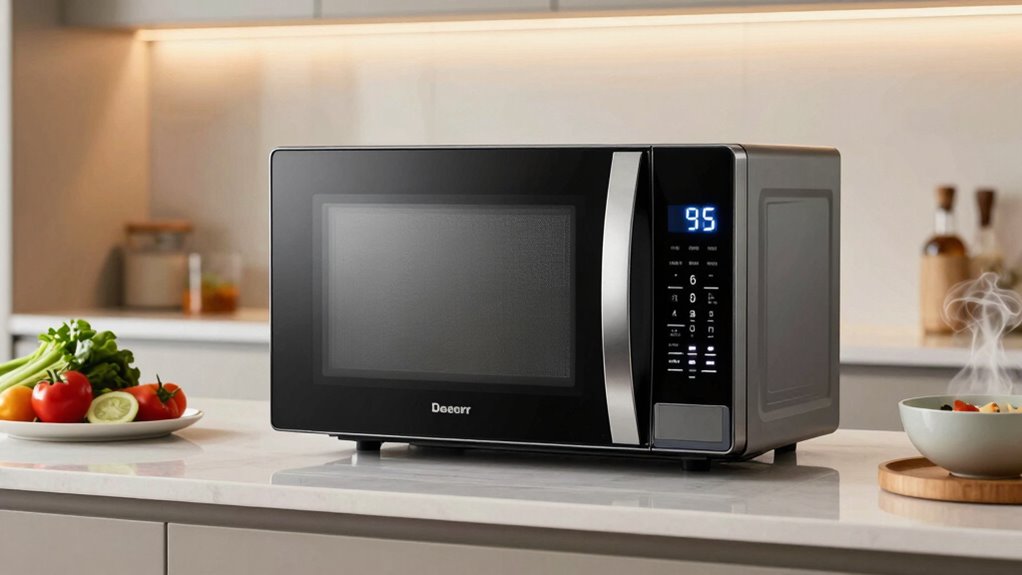

Inverter technology in a countertop microwave delivers a steady stream of power that provides more precise temperature control, leading to evenly heated dishes and energy savings. It’s especially helpful when melting delicate ingredients, reheating leftovers without overcooking, or cooking at lower power levels for gentle simmering. While it’s useful for more nuanced tasks, if you mainly do simple reheats or basic cooking, the benefits may be less noticeable. Keep exploring to discover how inverter tech can enhance your cooking experience.
Listen free for 30 days with Audible
Thousands of audiobooks and originals — cancel anytime.
As an affiliate, we earn on qualifying purchases.
Key Takeaways
- Inverter technology provides consistent, precise power for even heating, improved temperature control, and energy efficiency.
- It is especially useful for delicate tasks like melting, softening, or gentle reheating without overcooking.
- Inverter features are most beneficial when cooking requires nuanced temperature management or slow, gentle heating.
- For simple reheating or basic tasks, inverter technology may be less necessary, and traditional microwaves can suffice.
- Some marketing claims may highlight inverter tech but offer few real performance benefits; understanding actual advantages helps inform choices.
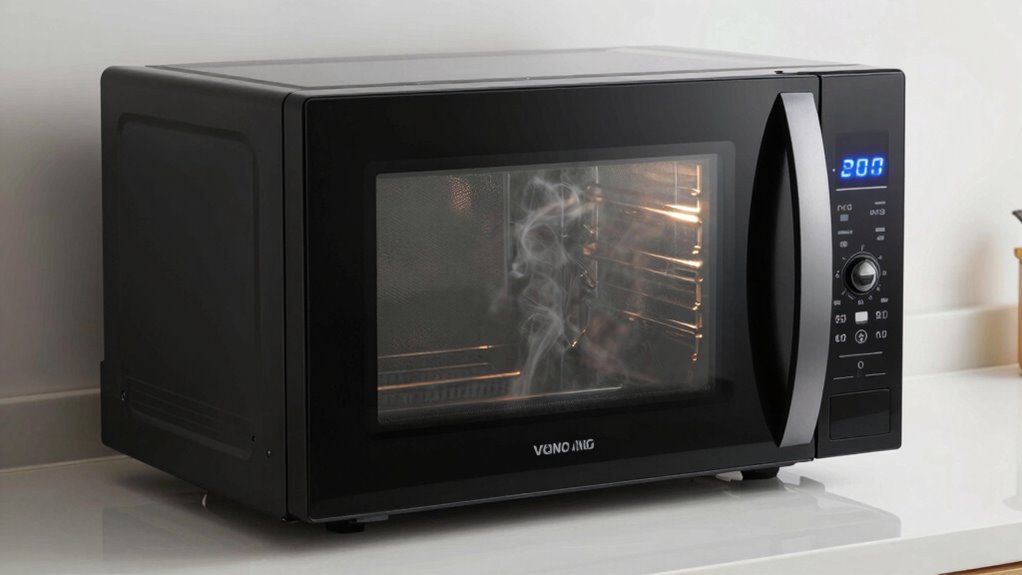
Inverter technology has revolutionized how countertop microwaves cook your food, offering more precise temperature control and even heating. Instead of cycling the power on and off like traditional microwaves, inverter models deliver a consistent stream of power. This means your food heats smoothly and thoroughly, reducing cold spots and overcooked edges. As a result, you get better cooking precision, ensuring dishes are heated evenly and retain their flavor and texture. Plus, because the microwave uses power more efficiently, it consumes less energy, making it a smarter choice for your wallet and the environment.
When you use a microwave with inverter technology, you’ll notice it handles delicate tasks more effectively. For example, melting chocolate or butter, or softening ice cream, becomes easier because the temperature stays steady without sudden bursts of heat that can ruin these delicate textures. This consistency is especially helpful when reheating leftovers, as it prevents overheating and drying out food. Inverter microwaves are also more capable when cooking at lower power levels, allowing you to simmer or gently cook ingredients without losing control over the process. So, if you’re preparing dishes that require slow, gentle heating, inverter technology provides unmatched precision.
However, it’s important to recognize when inverter technology is genuinely beneficial and when it’s just marketing. Some manufacturers tout inverter models as revolutionary, but the core benefits—power efficiency and cooking precision—may not always justify a higher price. Certain features, like preset cooking modes or smart sensors, can be marketed as part of inverter technology, but they might be available on more basic models, too. If you mainly use your microwave for simple reheating or basic cooking, the advanced control offered by inverter technology might not *considerably* impact your results. In these cases, traditional microwaves with turntables and standard power controls could suffice.
Despite this, if you frequently prepare nuanced dishes or value energy savings, inverter technology can be a worthwhile investment. It provides you with better control over your cooking, reduces energy consumption, and offers more consistent results. Additionally, newer inverter models often include additional features that enhance convenience and versatility. Just keep in mind that not every feature labeled as “inverter” will dramatically improve your experience unless your cooking style benefits from precise temperature management. *Basically*, understanding when inverter technology truly enhances your microwave use helps you make smarter choices, balancing cost against real benefits.
As an affiliate, we earn on qualifying purchases.
Frequently Asked Questions
Does Inverter Technology Increase Microwave Energy Consumption?
No, inverter technology doesn’t markedly increase your microwave’s energy consumption. In fact, it enhances energy efficiency by delivering consistent power, which can reduce overall power consumption during operation. You’ll notice that cooking is more even and quick, often using less energy compared to traditional microwaves. So, instead of raising your energy bills, inverter technology helps optimize power usage, making your microwave more efficient without adding to your energy costs.
Are All Microwave Brands Using Inverter Technology Equally Effective?
Not all microwave brands using inverter technology are equally effective. In a brand comparison, some brands have advanced inverter systems that deliver more precise temperature control, while others face technological limitations that reduce efficiency. You’ll find that reputable brands tend to invest in better inverter components, offering more consistent cooking results. So, it’s smart to research specific models and read reviews to guarantee you choose a microwave with reliable inverter performance.
How Does Inverter Microwave Repair Differ From Traditional Models?
You’ll find that inverter microwave repair differs from traditional models mainly in inverter durability and repair costs. Inverter components are more complex, so repairs may be pricier and require specialized skills. If the inverter fails, you might face higher costs compared to traditional magnetron replacements. However, because inverter technology often lasts longer, repairs could be less frequent, balancing out the initial investment over time.
Can Inverter Technology Improve Cooking Speed for All Food Types?
Yes, inverter technology can enhance cooking speed for all food types. It delivers consistent power, which helps maintain food texture and guarantees even cooking. Whether you’re reheating leftovers, melting chocolate, or preparing delicate dishes, inverter microwaves adjust power levels seamlessly. This results in faster cooking times, better texture, and more reliable results across a variety of foods, making your cooking experience more efficient and satisfying.
Is Inverter Technology Necessary for Basic Microwave Functions?
Inverter technology isn’t necessary for basic microwave functions, but it can boost power efficiency, helping you save energy over time. It also provides more precise temperature control, which improves cooking quality. However, this feature often comes with higher cost implications. If you mainly need a microwave for simple tasks like reheating or boiling, a basic model will suffice and be more budget-friendly.
As an affiliate, we earn on qualifying purchases.
Conclusion
Inverter technology is like a skilled conductor guiding your microwave’s energy, ensuring every dish is perfectly reheated or cooked. While it’s a powerful tool when precision matters, sometimes it’s just a shiny ornament in the marketing symphony. Know when to trust its gentle touch and when to see through the hype. With a little knowledge, you’ll be the maestro of your kitchen, turning everyday cooking into a harmonious performance.
As an affiliate, we earn on qualifying purchases.
energy efficient countertop microwave
As an affiliate, we earn on qualifying purchases.
As an affiliate, we earn on qualifying purchases.
Flea & tick season Picks
flea and tick prevention
As an affiliate, we earn on qualifying purchases.