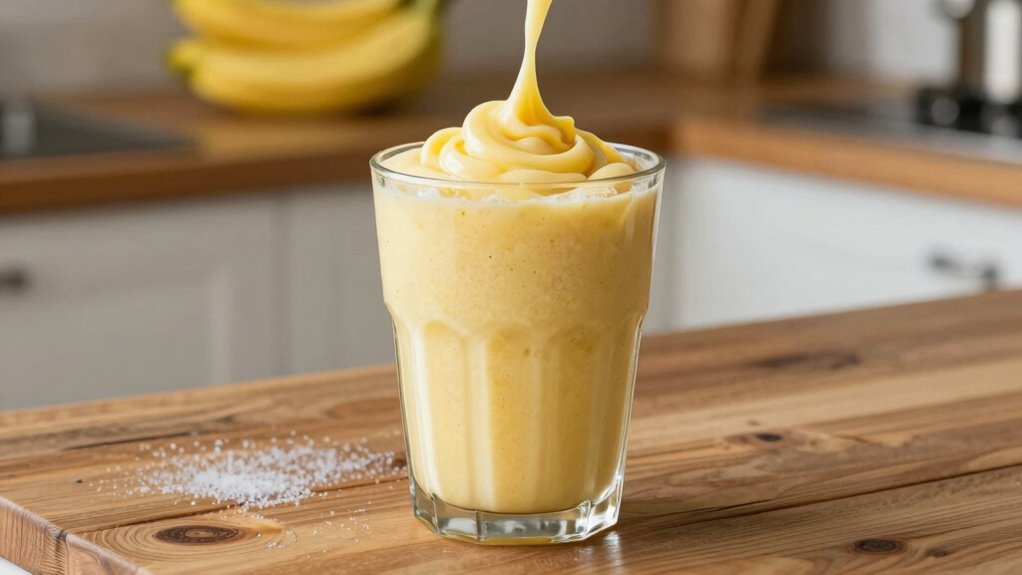

The key to preventing chunky banana bits in your smoothie is to freeze your bananas properly. Use fully ripe bananas, peel and slice them into uniform pieces, then store in airtight containers or zip-top bags before freezing until solid. make certain the bananas are fully frozen before blending to achieve a smooth, creamy texture and avoid clumps. If you want to master this simple step and perfect your smoothies, keep exploring tips and techniques.
Key Takeaways
- Fully freeze banana slices until completely solid before blending to prevent chunky bits.
- Use small, uniformly sliced banana pieces for even freezing and smoother blending.
- Ensure bananas are fully frozen and firm before adding to the blender.
- Use a high-powered blender capable of smoothly processing frozen fruit.
- Add liquid gradually during blending to facilitate a velvety, chunk-free smoothie.
Why Frozen Bananas Make Your Smoothie Creamier and Easier to Blend
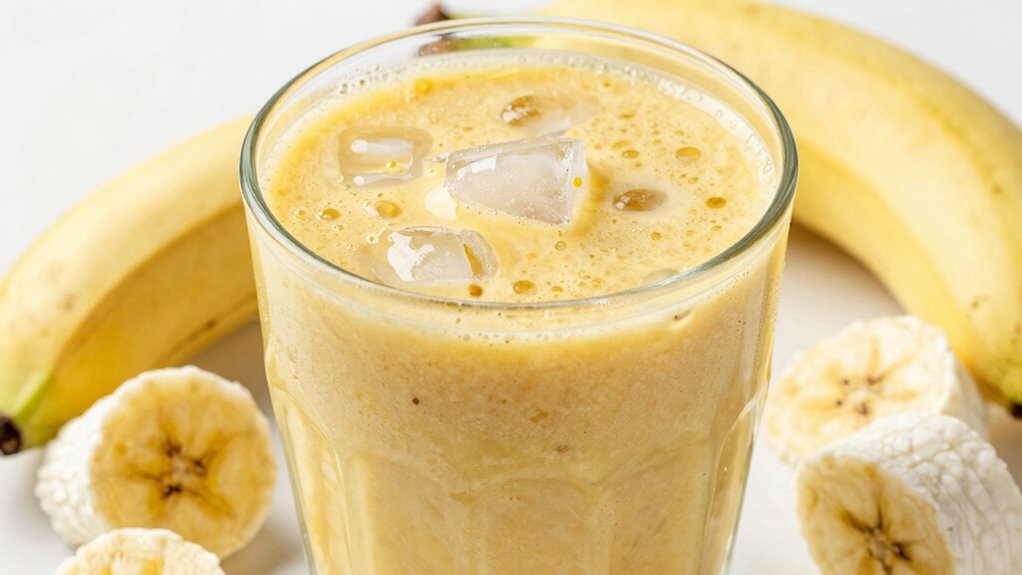
Frozen bananas are key to achieving a creamy, smooth texture in your smoothies because their cold temperature and icy consistency help thicken the blend. The ripeness of your bananas impacts the flavor and texture; perfectly ripe bananas are sweet and soft, making them ideal for freezing. When it comes to freezing methods, peel your bananas first and then store them in airtight bags or containers to prevent freezer burn. Slicing bananas before freezing speeds up the process and makes blending easier. Proper freezing ensures your bananas stay firm and cold, which contributes to a creamier smoothie. Avoid freezing bananas loose in a bag, as they tend to clump together. Using well-ripened, properly frozen bananas guarantees a smooth, velvety drink every time.
How to Freeze and Prepare Bananas for Perfectly Smooth Results
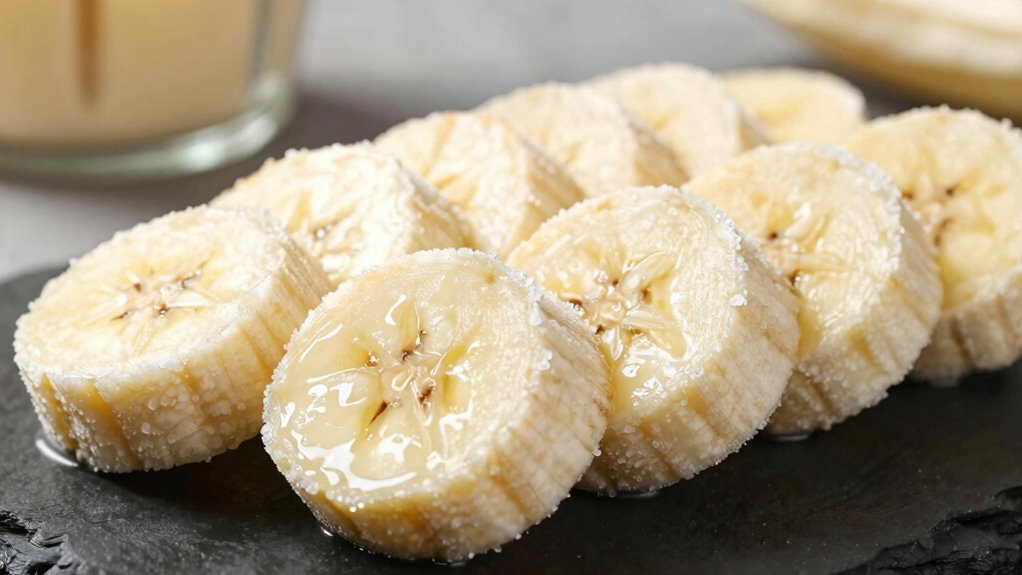
To guarantee your smoothies turn out perfectly smooth and creamy, it’s essential to freeze and prepare your bananas properly. Start with banana ripeness—aim for bananas that are fully ripe, with brown spots, for ideal flavor and texture. When freezing, use effective freezing techniques: peel the bananas first to save time and prevent freezer burn. Slice them into uniform pieces to ensure even freezing and blending. Store the slices in airtight containers or zip-top bags, removing excess air. Label and date the packages to keep track of freshness. Proper preparation involves removing excess moisture and ensuring bananas are fully frozen before blending. Additionally, using proper freezing techniques can help maintain the best quality and prevent the formation of ice shards, resulting in a creamy, smooth consistency every time, free from chunky bits and ice shards. Understanding the history of pinball machines can also inspire creative ways to incorporate vintage aesthetics or themes into your kitchen decor, making your smoothie prep area more fun and personalized. Incorporating freezing best practices can further enhance texture and prevent unwanted ice formation.
The Simple Step to Avoid Chunky Banana Bits Every Time
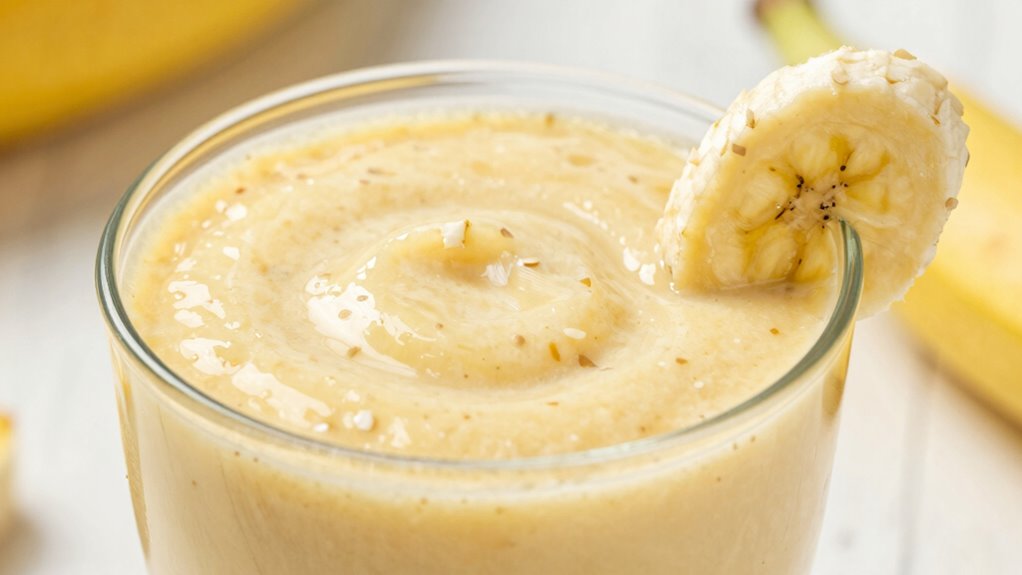
After properly freezing and slicing your bananas, the key to avoiding chunky bits during blending is to guarantee they are fully frozen before you start. Make sure your bananas are in small pieces to promote even freezing, which helps when mixing with other fruits for perfect fruit pairing. Using a high-powered blender also makes a difference, as it can handle frozen chunks smoothly and efficiently. Regular blender maintenance, like cleaning the blades and container, prevents buildup that could hinder blending power. Keep your blender in top shape to ensure it processes ingredients evenly. Fully frozen bananas combined with well-maintained equipment ensure a silky, smooth texture every time, preventing those unwanted chunky banana bits and giving you a consistently creamy smoothie. Additionally, ensuring your blender blades are sharp and well-maintained will improve blending performance and help achieve the perfect smoothness. To further enhance your blending results, proper freezing techniques can make a significant difference in preventing unwanted chunks. Proper freezing not only preserves banana quality but also influences how easily they blend, as supported by the role of freezing in food preparation. For best results, understanding the science of texture in smoothies can help you troubleshoot and perfect your blending process.
Common Mistakes That Cause Lumpy Banana Smoothies (and How to Fix Them)

If your smoothies turn out lumpy, you might be overloading with frozen bananas or not blending long enough. Adding too many frozen chunks can overwhelm your blender, making it hard to get a smooth texture. Make sure to blend in stages and give it enough time to fully incorporate all the ingredients. Utilizing energy-efficient blending techniques can also help improve the process and result. To avoid issues with frozen bananas, consider leasing a car with features that include powerful motors designed for heavy-duty blending.
Overloading With Frozen Bananas
Overloading your blender with too many frozen bananas is a common mistake that leads to lumpy, uneven smoothies. When you pack in excessive bananas, the blender struggles to blend everything smoothly, resulting in chunky bits. To avoid this, consider the ripeness of your bananas, as riper bananas add natural sweetness without needing extra ingredients. Using too many frozen bananas can also overpower the smoothie’s flavor and texture, making it overly thick. Keep these tips in mind:
- Use a balanced ratio of bananas to other ingredients
- Choose bananas at the right ripeness for natural sweetness
- Add liquids gradually to help blending
- Reserve some frozen banana for later blending if needed
This approach guarantees a smooth, creamy consistency without compromising flavor or texture.
Inadequate Blending Time
Many people end up with lumpy banana smoothies simply because they don’t blend long enough. Inadequate blending duration prevents the ingredients from fully breaking down, resulting in uneven smoothie consistency. To avoid this, blend your smoothie until it’s smooth and creamy, usually about 1-2 minutes depending on your blender. Check the consistency regularly and stop once it’s velvety and uniform.
| Blending Duration | Resulting Smoothie Consistency |
|---|---|
| Less than 1 minute | Chunky, lumpy texture |
| 1-2 minutes | Smooth, well-blended, creamy |
| Over 2 minutes | Thin or frothy texture, potential overheating |
| Varies by blender | Adjust blending time for ideal consistency |
| Proper blending | Perfectly smooth banana smoothie |
Tips to Boost Your Banana Smoothie’s Texture and Flavor
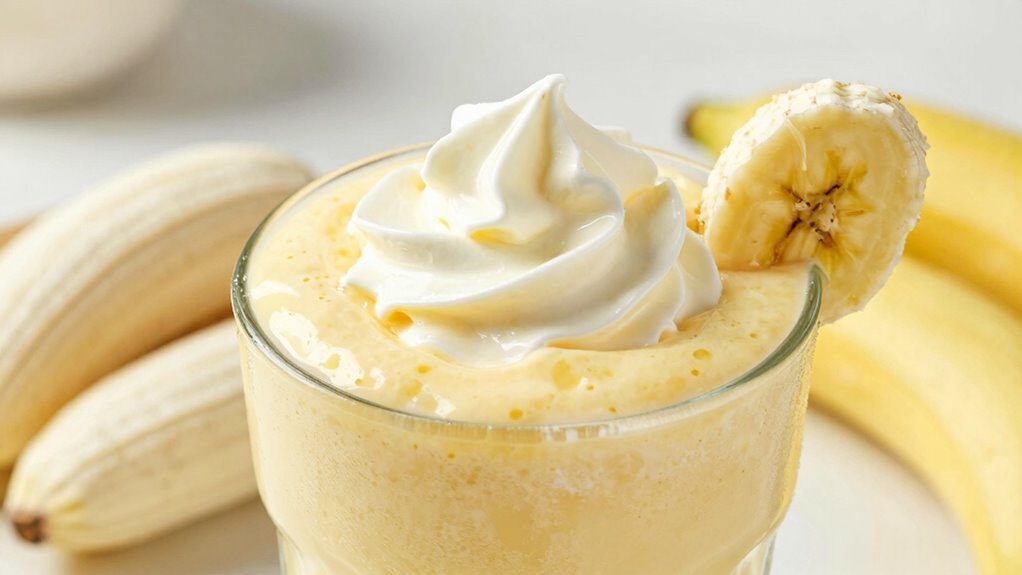
To enhance your banana smoothie’s texture and flavor, start by choosing the right ingredients. Incorporate complementary fruit pairings to create a richer taste and improve texture. Using ingredients like berries or mango can boost flavor enhancement and add natural sweetness. Additionally, consider adding a splash of vanilla or a hint of cinnamon for depth. To make your smoothie creamier and more satisfying, include a dollop of Greek yogurt or a splash of coconut milk. You can also experiment with different textures by adding oats or chia seeds. These simple tips guarantee your smoothie is smooth, flavorful, and perfectly balanced without chunkiness. Remember, selecting ingredients thoughtfully makes all the difference in achieving a luscious, well-rounded blend. Moreover, understanding food texture modification can inspire creative ingredient choices and presentation styles. Exploring texture-enhancing techniques allows for even more control over your smoothie’s consistency and appeal. Incorporating methods like blending in stages or adjusting blending times is a key factor in achieving the perfect smoothness.
Troubleshooting: What to Do When Your Smoothie Still Turns Out Lumpy
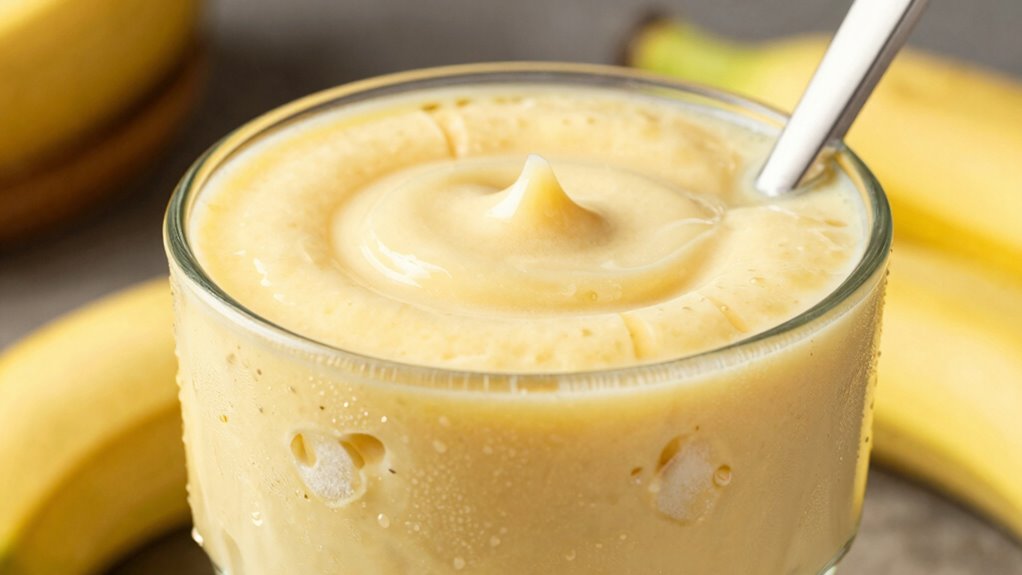
If your smoothie still turns out lumpy despite blending, the issue often lies in the ingredients or blending process. Start by examining your fruit pairing; some fruits, like bananas, blend smoothly, but others, like berries, can cause lumps if not properly prepared. Make certain your frozen bananas are fully frozen and cut into smaller chunks to help the blender process them evenly. Additionally, check your blender maintenance—clean blades and a well-functioning motor make a big difference. If your blender isn’t blending smoothly, consider adding a splash of liquid or pausing to scrape down the sides. Using the right fruit pairing and maintaining your blender ensures a consistently smooth texture, preventing those unwanted chunky banana bits. Proper electric motor power can also improve blending performance, especially with tougher ingredients. Regularly inspecting your blender components guarantees optimal performance and smoother results. To achieve the best consistency, choosing a blender with sufficient digital literacy features can help you troubleshoot and optimize your blending process more effectively. Ensuring your blender has adequate power capacity is essential for handling frozen fruits efficiently and preventing lumps. Moreover, selecting a blender with high-quality blades can significantly contribute to achieving a smoother blend.
Frequently Asked Questions
Can I Use Fresh Bananas Instead of Frozen Ones?
Yes, you can use fresh bananas instead of frozen ones. To achieve a smooth, creamy texture, choose bananas that are very ripe, as they blend easier. Use proper freezing techniques by peeling and slicing the bananas before freezing to prevent chunky bits. When blending, add a splash of milk or juice to help achieve the desired consistency, making your smoothie just as delicious and smooth as with frozen bananas.
How Long Should I Freeze Bananas Before Blending?
You should freeze bananas for at least 2 hours, but ideally 4-6 hours for the best texture. Use ripe bananas, as their natural sweetness enhances your smoothie. The longer you freeze, the creamier your smoothie becomes, preventing chunky banana bits. Avoid overfreezing beyond 24 hours, which can cause freezer burn. Proper freezing duration guarantees smooth blending and a delicious, creamy consistency every time.
Does Blending Speed Affect Smoothie Texture?
Blending speed definitely affects your smoothie texture. If you use a high speed, you’ll blend ingredients quickly and get a smoother, creamier consistency. Slower speeds may leave chunks or create a less uniform texture. To achieve the best results, start blending on low to break down large pieces, then increase to high for a silky, well-blended smoothie. Adjust the speed based on your desired thickness and smoothness.
Are There Alternative Methods to Prevent Banana Chunks?
Ever wondered if there’s a way to avoid banana chunks without extra steps? You can try chopping your bananas into smaller pieces or letting them ripen fully before freezing. Riper bananas blend more smoothly, helping you achieve the perfect smoothie thickness. Do you really want a lumpy drink? Using these methods guarantees your smoothie stays creamy and consistent, giving you that velvety texture every time.
Can Adding Liquids First Help Avoid Chunky Bits?
Yes, adding liquids first helps prevent chunky bits by creating a liquid layer that facilitates smoother blending. When you layer liquids at the bottom, it allows your blender blades to spin more freely, breaking down banana chunks more effectively. Using blending techniques like pulsing and gradually increasing speed ensures a silky texture. This simple step makes a noticeable difference, giving you a perfectly smooth banana smoothie every time.
Conclusion
Think of your smoothie as a well-orchestrated symphony—every ingredient needs to play its part smoothly. When you freeze bananas properly, you’re like a conductor ensuring each note sounds perfect. I once skipped this step and ended up with chunky bits, feeling like I was chewing my music. Now, with this simple trick, your smoothie will blend effortlessly, creating a creamy masterpiece every time. Just a small step can turn your blend into a smooth, delicious harmony.