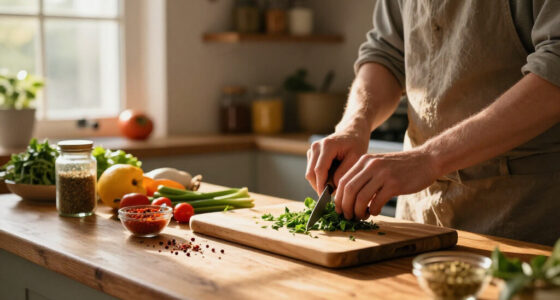
Your pesto turns brown because of oxidation, which happens when herbs and nuts are exposed to air, causing enzymes to break down and produce dark melanin pigments. To prevent this, quickly assemble ingredients, cover the pesto tightly with plastic wrap or a layer of olive oil, and add a splash of lemon juice to slow the process. For effective natural fixes and storage tips, you’ll find simple steps that keep your pesto vibrant longer.

Get kitchen staples and gadgets delivered free — and shop member deals
- Fast, free delivery on millions of items
- Access to Prime Big Deal Days deals on October 6–7
- Prime Video, Amazon Music and more included
Key Takeaways
- Oxidation from air exposure causes herbs and nuts in pesto to turn brown, degrading color and flavor.
- Quickly blending ingredients and covering pesto minimizes air contact, slowing oxidation.
- Adding lemon juice or vinegar early helps preserve vibrant green color naturally.
- Storing pesto in airtight containers with a layer of olive oil creates a barrier against oxygen.
- Freezing in small portions and pressing plastic wrap directly on the surface prevents browning over time.
airtight food storage containers
As an affiliate, we earn on qualifying purchases.
As an affiliate, we earn on qualifying purchases.
Why Does Pesto Turn Brown? Understanding Oxidation
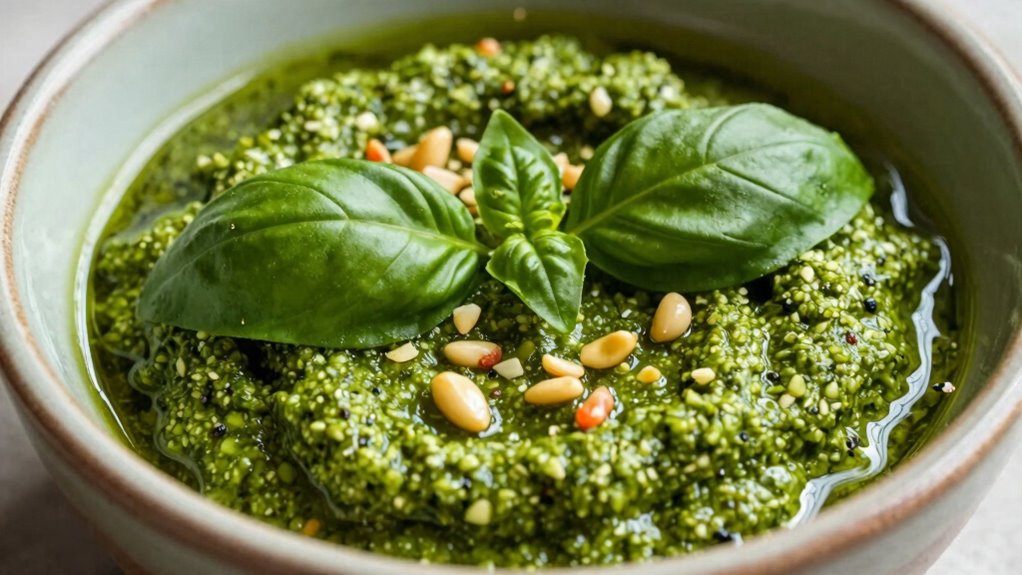
When you expose pesto to air, it quickly turns brown due to a chemical process called oxidation. This happens because the herbs in your pesto, like basil, contain enzymes that degrade when exposed to oxygen, leading to herb degradation. Similarly, the nuts in pesto, such as pine nuts or walnuts, undergo nut oxidation, which accelerates browning. As these enzymes break down, they react with oxygen, producing melanin pigments that turn the mixture darker. This process isn’t harmful but affects the appearance and flavor. The more air your pesto contacts, the faster these reactions occur, causing it to lose its vibrant green color. Understanding this helps you grasp why wearing down the pesto’s freshness happens quickly once it’s exposed to air. Additionally, color temperature adjustments can be used in lighting setups to enhance the visual appeal of food photography, making your pesto look more vibrant in photos. Proper storage methods, such as pressing plastic wrap directly onto the pesto’s surface, can also reduce oxidation rates and help maintain its fresh color longer. Using antioxidant-rich ingredients like lemon juice or vinegar in your pesto can further slow down browning by inhibiting enzyme activity and oxidation. Incorporating airtight containers is another effective way to limit oxygen exposure and preserve the pesto’s bright color over time.
As an affiliate, we earn on qualifying purchases.
How Does Oxidation Affect Herbs and Nuts in Pesto?
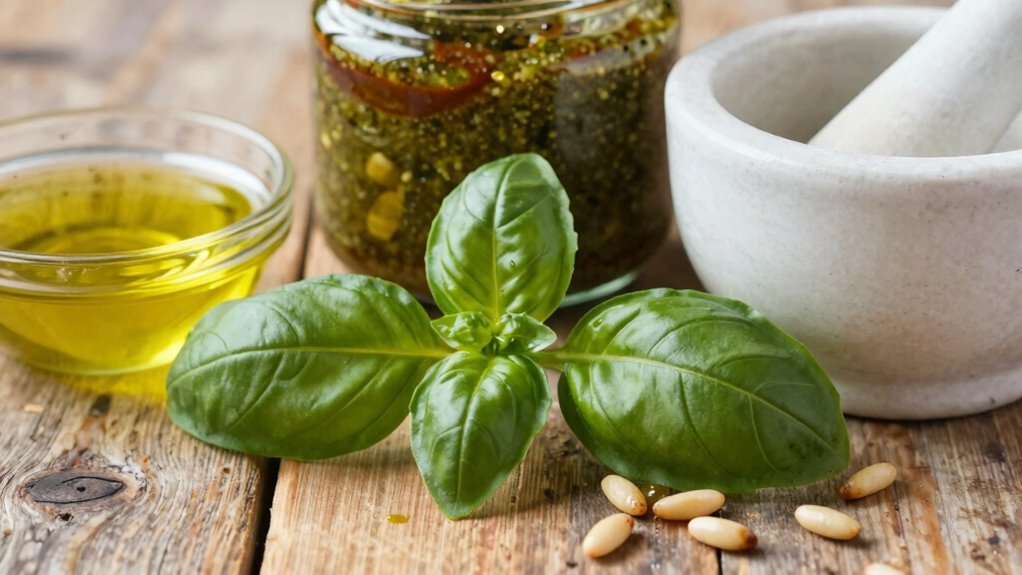
Oxidation impacts both the herbs and nuts in your pesto, leading to noticeable changes in color, texture, and flavor. When herbs are exposed to air, their vibrant greens fade, compromising herb preservation and resulting in dullness. Nuts undergo nut oxidation, becoming bitter and rancid over time, which affects taste and smell. To understand this, consider the following:
| Herb Preservation | Nut Oxidation |
|---|---|
| Keeps pesto green | Causes bitterness |
| Slows color fading | Renders nuts rancid |
| Maintains flavor | Degrades texture |
| Uses antioxidants | Accelerates spoilage |
| Extends freshness | Reduces shelf life |
Recognizing how oxidation affects these ingredients helps you take action to keep your pesto fresh and flavorful. Oxidation process
As an affiliate, we earn on qualifying purchases.
How to Prevent Pesto From Turning Brown During Preparation
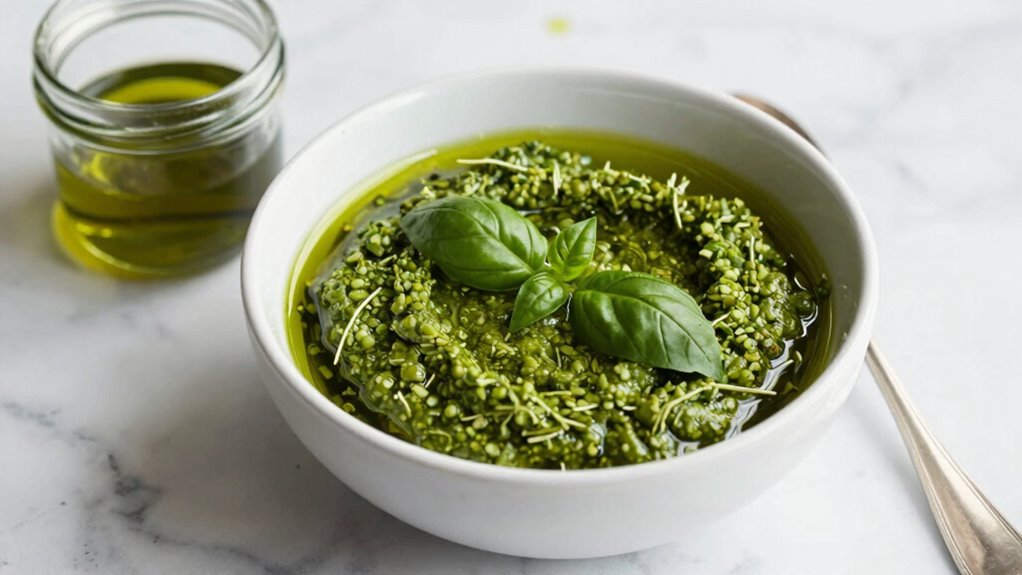
To prevent your pesto from turning brown during preparation, start by working quickly and assembling ingredients just before blending. This minimizes exposure to air, which is essential for herb preservation and reducing nut oxidation. Keep herbs and nuts fresh and ready, so you can blend everything swiftly. Use a clean, airtight bowl or container if you need to pause briefly. When blending, add a thin layer of olive oil on top, acting as a barrier against oxygen. Avoid over-processing, which can release more enzymes and speed up browning. Incorporating lemon juice or vinegar early in the process, as their acidity helps slow oxidation, is also beneficial. Additionally, choosing air quality appliances like air purifiers can help maintain a fresher environment, reducing the presence of airborne pollutants that might accelerate spoilage. Maintaining proper kitchen hygiene further minimizes bacteria and mold growth that could contribute to spoilage. Using fresh herbs and nuts enhances flavor and reduces the likelihood of browning, as older ingredients are more prone to oxidation. Proper storage conditions of your ingredients can also significantly impact how quickly your pesto browns, ensuring your ingredients stay vibrant longer. Paying attention to oxidation processes and how they affect fresh produce can also help you better control browning. Focusing on these steps keeps your pesto vibrant and fresh during preparation, preventing that undesirable browning.
As an affiliate, we earn on qualifying purchases.
Best Storage Tips to Keep Your Pesto Vibrant and Fresh
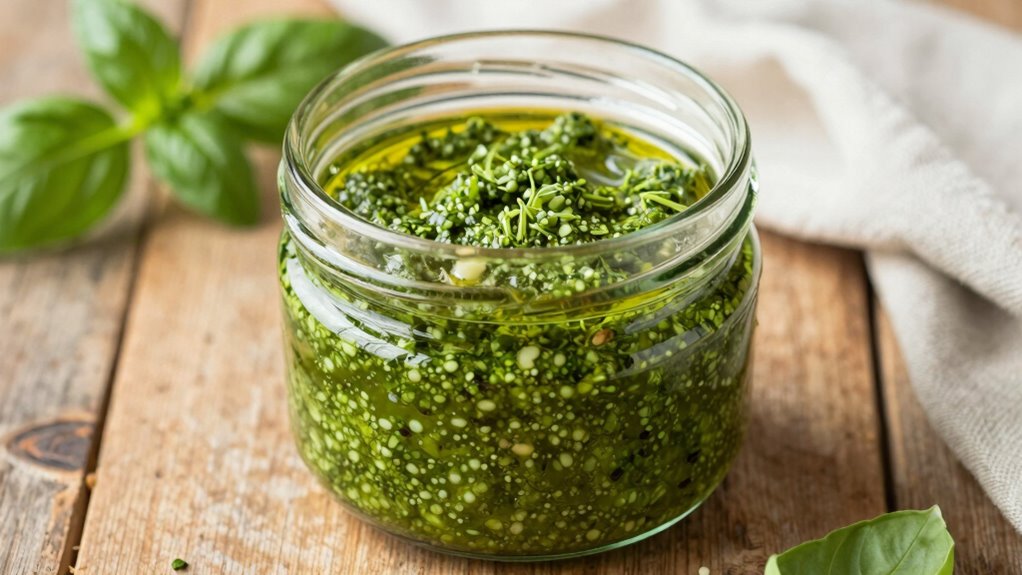
Keeping your pesto vibrant and fresh after making it depends largely on how you store it. To prevent herb degradation and nut oxidation, use airtight containers and cover the surface with a thin layer of olive oil. Refrigerate promptly and consume within a few days for ideal freshness. Here’s a quick guide to storage tips:
| Tip | Explanation |
|---|---|
| Use airtight containers | Limits air exposure, slowing oxidation and browning. |
| Cover with olive oil | Creates a barrier, maintaining color and herb preservation. |
| Keep it cold | Refrigeration slows oxidation processes. |
| Avoid metal containers | Metal can react with pesto, causing discoloration. |
| Freeze in small portions | Preserves freshness longer and prevents nut oxidation. |
These simple steps help keep your pesto looking vibrant and tasting fresh.
Natural Ways to Fix Browning Pesto Without Additives
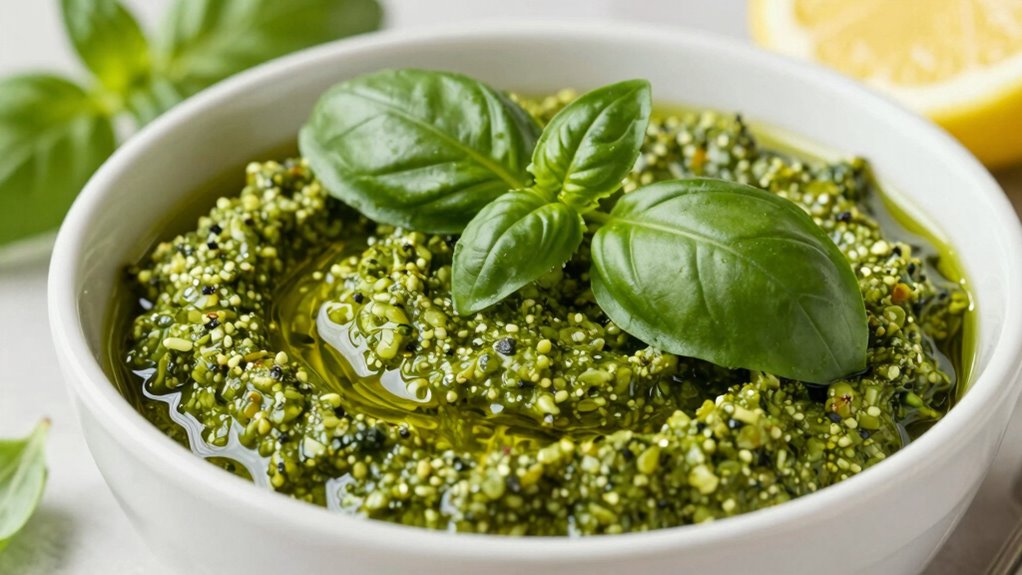
You can naturally revive browned pesto by adding a splash of lemon juice, which helps slow oxidation. Lemon juice acts as a natural preservative and antioxidant, further helping to maintain your pesto’s vibrant color. Covering the pesto tightly with plastic wrap or storing it in an airtight container minimizes air exposure and keeps it fresh longer. Additionally, choosing the right storage containers can significantly extend the pesto’s freshness and color. Using proper storage techniques, such as keeping pesto in a cool, dark place, can also help preserve its hue and flavor. Incorporating specialized cleaning equipment like small scrubbers or robotic cleaners can help maintain your kitchen tools and surfaces, preventing contamination that could affect food quality. These simple tricks can help maintain your pesto’s vibrant color without relying on additives. Incorporating live music at your dining experience can also enhance the overall enjoyment of your meals.
Use Lemon Juice
When pesto starts to brown, a simple and natural fix is to add a splash of lemon juice. The acidity helps slow down herb preservation issues by neutralizing enzymes responsible for oxidation. Lemon juice also prevents nut oxidation, which can accelerate browning and alter flavor. Just a teaspoon or two is enough to boost freshness and maintain vibrant color. Pour it directly into your pesto and stir well. This method is effective because the natural acidity hampers the chemical reactions that cause browning. Plus, it adds a subtle tang that enhances your pesto’s flavor. Using lemon juice is a clean, additive-free way to keep your pesto looking fresh and appetizing without compromising on natural ingredients. Incorporating a small amount of antioxidants like lemon juice can further help preserve the bright green color and freshness of your pesto.
Cover With Plastic Wrap
After adding lemon juice to slow oxidation, covering the pesto with plastic wrap creates an additional barrier against air exposure. Proper plastic wrap sealing minimizes oxygen contact, helping keep your pesto vibrant longer. To maximize air exposure prevention, press the wrap directly onto the surface, ensuring no air pockets remain. This technique prevents browning caused by oxidation. Here’s a quick guide:
| Step | Tip |
|---|---|
| 1 | Use tight plastic wrap |
| 2 | Press wrap directly onto pesto |
| 3 | Avoid wrinkles for a tight seal |
| 4 | Ensure no air gaps remain |
| 5 | Store in a cool, dark place |
This simple method effectively slows browning without additives, keeping your pesto fresh and colorful. Incorporating proper storage techniques, like understanding how to maximize your truck bed’s potential, can also help in preserving food freshness during transport or storage. Proper sealing techniques are essential for preventing oxidation, ensuring your pesto stays vibrant and appetizing for longer. Additionally, using airtight containers can provide an extra layer of protection against air exposure when storing your pesto. Utilizing proper storage methods is key to maintaining food quality over time.
Store in Airtight Container
Storing pesto in an airtight container is one of the simplest natural methods to prevent browning without adding preservatives. Airtight storage limits oxygen contact, slowing down oxidation that causes browning. When choosing a container, opt for glass or high-quality plastic with a tight-sealing lid to guarantee minimal air exposure. Before sealing, smooth out the pesto’s surface or add a thin layer of olive oil on top to create a barrier against oxygen. Proper container choices prevent air from sneaking in, keeping your pesto vibrant longer. To further enhance preservation, consider incorporating protective styling benefits like covering the surface with plastic wrap directly on the pesto before sealing. Remember, the key is to eliminate as much oxygen as possible, so always choose a container that fits snugly. This simple step considerably extends the freshness and color of your pesto without relying on artificial additives.
How to Use Lemon Juice and Acids to Stop Pesto From Browning
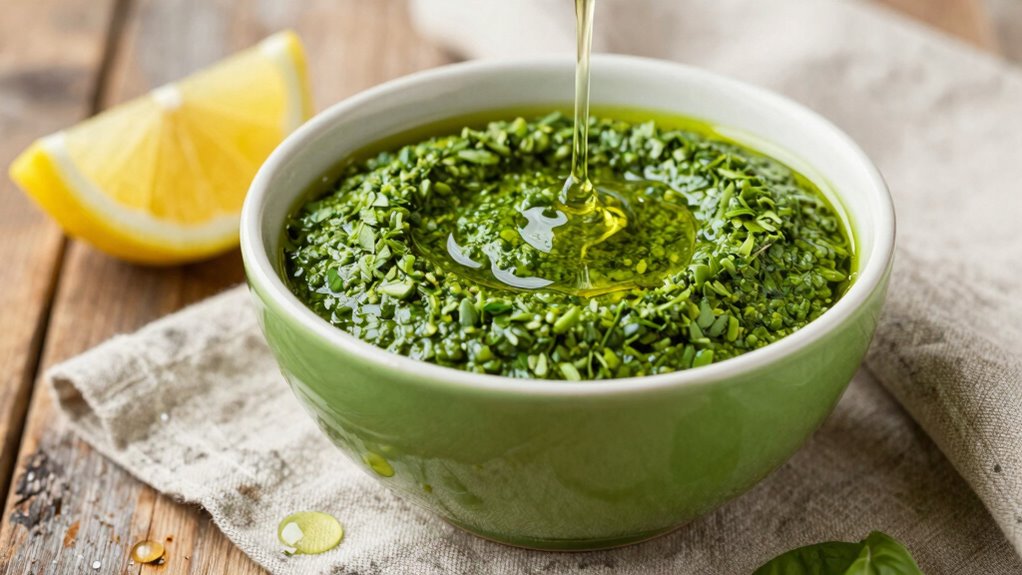
Lemon juice is a simple way to slow down pesto’s browning process by neutralizing oxidation. You should add a small amount of lemon juice evenly across the pesto to maintain color. Proper application guarantees the acidity works without compromising the flavor.
Lemon Juice’s Role
To prevent pesto from browning, applying lemon juice or other acids is an effective strategy. Fresh citrus, like lemon juice, helps maintain the pH balance, which slows down the oxidation process. The acidity in lemon juice inhibits the enzymes responsible for browning, keeping your pesto vibrant and fresh. When you add lemon juice, do so promptly after blending, ensuring even coverage. The natural acids in citrus also enhance flavor without adding artificial preservatives. Just a small squeeze can make a significant difference, especially if you’re preparing pesto ahead of time. Remember, the key is to use fresh citrus to maximize acidity and preserve the pesto’s bright green color. This simple step is a natural, effective way to extend its freshness.
Proper Acid Application
Applying acids like lemon juice correctly guarantees your pesto stays vibrant and green longer. To assure proper herb preservation and effective acid balancing, follow these steps:
- Add lemon juice gradually, tasting as you go, to prevent over-acidification.
- Mix thoroughly to evenly distribute the acid for consistent color preservation.
- Use fresh lemon juice rather than bottled, as it contains more natural acidity.
- Cover the pesto tightly with plastic wrap, pressing directly on the surface to minimize air exposure.
These methods help control oxidation without overpowering flavors. By carefully applying acids, you protect the delicate herbs and maintain that bright, fresh look. Proper acid application is key to preventing browning while keeping your pesto fresh and flavorful.
When and How to Freeze Pesto to Preserve Its Color and Flavor
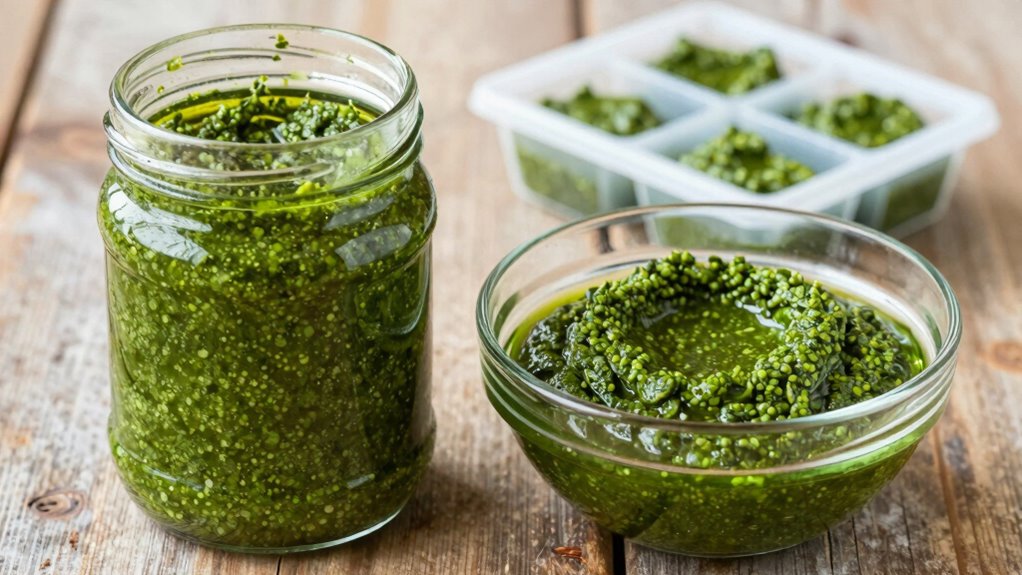
Freezing pesto at the right time helps preserve its vibrant color and fresh flavor. To do this effectively, use proper pesto freezing techniques that minimize oxidation and maintain herb color. First, wait until your pesto is freshly made and has reached its peak flavor before freezing. Transfer it into small, airtight containers or ice cube trays for easy portioning. Cover the surface with a thin layer of olive oil to create a barrier against air and help preserve herb color. Once frozen, transfer the cubes or portions into a sealed bag for long-term storage. This method prevents exposure to air, which can cause browning. By freezing promptly and using these techniques, you lock in the bright green hue and fresh taste for future use.
Common Mistakes That Speed Up Pesto Browning and How to Avoid Them
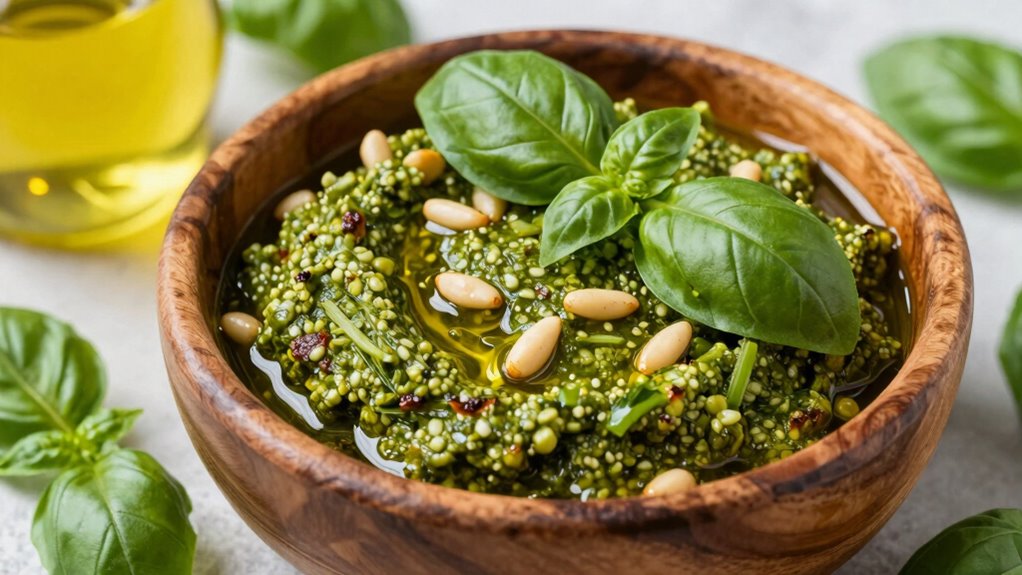
One common mistake that accelerates pesto browning is exposing it to air for too long, which allows oxidation to occur rapidly. To improve herb preservation and slow nut oxidation, avoid these pitfalls:
- Leaving pesto exposed in the open air for extended periods.
- Using a thin layer of oil on top without pressing it down to block air contact.
- Using metal containers that can catalyze oxidation reactions.
- Not covering the pesto tightly or lacking a protective layer, increasing air exposure.
Frequently Asked Questions
Can Certain Herbs or Nuts Resist Browning Better Than Others?
Certain herb varieties and nut options resist browning better than others. For herbs, basil maintains its vibrant color longer than parsley or cilantro, which tend to brown faster. When choosing nuts, pine nuts and walnuts are more prone to oxidation, while macadamia nuts and almonds resist browning better. Using these herb varieties and nut options helps keep your pesto looking fresh and appetizing for longer.
Does the Type of Oil Used Affect Pesto Oxidation and Browning?
Think of oil variations as the shield in your pesto’s battle against oxidation; the right choice can slow browning. Light olive oil or avocado oil, with their stable fats, help preserve herb freshness and reduce browning. Conversely, oils with higher polyunsaturated fats may accelerate oxidation. Selecting oils that support herb stability guarantees your pesto stays vibrant, much like a well-guarded secret keeps its integrity over time.
How Long Can Pesto Sit Out Without Turning Brown?
You should not leave pesto out at room temperature for more than two hours, as it risks spoilage and browning. To maximize pesto shelf life and prevent browning, store it in an airtight container and cover the surface with a thin layer of olive oil. This simple step helps keep it fresh longer and reduces oxidation, ensuring your pesto stays vibrant and tasty for as long as possible.
Are There Natural Preservatives That Help Maintain Pesto Color?
Think of natural preservatives like a shield for your pesto’s vibrant color. You can use lemon juice or vinegar to slow down herb preservation and nut oxidation, keeping your pesto fresh and green longer. For example, adding a splash of lemon not only brightens flavors but also acts as an antioxidant. These natural methods are effective, safe, and help maintain that beautiful, fresh pesto hue without artificial additives.
Is It Safe to Eat Browned Pesto, or Should It Always Be Discarded?
If your pesto has turned brown, it’s generally safe to eat if stored properly, but check for signs of spoilage like an off smell or mold. Proper pesto storage helps maintain microbial safety and color, so keep it airtight and refrigerated. While oxidation causes browning, it doesn’t mean the pesto is unsafe, just that it’s less fresh. When in doubt, discard it to avoid potential health risks.
Conclusion
To keep your pesto vibrant and fresh, prevent browning by controlling oxidation, storing it properly, and using natural acids like lemon juice. Avoid mistakes that speed up discoloration, and freeze wisely to preserve flavor and color. By understanding these simple steps, you’ll enjoy bright, tasty pesto every time—fresh, lively, and free from unwanted browning. Keep it bright, keep it delicious, and enjoy every flavorful spoonful.
NFL season / tailgating Picks
team gear
As an affiliate, we earn on qualifying purchases.