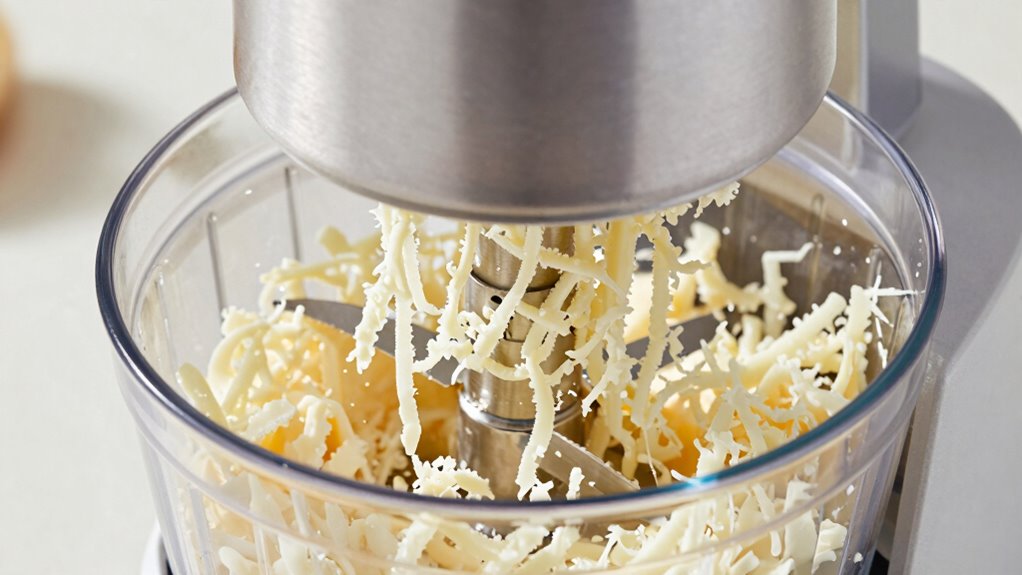

To grate cheese without turning it into a paste, start by choosing firm, low-moisture cheeses like Parmesan or aged cheddar. Chill the cheese slightly to keep it firm, and use sharp blades on your food processor. Pulse in short bursts, avoiding over-processing, and work in small batches with gentle pressure. Keep the cheese cold and dry, and skip warm or soft varieties. Want more tips to perfect your technique? Keep exploring to learn how to avoid common pitfalls.
Key Takeaways
- Chill cheese slightly to firm it up before processing.
- Use sharp blades and pulse in short bursts to prevent over-processing.
- Work with small batches and apply gentle, steady pressure.
- Choose firm, low-moisture cheeses like Parmesan or aged cheddar.
- Avoid overloading the processor or running it too long to prevent melting.

Hamilton Beach Food Processor & Vegetable Chopper for Slicing, Shredding, Mincing, and Puree, 10 Cups + Easy Clean Bowl Scraper, Stainless Steel (70730)
- Built-in Bowl Scraper: Saves time by scraping during processing
- Versatile Attachments: Includes slicing/shredding and chopping blades
- Multiple Processing Functions: Slice, shred, chop, mix, and puree
As an affiliate, we earn on qualifying purchases.
As an affiliate, we earn on qualifying purchases.
Why Does Cheese Turn Into Paste When Using a Food Processor?
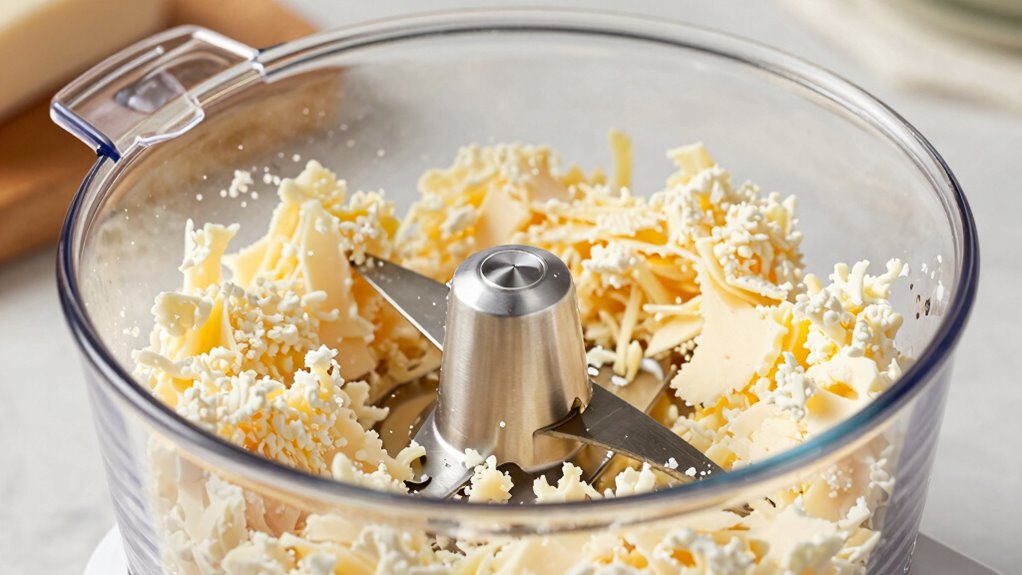
When you use a food processor to grate cheese, it often turns into a paste instead of fluffy shreds. This happens because the cheese’s texture isn’t suited to the rapid, powerful blades that quickly break down the product. If you press too hard or run the processor too long, the cheese releases its oils and begins to stick together, creating a paste rather than light, grated pieces. Proper food processor techniques involve pulsing in short bursts and avoiding over-processing, which helps maintain the cheese’s original texture. Overworking the cheese causes the fat to melt and clump, resulting in a pasty consistency. To keep the cheese fluffy, you need to control the speed and duration, ensuring it’s shredded rather than processed into a paste. Additionally, understanding the texture of cheese can help you adjust your technique for better results. Being aware of the cheese’s moisture content also plays a role in preventing it from turning into paste. Recognizing the optimal processing time can further improve your shredding results and prevent the cheese from becoming overly processed. Moreover, selecting the right type of cheese with the appropriate moisture level can significantly influence the outcome. Knowing the cheese’s composition helps in choosing the best cheese for shredding without turning into paste.

La Reveuse Bi-Level Chop Blade Replacement Part for Food Chopper LARB4016
- Compatibility: Fits La Reveuse LARB4016 only
- Blade Material: Double-layer stainless steel leaves
- Functionality: Chops, blends, mixes, minces, purees
As an affiliate, we earn on qualifying purchases.
As an affiliate, we earn on qualifying purchases.
How to Prepare and Choose the Best Cheese for Grating
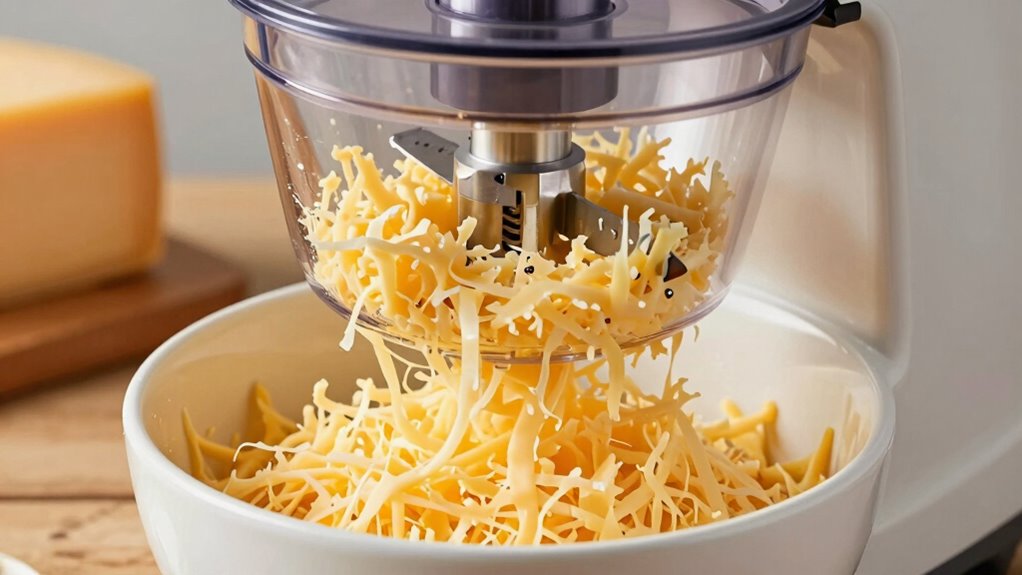
Choosing the right cheese for grating starts with selecting varieties that have firm, dry textures, which make them easier to shred without clumping or turning into paste. Look for cheeses like Parmesan, aged cheddar, or Pecorino, which have low moisture content and sturdy cheese textures. These types hold up well in a food processor and produce fluffy, evenly grated pieces. Additionally, consider the flavor profiles—sharp, nutty, or salty cheeses add distinct taste to your dishes. Avoid soft cheeses like mozzarella or ricotta, as their high moisture makes them difficult to grate smoothly and increases the risk of paste formation. Properly selecting and preparing your cheese guarantees better results and prevents the paste-like consistency that often occurs during processing. Moisture content also plays a crucial role in determining how well cheese can be grated in a food processor. Using cheeses with consistent texture ensures a smoother process and more uniform results, and incorporating cheeses with optimal aging can enhance flavor and grating performance. Understanding the 16PF personality traits can help in selecting the right tools and techniques for your kitchen preferences, making the grating process more efficient and enjoyable. Additionally, paying attention to cheese storage can help maintain the ideal moisture level and firmness needed for optimal grating.

Cambom Lemon Zester Grater Three-piece Suit – Heavy Duty Kitchen Tool for Parmesan Cheese, Ginger, Garlic, Nutmeg, Chocolate, Vegetables,Fruits,Stainless Steel Grater Dishwasher Safe Black
- Complete Grater Set: Includes fine, coarse, and extra coarse graters with cleaning brush
- Versatile Kitchen Tool: Perfect for cheese, lemon, ginger, garlic, spices, chocolate, and vegetables
- High-Quality Material: Made of durable 304 stainless steel with sharp, clog-resistant blades
As an affiliate, we earn on qualifying purchases.
As an affiliate, we earn on qualifying purchases.
What Are the Best Techniques to Get Fluffy, Grated Cheese?
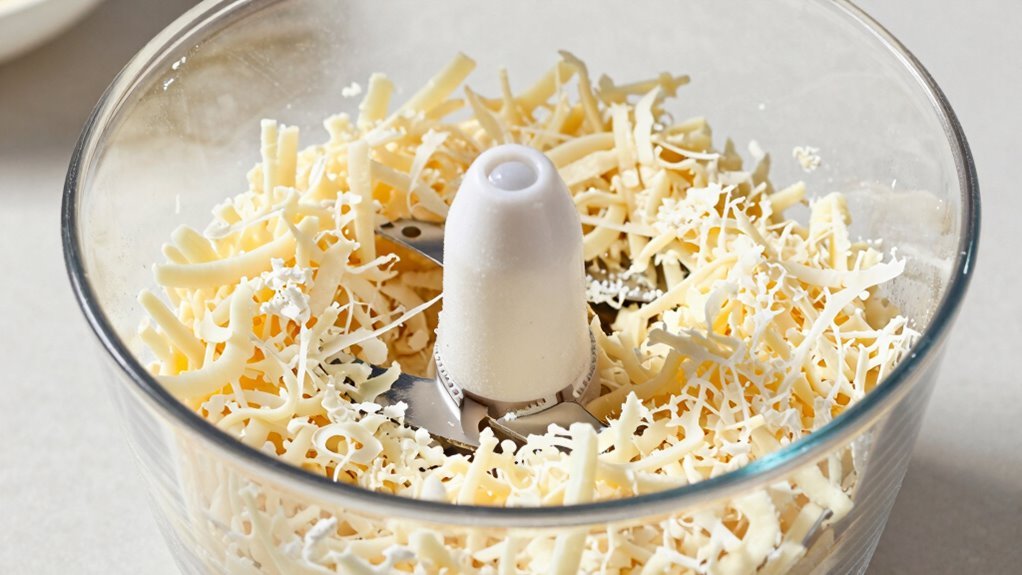
To achieve fluffy, well-grated cheese, utilizing the right techniques during processing is essential. Start by chilling the cheese slightly; cold cheese is firmer and easier to grate into light, airy textures. Use sharp blades in your food processor and pulse in short bursts to prevent over-processing. When grating, avoid forcing cheese through the blades, as this can lead to clumping and a sticky texture. Instead, work in small batches if needed, ensuring even grating. Pay attention to grating techniques—hold the cheese steady and apply gentle, consistent pressure. Properly preparing your cheese and equipment helps maintain the cheese’s texture, preventing it from becoming paste-like. Additionally, understanding the free-floating nature of cheese particles can guide you in achieving a more consistent, fluffy result. Recognizing the importance of particle size can significantly improve your results. Using the right grating tools can also make a big difference in achieving the perfect texture. For optimal results, consider the cheese type as some varieties grate more easily than others. With these methods, you’ll produce fluffy, perfectly grated cheese every time, enhancing your dishes without the mess or texture issues.

OXO Good Grips 4-Sided Box Grater for Cheese & Vegetables with Container
- Multiple stainless steel grating surfaces: Coarse, medium, fine, and slicing
- Slim design fits in drawers: Space-saving construction
- Detachable container for grated ingredients: Catch, measure, dispense, store
As an affiliate, we earn on qualifying purchases.
As an affiliate, we earn on qualifying purchases.
Common Mistakes That Cause Cheese to Get Sticky and How to Avoid Them
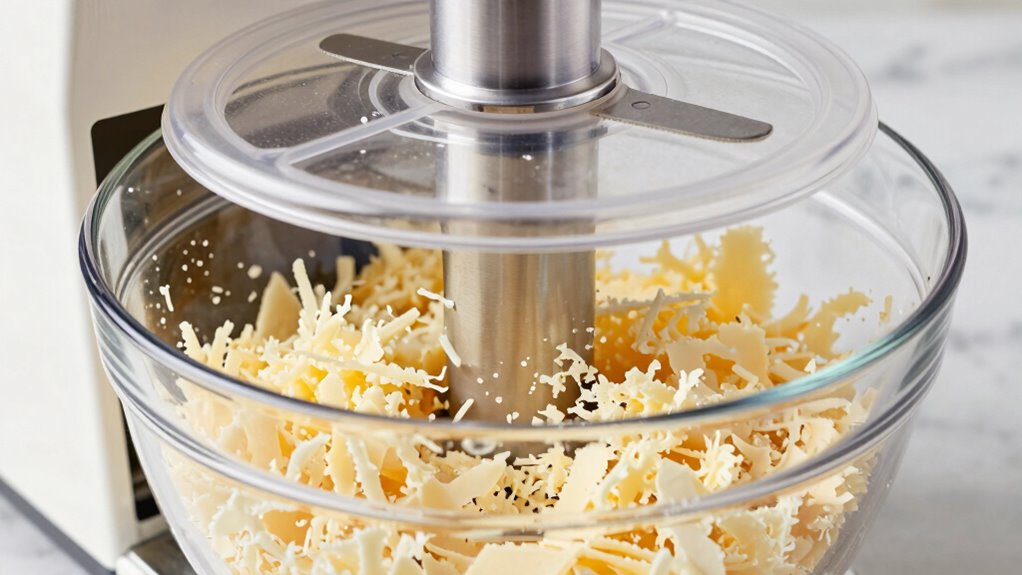
One common mistake that causes cheese to become sticky is applying too much pressure while grating, which forces moisture out of the cheese and makes it clump together. To avoid this, focus on moisture control by keeping your cheese cold and dry. Warm or damp cheese releases more moisture, leading to stickiness. Additionally, blade sharpness plays a vital role; dull blades tear the cheese instead of slicing it cleanly, increasing friction and moisture release. Regularly check and sharpen your food processor blades to ensure smooth operation. Overloading the processor or rushing can also cause the cheese to get sticky. Proper food safety practices, such as handling cheese at the correct temperature, can further prevent moisture issues. Maintaining proper moisture levels and keeping your blades sharp will prevent cheese from turning into a paste and help you achieve perfect, fluffy grated cheese every time.
Troubleshooting: Fixing Cheese That Turns Into Paste
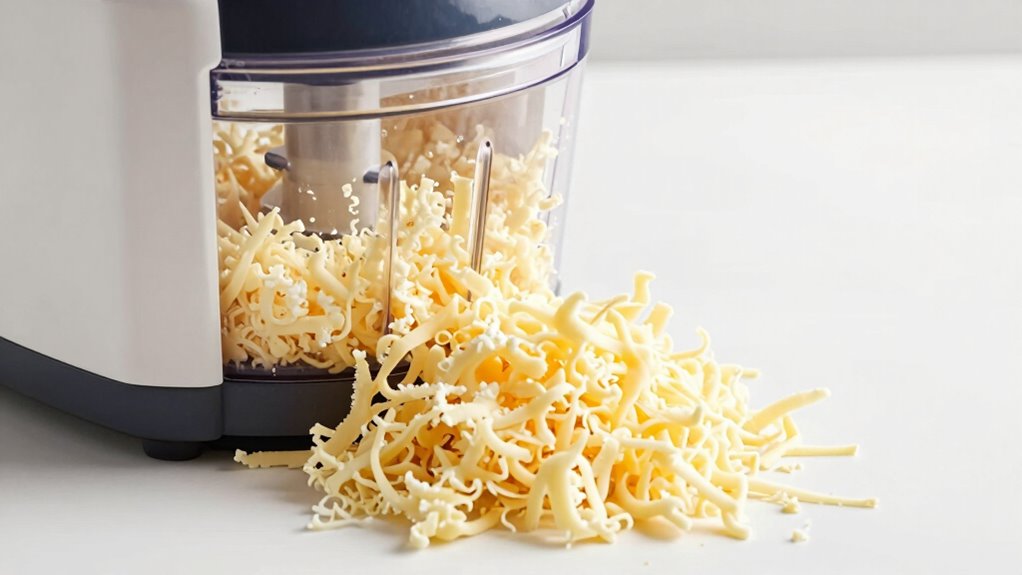
When cheese turns into a paste instead of fluffy shreds, moisture and temperature are usually the culprits. To fix this, start by checking your cheese storage; cheese that’s been stored too warm or exposed to humidity tends to become too soft. For future use, keep your cheese cold and well-wrapped to prevent this issue. If your cheese has already turned pasty, try blotting excess moisture with a paper towel before processing again. You can also consider ingredient substitutions, such as using low-moisture cheese varieties or adding a small amount of cornstarch to help absorb moisture. Freezing the cheese briefly before grating can firm it up, making it easier to shred without turning into paste. Proper storage and smart substitutions are key to achieving fluffy, grated cheese every time. Additionally, understanding food moisture content can help you select the best cheese types for grating, since moisture levels directly influence how well cheese will shred. Recognizing the ideal cheese temperature before grating can also significantly improve your results. Monitoring cheese aging can further help prevent issues with moisture and texture during grating. Being aware of humidity levels in your environment can also make a difference in maintaining the proper cheese consistency.
Frequently Asked Questions
Can I Grate Frozen Cheese in a Food Processor?
Yes, you can grate frozen cheese in a food processor. Freezing techniques help maintain the cheese’s texture, making it firmer and easier to grate without turning into paste. Just make sure you don’t let the cheese thaw before processing, as this can cause clumping. Keep the cheese solid, and use quick pulses to achieve even shreds. This method preserves the cheese’s quality and prevents it from becoming overly sticky or mushy.
Is There a Specific Blade Type Best for Soft Cheese?
To gently embrace soft cheese, opt for a blade designed for delicate textures, like a finely serrated or dough blade, which guarantees ideal blade compatibility. These blades minimize crushing and preserve the cheese’s tender consistency, preventing it from becoming pasty. Using the right blade allows you to maintain the cheese’s smooth texture and achieve even grating, making your culinary tasks more refined and efficient.
How Does Room Temperature Affect Cheese Grating Results?
Room temperature considerably impacts your cheese texture and how easily you can grate it. When cheese is too warm, it becomes soft and clumpy, making it hard to get clean, uniform shreds. To avoid this, you should practice temperature control by refrigerating your cheese until it’s firm but not cold. This way, you’ll achieve smoother, more consistent grated cheese without turning it into paste, ensuring a perfect result every time.
Can Adding Oil or Moisture Prevent Cheese From Becoming Paste?
Adding oil or moisture can help manage cheese texture, but it may not fully prevent it from becoming paste-like. If you add too much, it can make the cheese sticky and difficult to grate properly. To control moisture, keep your cheese cold and dry before processing. Using small pulses and avoiding over-processing also helps maintain the right moisture level, ensuring your cheese stays fluffy and easy to grate.
What Are Alternative Tools for Grating Cheese Without Paste?
You can use a box grater or microplane for grating cheese without turning it into paste. To get the best results, employ proper knife techniques, like using a sharp chef’s knife and applying steady, even pressure. Make sure your cheese is well stored in an airtight container to prevent moisture build-up, which can cause clumping. These tools and tips help you grate cheese efficiently and keep its texture perfect.
Conclusion
Mastering the art of grating cheese means balancing precision and patience. While a food processor offers speed, rushing can turn your cheese into paste—softness that melts away from perfect shreds. Yet, with careful preparation and technique, you can achieve fluffy, grated cheese effortlessly. Remember, the goal isn’t just speed but control. In this dance between technology and technique, your careful approach transforms simple ingredients into culinary perfection—without sacrificing texture or flavor.