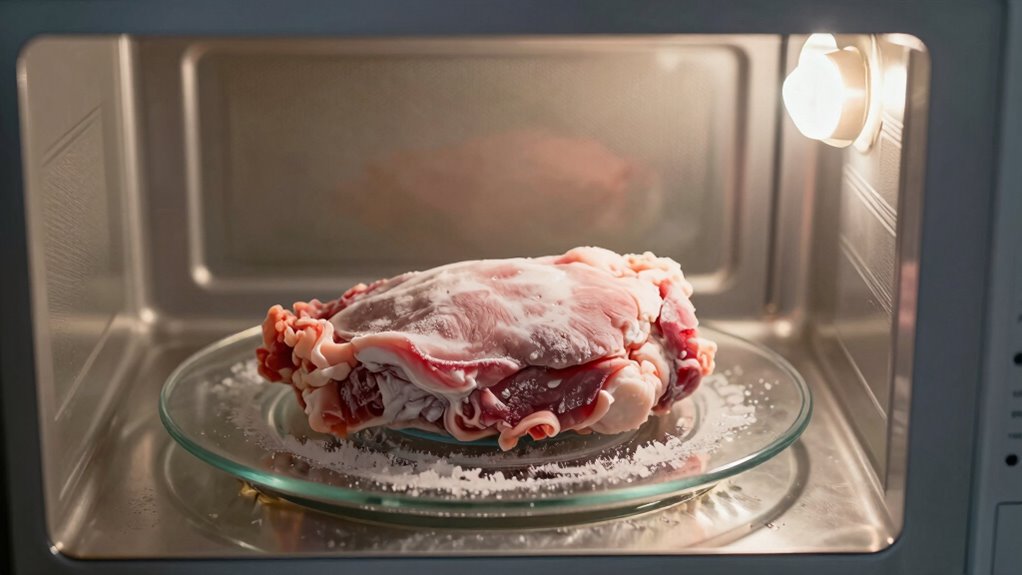

To defrost food evenly without cooking the edges, use short microwave bursts at low power and pause for rest periods between each burst. This allows residual heat to spread internally, preventing overcooked edges and uneven thawing. Rotating or redistributing your food during breaks further promotes uniformity. Mastering the timing of bursts and rests makes a big difference, and if you keep practicing, you’ll find it easier to achieve perfectly defrosted results every time.
Key Takeaways
- Incorporate short microwave bursts followed by rest periods to allow residual heat to distribute evenly, preventing edge overcooking.
- Lower microwave power settings during defrosting to reduce the risk of edges cooking before the interior thaws.
- Pause the microwave immediately when edges begin to cook, then let the food rest to even out temperature differences.
- Rotate or redistribute food during rest periods to promote uniform defrosting and avoid hot spots.
- Cover food loosely to help distribute heat evenly and reduce direct hot spots that cause edges to overcook.
Why Microwave Defrosting Often Leads to Uneven Thawing

Microwave defrosting often results in uneven thawing because microwaves heat food unevenly due to their design. This uneven heating causes some areas to warm faster than others, leading to the formation of ice crystals in the frozen parts. When these ice crystals melt quickly, they can cause moisture loss, making the meat or food dry and tough. Additionally, rapid thawing at certain spots can start cooking edges while the interior remains frozen, further complicating even defrosting. The inconsistent heat distribution is a primary reason why microwave thawing isn’t perfect. To minimize these issues, it’s essential to understand how microwave energy interacts with frozen foods and to use techniques that promote even thawing, like resting periods or specific power settings. Moreover, understanding the role of contrast ratio in imaging can help improve the visual clarity of the process if visual aids are used to demonstrate proper defrosting techniques.
How Rest Time Helps You Defrost Evenly
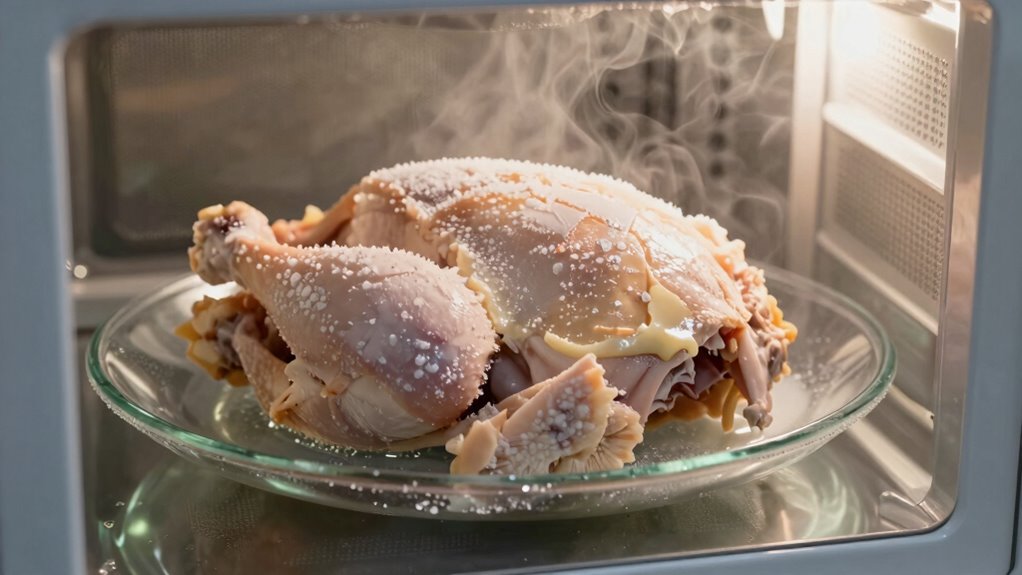
Allowing your food to rest after microwaving helps achieve heat equilibration, so the center warms evenly. This pause prevents the edges from overcooking and drying out, ensuring a more consistent thaw. Overall, resting improves the uniformity of your defrosting process. Incorporating energy-efficient practices into your microwave routines can further enhance sustainability and reduce energy consumption. Additionally, understanding microwave power levels can help optimize your defrosting technique for better results. Using the appropriate power settings can make a significant difference in evenly thawing your food without overcooking the edges. Recognizing the importance of temperature distribution within your food can help you better control the defrosting process and prevent uneven heating. To further improve your defrosting, paying attention to microwave wattage can ensure you’re using the optimal energy for even results.
Allows Heat Equilibration
Resting your food after microwave defrosting is essential for even heat distribution. This pause allows the heat to spread uniformly, promoting better temperature regulation throughout the food. Without this rest period, some areas may remain cold while others warm up too quickly. Proper heat distribution ensures the entire piece thaws consistently, reducing the risk of partially frozen spots or overcooked edges. To understand this better, consider the table below:
| Heat Transfer Process | Effect on Defrosting |
|---|---|
| Conduction | Transfers heat within food |
| Convection | Moves heat through liquids |
| Rest Period | Balances heat distribution |
This process helps your food reach a stable, evenly defrosted state, making your microwave defrosting more effective.
Prevents Edge Overcooking
When you pause to let your food rest after microwaving, it helps prevent overcooking at the edges. Without this pause, the outer parts tend to become overcooked or even cooked through because they receive more direct heat, especially if you used a high power level. Resting allows residual heat to distribute more evenly inside the food, reducing the risk of edge overcooking. By giving the microwave’s uneven heat a moment to settle, you ensure the edges don’t get too hot while the center warms up. This method helps you control the power level’s impact, making sure that the outer layers don’t get cooked prematurely. Ultimately, resting creates a buffer that promotes more even defrosting without sacrificing the integrity of the edges.
Enhances Overall Uniformity
Taking a brief pause after microwaving helps your food defrost more evenly because it allows residual heat to distribute throughout the entire piece. This rest period minimizes uneven ice crystal formation, which can cause parts of your food to remain frozen while others start cooking. By letting the heat settle, you reduce the risk of freezer burn, as uneven thawing often leads to moisture loss and dryness. Resting also helps ensure that the internal temperature equalizes, promoting uniform defrosting. Without this pause, the outer edges might become warm while the center stays frozen. Incorporating a rest time ensures every part of your food thaws consistently, making your microwave defrosting more effective and preventing the common issues associated with uneven thawing. Additionally, understanding proper food safety practices can help you avoid bacterial growth during the thawing process. Proper microwave techniques can further enhance your results and safety. Recognizing the role of residual heat distribution helps improve overall defrosting performance and food quality.
How Short Microwave Bursts and Rest Periods Work Together
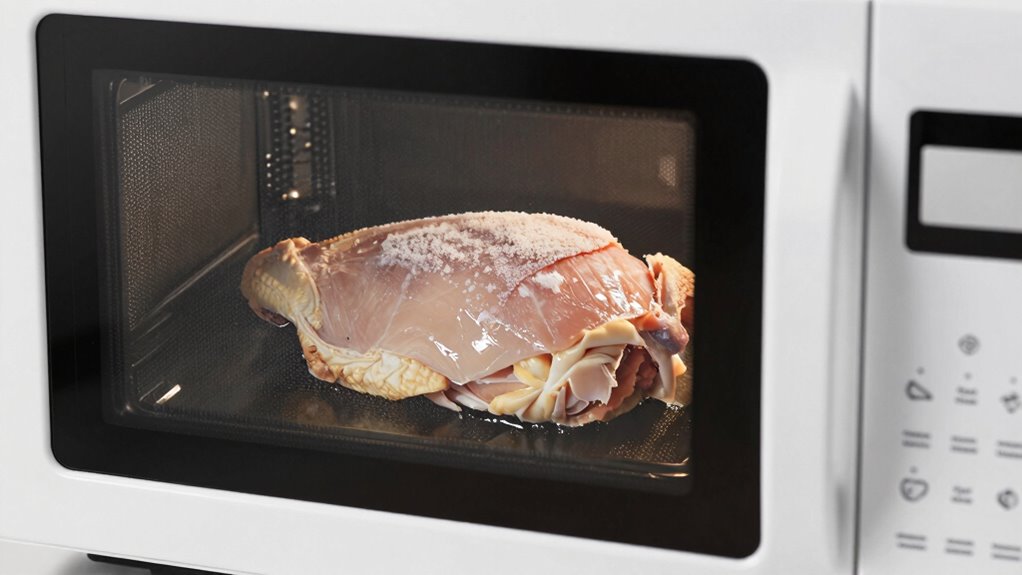
Short microwave bursts combined with brief rest periods help defrost food more evenly by preventing overheating of the edges. This technique improves microwave safety by reducing the risk of partially cooking or damaging the food’s surface. During the burst, heat penetrates the center without overly warming the outer layers. Rest periods allow residual heat to distribute throughout the food, promoting uniform thawing. This coordinated approach works with effective defrosting techniques to avoid uneven textures or partial cooking. By controlling the energy input and giving the food time to equilibrate, you maintain the integrity of the thawed item. Incorporating thermal equilibrium into your defrosting process ensures more consistent results. Additionally, understanding microwave energy distribution can help optimize the timing and power levels for better outcomes. Combining short bursts with rest periods ensures safer, more consistent defrosting, helping you achieve better results while minimizing the risk of cooking edges unintentionally.
Step-by-Step: Using the Rest Time Method for Perfect Thawing

To achieve perfectly defrosted food with the rest time method, follow a clear step-by-step process. First, set your microwave to a low power level, typically around 30%, to ensure gentle thawing. Use your microwave’s thawing setting or manually adjust the time based on the food’s weight and thickness. During the process, pause periodically to check the progress and turn or rearrange the food for even thawing. After each short burst, let the food rest for a few minutes to allow residual heat to distribute evenly, preventing partial cooking. This approach aligns with safe thawing techniques and enhances microwave safety by avoiding hot spots. By carefully managing each step, you’ll achieve thorough, safe defrosting without risking cooked edges.
Adjust Rest Periods for Different Foods and Thicknesses
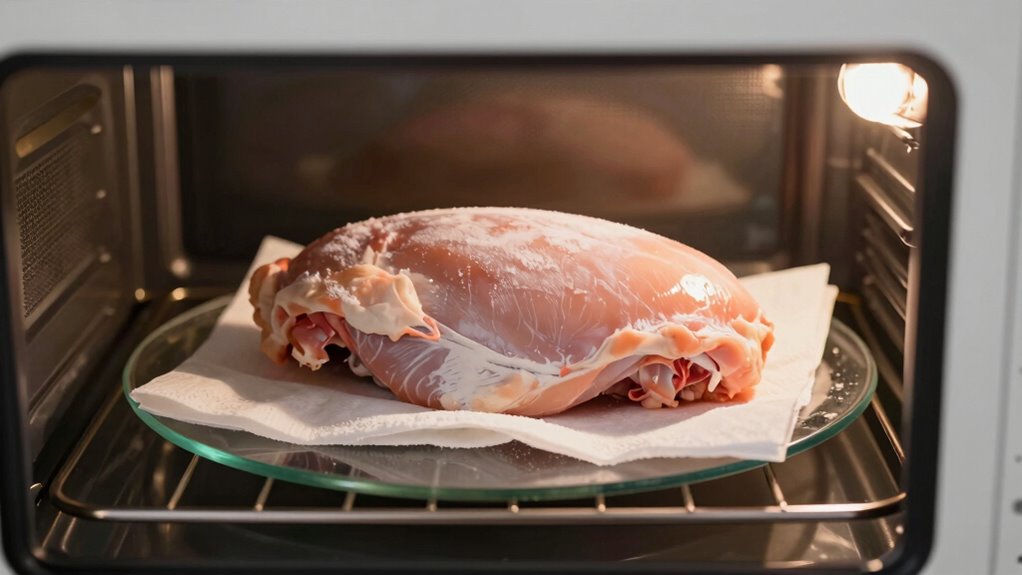
Adjusting rest periods based on the type and thickness of the food guarantees even thawing without cooking the edges. Thicker cuts or denser foods need longer rest times, while thinner items require less. Recognize that microwave wattage varies; higher wattage may speed up defrosting but increases the risk of uneven thawing. To ensure food safety, always adjust your rest periods accordingly—generally, thicker foods need more time and a longer rest period afterward. For example, a large chicken breast might require a longer rest than thin fish fillets. Monitoring these differences helps prevent partial cooking and keeps your food safe to eat. Tailoring rest times ensures thorough defrosting while maintaining the quality and safety of your food.
Common Mistakes That Cause Uneven Defrosting: and How to Avoid Them
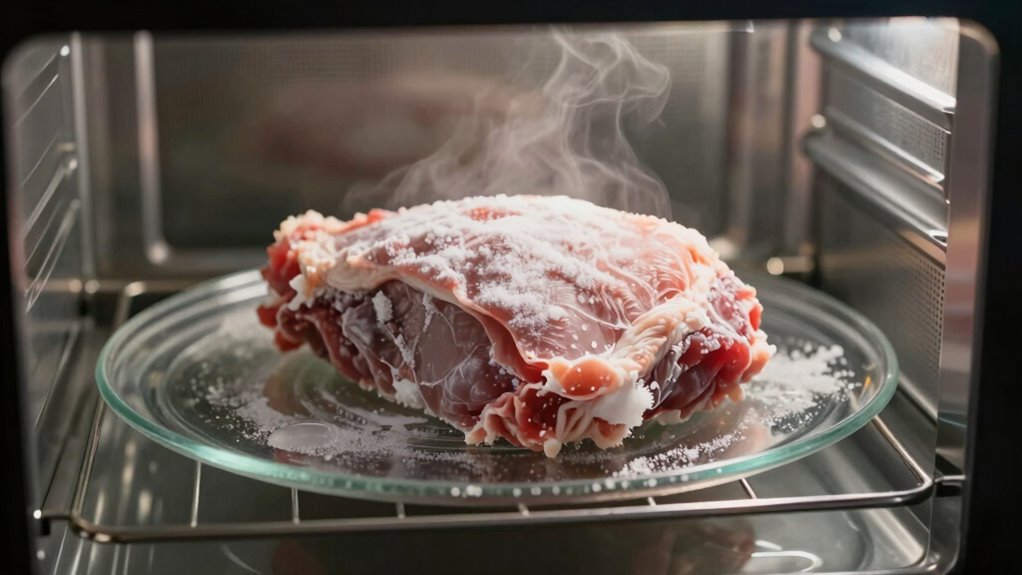
Using too high power levels or skipping rest periods can lead to uneven defrosting. When you overuse power, edges may cook while the center stays frozen. To get consistent results, adjust power properly and always let the food rest before finishing. Incorporating practical methods like monitoring power settings and following recommended rest times can greatly improve defrosting outcomes. Additionally, understanding air purification techniques can help maintain a clean environment that supports better food preservation and handling.
Overusing Power Levels
Relying solely on the highest power setting can lead to uneven defrosting, with edges starting to cook while the center stays frozen. This results from power level overuse, which causes rapid surface heating without proper heat penetration. To avoid this, don’t set your microwave to maximum every time; instead, use lower power levels for more controlled, even thawing. Remember, microwave timing is vital—short bursts with rest periods work better. Here are some tips:
- Use lower power settings for gentle defrosting
- Avoid long, continuous microwave runs at high power
- Incorporate short, timed intervals with rest periods
- Adjust power levels based on food size and density
- Monitor and rotate food to ensure even defrosting
This approach helps prevent overcooking edges and promotes even thawing.
Neglecting Rest Periods
Neglecting rest periods during microwave defrosting often causes uneven thawing, leaving some parts partially cooked while others remain frozen. Thawing science shows that resting allows residual heat to distribute evenly, preventing hot spots and cooked edges. Many microwave myths suggest continuous defrosting without breaks is efficient, but this leads to uneven results and potential food safety issues. Rest periods give the microwave time to finish thawing internally, reducing the risk of cooking the outer layers prematurely. Skipping these pauses can result in uneven textures and compromised quality. To avoid this, stop the microwave periodically, let the food rest for a minute, then continue. This simple step ensures even defrosting, preserves food quality, and debunks common microwave myths about faster, continuous defrosting.
What to Do When Edges Start Cooking During Defrosting?
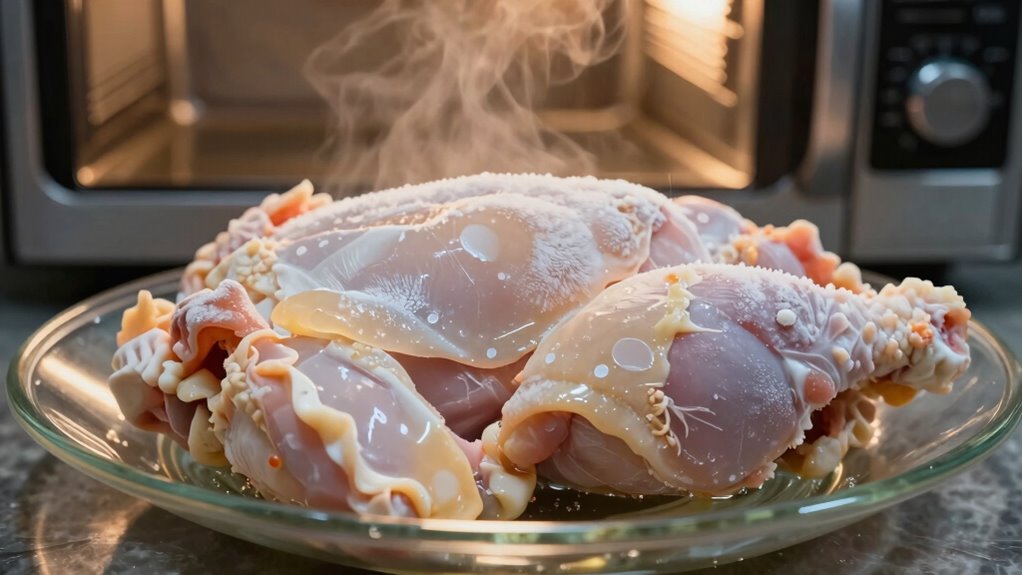
When the edges of your food start to cook during defrosting, it’s a clear sign that your microwave’s heat is uneven. To prevent further cooking, stop the microwave immediately. First, check if your microwave’s power level is set correctly—using a lower setting can help. Remember, thawing myths often lead people to believe they can ignore uneven heating, but microwave safety depends on proper technique. To fix the issue:
- Pause and redistribute the food evenly
- Use a microwave cover to promote uniform heat
- Shorten defrost intervals and stir frequently
- Rotate the food during the process
- Let the food rest to allow heat to distribute
- Proper microwave maintenance and calibration can help ensure consistent heat distribution during defrosting. These steps help avoid cooking edges and ensure safe, even thawing, aligning with proper microwave safety practices. Additionally, understanding microwave technology can assist in selecting the right settings for more reliable results.
Extra Tips for Consistent Microwave Defrosting Results
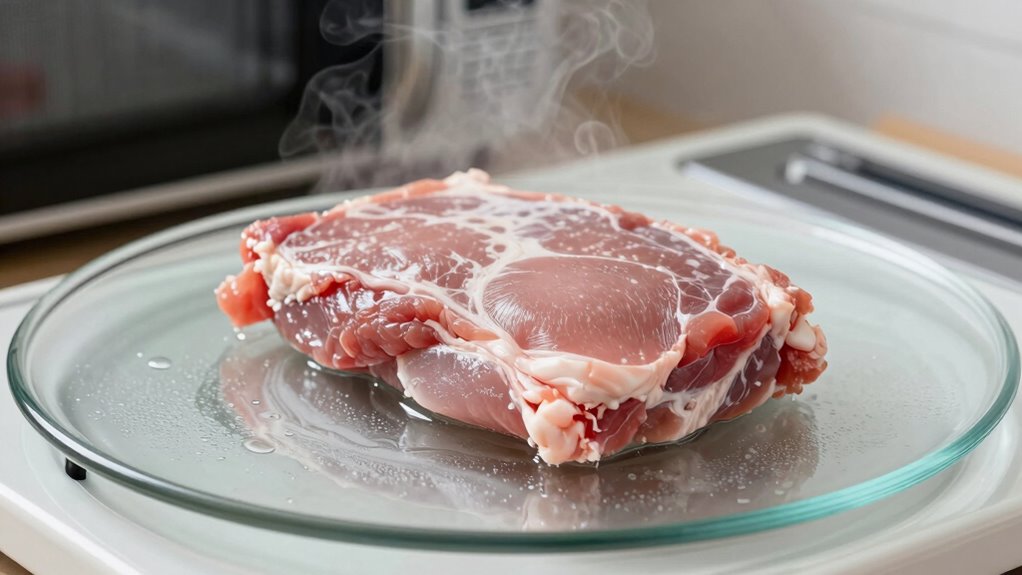
To achieve consistent microwave defrosting results, you should adopt some simple but effective techniques. First, always prioritize microwave safety by using microwave-safe containers and avoiding metal. This prevents accidents and uneven heating. Next, debunk common defrosting myths, such as the idea that you should constantly stop and rearrange food; instead, gentle pauses and even spacing work better. Use the defrost setting or low power to avoid cooking the edges while thawing the center. Keep your food uncovered or loosely covered to prevent moisture buildup, which can lead to uneven thawing. Additionally, understanding the net worth of individuals can provide insights into their financial success, much like how proper defrosting techniques can ensure the best culinary results. Incorporating a consistent approach and patience during the process can significantly improve outcomes. Paying attention to your microwave’s power levels and how they influence heat distribution can help tailor the process for more precise results. Being aware of your microwave’s wattage can help you better estimate defrosting times and avoid overcooking. Finally, let your food rest after defrosting; this helps distribute the cold evenly. These tips help ensure your defrosting process is safe, effective, and consistent every time.
Mastering Rest Time to Improve Your Microwave Skills
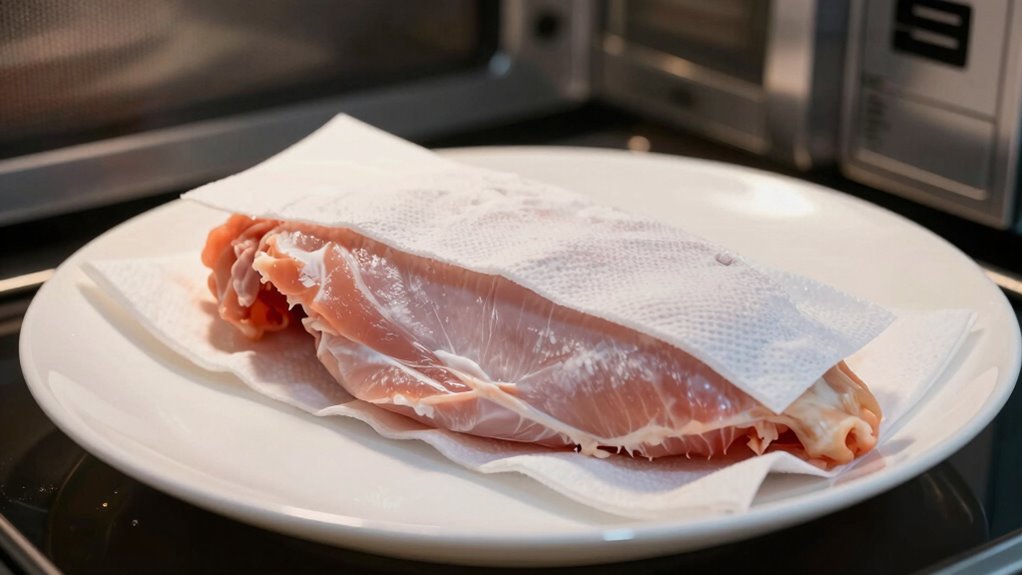
Mastering rest time is essential for perfect microwave defrosting because it allows the food to evenly distribute the cold and moisture. This step helps prevent overcooking edges while keeping the interior thawed. To improve your microwave skills, focus on timing and understanding your kitchen equipment’s capabilities. Always prioritize microwave safety by avoiding unsafe containers and using proper covers.
To make the most of rest time:
- Stop the microwave at intervals to check progress
- Turn or rotate food halfway through
- Use microwave-safe dishes for even heating
- Keep an eye on power levels to avoid uneven thawing
- Allow food to rest undisturbed to finish thawing naturally
Mastering these techniques ensures safer, more consistent results every time.
Frequently Asked Questions
Can I Use the Rest Time Method With All Types of Frozen Foods?
You can use the rest time method with most frozen foods, but it’s important to ensure temperature control for food safety. Thicker items may need longer rest periods to consider even defrosting without cooking the edges. Always monitor the process carefully, and if you’re unsure, check that the food reaches a safe temperature before cooking. This method helps prevent partial cooking and maintains food safety standards.
How Do I Determine the Optimal Rest Time Duration?
Did you know that proper rest time calibration can reduce uneven thawing by up to 50%? To determine your ideal rest time duration, monitor the temperature closely and adjust based on the size and shape of your food. Use a food thermometer to check if the center reaches 40°F, then let it rest for about 5-10 minutes, ensuring even thawing without cooking the edges.
Is There a Risk of Bacteria Growth During Rest Periods?
Yes, there’s a small risk of bacterial growth during rest periods if the food stays in the temperature danger zone (40-140°F) for too long. To guarantee food safety, keep the rest time short and avoid leaving the food out for more than two hours. Proper handling and timely refrigeration after defrosting help prevent bacterial growth and maintain food safety.
Can This Method Be Applied to Large or Thick Frozen Items?
Think of defrosting large portions or thick items like warming a frozen mountain—it’s a slow, steady process. You can apply this method, but it requires patience; it might take longer and need more pauses to prevent cooking edges. Keep the process gentle, and make sure to check the internal temperature. Rest periods are essential for even thawing, especially with thick items, ensuring safety and quality.
How Does This Technique Compare to Traditional Thawing Methods?
This technique is faster than traditional thawing methods, but it might not match the thawing speed of a refrigerator or cold water bath. Traditional benefits include even thawing and less risk of bacteria growth. While the “Rest Time” method helps prevent cooking edges, it requires careful timing and attention. Overall, it’s a convenient option when you need quicker results, but for quality and safety, traditional methods are still preferred.
Conclusion
Mastering the rest time method transforms your microwave into a gentle thawing breeze, guiding your food to thaw evenly without the chaos of cooked edges. Like a skilled conductor, you orchestrate short bursts and pauses, turning a noisy appliance into a symphony of perfect defrosting. With patience and practice, you’ll turn raw, icy blocks into a culinary canvas ready to cook, all while avoiding the fiery pitfalls of uneven thawing. Your microwave mastery begins now—let your food thaw with grace.