
To reheat baked goods without making them tough, use gentle methods like reheating in a low-temperature oven around 300°F and wrapping items loosely in foil to keep moisture in. For smaller portions like pastries or cookies, microwave briefly with a damp paper towel to prevent drying out. Stay attentive to timing and avoid high heat, which can harden surfaces. Want to keep baked goods soft and delicious? Keep exploring for more helpful tips.

Get kitchen staples and gadgets delivered free — and shop member deals
- Fast, free delivery on millions of items
- Access to Prime Big Deal Days deals on October 6–7
- Prime Video, Amazon Music and more included
Key Takeaways
- Reheat baked goods in a low-temperature oven (~300°F) to prevent drying and toughness.
- Wrap items loosely in aluminum foil or cover with a damp towel to retain moisture.
- Use short, gentle bursts in the microwave with a damp paper towel to avoid over-drying.
- Avoid high heat and prolonged reheating, which can harden surfaces and make baked goods tough.
- Reheat just until warmed through, focusing on even, low-temperature methods for best texture.
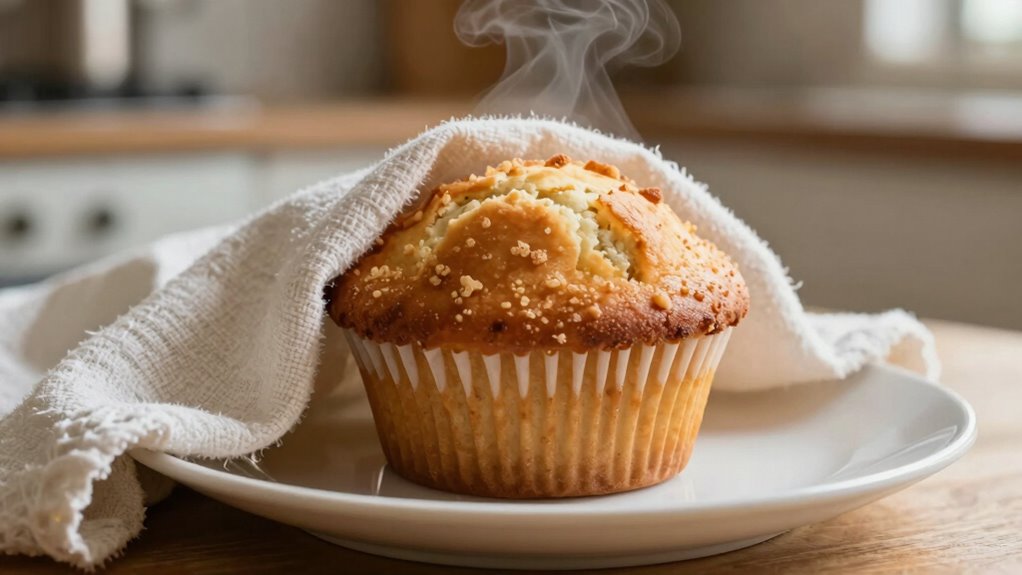
Reheating baked goods can help restore their freshness and flavor, but doing it properly guarantees they stay delicious. When you reheat bread, pastries, or cookies, your goal is to revive their original taste while maintaining the right texture. If you’re not careful, you risk turning them tough, dry, or rubbery. To avoid this, focus on techniques that promote flavor preservation and texture maintenance.
Start by considering the type of baked good you’re reheating. For items like bread and rolls, gentle reheating is key. Using an oven set to a low temperature—around 300°F (150°C)—allows heat to penetrate evenly without drying out the surface. Wrap the baked good loosely in aluminum foil before placing it in the oven. This traps moisture and helps prevent the exterior from becoming hard or crusty, which can compromise flavor preservation and texture. Keep an eye on the clock; most baked items only need about 10 to 15 minutes in the oven to become warm and soft again. Additionally, using proper reheating methods can further ensure your baked goods stay just as enjoyable as when freshly baked.
Reheat bread at 300°F, loosely wrapped in foil, for 10-15 minutes to restore softness and flavor.
If you’re reheating pastries or cookies, the microwave can be tempting for speed, but it’s easy to overdo it and turn them tough. To mitigate this, place the baked goods on a microwave-safe plate and cover them with a damp paper towel. The moisture from the towel helps prevent rapid drying, preserving flavor and softness. Heat in short bursts of 10-15 seconds, checking frequently so they don’t overheat. This quick method works best for small portions and when you want to restore moistness without sacrificing texture. Employing gentle reheating techniques can help protect delicate baked goods from becoming tough or rubbery. Additionally, employing proper reheating methods can further ensure your baked goods stay just as enjoyable as when freshly baked.
oven reheating tray for baked goods
As an affiliate, we earn on qualifying purchases.
As an affiliate, we earn on qualifying purchases.
Frequently Asked Questions
Can I Reheat Baked Goods in a Microwave Without Making Them Soggy?
Yes, you can reheat baked goods in a microwave without making them soggy. Use a low or medium microwave setting to prevent overheating. Place the baked item on a microwave-safe plate and cover it with a damp paper towel to help with moisture. This method helps preserve texture, keeping your baked goods soft and fresh. Reheat in short intervals, checking frequently to avoid overdoing it.
What Is the Ideal Reheating Time for Different Types of Baked Goods?
Imagine your baked goods as delicate sculptures, needing just the right touch. For ideal results, reheat croissants for 10-15 seconds in the microwave, or bake bread at 350°F for 10 minutes, and pies for about 15 minutes. Use alternative reheating methods like oven or skillet to maintain crispy textures. Remember, shorter times preserve freshness, so keep a close eye to avoid overdoing it and losing that perfect bite.
Should I Wrap Baked Items Before Reheating to Prevent Toughness?
Yes, wrapping baked items before reheating helps prevent toughness by using wrapping techniques that retain moisture. You should wrap them loosely in foil or a damp paper towel, which traps steam and keeps the baked goods tender. This method guarantees even reheating and moisture retention, avoiding dryness or toughness. Always reheat at a moderate temperature, and unwrap carefully to enjoy fresh, soft baked treats without compromising their texture.
How Do I Store Baked Goods to Maintain Their Freshness After Reheating?
Imagine your baked treats nestled snugly in airtight bags or storage containers, like a cozy home for their freshness. To keep them delightful after reheating, store baked goods in these sealed containers at room temperature or in the fridge, depending on the item. This prevents air from sneaking in and drying them out. When you’re ready to enjoy, reheat gently, and they’ll taste just as fresh as when first baked.
Can Reheating Affect the Flavor of Baked Goods?
Reheating can affect the flavor of baked goods if you’re not careful, but proper reheating techniques help maintain flavor. When you reheat gently, you prevent loss of moisture and flavor, keeping your baked goods tasting fresh. Use low heat or a steam method, and avoid overheating, which can cause bitterness or dryness. Proper reheating techniques guarantee your baked treats retain their original flavor and aroma, making each bite just as delightful as the first.
As an affiliate, we earn on qualifying purchases.
Conclusion
Think of reheating baked goods as tending to a delicate garden. With gentle care—using the right temperature and moisture—you nurture the warmth and softness back to life, preserving their sweet memories. Just like a gardener’s patience revives a wilting flower, your careful approach guarantees each bite remains tender and delightful. In this quiet act, you keep the essence of your baked treasures alive, turning leftovers into a comforting, symbolic reminder of home’s warmth and care.
aluminum foil for baking and reheating
As an affiliate, we earn on qualifying purchases.
As an affiliate, we earn on qualifying purchases.
As an affiliate, we earn on qualifying purchases.
Fall Picks
fall essentials
As an affiliate, we earn on qualifying purchases.