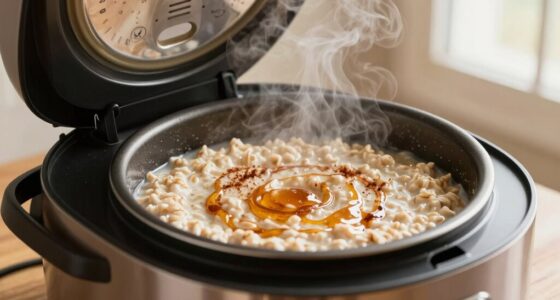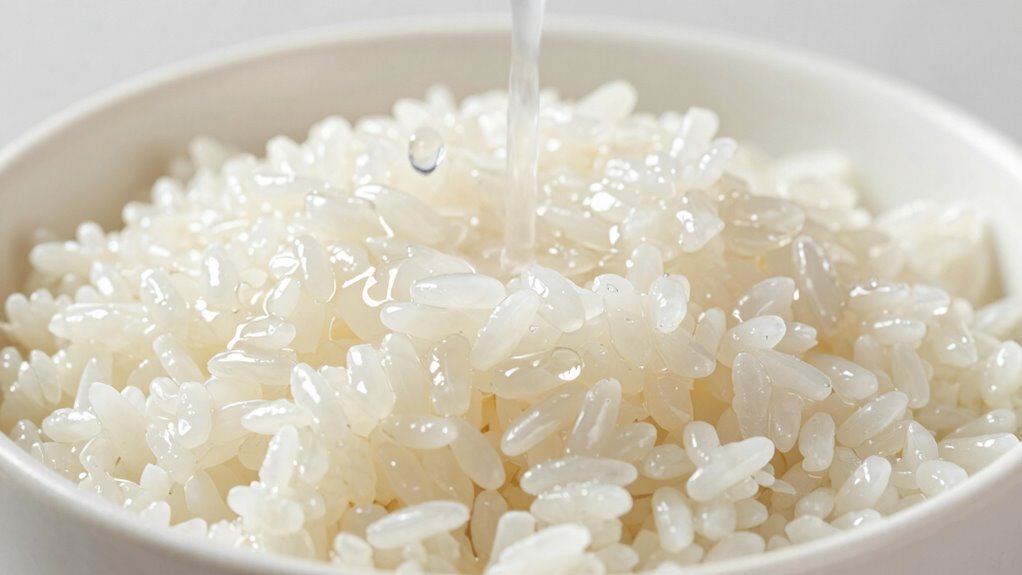

To get sticky rice without a gluey texture, you need to rinse it until the water runs clear, which removes surface starches that cause clumping. Use cold or room-temperature water and gently agitate the rice, rinsing 2-3 times or until the water stays clear. Proper rinsing, water quality, and handling are key. Keep the process gentle, and you’ll end up with fluffy, well-separated grains—more tips like this are just a step away.

Get kitchen staples and gadgets delivered free — and shop member deals
- Fast, free delivery on millions of items
- Access to Prime Big Deal Days deals on October 6–7
- Prime Video, Amazon Music and more included
Key Takeaways
- Rinse rice thoroughly with cold water until the water runs clear to remove surface starch and prevent gluey texture.
- Use filtered or bottled water for consistent results and optimal grain stickiness.
- Handle rice gently during rinsing to avoid breaking grains and ensure effective starch removal.
- Adjust rinsing duration based on soaking time—more rinses if rice is only briefly soaked.
- Proper steaming and avoiding overcooking help maintain fluffy, non-gooey rice with a desirable sticky texture.
Why Rinsing Sticky Rice Is Essential for Fluffy, Non-Gooey Texture
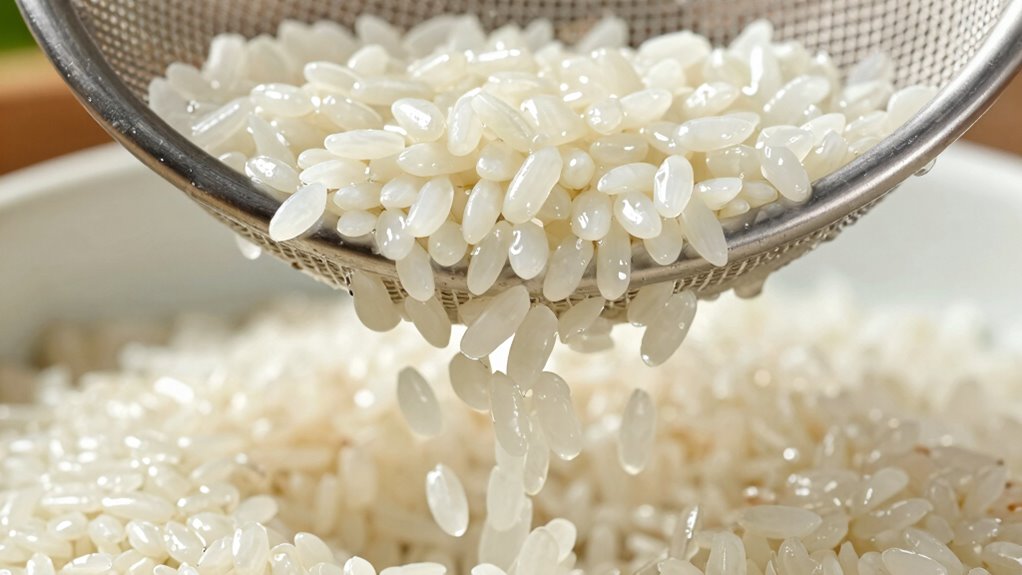
Rinsing sticky rice before cooking is vital because it removes excess surface starch that causes clumping and a gooey texture. When you rinse thoroughly, you improve grain absorption during cooking, allowing each grain to absorb just enough moisture for maximum fluffiness. This process helps control the rice’s texture, preventing it from becoming overly sticky or gluey. When surface starch is washed away, the rice cooks more evenly, resulting in grains that are tender yet separate. Proper rinsing ensures that the rice’s natural texture shines through without excess sliminess. By mastering this step, you set the foundation for achieving perfectly fluffy, non-gooey sticky rice every time. It’s an easy but essential step for anyone aiming for ideal grain absorption and impeccable texture control.
How to Properly Rinse Sticky Rice for Perfect Results
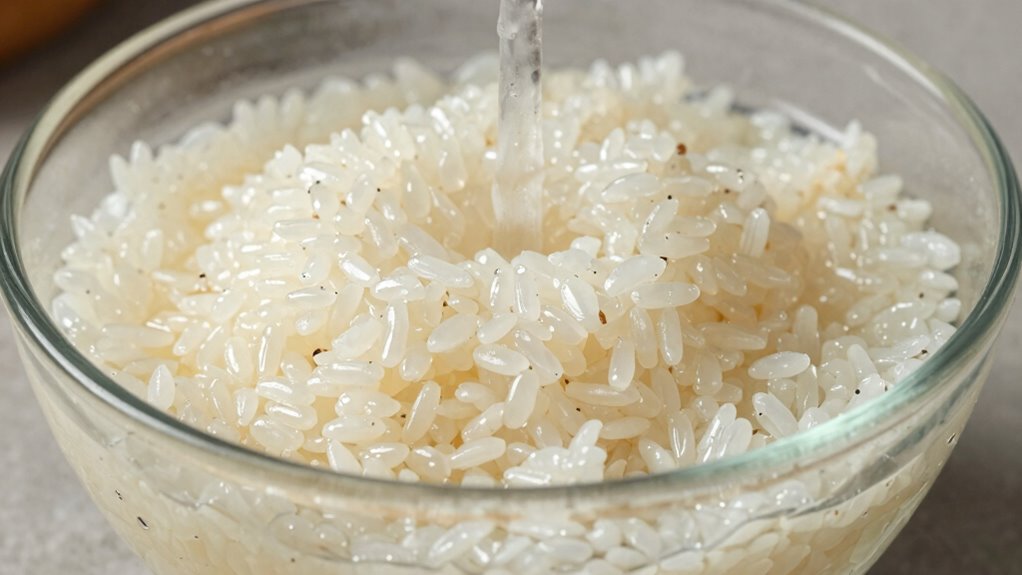
To guarantee your sticky rice turns out perfectly fluffy and non-gummy, start by measuring the rice and placing it in a large bowl or fine-mesh sieve. Rinse the rice thoroughly with cold water, using gentle agitation to promote grain separation. Focus on rinsing until the water runs clear, which ensures most surface starches are removed. The rinsing frequency is key; too few rinses leave excess starch, leading to stickiness, while over-rinsing can wash away nutrients and flavor. Swirl the rice gently during each rinse to maximize grain separation without damaging the grains. Repeat rinsing as needed until the water becomes clear. Proper rinsing helps achieve evenly separated grains, resulting in fluffy, perfectly cooked sticky rice every time. Additionally, understanding the importance of proper water-to-rice ratio can significantly influence the final texture of your rice. Maintaining the correct surface starch removal process is essential for achieving the desired non-gummy consistency, and being aware of grain integrity preservation can help prevent broken or damaged grains that affect texture. Ensuring consistent rinsing technique can further improve the uniformity of your cooked rice.
How Surface Starch Affects the Stickiness of Rice

The amount of surface starch on your rice directly influences how sticky it turns out. If you don’t rinse well, excess starch remains, making the rice gluey and dense. Proper rinsing reduces surface starch, helping you achieve a lighter, more desirable texture. Using ventilation considerations during rinsing can also prevent excess moisture from affecting the rice’s final consistency. Additionally, understanding starch removal techniques can further improve your rice’s texture by ensuring all surface starch is effectively washed away. For example, adjusting water temperature during rinsing can enhance starch removal efficiency. Applying the correct rinsing method can further optimize the removal of surface starch, resulting in fluffier rice. Incorporating best rinsing practices ensures you consistently achieve the ideal rice texture for your dishes.
Surface Starch Levels
Have you ever wondered why some rice turns out sticky while others stay fluffy? It all comes down to surface starch levels. When rice has a thick layer of surface starch, it releases more during cooking, creating a gluey texture. This excess starch increases water absorption, causing the grains to cling together. To achieve fluffiness, you want minimal surface starch, which means rinsing thoroughly until the water runs clear. Proper rinsing removes loose surface starch, preventing it from coating each grain and turning your rice gluey. By controlling surface starch levels, you influence how the rice absorbs water and how it cooks, resulting in a light, fluffy texture instead of a sticky mess. Remember, less surface starch means less stickiness. Additionally, understanding the mechanics of rice cooking can help you better manage surface starch levels and achieve perfect results every time. Controlling surface starch not only affects stickiness but also impacts texture and flavor, making your rice more enjoyable.
Rinsing Effectiveness
When you rinse rice thoroughly, you’re effectively removing surface starch that can make grains stick together. This surface starch is what causes excess clumping and a gluey texture. Using a proper rinsing method, such as gentle swirling and draining, ensures most of this starch washes away. Keep in mind that incomplete rinsing leaves residual starch, leading to stickiness. To highlight this, consider the following:
| Rinsing Method | Effect on Surface Starch |
|---|---|
| Gentle swirling | Removes surface starch gradually, reducing stickiness |
| Cold water rinse | Effectively washes away surface starch without damaging grains |
| Vigorous agitation | May break grains but can also remove more surface starch |
| Short rinsing time | Leaves more surface starch, increasing stickiness |
Proper rinsing minimizes surface starch, controlling rice’s stickiness. Additionally, understanding the surface starch can help you optimize your rinsing technique for perfect rice texture.
Rice Texture Outcomes
Surface starch plays a crucial role in determining the stickiness of rice. When the surface starch isn’t thoroughly rinsed away, it releases more during cooking, resulting in a gluey texture. The quality of rice grain also influences the outcome; high-quality grains tend to have less surface starch, making them less sticky when cooked properly. Your choice of cooking vessel impacts how evenly heat is distributed, which can affect surface starch release and final texture. Using a pot with a tight-fitting lid helps control moisture and prevents excess surface starch from making the rice overly sticky. Additionally, proper rinsing techniques can significantly reduce surface starch and improve rice texture. Selecting the right rice variety can also help achieve the desired outcome, as different types have varying surface starch levels. Ensuring that the rice is well-rinsed before cooking is essential for controlling surface starch and achieving the perfect texture. Incorporating appropriate cooking methods can further help in managing surface starch release. Overall, to achieve the desired texture, aim for well-rinsed rice and select vessels that promote even cooking, ensuring surface starch creates the right balance of stickiness without turning gluey. Using surface starch management techniques can further refine your results and prevent the rice from becoming overly sticky.
What Water Type and Rinsing Technique Give the Best Results
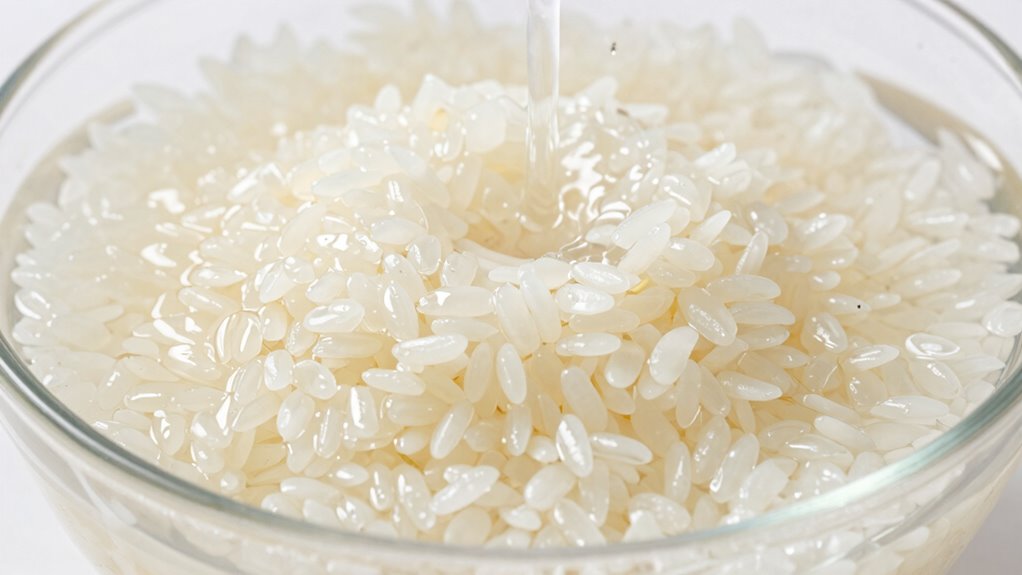
Start by rinsing your rice with cold water to remove surface starch without making it gluey. Avoid tap water, as minerals can affect texture and flavor. Use a gentle rinsing technique to prevent breaking grains and preserve a light, fluffy result. For the best results, choose water with balanced mineral content to support optimal grain integrity and texture and home water quality. Ensuring proper water mineral balance can also help maintain consistent rice results and prevent unwanted stickiness. Incorporating sustainable water practices can further enhance the quality of your cooked rice and promote environmentally responsible cooking habits. Additionally, selecting water with the appropriate mineral composition can contribute to consistent cooking outcomes and overall rice quality.
Use Cold Water
Using cold water is essential for rinsing rice effectively and achieving a non-gooky texture. Cold water helps remove surface starches without partially cooking the rice, which can happen with warm water. To maximize results, consider these tips:
- Rinse with cold water for at least 30 seconds to thoroughly wash away excess starch.
- Adjust soaking duration based on rice variety; longer for denser grains like jasmine.
- Use gentle agitation during rinsing to loosen surface starches.
- Repeat rinsing until the water runs clear, ensuring minimal stickiness and a fluffy texture.
Cold water preserves the rice’s integrity, especially important for sticky rice varieties, preventing gluey results. Proper rinsing with cold water is your best approach for perfect, non-gooey rice.
Avoid Tap Water
Have you considered that tap water may contain minerals or impurities that can affect the rice’s texture? Poor water quality can leave residues or cause uneven rinsing, leading to a gluey or unevenly cooked rice. To get the best results, opt for filtered or bottled water instead. Here’s a quick overview:
| Water Type | Effect on Rice | Best Use Case |
|---|---|---|
| Tap Water | May contain minerals or impurities | Avoid if water quality is poor |
| Filtered Water | Removes most impurities | Ideal for rinsing rice |
| Bottled Water | Usually pure, consistent quality | Best for delicate rice |
| Distilled Water | Very pure, no minerals | Not necessary, but effective |
Choosing water with high quality guarantees your rice remains sticky without an unwanted gluey texture.
Gentle Rinsing Technique
Choosing the right water type and rinsing technique can make all the difference in achieving perfectly sticky rice. A gentle rinse technique helps remove excess starch without over-washing, which can lead to a gluey texture. Use cool or room-temperature water and avoid vigorous swirling. Focus on these key steps:
- Fill the bowl with water, swirling gently to loosen surface starch.
- Drain gently, avoiding splashing or agitation.
- Repeat the process 2-3 times until the water runs clear.
- Handle the rice delicately during rinsing to prevent breaking grains.
This approach maximizes starch removal while preserving rice integrity. A gentle rinse technique ensures you eliminate enough surface starch to prevent stickiness, resulting in fluffy, non-gluey rice that sticks just enough without becoming mushy.
How Long Should You Rinse Sticky Rice?

Rinsing sticky rice properly is essential to achieve the right texture, but overdoing it can remove too much of the surface starch that helps the rice stick together. Typically, you should rinse until the water runs clear, which usually takes about 2-3 rinses. The soaking duration and water temperature influence how long you need to rinse; longer soaking can reduce necessary rinsing. Warmer water loosens surface starch faster, shortening rinsing time, while cold water may require a bit more rinsing. To clarify, consider this:
| Soaking Duration | Rinsing Time Needed |
|---|---|
| Short (30 min) | 2-3 rinses |
| Long (2 hours) | 1-2 rinses |
| Cold water | Slightly longer |
| Warm water | Slightly shorter |
Adjust your rinsing based on your soaking and water temperature.
Common Mistakes That Make Sticky Rice Too Gluey: And How to Avoid Them
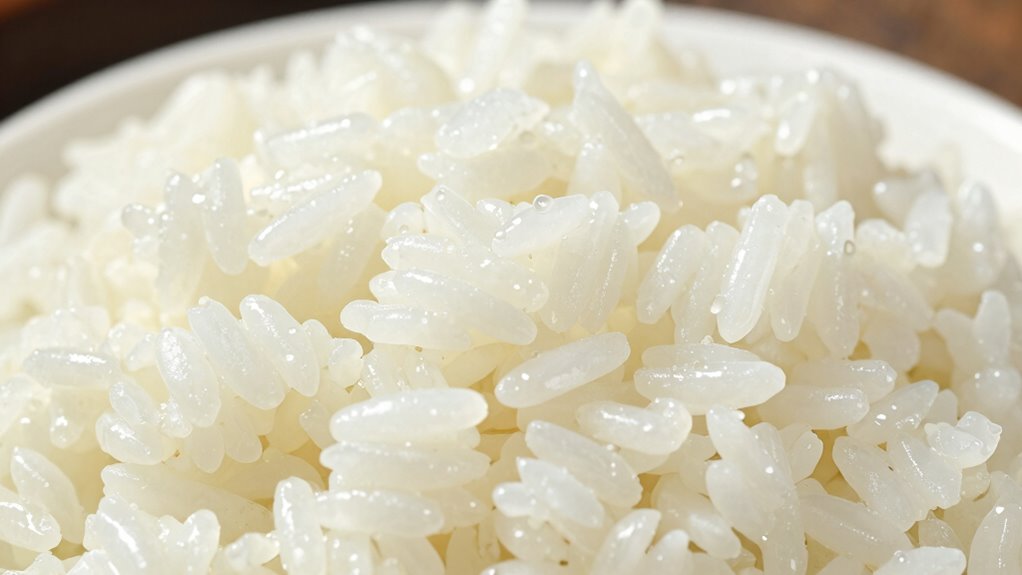
One common mistake that makes sticky rice too gluey is overcooking it or steaming it for too long, which causes excess moisture and releases more surface starch. To avoid this, pay attention to these pitfalls:
- Over soaking the rice, which can lead to overly soft grains and difficulty controlling moisture.
- Using hot water during rinsing, which can soften the surface too much and increase stickiness.
- Rinsing insufficiently, leaving surface starch that turns gluey when cooked.
- Steaming for too long, releasing excess starch and moisture that make the rice sticky and gluey.
Tips for Cooking Rinsed Sticky Rice to Fluffy Perfection
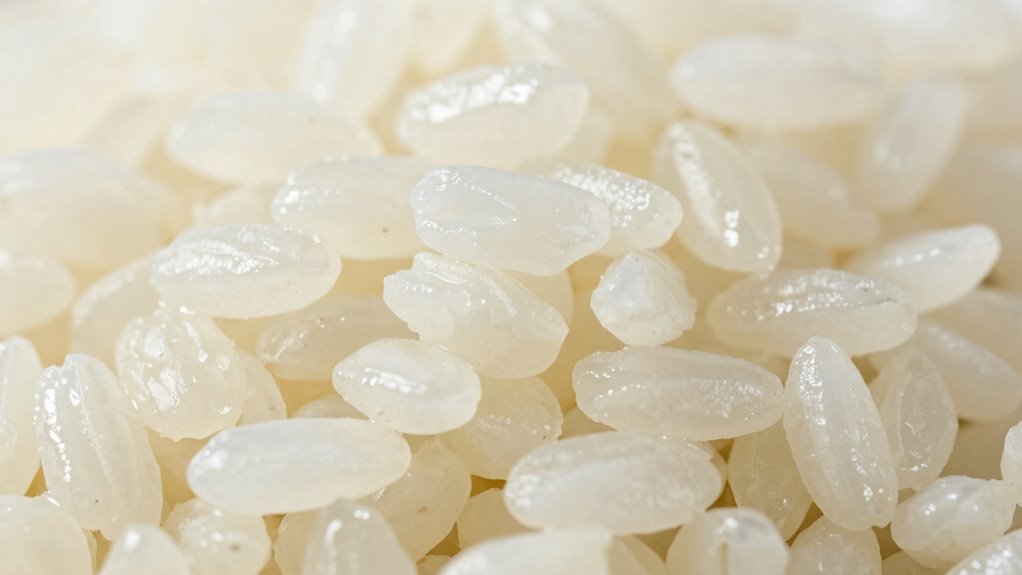
Achieving fluffy, perfectly cooked sticky rice starts with proper rinsing and attention during the steaming process. Use a thorough rinse technique, swirling the rice gently and draining multiple times until the water runs clear. This removes excess starch, which can cause the rice to become gluey. After rinsing, soak the rice for at least 30 minutes to ensure even moisture absorption and better fluffiness. When cooking, use a steaming method rather than boiling, as this preserves the rice’s texture. Maintain a gentle heat, and avoid lifting the lid too often, which releases steam and affects fluffiness. Once cooked, let the rice rest covered for 10 minutes before fluffing with a fork or chopsticks. These tips help you achieve light, airy, and perfectly fluffy sticky rice every time.
Troubleshooting Sticky Rice: Why It Still Turns Out Gluey and How to Fix It

Even when you follow all the right steps, sticky rice can still turn out gluey if too much starch remains or if it’s overcooked. To fix this, consider these points:
- Adjust your soaking methods—soak rice just enough to loosen starch but not so long that it absorbs excess moisture.
- Experiment with different rice varieties—some, like jasmine or sushi rice, naturally produce less stickiness.
- Rinse thoroughly after soaking to remove surface starch that contributes to glueiness.
- Use less water during steaming or boiling; too much moisture can make rice overly sticky.
Extra Tips for Perfect Sticky Rice Every Time
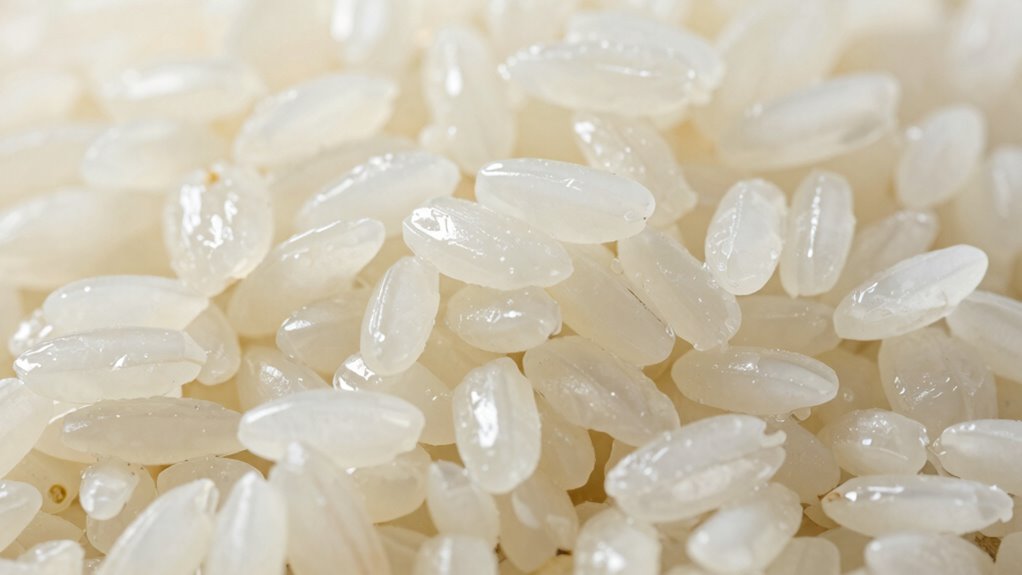
For consistently perfect sticky rice, paying attention to a few simple tips can make all the difference. First, consider the soaking duration; soaking the rice for at least 30 minutes helps achieve the ideal texture. Avoid rushing this step, as it allows the grains to absorb water evenly. Also, choose a trusted rice brand known for quality sticky rice—better brands often yield better results. After rinsing until the water runs clear, don’t skip the soaking step. Keep an eye on the rice’s consistency and adjust soaking time if needed, especially if you notice the rice still feels too firm or gluey. By selecting the right rice brand and following an suitable soaking duration, you’ll consistently achieve perfectly sticky rice every time.
Frequently Asked Questions
Can Rinsing Remove All the Sticky Texture From the Rice?
Rinsing can considerably reduce rice stickiness, but it may not remove all the sticky texture entirely. The rinsing effectiveness depends on how thoroughly you rinse and the rice type. Usually, rinsing until the water runs clear helps wash away surface starches that cause stickiness. However, some stickiness remains due to the rice’s inherent qualities, so don’t expect complete elimination—just a noticeable reduction for fluffier rice.
Is Cold Water Better Than Warm Water for Rinsing Rice?
Is cold water better than warm water for rinsing rice? Think of water temperature as a key to unleashing rinsing efficiency. Cold water often preserves rice’s texture while effectively removing surface starch, making it ideal for sticky rice. Warm water can help loosen particles but may start to cook the rice slightly, reducing rinsing efficiency. For best results, stick with cold water to maintain the perfect balance of cleanliness and texture.
Does Soaking Rice Affect the Stickiness After Rinsing?
Yes, soaking rice can affect its stickiness after rinsing. Soaking helps loosen surface starches, which reduces the gluey texture and enhances rinsing benefits. By soaking, you allow the rice to absorb water, making it easier to rinse away excess starch. This process results in fluffier, less sticky rice. Just remember not to soak too long, as over-soaking might make the rice mushy, diminishing the desired texture.
Should Rice Be Rinsed Multiple Times or Just Once?
You should rinse rice just once or twice, depending on how dirty it is, using cold water to remove surface starches. Rinsing too many times or with hot water can make the rice stickier or affect texture. Effective rinsing clears the water quickly, giving you a cleaner, fluffier rice. Focus on rinsing until the water runs clear, and avoid excessive rinsing to maintain the desired texture.
How Does Rice Age or Storage Affect Rinsing and Texture?
You’ll notice that rice freshness and storage conditions influence rinsing and texture. Fresh rice tends to be firmer and may need less rinsing, while older rice can be starchy and benefit from thorough rinsing to improve texture. Proper storage in a cool, airtight container keeps rice fresher longer, reducing stickiness. If rice is stored improperly or for too long, rinse until the water runs clear to achieve a better, less gluey texture.
Conclusion
Remember, patience and proper technique are key to perfect sticky rice. Rinse until the water runs clear to remove excess surface starch, ensuring a fluffy, non-gooey texture. Avoid shortcuts and common mistakes that cause stickiness. With consistent rinsing and careful cooking, you’ll master achieving that ideal, tender rice every time. As the saying goes, “Rome wasn’t built in a day”—so take your time and enjoy the process of perfecting your rice.
NFL season / tailgating Picks
team gear
As an affiliate, we earn on qualifying purchases.