In sous vide cooking, while precise temperature control is essential for safety and doneness, extending cooking time can sometimes make a bigger difference in achieving tender, flavorful results. Longer cooking allows tough proteins and connective tissues to break down, resulting in melt-in-your-mouth texture. It also lets flavors fully develop and infuse. If you notice your food isn’t quite right, adjusting time might be the key—continue exploring to learn exactly how timing can transform your dishes.

Get kitchen staples and gadgets delivered free — and shop member deals
- Fast, free delivery on millions of items
- Access to Prime Big Deal Days deals on October 6–7
- Prime Video, Amazon Music and more included
Key Takeaways
- Extended cooking times can break down connective tissues, making tougher cuts tender regardless of temperature.
- Longer durations allow flavors and aromatics to fully infuse into the food, enhancing taste.
- Overcooking at high temperatures can lead to mushiness; timing helps prevent this.
- Precise time control ensures consistent texture and doneness, especially for delicate or fibrous foods.
- Adjusting cooking duration can compensate for minor temperature inaccuracies or equipment calibration issues.
As an affiliate, we earn on qualifying purchases.
What Is Sous Vide Cooking and Why It’s Popular
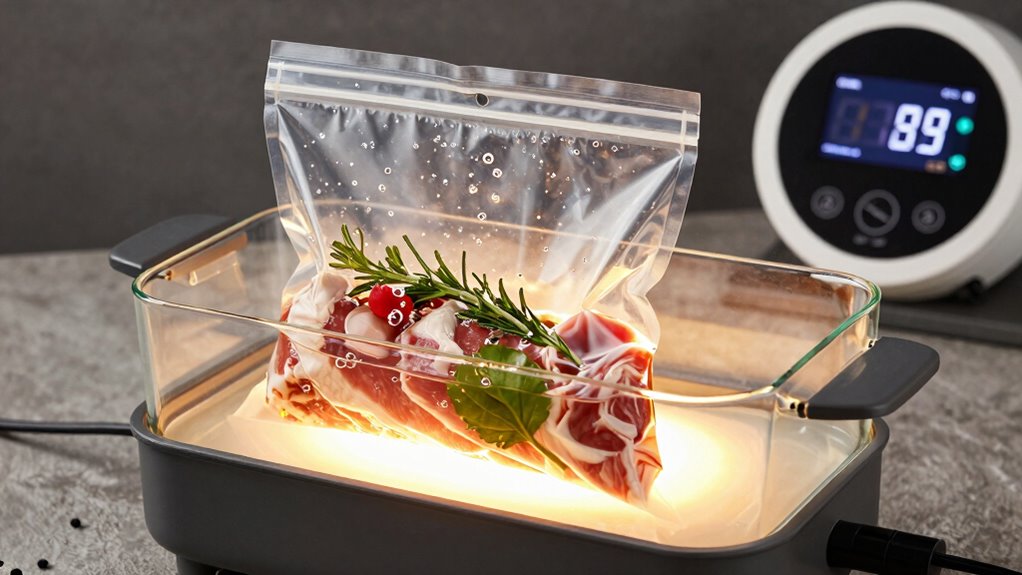
Have you ever wondered how chefs achieve perfectly cooked, tender dishes every time? That’s where sous vide cooking shines. It involves vacuum sealing your food to lock in flavors and moisture, then immersing it in a precisely controlled water bath. Water circulation is key here, ensuring even heat distribution around your food. Unlike traditional methods, sous vide allows for consistent results, making every bite tender and flavorful. The process minimizes overcooking, as the temperature remains steady during the entire cook time. This technique is popular among home cooks and professional chefs alike because it simplifies achieving restaurant-quality dishes. With minimal effort, you get perfectly cooked proteins, vegetables, and more, thanks to the combination of vacuum sealing and water circulation working together seamlessly.
As an affiliate, we earn on qualifying purchases.
How Temperature Affects Your Sous Vide Results
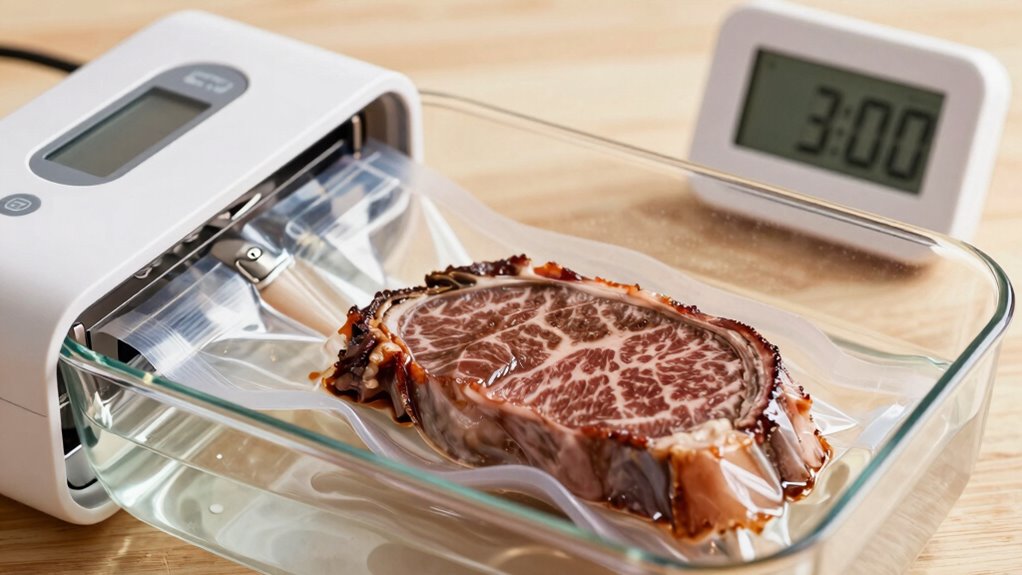
The temperature you set during sous vide cooking directly determines the doneness and texture of your food. Precise temperature control allows you to achieve consistent results, ensuring your dish reaches just the right level of tenderness or firmness. Maintaining the correct temperature also helps preserve the desired color and clarity, leading to more visually appealing dishes. Here’s how temperature influences your results:
- Low temperatures (around 125°F) produce tender, rare, or medium-rare textures, perfect for steaks and fish.
- Moderate temperatures (130°F to 140°F) create a more traditional cooked texture, like medium to well-done meats.
- Higher temperatures (above 150°F) result in firmer, more fully cooked foods, ideal for tougher cuts or poached eggs. Using precise temperature control is essential for achieving consistent results and is facilitated by advanced sous vide equipment that maintains consistent heat throughout the cooking process. Mastering cooking precision helps you hit your desired outcome every time, emphasizing the importance of accurate temperature control. Additionally, understanding temperature stability ensures your food cooks evenly and prevents over- or under-cooking.
As an affiliate, we earn on qualifying purchases.
Signs You Need to Extend Cooking Time
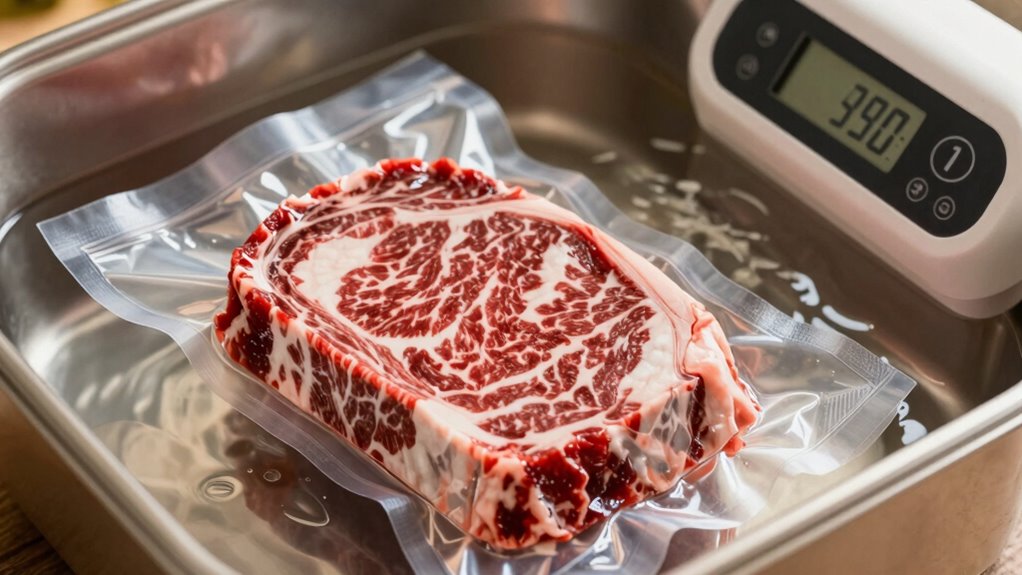
Wondering if your food needs more time in the sous vide bath? If it’s not quite tender or evenly cooked, it might be a sign you should prolong the cooking duration. When the texture still feels tough or rubbery, it indicates the proteins haven’t fully broken down, and more time could help. Additionally, if you notice uneven doneness or if the edges are overcooked while the center remains underdone, extending the cook can prevent overcooking risks and ensure uniform results. Incorporating controlled water temperature can help maintain consistent cooking conditions and improve outcomes. Maintaining food safety is also crucial when adjusting cooking times, especially for thicker cuts of meat. Be cautious—too long, and you might encounter texture changes like mushiness or a loss of structure. Paying attention to these signs helps you strike the right balance, ensuring your dish reaches perfection without compromising its quality. In cases where the texture remains inconsistent, reviewing your cooking techniques can provide valuable insights to improve your results. Additionally, understanding cooking duration principles can help you develop more intuitive timing adjustments for better meal outcomes.
As an affiliate, we earn on qualifying purchases.
When Longer Cooking Improves Texture and Flavor
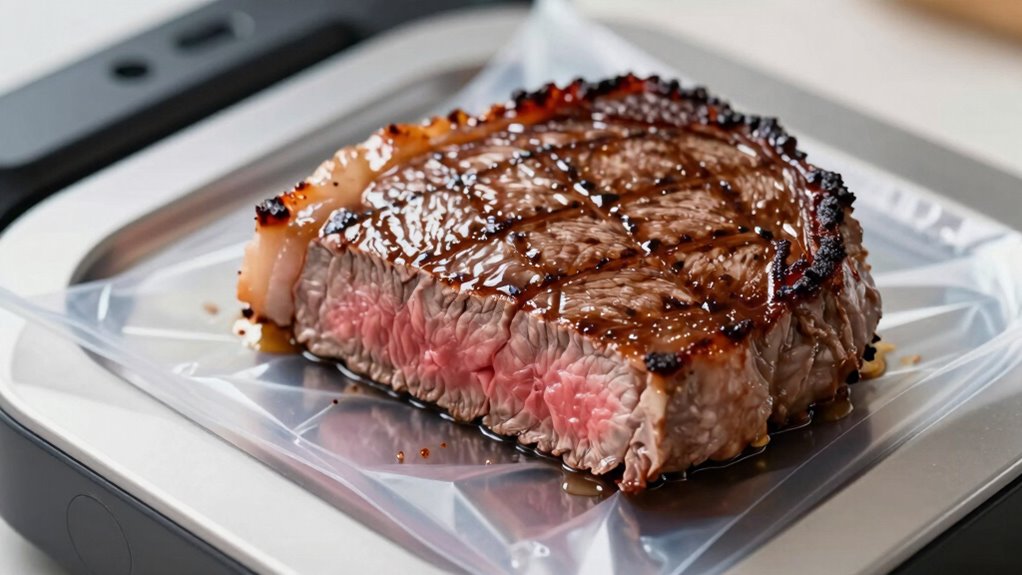
When you cook food for longer in a sous vide, you’ll notice it becomes more tender and easier to eat. Extended cooking also allows flavors to fully develop and infuse into the meat or vegetables. This process can markedly elevate the overall taste and texture of your dish. Additionally, understanding easy document management can help you keep track of your recipes and cooking times more efficiently. Properly managing your recipes ensures consistent results and saves you time during meal prep.
Enhanced Tenderness Over Time
As you cook sous vide for longer periods, you’ll notice that the meat becomes increasingly tender and flavorful. This is because extended cooking allows for marbling enhancement, where fat melts into the meat, boosting juiciness. It also promotes collagen breakdown, transforming tough connective tissues into gelatin, which adds a luxurious texture. To visualize this process:
- The marbling becomes more pronounced, enriching flavor and mouthfeel.
- Collagen dissolves gradually, softening muscle fibers for a melt-in-your-mouth experience.
- The meat’s overall tenderness improves, making it easier to cut and chew.
- Additionally, longer cooking times can aid in enzyme activity, further breaking down tissue and enhancing overall tenderness. This process is especially effective when maintaining precise temperature control, ensuring consistent results throughout extended cook times. Proper temperature stability can maximize these benefits by preventing over- or under-cooking. Moreover, understanding halal standards for meat processing can help ensure the meat used adheres to specific dietary requirements, further enhancing confidence in your cooking choices. Furthermore, using visual cues can help monitor doneness and tenderness levels during the cooking process.
Flavor Infusion Through Extended Cooking
Extending the cooking time in sous vide not only tenderizes meat but also creates an excellent opportunity for enhanced flavor infusion. As the food stays immersed longer, marinade penetration improves, allowing herbs, spices, and other aromatics to seep deeper into the protein. This gradual infusion results in a more uniform distribution of flavors, elevating the dish’s overall taste. Additionally, prolonged cooking amplifies aroma enhancement, making each bite more fragrant and appealing. The gentle, consistent heat helps delicate flavors develop fully without overcooking, ensuring your ingredients absorb maximum flavor. Longer cook times also improve texture by softening fibrous tissues and making the meat more enjoyable to eat. By extending your sous vide process, you emancipate a richer, more complex taste profile that’s difficult to achieve with traditional methods. Understanding flavor infusion can help you optimize your techniques for even better results. Incorporating proper timing is crucial for unlocking the full potential of your ingredients and achieving the desired culinary outcome. Recognizing how cooking duration influences both flavor and texture allows for more precise control over the final dish.
Tips for Adjusting Time and Temperature for Best Results
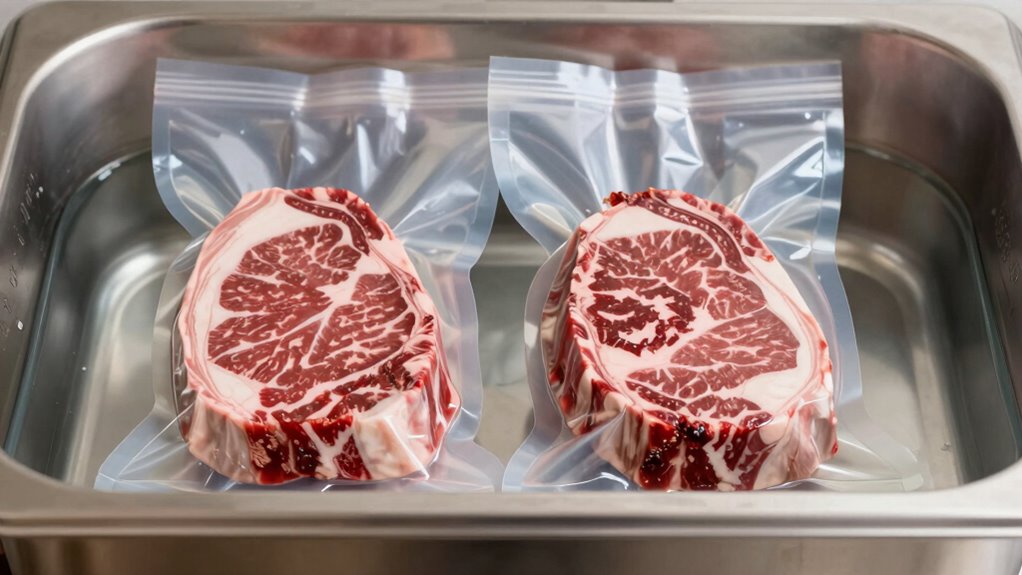
Adjusting your cooking time can help you achieve the perfect texture, whether you want your meat more tender or firmer. Fine-tuning your temperature settings guarantees your food reaches the ideal doneness without overcooking. Small changes can make a big difference in the final result, so experiment to find what works best for you. Remember that understanding cooking time and temperature can help you become more confident in your sous vide cooking. Additionally, cooking techniques play a crucial role in mastering your equipment and achieving consistent results.
Adjusting Time for Texture
If you want to achieve the perfect texture in your sous vide cooking, changing the cooking time can make a significant difference. Adjusting the timing precision allows you to fine-tune the tenderness or firmness of your food. Here are some tips:
- Increase the time to soften tougher cuts or achieve a more tender, melt-in-your-mouth texture.
- Shorten the time for a firmer bite or when you want a slight crunch, like with vegetables.
- Use incremental adjustments, testing small changes to find the ideal texture without overcooking.
Fine-Tuning Temperature Settings
Fine-tuning your temperature settings alongside timing is key to achieving perfect sous vide results. Adjusting temperature carefully helps you reach the ideal doneness and texture, especially for delicate proteins. When considering marinating duration, keep in mind that sous vide can amplify flavors without risking over-marination. Always prioritize safety considerations; cooking at proper temperatures ensures harmful bacteria are eliminated, even if you extend your cook time. Small temperature tweaks can profoundly impact tenderness and moisture retention. If you’re experimenting with different cuts or recipes, document your adjustments to refine your process. Remember, precise temperature control is essential for consistent results, so use reliable equipment and double-check your settings before starting. Fine-tuning these variables will elevate your sous vide dishes to professional quality.
Troubleshooting When Results Aren’t Perfect
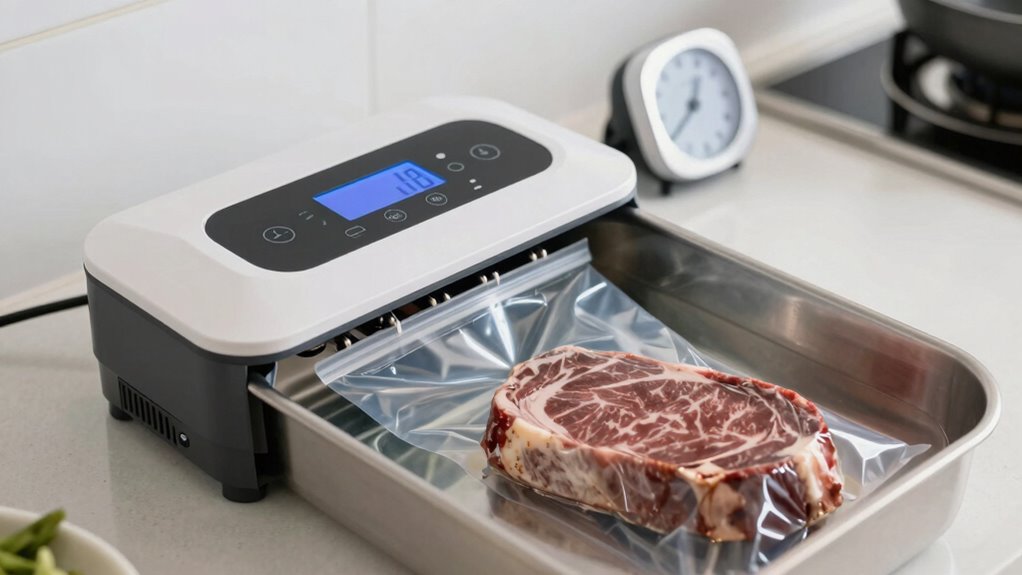
When your sous vide results aren’t quite right, pinpointing the issue can feel frustrating. Common problems often stem from overcooking pitfalls or equipment calibration errors. To troubleshoot:
- Check your timing and temperature settings—they might be too high or too long, leading to overcooked textures.
- Make sure your water bath temperature is accurate; incorrect calibration can cause inconsistent results.
- Inspect your vacuum seal for leaks or improper sealing, which can affect heat transfer and doneness.
Final Tips for Perfect Sous Vide Results
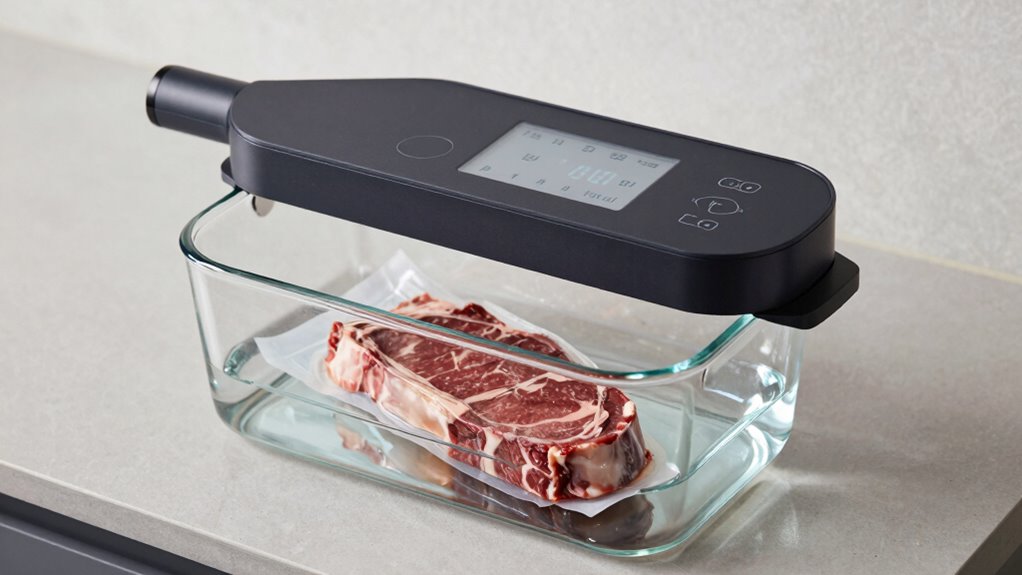
Achieving perfect sous vide results requires attention to detail and a few key practices. First, guarantee proper marinade penetration by allowing your ingredients to sit in the marinade beforehand or include flavorful ingredients directly in the bag. This enhances taste and texture. Always prioritize food safety by cooking at correct temperatures and avoiding cross-contamination. Use high-quality, vacuum-sealed bags to prevent leaks and ensure even heat transfer. When finishing, consider searing or browning for flavor and appearance, but do so quickly to prevent overcooking. Also, don’t forget to chill leftovers promptly if you’re not serving immediately. These tips help you consistently achieve tender, flavorful results while maintaining safety and maximizing marinade benefits. Precision and care make all the difference in sous vide cooking success.
Frequently Asked Questions
Can Sous Vide Cooking Replace Traditional Methods Entirely?
Sous vide cooking can’t fully replace traditional methods because it offers precision control that enhances flavor and tenderness. While it excels at maintaining perfect doneness and infusing flavors deeply, some techniques like searing or browning still need conventional heat. You’ll find sous vide a powerful tool for consistency, but combining it with traditional methods creates the best results, especially for complex dishes that benefit from multiple cooking styles.
How Does Thickness Influence Cooking Time in Sous Vide?
Your thickness substantially impacts cooking duration in sous vide. Thicker cuts require more time to reach the desired doneness because heat takes longer to penetrate fully. You should adjust your cooking time based on thickness, allowing for extra minutes for thicker pieces. This ensures even cooking and perfect results. Remember, undercooking is less risky than overcooking, so always trust the recommended times for your specific cut.
Are There Safety Concerns With Longer Sous Vide Cooking?
Longer sous vide cooking can raise food safety concerns if you don’t follow proper guidelines. Extended times at certain temperatures can promote bacterial growth, especially if you don’t hold the food at safe temperatures long enough to kill pathogens. To keep your food safe, always monitor your cooking times, temperatures, and use a reliable thermometer. Proper vacuum sealing and promptly refrigerating leftovers also help prevent foodborne illnesses.
How Do I Choose the Right Bag or Container for Sous Vide?
To choose the right bag or container for sous vide, you should use vacuum sealers and heat-resistant containers. Vacuum-sealed bags prevent water from contacting the food, ensuring even cooking and safety. Opt for BPA-free, food-grade vacuum bags for best results. For containers, select heat-resistant, BPA-free containers that can withstand the temperature. Make sure the container is large enough to allow water circulation around the food for even cooking.
Is It Necessary to Sear After Sous Vide Cooking?
Yes, searing after sous vide cooking is necessary for flavor enhancement and to develop the searing benefits like a crispy, caramelized crust. Searing adds depth to the meat’s taste, enhances appearance, and creates a pleasing contrast in texture. It’s a quick step that markedly improves your dish, giving it that professional touch. Don’t skip it—your taste buds will thank you for the extra flavor and appealing presentation.
Conclusion
Think of sous vide like tuning a delicate instrument—you might tweak the temperature, but sometimes, it’s the extra time that truly brings out the harmony. Patience is your secret ingredient, allowing flavors to meld and textures to reach perfection. By understanding that time often outweighs temperature, you’ll master the art of sous vide cooking. Remember, the magic happens when you give your ingredients the time they need to become their best selves.
NFL season / tailgating Picks
team gear
As an affiliate, we earn on qualifying purchases.