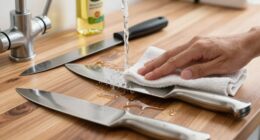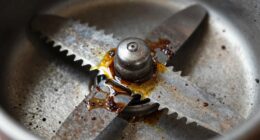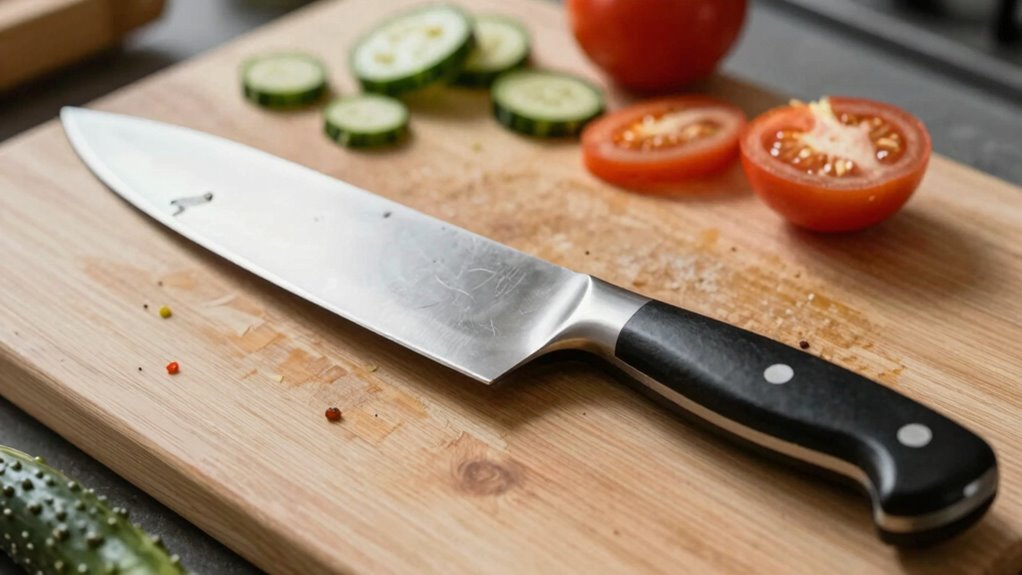

One common mistake is neglecting proper sharpening, which dulls your blade and makes cutting harder and riskier. Many people also toss knives into drawers, dulling and chipping the edges, or store them improperly, increasing safety hazards. Using hard surfaces like glass or stone cuts the knife’s edge faster. Additionally, skipping routine cleaning causes rust and corrosion. If you keep these errors in mind, you’ll be better prepared to care for your knives and avoid unnecessary damage—learn more to master your setup.
Key Takeaways
- Neglecting to properly sharpen the knife, leading to dull blades that require more force and increase safety risks.
- Storing knives improperly, such as in drawers, causing dulling, chipping, or safety hazards.
- Using hard surfaces like glass or stone cutting boards that dull or damage the blade.
- Failing to clean and dry knives correctly, which can cause rust, corrosion, and reduced sharpness.
- Ignoring proper cutting techniques, which can damage the blade and compromise safety.
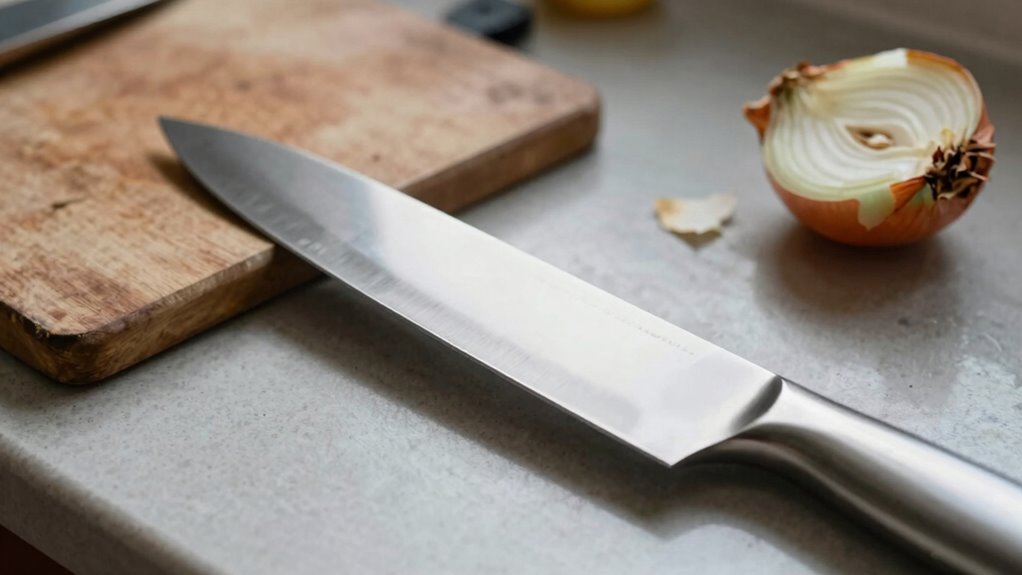
When you first get a chef’s knife, it’s easy to make mistakes that can affect your safety and the knife’s longevity. One common mistake is neglecting proper knife sharpening. A dull knife requires more force to cut through ingredients, increasing the risk of slips and injuries. Instead of using excessive pressure, take the time to sharpen your knife regularly with a whetstone or a professional sharpening system. Keeping your blade sharp not only makes cooking safer but also extends its lifespan. A well-sharpened knife slices smoothly, reducing the strain on the edge and preventing chips or bends over time.
Sharpen your chef’s knife regularly to enhance safety and prolong its lifespan.
Another mistake many beginners make involves poor knife storage. Tossing your chef’s knife into a drawer with other utensils can dull or chip the blade and pose safety hazards. Instead, invest in a knife block, magnetic strip, or a protective sheath. Proper storage keeps the blade aligned and protected, maintaining its sharpness longer and reducing the chance of accidental cuts when reaching for it. Remember, the way you store your knife plays a crucial role in how well it performs and how long it lasts. Proper knife storage is essential for preserving the integrity of your blades.
Many new cooks also underestimate the importance of maintaining the correct cutting techniques. Using improper cutting methods can damage the edge of your knife and make sharpening more frequent. Focus on using a controlled, rocking motion when chopping or slicing rather than pressing down hard or hacking away. This technique minimizes unnecessary stress on the blade and helps keep the edge fine for longer. Additionally, avoid cutting on hard surfaces like glass or stone, which can quickly dull or chip the blade. Instead, opt for wooden or plastic cutting boards designed to protect your knife’s edge. Proper cutting techniques are essential for preserving the quality and safety of your tools. Proper technique also involves understanding knife maintenance, which includes regular care and handling to prolong your knife’s life.
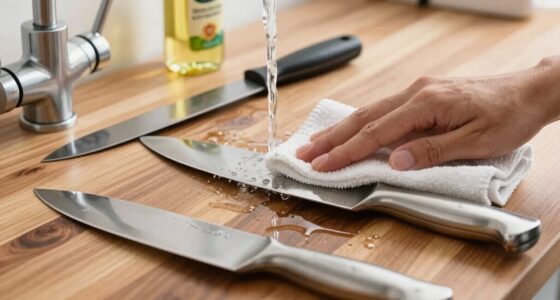
Finally, don’t overlook the importance of cleaning your knife properly after each use. Hand wash it with warm water and mild detergent, then dry it thoroughly. Leaving a knife wet or soaking can cause corrosion or rust, especially if it’s made of high-carbon steel. Proper cleaning and storage are essential to maintain the sharpness and integrity of your knife over time. It’s also beneficial to be aware of the knife sharpening process, as a dull blade can compromise both safety and performance. Avoid putting it in the dishwasher, as the high heat and harsh detergents can damage the blade and handle. Regularly inspecting and caring for your knife will ensure it stays in optimal condition.

SHARPAL 202H Precision Knife Sharpening System, Adjustable Angle 10–35°
- Adjustable Sharpening Angle: 10° to 35° for precision
- Innovative Angle Setting: Fixed edge-to-clamp distance
- Complete 7-Piece Kit: Diamond plates, whetstones, leather strop
As an affiliate, we earn on qualifying purchases.
As an affiliate, we earn on qualifying purchases.
Frequently Asked Questions
How Often Should I Sharpen My Chef Knife?
You should sharpen your chef knife every 1-3 months, depending on how often you use it and your cutting techniques. Regular knife maintenance keeps your blade sharp and prevents accidents. If you notice it’s tearing or crushing food rather than slicing, it’s time to sharpen. Proper cutting techniques reduce dulling, so focus on safe, controlled motions. A sharp knife makes prep easier and safer, so don’t neglect regular sharpening.
What Is the Best Way to Store a Chef Knife?
Think of your chef knife as a trusted tool that deserves a safe home. Store it in a knife block, on a magnetic strip, or in a protective sheath to keep it sharp and secure. Proper storage solutions prevent accidents and maintain blade integrity. Always prioritize knife safety by keeping blades away from clutter, children, and moisture. This way, your knife stays sharp, safe, and ready whenever you need it.
Can I Cut Frozen Foods With My Chef Knife?
You shouldn’t cut frozen foods with your chef knife because it can damage the blade and compromise knife safety. Frozen items are hard and can cause the knife to slip or chip if you try to cut through them directly. Instead, let the food thaw slightly or use a serrated knife designed for frozen foods. Prioritizing knife safety helps prevent accidents and keeps your chef knife in good condition.
Should I Wash My Chef Knife in the Dishwasher?
Never toss your chef knife into the dishwasher! The risks are huge—you could end up dulling or chipping your blade, or even causing a dangerous accident. Dishwasher cleaning might seem easy, but it’s brutal on your knife’s edge and handle. Hand wash your knife gently with warm water and mild soap instead. This keeps your knife sharp, safe, and ready for those culinary adventures!
How Do I Prevent My Chef Knife From Slipping During Use?
To prevent your chef knife from slipping, focus on your knife grip and cutting surface. Hold the handle firmly with a secure grip, keeping your fingers tucked under your knuckles for safety. Use a stable, non-slip cutting surface like a wooden or silicone board. Make certain your cutting surface stays still by applying even pressure and working slowly. These steps will give you better control and reduce the risk of slipping.

Cook N Home Basics, Acacia Wood Cutlery Storage Block without Knives, Universal Knife Holder Countertop Butcher Block Knife Stand for Easy Kitchen Storage, 20-Slot
- Material: Premium Acacia Wood
- Number of Slots: 20 versatile slots
- Slot Sizes: Varies from 0.87 to 3.35 inches
As an affiliate, we earn on qualifying purchases.
As an affiliate, we earn on qualifying purchases.
Conclusion
Getting your setup right with a chef’s knife isn’t just about safety; it’s about making your cooking easier and more enjoyable. Sure, it might seem like a small detail, but proper handling and setup prevent accidents and improve your skills. Don’t let fear or uncertainty hold you back—starting with the right setup builds confidence and transforms your kitchen experience. Once you get it right, cooking becomes more fun, precise, and safe.

Visaire Bamboo Cutting Board with Knife Set, 13.4 x 9.4 Inch Wooden Chopping Board with Built-In Knife Storage, Non-Slip Corner Grips for Meat, Vegetables, Fruit, Cheese & Serving
- All-in-One Kitchen Prep Set: Includes cutting board and knife
- Large Bamboo Cutting Surface: Measures 13.4 x 9.4 inches
- Durable Bamboo Material: Gentle on knives and sturdy
As an affiliate, we earn on qualifying purchases.
As an affiliate, we earn on qualifying purchases.

Hoplon Blade Premium Kit – 3oz Knife Oil (9X More Than Leading Oils) – Pocket Knife Cleaning & Care Kit, Dauber & Needle Applicators, Rust Prevention, Complete Knife Restoration & Maintenance Set
- Large 3oz Professional Blade Oil: 9 times more than leading oils
- Complete Pocket Knife Cleaning Kit: Includes oil, dauber, and cleaning accessories
- Rust Prevention and Blade Restoration: Protects against moisture, corrosion, and oxidation
As an affiliate, we earn on qualifying purchases.
As an affiliate, we earn on qualifying purchases.