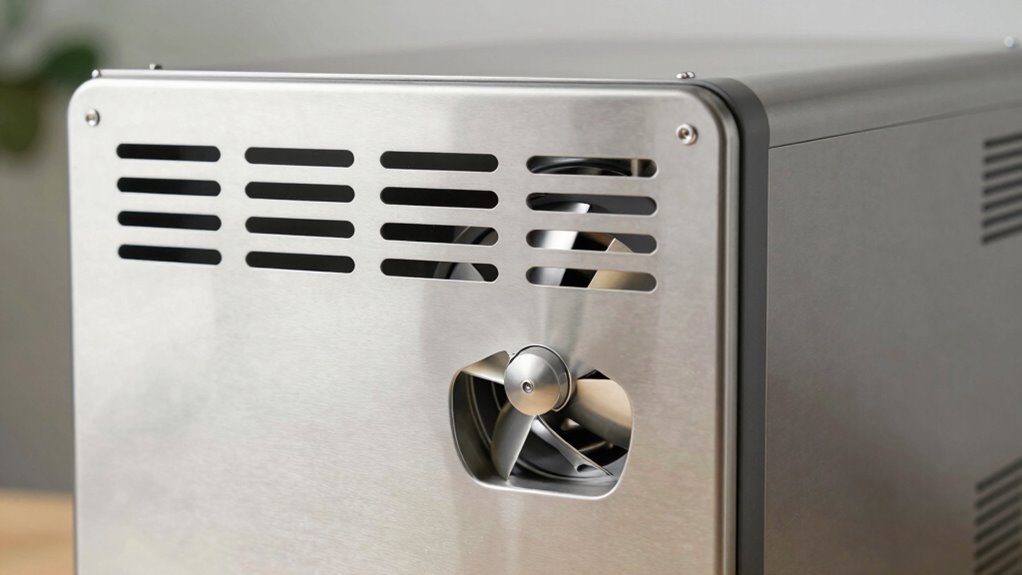

A rear-mounted fan in a stainless steel food dehydrator boosts airflow and helps guarantee even drying, especially for large or delicate batches. It also reduces noise and vibrations, making the device quieter during operation. However, its actual benefits depend on the quality of the design and build. Not all units with rear fans deliver these advantages. To understand when it truly helps versus marketing hype, explore the details further and see how specific models perform.
Key Takeaways
- Rear-mounted fans improve airflow for even dehydration and faster drying, especially useful for large batches.
- They operate more quietly and reduce vibrations, creating a more pleasant environment during use.
- Effectiveness depends on the dehydrator’s design quality; not all models with rear fans deliver significant benefits.
- They are most helpful when consistent, uniform drying of large quantities is needed or noise reduction is desired.
- Marketing claims about airflow and noise reduction may be overstated; actual performance varies by product.
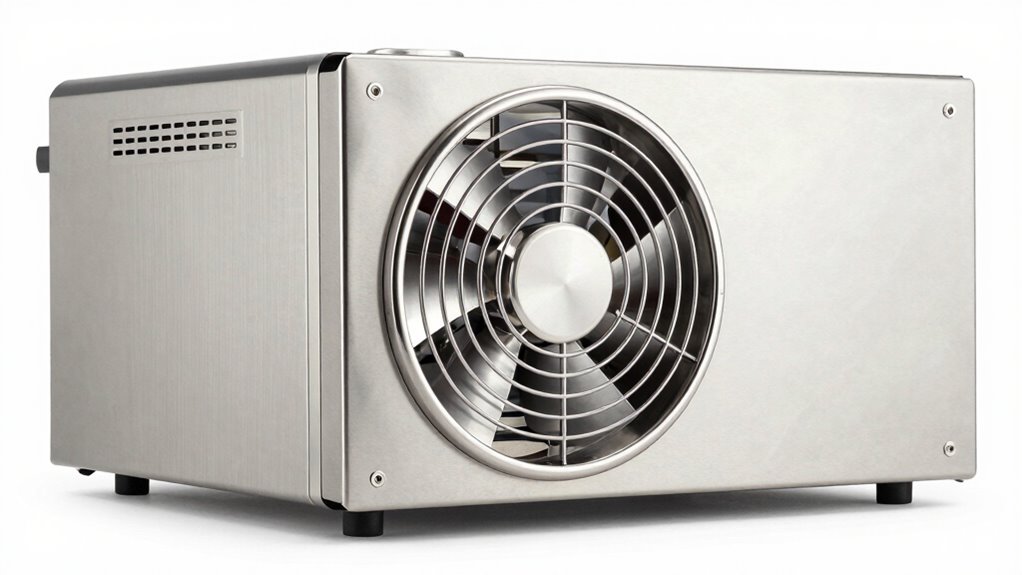
A rear-mounted fan on a food dehydrator offers several advantages that can improve your drying experience. One of the main benefits is enhanced airflow efficiency. When the fan is positioned at the back, it creates a more uniform distribution of air across all trays. This means your food items dry more evenly, reducing the chances of over-drying or under-drying certain spots. With better airflow, you spend less time waiting for your food to dehydrate and achieve more consistent results. Plus, since the air moves smoothly over the food, you’re less likely to encounter hot spots or uneven dehydration, which is especially important when drying delicate slices of fruit or herbs.
Another significant advantage of a rear-mounted fan is its impact on noise levels. Fans located at the back tend to operate more quietly because the design allows for better noise insulation within the unit. The fan’s placement minimizes vibrations and sound transmission, making your drying process less disruptive, especially if you’re doing multiple batches or using the dehydrator in a shared space. This quieter operation means you can set it and forget it without being constantly aware of loud fan noises, creating a more pleasant environment overall.
A rear-mounted fan reduces noise and vibrations for quieter, less disruptive drying sessions.
However, it’s worth noting that the effectiveness of a rear-mounted fan isn’t always cut-and-dried. In some cases, marketing claims highlight the benefits of rear-mounted fans without offering significant real-world improvements. Some brands might emphasize airflow efficiency and noise reduction to set their products apart, but not all models deliver these advantages equally. It’s essential to consider the design quality, materials used, and user reviews before assuming a rear-mounted fan will automatically provide superior performance.
There are moments when a rear-mounted fan truly helps. If you’re dehydrating large quantities of food regularly, the improved airflow distribution can save you time and effort. It’s also beneficial if you’re sensitive to noise or need a quieter kitchen appliance. Conversely, if you only use your dehydrator occasionally or for small batches, the differences may be marginal, and the added cost for a rear-mounted fan might not justify the expense. Sometimes, manufacturers use the rear-mounted fan as a marketing feature to make their product stand out, but the actual performance gains depend on the specific design and build quality of the dehydrator. Additionally, understanding airflow efficiency can help you select the best dehydrator for your needs.
Frequently Asked Questions
Does a Rear-Mounted Fan Improve Dehydration Speed?
Yes, a rear-mounted fan can improve dehydration speed by enhancing airflow optimization. This design promotes more even dehydration, reducing the time needed to dry foods completely. With better airflow, you’re likely to see more consistent dehydration results, avoiding uneven spots or moisture retention. So, if you want faster, more reliable dehydration, a rear-mounted fan helps by boosting airflow and maintaining dehydration consistency throughout your food.
How Loud Is the Rear-Mounted Fan During Operation?
The rear-mounted fan typically produces a moderate noise level during operation, which varies depending on the model. You might notice a sound comparison to a quiet household appliance, like a dishwasher, rather than loud machinery. While it’s not silent, it shouldn’t disrupt your kitchen activities considerably. If noise is a concern, check user reviews for specific decibel ratings, but overall, it’s designed to operate quietly enough for regular use.
Can the Fan Be Turned off or Adjusted?
You might wonder if you can control the fan during operation. Yes, the fan speed is adjustable with the fan control, allowing you to turn it off or set it to different levels. This flexibility helps you optimize drying times and noise levels. Keep in mind, some models may have limited options, so check your dehydrator’s specific features. With the right control, you stay in command of your drying process.
Is Maintenance Required for the Rear-Mounted Fan?
Yes, maintenance is required for the rear-mounted fan. You should regularly clean the fan to prevent dust buildup, which can reduce efficiency. If the fan becomes noisy or stops working despite cleaning, you might need a fan replacement. Keep an eye on its performance, and perform routine fan cleaning to guarantee peak operation and prolong its lifespan. Proper maintenance helps your dehydrator function smoothly and efficiently.
Does the Fan Affect Energy Consumption?
The fan does affect energy consumption, but its impact depends on the dehydrator’s design and efficiency. A well-designed rear-mounted fan can improve energy efficiency by evenly distributing heat, reducing overall power consumption. However, if the fan is inefficient or runs constantly, it may increase energy use. Monitoring the fan’s operation helps you optimize power consumption, ensuring your dehydrator uses energy wisely without sacrificing performance.
Conclusion
A rear-mounted fan is like a silent conductor, guiding airflow smoothly through your dehydrator’s orchestra of flavors. It’s your ally when even heat and even drying matter most, turning chaos into harmony. But beware the hype—sometimes, it’s just a shiny badge, not a game-changer. Know when it truly helps, and let your dehydrator’s quiet rhythm bring out the best in your snacks, turning simple ingredients into a symphony of flavor.