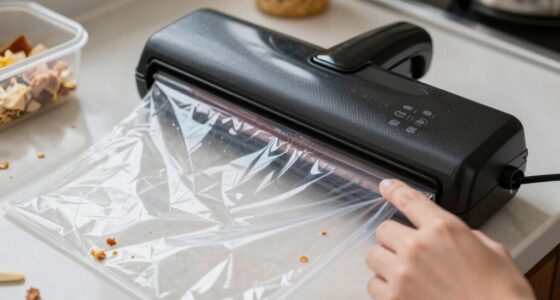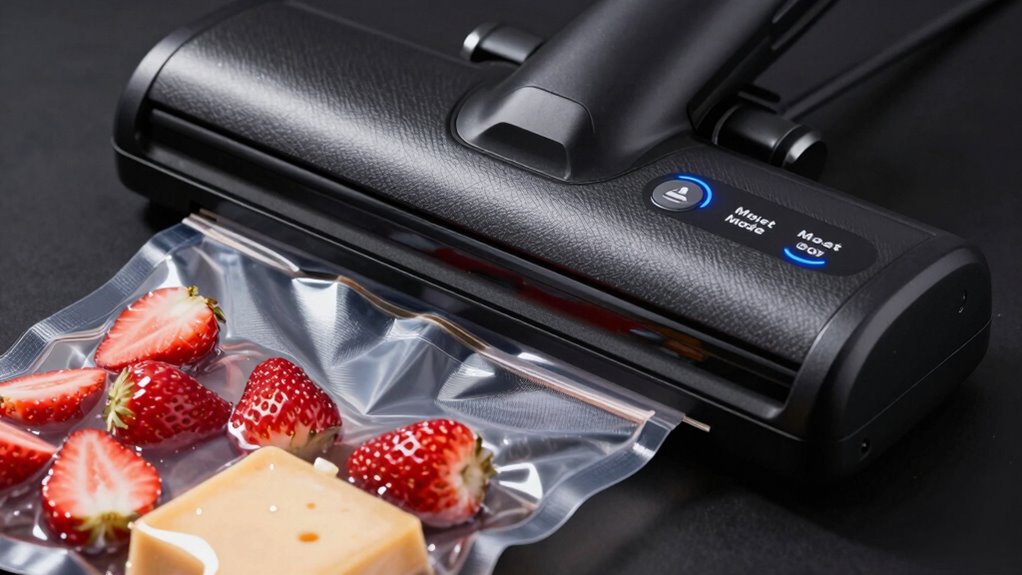
Moist mode on a vacuum sealer is designed for high-moisture foods like soups, marinated items, or sous vide bags. It adjusts the vacuum pressure and sealing time to prevent liquids from causing leaks or damaging the bag. You’ll find it helpful when sealing wet foods to get a strong, airtight seal. However, it’s not a magic solution—using it on dry items can hurt your results. Want to learn more about when and how to use it properly?

Get kitchen staples and gadgets delivered free — and shop member deals
- Fast, free delivery on millions of items
- Access to Prime Big Deal Days deals on October 6–7
- Prime Video, Amazon Music and more included
Key Takeaways
- Moist mode adjusts vacuum pressure and sealing time for high-moisture foods, preventing leaks and seal breakage during sealing.
- It is ideal for sealing water-rich items like soups, stews, and sous vide bags, enhancing preservation and freshness.
- Moist mode is not suitable for dry foods; overuse on such items can cause over-vacuuming or damage.
- Its primary function is to optimize sealing performance for moist foods, not to serve as a universal setting.
- Claims that moist mode works for all foods may be marketing exaggerations; proper mode selection is key for best results.
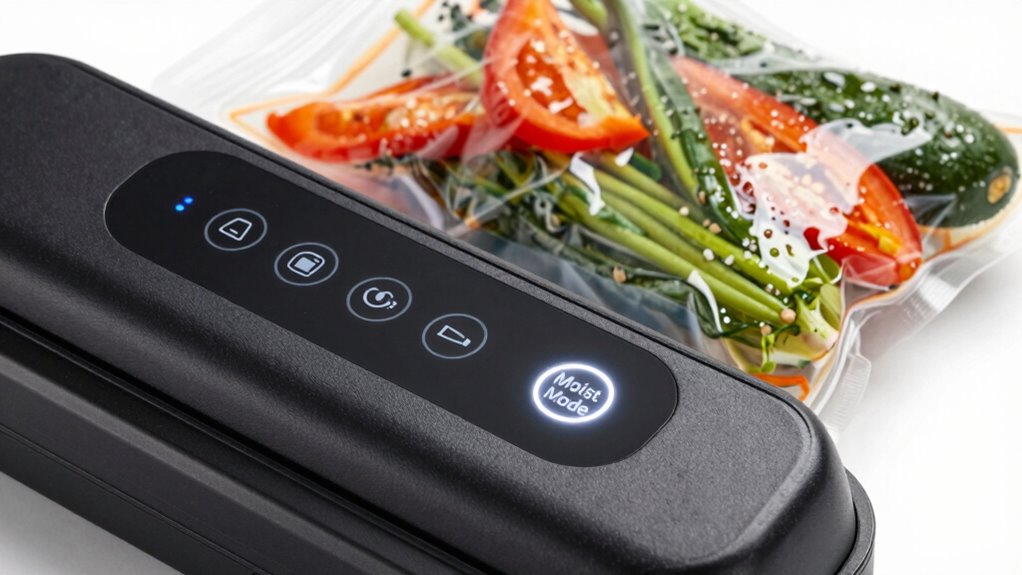
Have you ever wondered when to use the moist mode on a vacuum sealer? If you’re into sous vide cooking or trying to extend the shelf life of your food, understanding this feature can make a big difference. The moist mode is specifically designed to handle foods with high moisture content, guaranteeing a better seal without damaging delicate ingredients. When you’re preparing meals for sous vide, for example, you often cook vacuum-sealed bags submerged in water at precise temperatures. In this process, the water and food release moisture, which can interfere with a standard dry vacuum seal. That’s where moist mode comes into play. It adjusts the sealing process to accommodate the moisture, preventing the bag from loosening or the seal from breaking. This makes it ideal for sealing raw meats, fish, fruits, or vegetables that naturally contain a lot of liquids. Using moist mode helps you achieve an airtight seal, vital for food preservation, because it reduces the risk of spoilage and freezer burn. Proper sealing in these cases ensures your food stays fresh longer and retains its flavor, texture, and nutritional value.
In addition to sous vide cooking, moist mode is invaluable for food preservation. When you’re storing leftovers or bulk purchases, sealing foods with high moisture content properly keeps bacteria and mold at bay. This mode minimizes the chance of leaks or compromised seals due to liquid seepage, giving you confidence that your food will stay safe and fresh. Plus, it’s especially useful when sealing soups, stews, or marinated items that are inherently moist. The moist mode works by adjusting the vacuum pressure and sealing time, allowing excess moisture to be expelled without sacrificing the integrity of the bag or the seal. This process is more effective than the standard dry setting, which isn’t optimized for liquids and can result in incomplete seals or damaged bags. Additionally, understanding the importance of high-quality sealing technology can help you choose the right vacuum sealer that offers effective moist mode options, ensuring optimal results every time.
However, it’s important to recognize that moist mode isn’t just a gimmick. Some marketing claims exaggerate its usefulness, suggesting it’s a universal solution for all sealing needs. In reality, it’s specifically designed for foods with high moisture levels, and using it for dry items might result in over-vacuuming or crushing delicate foods. So, if you’re sealing watery ingredients or preparing for sous vide, moist mode is your best bet. For dry items like grains, nuts, or dried herbs, sticking with the dry setting will typically give you the best results. Knowing when and how to use moist mode allows you to optimize your vacuum sealing process, ensuring your food stays fresh, safe, and perfectly sealed every time.
As an affiliate, we earn on qualifying purchases.
Frequently Asked Questions
Can Moist Mode Be Used for Liquids Other Than Soups?
Yes, you can use moist mode for liquids other than soups, but it depends on the liquid’s consistency and food texture. Moist mode is designed to handle foods with higher moisture content, ensuring a tight seal without crushing delicate items. However, for very thin or watery liquids like juices, it might not work well, and you should be cautious to prevent leaks or spoilage. Always check your sealer’s instructions for best results.
How Long Should I Use Moist Mode for Best Results?
You should use moist mode for about 20 to 30 seconds during vacuum sealing. This timing guarantees proper removal of moisture without overexposing your food to the vacuum process. Pay attention to the vacuum sealing duration; if you notice liquid escaping, reduce the moist mode timing slightly. Adjust based on the food’s moisture level, but generally, sticking to this range gives you the best results for preserving freshness.
Is Moist Mode Safe for Vacuum Sealing Delicate Foods?
Yes, moist mode is safe for sealing delicate foods if you use proper sealing technology. It helps preserve food safety by preventing spoilage and maintaining freshness. Just make certain you don’t overuse moist mode, as excessive sealing could damage fragile textures. Always follow your vacuum sealer’s instructions and monitor the process. Proper sealing technology ensures your delicate foods stay safe and fresh without compromising their quality.
Does Moist Mode Preserve Nutrients Better Than Dry Sealing?
Did you know that foods lose about 50% of their nutrients within just a few days? Moist mode can help preserve nutrient retention better than dry sealing by preventing oxygen exposure, which degrades vitamins. This means your food stays fresher longer and retains more flavor. So, if maintaining maximum nutrients and food freshness matters to you, using moist mode is definitely a smart choice.
Can Moist Mode Be Used With All Vacuum Sealer Brands?
Not all vacuum sealer brands support moist mode, so you need to verify brand compatibility and feature availability first. Some brands design their models to handle moist foods effectively, while others don’t include this feature. Before using moist mode, review your vacuum sealer’s specifications or manual to confirm it’s compatible. If your device lacks this feature, attempting to use moist mode could damage your machine or result in poor sealing.
best vacuum sealer for sous vide
As an affiliate, we earn on qualifying purchases.
As an affiliate, we earn on qualifying purchases.
Conclusion
So, next time you see “Moist Mode” on your vacuum sealer, remember it’s basically the appliance’s way of saying, “I’m fancy enough to handle your soggy sandwiches.” Sure, it’s helpful for delicate foods, but don’t be fooled—sometimes it’s just marketing’s shiny new trick to make you think your vacuum is smarter than it really is. Happy sealing, and may your leftovers stay fresh—moist or not!
As an affiliate, we earn on qualifying purchases.
high-moisture food vacuum sealer
As an affiliate, we earn on qualifying purchases.
As an affiliate, we earn on qualifying purchases.
NFL season / tailgating Picks
team gear
As an affiliate, we earn on qualifying purchases.