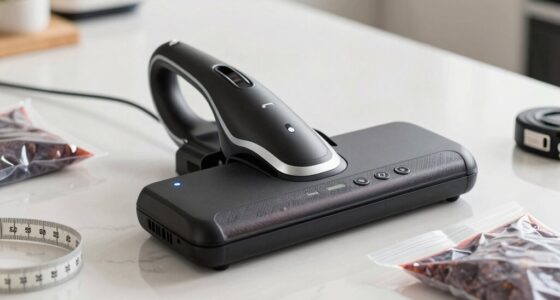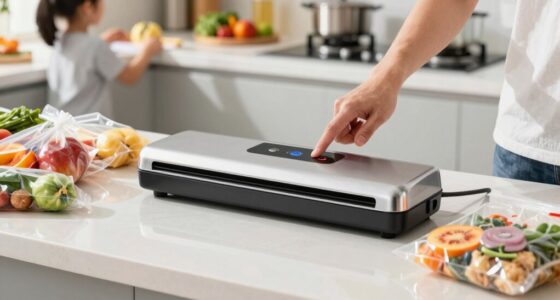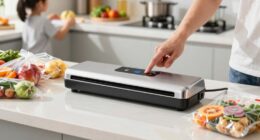
To prevent overheating and messes, place your vacuum sealer near your work area on a flat, stable surface with good ventilation. Keep it away from heat sources, enclosed spaces, and clutter that could block airflow. Use silicone mats or trays to catch leaks and clean regularly to maintain hygiene. Keeping it organized and accessible guarantees safety and efficiency; continue to explore for more tips to optimize your small kitchen setup.
Key Takeaways
- Place the vacuum sealer on a flat, stable surface near your work area, ensuring proper ventilation and distance from heat sources.
- Avoid enclosed or cluttered spaces; use open countertops or wall-mounted shelves to promote heat dissipation and easy access.
- Keep cleaning supplies and drip trays nearby to facilitate quick cleanup and prevent mess buildup during use.
- Store sealing bags and accessories within arm’s reach to improve efficiency and reduce clutter around the appliance.
- Regularly clean and check the sealer’s vents and heat dissipation areas to prevent overheating and prolong its lifespan.
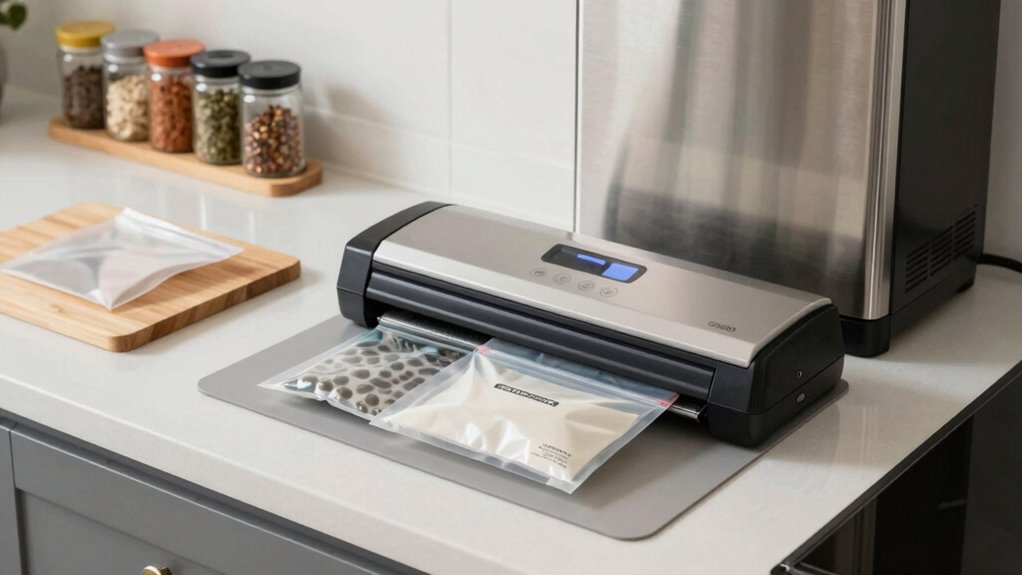
Setting up a small kitchen can be a rewarding challenge that maximizes functionality without sacrificing style. One of the key aspects is ensuring your appliances, like a vacuum sealer, are correctly placed for ideal use and safety. Proper placement helps prevent overheating and messes, which can quickly turn a cluttered space into a hassle. When considering where to position your vacuum sealer, think about your overall storage organization first. You want it close enough to your work area for easy access, but not so close that it clutters your countertop or disrupts other appliances. Keeping everything in an organized layout makes daily tasks smoother and reduces the risk of accidents or damage.
Arrange your vacuum sealer near your work area for easy access and safety.
To prevent overheating, avoid placing your vacuum sealer near heat sources or in enclosed spaces that trap heat. Overheating can cause the motor to malfunction or stop working altogether, leading to unnecessary appliance maintenance or replacement costs. Ensure there’s ample ventilation around the sealer—placing it on a flat, stable surface with space behind and on the sides helps dissipate heat effectively. If your kitchen is tight on space, consider installing wall-mounted shelves or using stacking storage bins to keep the sealer off the counter while still within reach. This way, you maintain a clean, organized appearance and reduce the chance of accidental spills or damage.
Mess prevention is equally important. When placing your vacuum sealer, select a spot that’s easy to clean and away from areas prone to splashes or crumbs. Consider using a silicone mat or a small tray underneath it to catch any leaks or drips, making cleanup quicker and easier. Proper appliance maintenance also involves regular cleaning of the sealing strip and interior to prevent build-up that could cause malfunction or reduce efficiency. Check the manufacturer’s instructions for specific cleaning recommendations and frequency, and incorporate this routine into your kitchen maintenance schedule. Additionally, considering filtration systems can help keep your kitchen air quality high by reducing cooking odors and airborne particles, further maintaining a fresh environment.
Another tip is to keep your vacuum sealer close to your food storage supplies—like vacuum bags, rolls, and clips—so you can quickly grab what you need without rummaging through cluttered cabinets. Streamlining these connections reduces the chance of misplacing essentials or creating a mess. Remember, small kitchens thrive on organized storage solutions that keep your workspace clutter-free, making appliances easier to use and maintain. Proper placement of your vacuum sealer not only extends its lifespan but also keeps your kitchen safer and more functional. With thoughtful positioning, you’ll find it easier to vacuum seal your food efficiently, maintaining freshness while keeping your kitchen tidy and well-organized.
Frequently Asked Questions
Can I Use a Vacuum Sealer Near Water or in Humid Environments?
You shouldn’t use a vacuum sealer near water or in humid environments because of water safety and humidity risks. Moisture can damage the machine’s electrical components, causing malfunctions or safety hazards. Keep your vacuum sealer dry and away from water sources, and avoid humid areas like bathrooms or outdoors. Proper placement ensures safe operation, prevents overheating, and maintains the device’s longevity. Always follow manufacturer instructions for maximum use.
How Often Should I Clean or Replace Vacuum Sealer Filters?
Think of your vacuum sealer filters as the lungs of your machine—they need care to keep things running smoothly. You should clean or replace filters during your regular filter maintenance routine, typically every 3 to 6 months, depending on usage. Sticking to this replacement schedule prevents clogs and maintains peak performance, ensuring your sealer breathes easy and keeps your food fresh without any hiccups.
Are There Specific Power Outlets Recommended for Vacuum Sealers?
You should plug your vacuum sealer into a grounded, dedicated power outlet, preferably a standard Type B outlet, to guarantee stable performance. Using a surge protector is highly recommended to guard against power surges that can damage the device. Avoid extension cords or multiple devices on one outlet, as they can cause overheating or electrical issues. Proper power outlet choices help prevent overheating and maintain your sealer’s efficiency.
Can I Operate the Vacuum Sealer Continuously Without Breaks?
You shouldn’t operate your vacuum sealer continuously without breaks, as it increases overheating risks. Most models are designed for short, efficient use, and running them nonstop can cause overheating, potentially damaging the device. To prevent this, give your vacuum sealer a few minutes to cool down after each session. This practice prolongs its lifespan and ensures consistent performance without risking overheating issues.
What Safety Precautions Are Necessary When Using a Vacuum Sealer in a Small Kitchen?
Think of your vacuum sealer like a vigilant guard dog—safety first. To prevent accidents, verify proper vacuum sealer safety by keeping it dry and away from kitchen humidity, which can cause short circuits. Always unplug it after use, avoid overfilling, and check for proper sealing. I once forgot to keep mine dry, and it sparked—lesson learned. Stay attentive, and your small kitchen stays safe and efficient.
Conclusion
Just like a wise chef keeps their tools in the right place, remembering these vacuum sealer placement rules keeps your kitchen safe and efficient. Avoid overheating and messes by following the guidelines, much like a seasoned sailor navigates calm waters. With careful setup, you’ll enjoy seamless sealing sessions and a clutter-free space. Keep these tips in mind, and your small kitchen will operate smoothly—turning everyday tasks into a masterful performance, much like a well-orchestrated symphony.