TL;DR

Get kitchen staples and gadgets delivered free with Prime
- Fast, free delivery on millions of items
- Prime Video, Amazon Music and more included
- Member-only deals all year
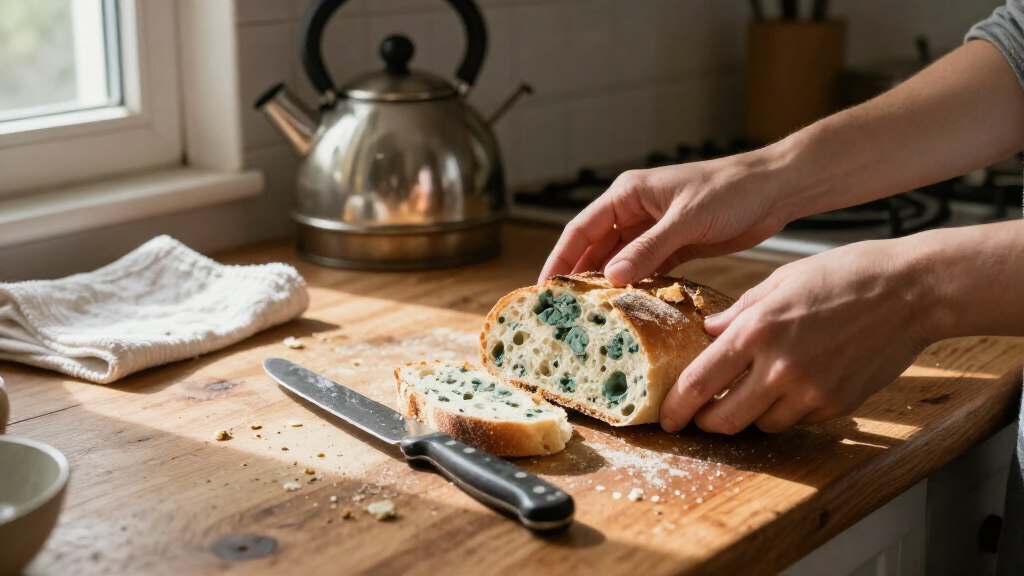
Good Housekeeping’s report says food safety expert Darin Detwiler advises discarding a whole loaf when any part of it is moldy. Mold can spread through soft bread in microscopic threads that are not visible, so removing the affected slice or spot does not guarantee the rest is safe.
If one slice or part of a loaf of bread is moldy, food safety expert Darin Detwiler advises throwing away the whole loaf, rather than cutting off the visible patch. In a report by Good Housekeeping, Detwiler said mold can send microscopic threads through soft, porous bread, meaning contamination may extend beyond what people can see.
The guidance differs from advice for some firmer foods, where a person may be able to remove a moldy section. Bread is soft and porous, allowing mold threads to spread beneath the surface. Those threads cannot be seen with the naked eye, so a clean-looking slice or section is not proof that it is uncontaminated.
Detwiler said removing a visible spot does not guarantee that the rest of the bread is free of contamination. The report applies the same advice to sliced bread: if one slice shows mold, discard the entire package or loaf, rather than removing that slice and eating the rest.
The report says mold may produce mycotoxins, and lists nausea, vomiting and breathing problems among possible health effects associated with mold exposure. It advises particular caution for people who are immunocompromised. It does not identify the mold species or establish that every moldy loaf contains a toxin or would cause illness.
Why One Moldy Slice Changes the Call
The practical issue is that visible mold may not mark the full extent of growth. A person cannot reliably judge the safety of the remaining bread by looking at it or by cutting around the patch. Discarding the loaf avoids relying on a visual check that, according to Detwiler, cannot reveal microscopic threads.
The advice also matters because bread is commonly stored and eaten in multiple slices over several days. With sliced loaves, the report says mold threads may have reached other slices even when only one looks affected. The recommendation is a precaution, not a claim that illness is certain after exposure; the report offers no figures on how often moldy bread causes illness.
As an affiliate, we earn on qualifying purchases.
How Mold Can Spread Through Bread
In the Good Housekeeping report, Detwiler describes visible mold as the “tip of the iceberg”: the surface patch can be seen, but smaller growth below it may not. He says mold threads travel more readily through soft, porous foods such as bread than through denser foods. That is the reason the report gives for treating a moldy loaf differently from a firm cheese that may be trimmed.
For storage, Detwiler recommends keeping bread as dry as possible. The report suggests a breadbox or paper bag because each allows air to circulate and can help limit moisture buildup. It advises against refrigerating bread, saying the refrigerator can make it stale more quickly than room-temperature storage. The freezer is presented as an option for longer storage, especially when the bread will later be toasted.
“If we see [mold], it’s like the tip-of-iceberg sort of thing.”
— Darin Detwiler, food safety expert and professor emeritus of food regulatory affairs, as quoted by Good Housekeeping
As an affiliate, we earn on qualifying purchases.
What the Report Does Not Establish
The supplied report does not say which mold species was found on a particular loaf, how quickly it spread, or whether the remaining bread in any individual case contains harmful substances. It also gives no illness rates or exposure thresholds. The recommendation to discard the loaf is precautionary; it should not be read as evidence that eating any moldy bread will necessarily make someone sick.
The source material does not include a publication date, a response from a public health agency, or laboratory testing of a specific loaf. Readers therefore have general expert guidance, not a case-specific assessment of the bread in their kitchen.
As an affiliate, we earn on qualifying purchases.
Safer Storage for the Next Loaf
If mold appears, follow the report’s advice to discard the whole loaf rather than tasting it or trimming the affected area. For the next loaf, reduce moisture buildup by storing it in a breadbox or paper bag, and consider freezing bread that will not be eaten soon. The report says refrigeration can speed staling compared with room-temperature storage.
The source provides no further scheduled update or investigation. Its immediate guidance is to treat any visible mold on bread as a reason to discard the loaf and to use dry, ventilated storage to help preserve bread.
As an affiliate, we earn on qualifying purchases.
Key Questions
Should I throw away a whole loaf if only one slice is moldy?
Yes, according to the report. Detwiler advises discarding the entire loaf because mold threads may spread through soft bread beyond the visibly affected slice.
Can I cut the mold off and eat the rest?
The report advises against it. Removing the visible patch does not guarantee that the rest of the bread is uncontaminated, because microscopic mold threads cannot be seen.
Is sliced bread treated differently?
No. The report gives the same advice for sliced bread: discard the package or loaf if one slice is moldy, rather than removing only that slice.
How should I store bread to help it last?
Detwiler recommends keeping bread dry, with a breadbox or paper bag offered as options that allow air circulation. The report says freezing is suitable for longer storage and that refrigeration can make bread stale more quickly.
Does eating moldy bread always cause illness?
The report does not say that illness is certain. It describes possible health effects associated with mold exposure, including nausea, vomiting and breathing problems, and recommends avoiding the risk by discarding moldy bread.
Source: rss
Fall Picks
fall essentials
As an affiliate, we earn on qualifying purchases.