
To prevent food poisoning, organize your fridge by storing raw meats on the bottom shelf to avoid drips contaminating other foods. Keep leftovers at the front and label them clearly, so you consume older items first. Properly assign zones for produce, dairy, and cooked foods, and avoid overloading shelves. Maintaining the right temperature and regularly cleaning spills will help. Continue exploring ways to set up your fridge for maximum food safety and freshness.
Key Takeaways
- Store raw meats on the bottom shelf to prevent drips contaminating other foods.
- Keep ready-to-eat foods and leftovers on the top shelves for easy access and safety.
- Use designated zones and clear labels to avoid cross-contamination between different food types.
- Regularly check expiration dates and rotate older items to prevent spoilage and food poisoning.
- Maintain fridge temperature below 40°F (4°C) and monitor with connected tech for safety alerts.
Why Proper Fridge Organization Is Key to Food Safety
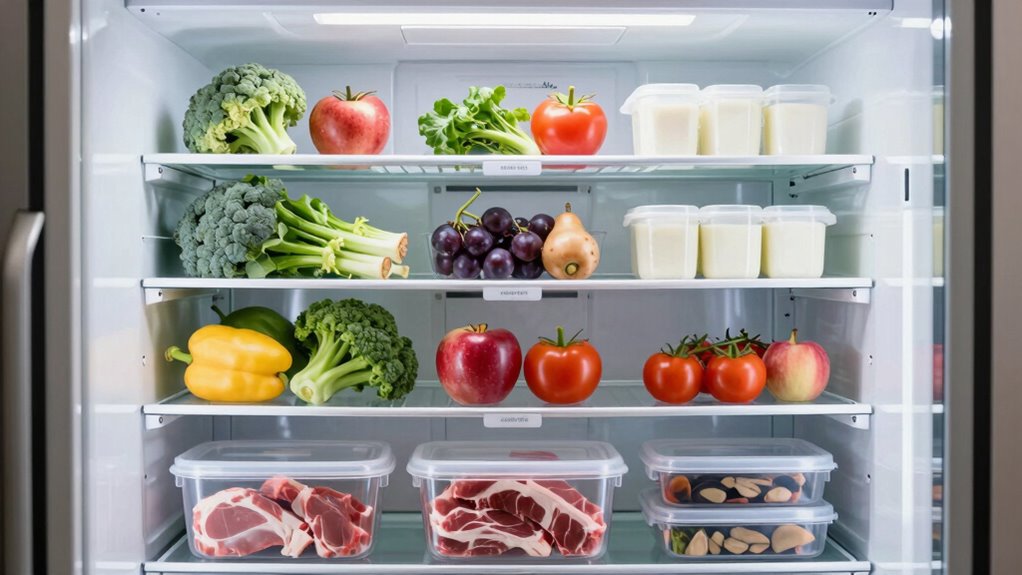
Proper fridge organization is essential because it helps prevent cross-contamination and keeps food safe to eat. When you organize your fridge properly, you reduce the risk of food spoilage caused by bacteria transfer between different items, especially raw meats and ready-to-eat foods. This organization also improves energy efficiency since cold air circulates more effectively, reducing the fridge’s workload and saving electricity. By placing perishable items in the right zones and avoiding overcrowding, you ensure consistent cooling and slow down spoilage. Well-organized storage not only protects your health but also prolongs the freshness of your food. Taking the time to arrange your fridge correctly makes a significant difference in food safety and helps you avoid unnecessary waste. Organized storage also contributes to a calmer, more functional kitchen environment.
Common Mistakes That Put Your Food at Risk
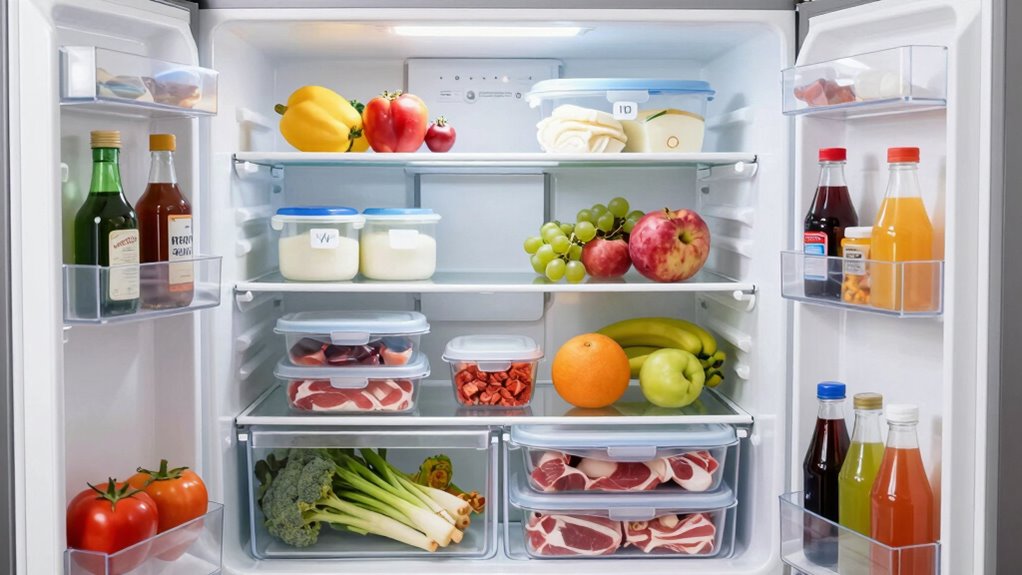
Even with a well-organized fridge, common mistakes can still put your food at risk. One major error is ignoring expired labels, which can lead to consuming spoiled or unsafe food. Another mistake is improper stacking, causing items to fall or get crushed, increasing contamination risk. Additionally, neglecting to check dates regularly can result in overlooking hidden dangers. Failing to store raw meat separately from ready-to-eat foods spreads bacteria. Overloading shelves impairs airflow, causing uneven cooling. Leaving leftovers uncovered invites cross-contamination. Not labeling leftovers causes confusion about freshness. Ultimately, storing produce above raw meats can lead to drip contamination. Being mindful of expired labels and avoiding improper stacking ensures your fridge stays safe and food stays fresh longer. Proper storage techniques are essential for maintaining food safety. Regularly inspecting your fridge for temperature control issues can also prevent bacterial growth. Ensuring good air circulation within your fridge helps maintain consistent temperatures and reduces spoilage. Incorporating temperature monitoring devices can provide additional peace of mind. These simple steps greatly reduce food poisoning risks and help prevent cross-contamination, which is a common concern in food safety management.
How to Set Up Safe Zones for Raw Meat, Cooked Food, and Produce
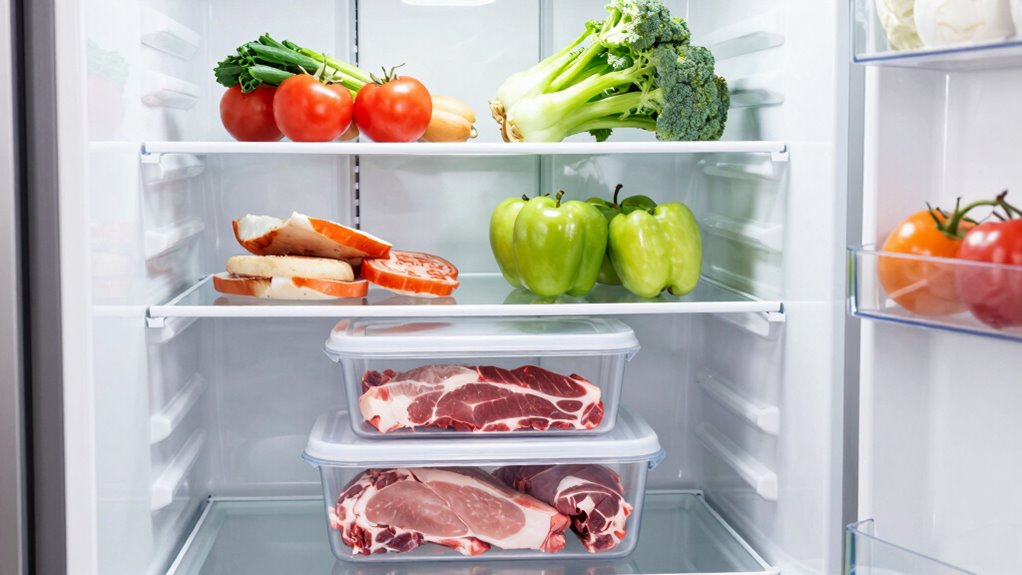
To keep your fridge safe, you need to assign specific storage zones for raw meat, cooked food, and produce. Proper food placement prevents cross-contamination and keeps everything fresh longer. Start by creating clear boundaries for each type of food to maintain a safe and organized fridge.
Safe Storage Zones
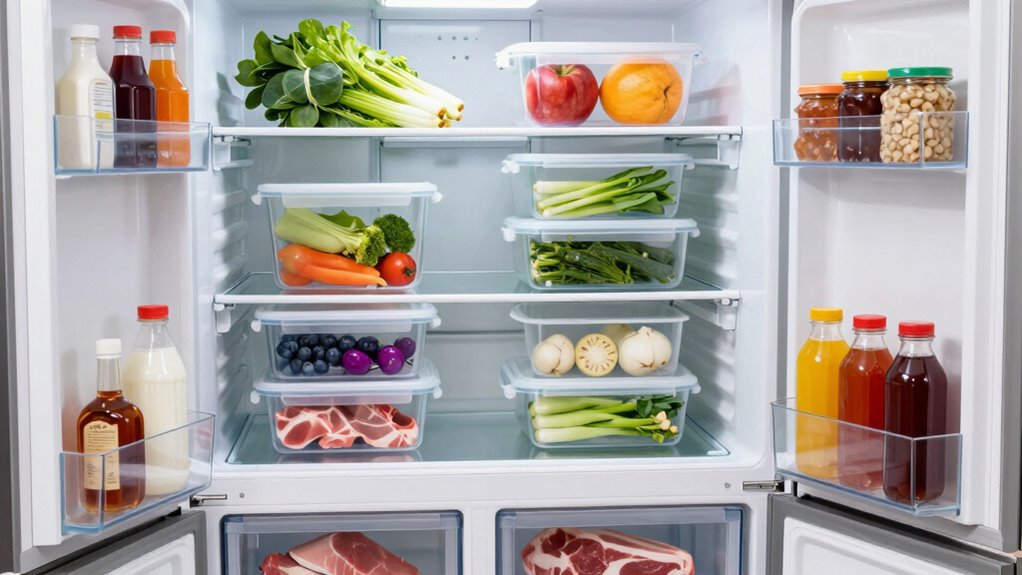
Setting up designated safe zones in your fridge is essential for preventing cross-contamination and keeping your food fresh. Start by maintaining proper temperature zones: keep raw meat on the bottom shelf to avoid drips, cooked foods in the middle, and produce on the upper shelves. Use clear labeling techniques to identify each zone easily, which helps you remember where to store different items. To organize effectively:
- Assign specific shelves for raw meat, cooked foods, and produce.
- Keep raw meat on the lowest shelf for safety.
- Use labels to mark zones clearly.
- Adjust temperature settings to ensure all zones stay below 40°F (4°C).
This setup minimizes cross-contact risks and ensures food stays fresh longer, making your fridge safer and more efficient.
Proper Food Placement
Organizing your fridge with proper food placement is key to maintaining safety and freshness. Start by placing raw meat on the bottom shelf, preventing drips from contaminating other foods. Use clear food labeling to identify cooked dishes and leftovers, so you don’t accidentally consume expired or unsafe items. Keep produce in designated crisper drawers away from raw meat to avoid cross-contamination. Proper fridge lighting helps you easily see and check the condition of your food, reducing the chance of overlooking spoiled items. Remember, cooked foods should be stored above raw meat but below produce, ensuring safe zones are maintained. Consistent placement based on food safety principles minimizes contamination risks and keeps your fridge organized and hygienic.
Best Ways to Store Leftovers Safely and Prevent Cross-Contamination
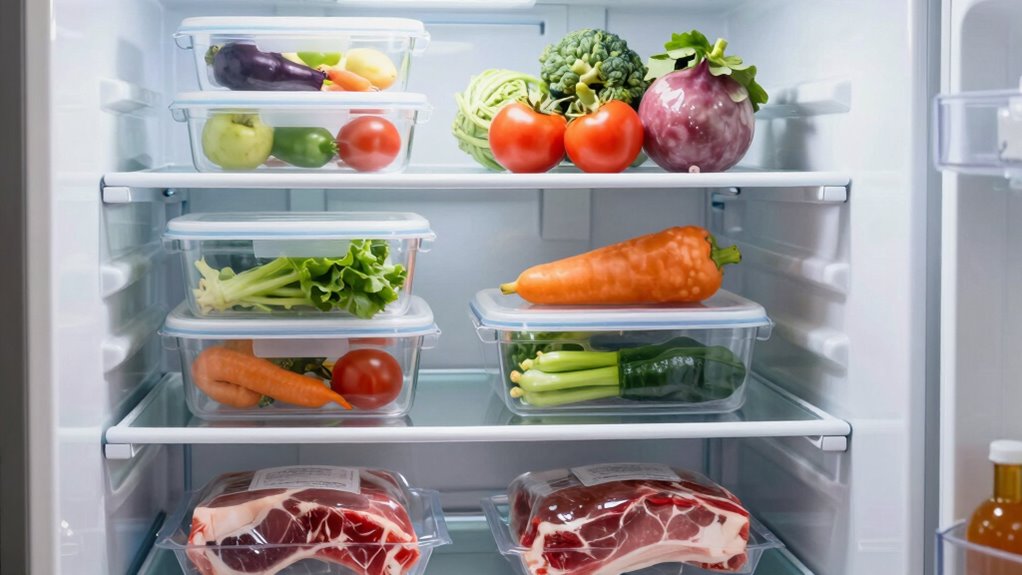
Storing leftovers safely is essential to prevent foodborne illnesses and cross-contamination in your fridge. To do this effectively, follow these key steps:
- Use airtight containers to keep leftovers sealed and prevent spills.
- Label leftovers with leftover labeling that includes the date, so you know how long they’ve been stored.
- Store leftovers on the top shelf to avoid drips onto fresh produce or other foods.
- Keep raw meats separate from cooked foods by placing them on the bottom shelf, reducing the risk of cross-contamination.
Tips for Organizing Shelves and Baskets in Your Fridge
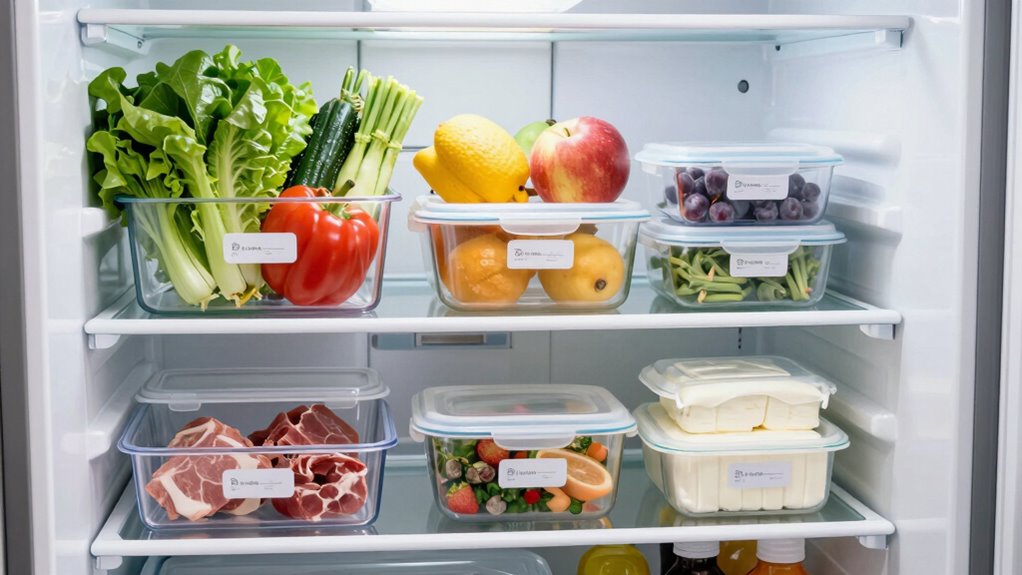
A well-structured fridge makes it easier to find what you need quickly and keeps food fresher longer. Start by using shelf labeling to designate specific zones for different food groups, like dairy, vegetables, and leftovers. This organization helps prevent cross-contamination and guarantees items are stored at ideal temperatures. Pay attention to basket sizing—choose baskets that fit comfortably on shelves without overcrowding. Smaller baskets are perfect for fruits and snacks, while larger ones work for bulkier items like beverages or produce. Organize items so frequently used foods are at eye level, making access simple. Clear labeling and appropriately sized baskets keep everything visible and accessible, reducing clutter. Additionally, incorporating air circulation techniques can help maintain consistent temperatures and reduce spoilage. Proper airflow not only ensures freshness but also helps prevent the buildup of harmful bacteria. This systematic approach saves time, minimizes waste, and promotes food safety in your fridge.
Top Food Storage Errors to Avoid for a Safer Fridge
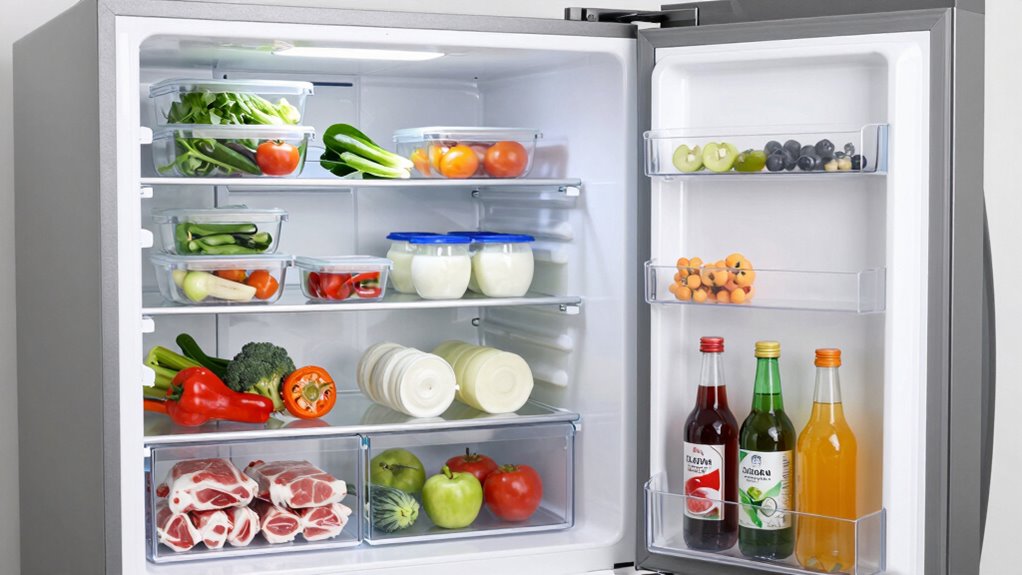
One common mistake is setting your fridge temperature too high or too low, which can lead to spoiled food or bacteria growth. Proper temperature settings are essential for safety and freshness. Also, placing foods in the wrong spots can cause cross-contamination or spoilage—knowing where to store each item makes a big difference.
Proper Temperature Settings
Maintaining the correct temperature settings is essential for keeping your food safe and fresh. Proper temperature control minimizes the risk of bacteria growth and spoilage. To optimize your fridge’s performance, verify:
- The main compartment stays at or below 40°F (4°C) to prevent bacteria proliferation.
- The freezer remains at 0°F (-18°C) for proper food preservation.
- Humidity levels are adjusted: high for produce to prevent wilting, low for meats to inhibit bacterial growth.
- Avoid frequent temperature fluctuations by keeping the door closed as much as possible.
- Regularly checking your home appliance technology ensures your fridge’s cooling system functions efficiently and maintains stable temperatures.
Consistent temperature control and appropriate humidity levels help preserve food quality and safety. Use a thermometer regularly to verify your fridge’s settings, preventing unsafe storage conditions and ensuring your food stays fresh longer.
Correct Food Placement
Are you placing food in the right spots to keep everything fresh and safe? Proper placement prevents cross-contamination and extends shelf life. Always store raw meats on the bottom shelf to avoid drips onto other foods. Use food labeling to identify leftovers and prioritize eating older items first. Keep ready-to-eat foods on the top shelf for easy access. Regular fridge cleaning helps remove spills and bacteria buildup, maintaining a safe environment. Additionally, connected kitchen technology can help monitor temperatures and alert you to unsafe conditions. Being aware of Food Safety Practices further enhances your fridge organization. Here’s a quick guide:
| Food Type | Ideal Storage Location |
|---|---|
| Raw meats | Bottom shelf |
| Fruits & veggies | Crisper drawers |
| Ready-to-eat foods | Top shelf |
| Dairy | Middle shelves |
| Leftovers | Front, clearly labeled |
Simple Steps to Reorganize Your Fridge for Maximum Food Safety

Reorganizing your fridge is a crucial step in guaranteeing food stays fresh and safe to eat. Start by emptying the fridge and cleaning shelves thoroughly. Use fridge labels to clearly mark zones for different food groups, reducing cross-contamination. Incorporate magnetic organizers to keep small items like condiments and leftovers accessible yet tidy. Follow these steps:
- Place raw meats on the bottom shelf to prevent drips.
- Store dairy and cooked foods in the middle for easy access.
- Keep fruits and vegetables in designated crisper drawers.
- Label shelves and containers for quick identification and rotation.
- Understanding tableware helps in organizing containers and utensils effectively for better food management. Proper storage practices are essential to maintaining optimal freshness and safety. When organizing, consider the temperature zones within your fridge to ensure each type of food is stored at the ideal temperature. This system minimizes spoilage and food poisoning risks, making your fridge safer and more efficient. Proper organization ensures you use food before it expires and maintains ideal freshness. Additionally, being aware of food safety standards can help prevent contamination and ensure your food remains safe for consumption. Regularly checking the expiration dates of items is also a key step in preventing foodborne illnesses.
Frequently Asked Questions
How Often Should I Clean and Reorganize My Fridge for Safety?
You should clean and reorganize your fridge at least once every three to four months to maintain safety. During this time, perform freshness testing on leftovers and produce, discard spoiled items, and wipe down shelves to prevent odors. Regular organization helps you spot expired foods early and ensures proper storage, reducing the risk of food poisoning. Stay vigilant and keep your fridge fresh by sticking to this routine.
What Are Signs That Stored Food May Be Unsafe to Eat?
Think of your fridge like a detective’s toolkit—any odor detection or mold growth signals danger. If food emits a sour or off smell, it’s a red flag; mold spots on surfaces or leftovers are clear signs to toss them. You should also check for slimy textures or discoloration. Ignoring these signs risks food poisoning. Regularly inspecting and smelling your food keeps you safe and in control.
How Can I Tell if My Fridge Temperature Is Set Correctly?
To tell if your fridge temperature is set correctly, place a thermometer in the middle of the fridge, not touching the walls or door. Check that the thermometer reads around 37°F (3°C) for ideal temperature. If it’s higher, adjust the thermostat downward. Regularly monitoring with proper thermometer placement helps prevent food spoilage and reduces the risk of foodborne illnesses. Keep it consistently at or below 40°F for safety.
Are There Specific Containers Recommended for Food Storage Safety?
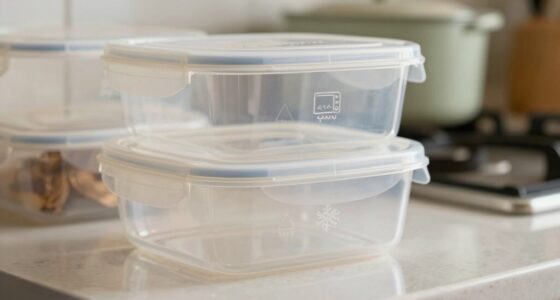
You should use airtight containers made from BPA-free plastics to store your food safely. These containers prevent leaks, keep out bacteria, and maintain freshness longer. Avoid using old or damaged containers, as they can harbor germs. Opt for clear, microwave-safe options for easy identification and reheating. Properly storing food in these containers helps prevent cross-contamination and reduces the risk of food poisoning.
How Do I Handle and Dispose of Spoiled or Expired Food Properly?
When handling and disposing of spoiled or expired food, you should first wear gloves for safety. Remove the items promptly, and place them in a sealed bag to prevent leaks and odors. Always label expiration dates clearly to avoid confusion. Dispose of the bag in your outdoor trash bin to reduce food waste and contamination. Regularly check your fridge to manage food waste reduction and keep your food safe.
Conclusion
By reorganizing your fridge with care, you turn it into a fortress guarding your health. Think of each shelf as a trusted sentry, standing guard against food poisoning. When you set safe zones and avoid common mistakes, you create a well-orchestrated symphony of freshness and safety. A tidy, strategic fridge isn’t just storage—it’s your frontline defense, keeping your food safe and your family healthier. Take control and let your fridge become a shield, not a hazard.