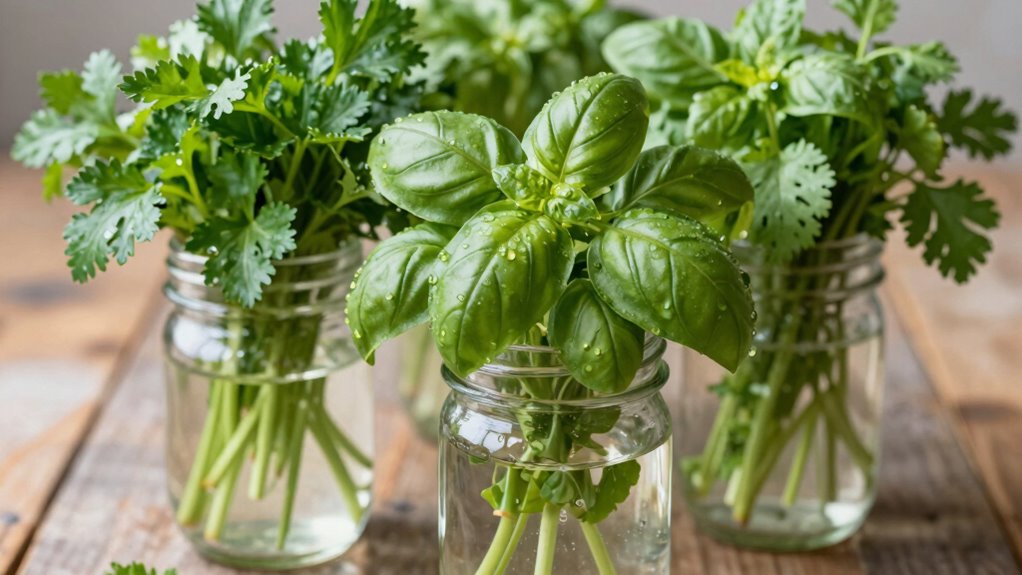
To keep herbs fresh for two weeks using the jar method, trim their stems and place them upright in a clean jar filled with about an inch of cold water. Loosely cover the herbs with a plastic bag to create a mini greenhouse. Store basil on the counter if warm, or cilantro and parsley in the fridge’s crisper. Change the water every couple of days, and you’ll notice herbs stay vibrant longer. For more tips, stay tuned.
Key Takeaways
- Trim herb stems and place upright in a jar with one inch of cold water for optimal hydration.
- Loosely cover the jar with plastic or produce bags to create a humidity-rich mini greenhouse.
- Store in the refrigerator’s crisper drawer or on a cool, dark shelf, depending on herb type.
- Change the water every 2-3 days and trim stems to maintain freshness and prevent bacteria growth.
- Regularly remove wilted leaves and monitor humidity to extend herb freshness up to two weeks.
Effective Herb Storage for Two Weeks

Wondering how to keep your herbs fresh for two weeks? It’s a common question, and the answer lies in understanding effective herb storage tips and freshness preservation techniques that many overlook. Most people toss herbs into the crisper drawer or leave them on the counter, but these methods often lead to wilting and spoilage within days. To truly extend their lifespan, you need a simple yet overlooked approach: the jar method. This technique keeps herbs hydrated, fresh, and vibrant for weeks.
Discover the jar method—an overlooked, simple way to keep herbs fresh and vibrant for weeks.
First, start by trimming the herbs’ stems to about an inch. This ensures they can absorb water efficiently. Fill a clean jar or glass with about an inch of cold water—think of it as a bouquet of flowers. Place the herbs upright in the jar, making sure their stems are submerged. Then, loosely cover the herbs with a plastic bag or a reusable produce bag. This creates a mini greenhouse, maintaining humidity and preventing the herbs from dehydrating. Store the jar in the refrigerator’s crisper drawer or on a cool, dark shelf, depending on the herb type. Basil, for example, prefers warmth, so keep it on the counter, but herbs like cilantro and parsley do better chilled.
One of the key freshness preservation techniques here is maintaining moisture without overwatering. Change the water every couple of days to prevent bacteria growth, and trim the stems slightly each time you do. This encourages continued absorption and keeps the herbs fresh longer. The jar method also allows you to see exactly how your herbs are doing, making it easy to remove any wilting or spoiled leaves before they affect the rest. Additionally, understanding the importance of contrast ratio can help you optimize lighting conditions to keep herbs looking vibrant. Proper humidity control is essential to prevent dehydration and spoilage, especially in a controlled environment like the jar setup. Recognizing freshness indicators can help you determine when herbs are nearing the end of their peak quality, ensuring you use them at their best. Incorporating ventilation techniques can help reduce excess moisture buildup and prolong freshness further.
Using this jar method is a simple herb storage tip that most people skip, yet it’s incredibly effective. It mimics the way herbs are kept fresh in professional kitchens and prolongs their usability dramatically. Plus, it’s budget-friendly—no special containers or fancy gadgets needed. With some routine care, you can enjoy fresh herbs for up to two weeks, which is a game-changer for home cooks who want to maximize flavor and minimize waste. Remember, the secret is in the hydration and the controlled environment you create. By applying these freshness preservation techniques consistently, you’ll find that your herbs stay lush and flavorful longer than you ever thought possible.
Frequently Asked Questions
Can This Method Be Used for All Types of Herbs?
Yes, you can use this jar method for most herb varieties, but keep in mind storage limitations. Delicate herbs like basil and cilantro may need more frequent water changes, while sturdier herbs like rosemary and thyme last longer. Adjust the method as needed, and always check for freshness. This approach works well for many herbs, but some may require special storage conditions to stay fresh.
Do Herbs Need to Be Washed Before Storage?
Yes, you should wash herbs before storage to guarantee herb cleaning and remove dirt or bacteria. Gently rinse them with cool water, then pat dry with a paper towel or use a salad spinner. Proper storage preparation includes removing any wilted leaves and trimming stems. This helps keep your herbs fresh longer and prevents spoilage, especially when using methods like the jar technique for two-week freshness.
How Often Should I Change the Water in the Jar?
You should change the water in the jar every two days to maintain herb freshness. Fresh water prevents bacteria build-up and keeps herbs hydrated, ensuring they stay vibrant longer. Regular water replacement also helps avoid mold and spoilage, so your herbs stay crisp and flavorful for up to two weeks. Make it a routine to check the water and change it promptly to maximize the jar method’s effectiveness.
Will This Method Work for Dried Herbs?
This jar method isn’t ideal for dried herb preservation since dried herbs need a different approach. Dried herbs lose moisture and can become brittle, so moisture retention isn’t necessary. Instead, store dried herbs in airtight containers away from light to keep their flavor. Using the jar method won’t help extend their freshness like it does with fresh herbs. Focus on proper storage to maintain their aroma and potency longer.
Can I Store Herbs in the Fridge Instead of at Room Temperature?
Think of herbs like delicate dancers—they thrive best with gentle temperature control. Storing herbs in the fridge keeps them fresh longer and helps prevent mold, especially in humid environments. I once kept basil at room temperature, and it wilted overnight. Refrigeration slows down spoilage, giving you up to two weeks of vibrant herbs. Just make sure they’re in a breathable container to avoid excess moisture, aiding mold prevention and maintaining flavor.
Conclusion
Think of your herbs as delicate butterflies that need a cozy, safe haven to thrive. By using the jar method, you’re creating that perfect sanctuary, ensuring they stay vibrant and fresh for two weeks. Skip this step, and they might flutter away too soon. So, treat your herbs like precious creatures—give them the right environment, and they’ll reward you with freshness and flavor, turning your kitchen into a flourishing garden of delights.