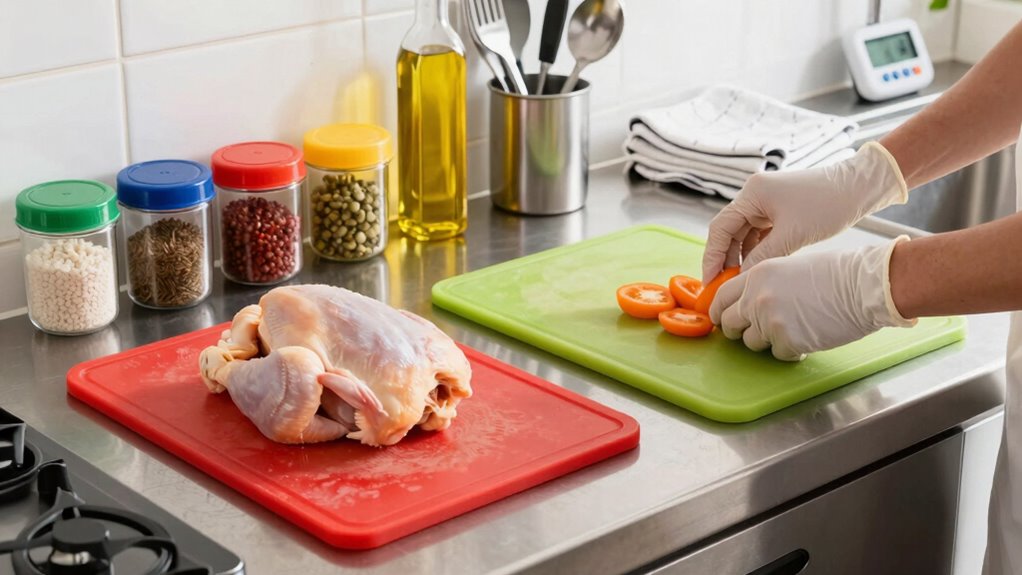

To prevent cross-contamination when cooking fast meals, focus on maintaining strict hygiene and organization. Use separate cutting boards and utensils for raw meats, produce, and cooked foods, and clean them thoroughly between uses. Keep raw ingredients sealed and stored away from ready-to-eat items, and wash your hands often, especially after handling raw meat. Keeping your workspace tidy and prepared helps you work efficiently and safely — if you want more tips, keep going.
Key Takeaways
- Use separate cutting boards and utensils for raw meats and ready-to-eat foods.
- Wash hands thoroughly and frequently during cooking, especially after handling raw ingredients.
- Clean and sanitize all surfaces, tools, and equipment between different food preparation steps.
- Properly store raw meats below cooked foods in sealed containers at appropriate temperatures.
- Organize the kitchen to keep raw and cooked foods separate, and prepare ingredients in batches efficiently.
Why Cross-Contamination Is a Risk When Making Quick Meals

When you’re rushing to prepare a quick meal, it’s easy to overlook safety steps, but this can increase the risk of cross-contamination. In fast kitchens, maintaining food safety is essential, and hygiene practices play a critical role. When you skip washing hands, using contaminated cutting boards, or neglecting proper storage, harmful bacteria can transfer between ingredients. This is especially risky with raw meats, seafood, and fresh produce. Quick meal prep often leads to multitasking, increasing the chance of accidental cross-contact. To prevent this, you need to prioritize hygiene practices, clean surfaces regularly, and use separate utensils for different ingredients. Recognizing that speed shouldn’t compromise safety helps you avoid foodborne illnesses and keeps your meals safe and healthy. Additionally, understanding the importance of attention to detail in food safety practices can help you create a well-optimized kitchen environment with clear, accurate visuals if you’re using a projector for cooking tutorials or recipe displays. Proper kitchen organization and dedicated prep areas can further reduce contamination risks during rapid meal preparation. Being mindful of food safety protocols ensures that even quick meals are prepared safely and hygienically. Incorporating best practices from local reviews for cleanliness and safety can further enhance your kitchen’s efficiency and safety standards.
Common Sources of Cross-Contamination in Fast Kitchens

In busy kitchens where quick meals are prepared, certain common sources can easily lead to cross-contamination if you’re not careful. Shared countertops are prime spots for transferring bacteria, especially when you don’t sanitize between tasks. Contaminated packaging is another risk; opening raw meat or produce can spread germs onto surfaces or other ingredients. Using the same cutting board or knife for different foods without cleaning also increases the danger. To help you stay safe, here’s a quick overview: Proper food handling and sanitation practices are essential to prevent the spread of harmful bacteria during rapid meal prep. Incorporating hygienic protocols into your workflow can significantly reduce contamination risks. Additionally, maintaining clean work surfaces between tasks helps minimize cross-contact and keeps your kitchen safer. Regularly washing your hands and changing gloves when switching between tasks is also key to preventing cross-contamination. Remember that practicing proper sanitation can make a significant difference in preventing foodborne illnesses.
How to Organize Your Kitchen for Quick, Safe Cooking

Organizing your kitchen efficiently can considerably speed up meal prep and reduce the risk of cross-contamination. Start by designing a layout that keeps raw ingredients separate from cooked foods and ready-to-eat items. Use clearly labeled containers for ingredient sorting, making it easy to access what you need quickly. Keep frequently used tools and ingredients within arm’s reach, but store raw meats and produce in designated zones to prevent cross-contact. Maintain a clean workspace by regularly clearing clutter and disposing of waste promptly. Arrange your kitchen so that pathways are unobstructed, allowing smooth movement between prep, cooking, and cleaning areas. Implementing proper food safety protocols ensures your kitchen remains safe and reduces contamination risks. This setup not only saves time but also minimizes the chances of accidental contamination, making your cooking process safer and more efficient. Additionally, incorporating water-efficient practices, like using solar pool covers to retain heat and reduce water waste, can contribute to a more sustainable kitchen environment. Regularly inspecting your storage areas helps prevent cross-contamination from spoiled or improperly stored ingredients. Being aware of natural pool features can also inspire creative outdoor kitchen designs that promote sustainability and outdoor enjoyment. Properly organizing and maintaining your workspace is essential for maintaining kitchen hygiene and ensuring a safe cooking environment.
Easy Tips for Cleaning and Sanitizing Cutting Boards and Utensils
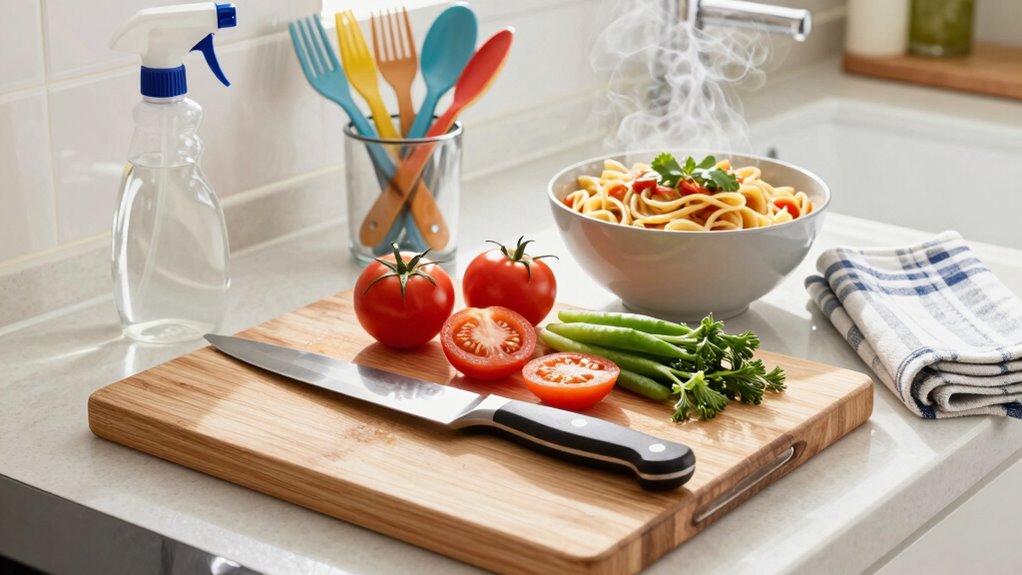
Keeping your cutting boards and utensils clean is key to preventing cross-contamination during meal prep. Establishing a cleaning schedule guarantees you don’t forget to sanitize after each use. Use effective sanitizing techniques, like soaking in a mixture of water and bleach or applying commercial sanitizers. Always wash with hot, soapy water first, then follow with sanitizing steps. For added safety, designate specific boards for raw meats and others for produce or cooked foods. Regularly replace worn-out cutting boards to prevent bacteria buildup. Remember to dry utensils thoroughly before storing. Incorporating these practices into your routine to minimize risks and keep your kitchen safe. Proper storage maximizes safety and helps maintain your tools in good condition. Regular cleaning helps prevent bacterial growth that can cause foodborne illnesses. Additionally, understanding food safety standards can guide you in maintaining optimal hygiene. Consistently following hygienic practices ensures your kitchen remains a safe environment for preparing meals.
How to Keep Raw and Cooked Ingredients Separate During Quick Meals

To prevent cross-contamination, always use separate cutting boards for raw and cooked ingredients. Store raw foods away from ready-to-eat items to avoid accidental contact. Keeping these practices in mind helps you cook quickly and safely. Additionally, regularly sanitize kitchen tools to eliminate bacteria and prevent transfer between ingredients. Using an air purifier with a HEPA filter can also help reduce airborne bacteria and allergens in your kitchen environment. Incorporating Suprem fabric in your kitchen accessories, such as aprons or covers, can further help minimize contamination risks by providing durable and easy-to-clean surfaces. Moreover, understanding field‑of‑view concepts and proper layout of your workspace can enhance safety and efficiency during rapid meal preparation.
Use Separate Cutting Boards
Ever wonder how to prevent cross-contamination when preparing quick meals? Using separate cutting boards is essential. It keeps raw ingredients separate from cooked foods, reducing bacteria transfer. To maintain cutting board hygiene, invest in color coded tools for different food groups—red for meats, green for vegetables, and white for dairy. Always wash and sanitize each board thoroughly after use. Here are some tips to keep things safe:
- Assign specific boards to raw meats, vegetables, and cooked foods
- Use different color coded tools for each category
- Never use the same board for raw and cooked ingredients
- Replace boards that have deep cuts or stains
- Wash boards with hot, soapy water immediately after use
This simple step helps ensure your quick meals are safe and bacteria-free.
Store Ingredients Properly
Properly storing ingredients is key to preventing cross-contamination during quick meals. Use clearly labeled storage containers to keep raw and cooked ingredients separate. Labeling helps you identify contents quickly, reducing the risk of mix-ups. Store raw meats on the bottom shelf of the fridge to prevent drips onto other foods, especially ready-to-eat items. Cooked foods should be kept in airtight containers to maintain freshness and prevent contamination. Here’s a handy guide:
| Ingredient Type | Storage Guidelines |
|---|---|
| Raw Meat | Store on bottom shelf, labeled, in sealed containers |
| Cooked Meat | Airtight containers, separate from raw meats |
| Vegetables | Store in crisper drawers, labeled if pre-cut |
| Dairy | Keep in original containers or labeled containers |
| Prepared Meals | Use airtight containers, label with date |
Following these steps keeps ingredients safe and your meals healthy.
Using Color-Coded Kitchen Tools to Prevent Cross-Contamination

Using color-coded kitchen tools is an effective way to prevent cross-contamination, especially when preparing fast meals. These tools help you quickly identify which has been used for raw meat, vegetables, or cooked foods, enhancing your kitchen organization. By assigning specific colors to different food groups, you reduce the risk of bacteria transfer. Keep a set of color-coded tools readily available near your prep stations for efficiency. Regularly sanitize them to maintain hygiene. This system promotes quick, safe meal prep without confusion or cross-contact. Incorporate this method into your routine to streamline fast cooking and prioritize safety.
Color-coded kitchen tools prevent cross-contamination and streamline fast, safe meal prep.
- Assign colors like red for raw meat and green for vegetables
- Keep tools separated and stored in designated containers
- Use different brushes or spatulas for each food group
- Regularly sanitize all tools after use
- Train everyone in your kitchen on color-coding protocols
Fast and Safe Storage Tips for Ingredients During Quick Cooking
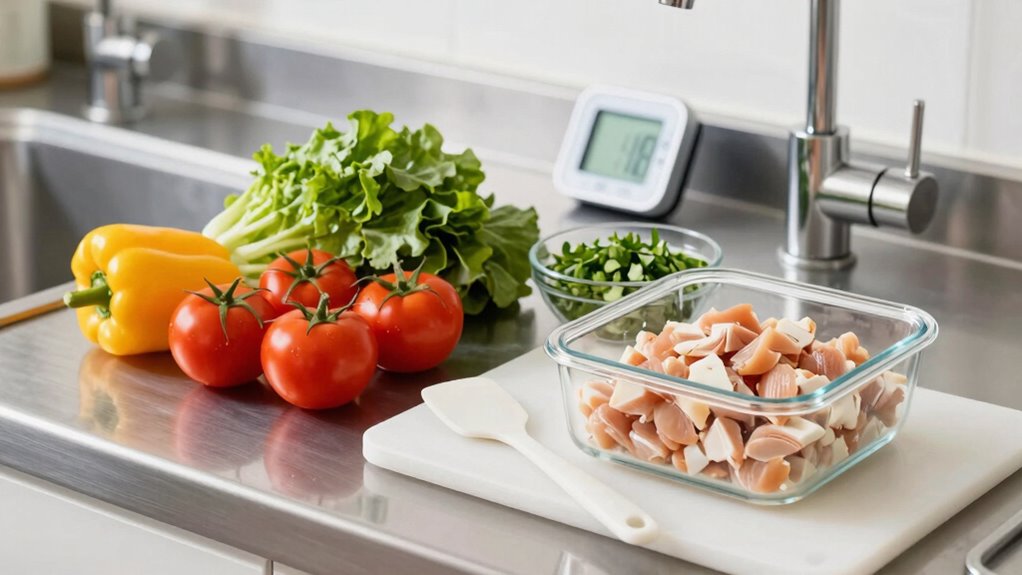
To keep your ingredients safe during quick meals, make sure to separate raw and cooked items properly. Use airtight containers to prevent leaks and contamination, and keep perishable items in cold storage until you’re ready to use them. These simple steps help prevent cross-contamination and keep your food safe.
Proper Ingredient Segregation
When you’re rushing to prepare a quick meal, keeping ingredients properly segregated is essential to prevent cross-contamination. Proper ingredient placement ensures raw meats stay separate from vegetables and cooked foods. Use designated areas in your fridge or countertop for different ingredient groups. Utensil segregation is equally important; always use separate cutting boards and knives for raw proteins and produce. This prevents bacteria transfer during prep. Keep raw ingredients on the bottom shelf or in sealed containers to avoid drips. Regularly clean surfaces and utensils used for raw foods before handling cooked or ready-to-eat ingredients. Remember, clear organization minimizes risks and keeps your meal safe.
- Use separate containers for raw and cooked ingredients
- Keep raw meats on the bottom shelf
- Designate specific utensils for each ingredient type
- Store produce away from raw meats
- Clean surfaces between ingredient handling
Use Airtight Containers
Airtight containers are essential for keeping ingredients fresh and preventing cross-contamination during quick meals. Using proper food storage with airtight containers helps isolate raw meats, vegetables, and cooked foods, reducing the risk of bacteria transfer. Always choose containers with secure seals to prevent leaks and exposure to contaminants. Label each container clearly with the contents and date to ensure proper rotation and freshness. When storing ingredients, keep raw items separate from ready-to-eat foods, and avoid overfilling containers to maintain their seal. This practice not only prolongs ingredient freshness but also minimizes cross-contamination risks in your kitchen. By investing in quality airtight containers, you streamline your food storage process and create a safer environment for quick, efficient meal preparation.
Maintain Cold Storage
How can you guarantee your ingredients stay fresh and safe during quick meal prep? Maintaining proper cold storage is essential. Keep perishable items at the correct food temperature by refrigerating or freezing them promptly. This prevents bacteria growth and preserves flavor. Use a thermometer to ensure your fridge stays at or below 40°F (4°C). Store raw meats separately from vegetables and cooked foods to avoid cross-contamination. Always label and date stored items so you use the oldest first. Remember, quick access to properly stored ingredients saves time and keeps your meal safe.
- Use airtight containers for cold storage
- Keep raw meats at the bottom of the fridge
- Regularly check and uphold fridge temperature
- Thaw frozen ingredients safely in the fridge
- Don’t overcrowd the fridge to ensure proper air circulation
Best Practices for Handling Meat, Dairy, and Produce Safely When Short on Time

Handling meat, dairy, and produce safely is essential, especially when you’re pressed for time. To streamline meat handling, always keep raw meat separate from other ingredients and use a separate cutting board. Store it in the coldest part of your fridge and cook it thoroughly to kill bacteria. For dairy safety, check expiration dates and avoid leaving dairy products out for too long. Use clean utensils and containers to prevent cross-contamination. When prepping produce, rinse it under running water and use a clean brush for firm-skinned items. Wash hands before and after handling each ingredient. By following these quick, effective practices, you reduce the risk of cross-contamination and ensure your fast meals are safe and healthy.
Why Hand Hygiene Is Critical for Preventing Cross-Contamination
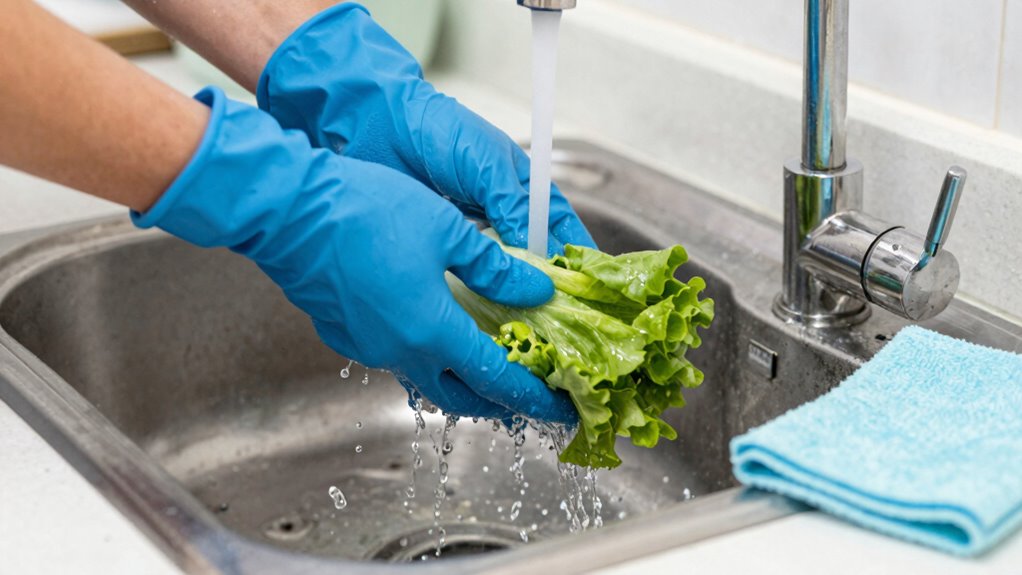
Since your hands come into direct contact with ingredients and surfaces during cooking, maintaining proper hand hygiene is essential to prevent cross-contamination. Handwashing importance cannot be overstated, as clean hands reduce the spread of bacteria and viruses. Proper hand hygiene also guarantees contamination prevention, protecting you and your family from foodborne illnesses. Remember to wash your hands thoroughly with soap and warm water for at least 20 seconds before handling food, after touching raw meat, or using the restroom. Keep hand sanitizer nearby for quick cleaning when soap isn’t accessible. Avoid touching your face or other surfaces with unwashed hands during meal prep to minimize risk. Consistently practicing good hand hygiene is a simple yet powerful step toward safer, faster meal preparation.
Common Mistakes to Avoid for Safer, Faster Meal Prep
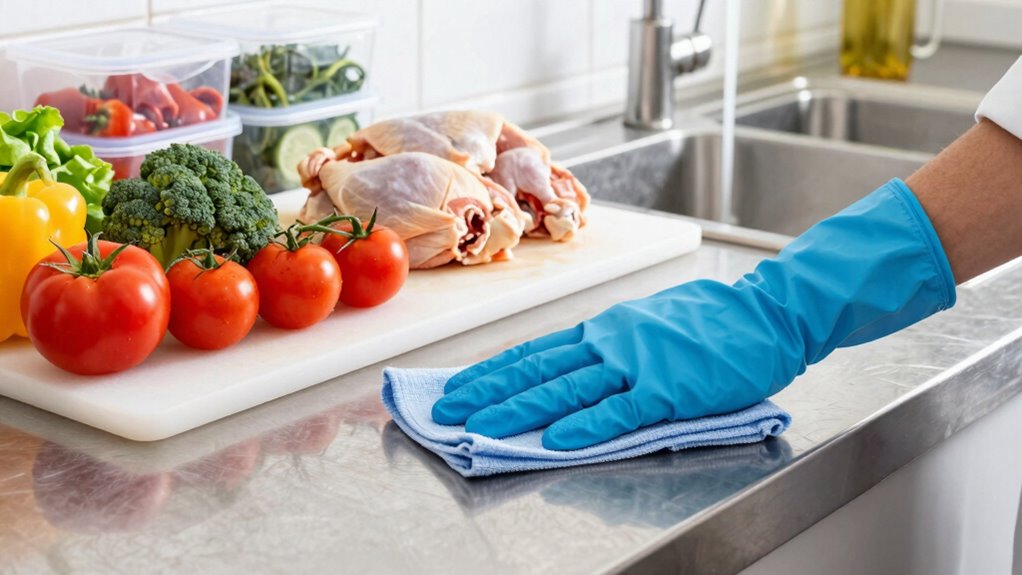
One common mistake to avoid during quick meal preparation is rushing through steps without proper attention to hygiene and food safety. When you’re in a hurry, it’s tempting to skip steps like cleaning surfaces or organizing ingredients, but neglecting kitchen organization can lead to cross-contamination. Make sure your workspace is tidy, with separate cutting boards and utensils for raw meats and vegetables. Failing to keep food safety in mind can spread bacteria and cause illness. Avoid multitasking without checking if surfaces and tools are sanitized. Rushing can also lead to overlooked expiration dates or improper storage. Staying disciplined and organized ensures you maintain safety standards while preparing meals quickly. Prioritize cleanliness and proper kitchen setup to prevent mistakes that compromise food safety.
Frequently Asked Questions
How Can I Prevent Cross-Contamination With Pre-Packaged Ingredients?
To prevent cross-contamination with pre-packaged ingredients, you should always practice proper ingredient handling. Start by washing your hands thoroughly before opening packaging. Use separate cutting boards and utensils for different ingredients, especially raw meats. Check pre-packaged safety labels and discard any damaged or expired items. Keep packaging sealed until use, and never reuse containers that held raw ingredients for cooked foods. These steps guarantee safe ingredient handling and minimize contamination risks.
Are There Specific Cleaning Products Best for Quick Kitchen Sanitation?
Did you know that using the right cleaning products can cut bacteria by up to 99%? For quick kitchen sanitation, opt for eco-friendly sprays and antimicrobial wipes. Eco-friendly sprays are safe for your family and the environment, while antimicrobial wipes quickly disinfect surfaces without hassle. Keep a supply nearby, and you’ll efficiently eliminate germs, ensuring your fast meals are prepared in a safe, sanitary space every time.
How Often Should I Sanitize Kitchen Tools During Fast Meal Prep?
You should sanitize utensils and clean sponges after each use, especially when preparing fast meals. Quickly rinse and sanitize utensils with hot, soapy water or a commercial sanitizer, then set them aside to dry. Replace cleaning sponges regularly, ideally every week, and disinfect them daily by microwaving or soaking in a bleach solution. This routine minimizes bacteria buildup, helping you prevent cross-contamination and keep your kitchen safe during quick meal prep.
Can Microwave Sterilization Help Prevent Cross-Contamination?
Microwave sterilization can help prevent cross-contamination by providing rapid bacteria elimination on your kitchen tools and surfaces. When you microwave items like sponges or utensils for a minute or two, you kill germs quickly and efficiently. This method is especially useful during fast meal prep when time is limited. Just make certain items are microwave-safe, and you’re effectively reducing bacteria, keeping your kitchen safer and your meals healthier.
What Are Quick Methods to Identify Contaminated Surfaces or Ingredients?
You can quickly spot contamination by performing surface testing with test strips or swabs—these reveal hidden bacteria instantly. Don’t overlook your nose; a strange or foul smell often signals microbial presence. Act fast: if surfaces smell off or test strips show positive, sanitize immediately. Trust your senses and testing tools to catch contamination early, keeping your meal safe and your kitchen secure from unseen threats.
Conclusion
So, next time you’re racing against the clock, remember: a little extra care keeps food poisoning at bay. Who knew that quick meals could be so high-stakes? Skip the sanitizing, and you might just turn your fast feast into a fast track to the hospital. So, be smart, stay safe, and give cross-contamination the same treatment you’d give that forgotten laundry—abandoned and avoided at all costs. Happy, safe cooking!