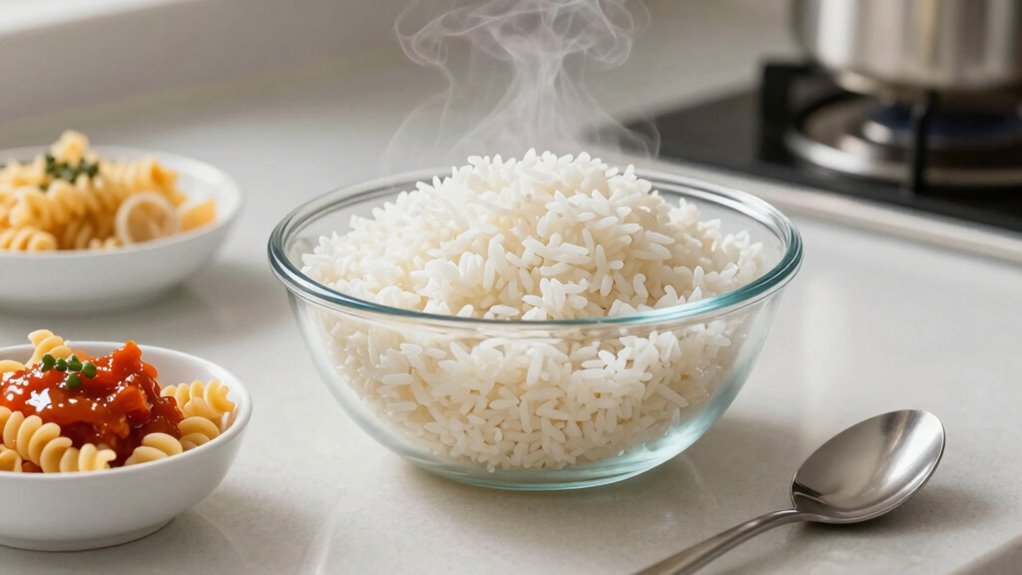

To reheat rice, pasta, and sauces safely, always reheat only what you’ll eat in one go and discard leftovers that smell or look unusual. Use a food thermometer to guarantee the internal temperature reaches at least 165°F (74°C), stirring frequently for even heat. Cover foods during microwaving or reheating to keep moisture and heat uniform. For more tips on preventing bacteria growth and ensuring safety, keep exploring how to handle leftovers properly.

Get kitchen staples and gadgets delivered free — and shop member deals
- Fast, free delivery on millions of items
- Access to Prime Big Deal Days deals on October 6–7
- Prime Video, Amazon Music and more included
Key Takeaways
- Reheat rice, pasta, and sauces thoroughly to at least 165°F (74°C) using a food thermometer for safety.
- Reheat only the portion you plan to eat immediately to prevent bacterial growth.
- Cover foods during reheating to retain moisture and promote even heating.
- Stir foods during reheating to ensure uniform temperature distribution.
- Avoid reheating leftovers multiple times to reduce bacteria risk and spoilage.

Reheating rice, pasta, and sauces might seem simple, but doing so safely is crucial to prevent foodborne illnesses. The key to safe reheating lies in proper food storage and understanding reheating safety. When you cook these foods and plan to enjoy leftovers later, how you store them immediately after cooking makes all the difference. To minimize bacteria growth, you should refrigerate leftovers within two hours of cooking. Use shallow containers to speed up cooling, and keep your fridge at 40°F (4°C) or below. Proper food storage helps maintain the quality of your leftovers and reduces the risk of harmful bacteria developing.
When you’re ready to reheat, reheating safety becomes your top priority. Never reheat rice, pasta, or sauces multiple times, as each reheating cycle increases the risk of bacteria proliferation. Always reheat only what you’ll consume in one sitting. To keep these foods safe, heat them evenly to an internal temperature of at least 165°F (74°C). Use a food thermometer to verify this temperature, especially when reheating in the microwave. Stirring during reheating helps distribute heat evenly, preventing cold spots where bacteria can survive.
Microwave reheating is quick and convenient, but it requires careful attention. Cover your food with a microwave-safe lid or wrap to retain moisture and promote even heating. Let the food sit for a minute or two after microwaving; this allows residual heat to kill any remaining bacteria. When reheating on the stovetop or in the oven, stir frequently and check temperature regularly. Avoid reheating rice or pasta that has cooled to room temperature for extended periods, as bacteria like Bacillus cereus can produce toxins that survive even high heat. Proper food handling is essential to prevent contamination and ensure food safety.
Good food storage habits also involve labeling leftovers with the date they were cooked. This practice ensures you consume them within safe timeframes—generally within three to four days. If you’re unsure whether leftovers are still safe, trust your senses. Discard any leftovers that develop an unusual smell, appearance, or texture. Remember, reheating safety isn’t just about the process; it starts with how you handle and store your food. By paying attention to proper food storage and reheating techniques, you markedly reduce your risk of foodborne illness while enjoying your favorite dishes safely at home.
As an affiliate, we earn on qualifying purchases.
Frequently Asked Questions
Can I Reheat Rice or Pasta More Than Once Safely?
Yes, you can reheat rice or pasta more than once, but you need to be cautious about food spoilage. Each time you reheat, bacteria can grow if the temperature isn’t controlled properly. To keep it safe, reheat leftovers thoroughly to an internal temperature of 165°F (74°C), and only reheat what you’ll eat immediately. Avoid reheating multiple times, as repeated temperature fluctuations increase the risk of foodborne illness.
What Are the Signs of Improperly Stored Leftovers?
You’ll notice food safety issues when leftovers develop a sour smell, slimy texture, or unusual discoloration—like a dull, grayish hue that wasn’t there before. If it’s sticky or has mold growing on it, it’s a clear sign to toss it out. Always follow storage tips: keep leftovers in airtight containers, refrigerate promptly, and consume within a few days to prevent spoilage and guarantee safety.
Is It Safe to Reheat Refrigerated Sauces Multiple Times?
Reheating refrigerated sauces multiple times isn’t recommended because it can increase the risk of bacterial growth. Proper food storage involves keeping sauces in airtight containers and reheating only what you’ll eat to avoid waste. When reheating, use even heat and stir well, ensuring the sauce reaches at least 165°F. This reheating technique helps maintain safety and flavor, reducing the chance of foodborne illness.
How Long Can Cooked Rice or Pasta Be Left at Room Temperature?
You shouldn’t leave cooked rice or pasta at room temperature for more than two hours. Proper food storage and temperature control are essential for safety. Bacteria grow quickly between 40°F and 140°F, so if you leave your cooked grains out longer, you’re risking foodborne illness. To stay safe, refrigerate leftovers promptly and reheat them thoroughly before eating. Always prioritize proper storage to prevent any health issues.
Are Microwave Reheating Methods Safer Than Stovetop?
Microwave reheating isn’t necessarily safer than the stovetop; it’s all about how you do it. Microwaves are quick but can unevenly heat, risking cold spots where bacteria hide, so microwave safety depends on thorough stirring and proper timing. Stovetop risks include burning or overcooking if you’re not careful. Both methods can be safe if you guarantee even heating to kill bacteria and prevent foodborne illness.
As an affiliate, we earn on qualifying purchases.
Conclusion
Reheating rice, pasta, and sauces safely is essential to prevent foodborne illnesses. Remember, bacteria like Bacillus cereus can survive improper reheating, leading to food poisoning. Did you know that about 48 million Americans get sick from foodborne illnesses each year? By following proper reheating guidelines—like storing leftovers promptly and reheating to the right temperature—you can enjoy your favorite dishes safely and avoid unnecessary health risks. Stay cautious and keep your meals both delicious and safe!
As an affiliate, we earn on qualifying purchases.
As an affiliate, we earn on qualifying purchases.
NFL season / tailgating Picks
team gear
As an affiliate, we earn on qualifying purchases.