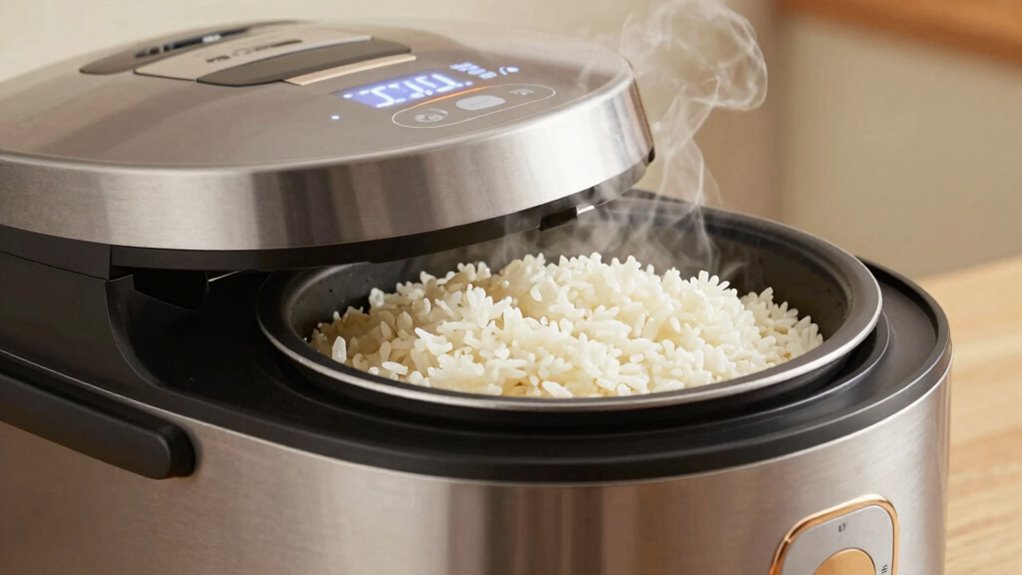

You should keep rice warm in a rice cooker for no more than 4 to 6 hours. After this time, bacteria like Bacillus cereus can grow, making the rice unsafe to eat, and its texture will likely decline. If you stay beyond this window, the rice might dry out, develop off smells, or spoil. To learn more about keeping rice safe, discover the signs of spoilage and best storage tips.
Key Takeaways
- Keep rice warm safely for up to 4-6 hours; beyond that, quality and safety decline.
- Bacterial growth, especially Bacillus cereus, increases significantly after 2 hours of warm storage.
- Signs of spoilage include sour odor, dryness, clumping, or mold; discard if detected.
- Promptly cool leftovers within one hour and refrigerate to prevent bacterial proliferation.
- Prolonged warm holding over 6 hours can make rice unsafe and undesirable to eat.
How Long Is It Safe to Keep Rice Warm in a Rice Cooker?
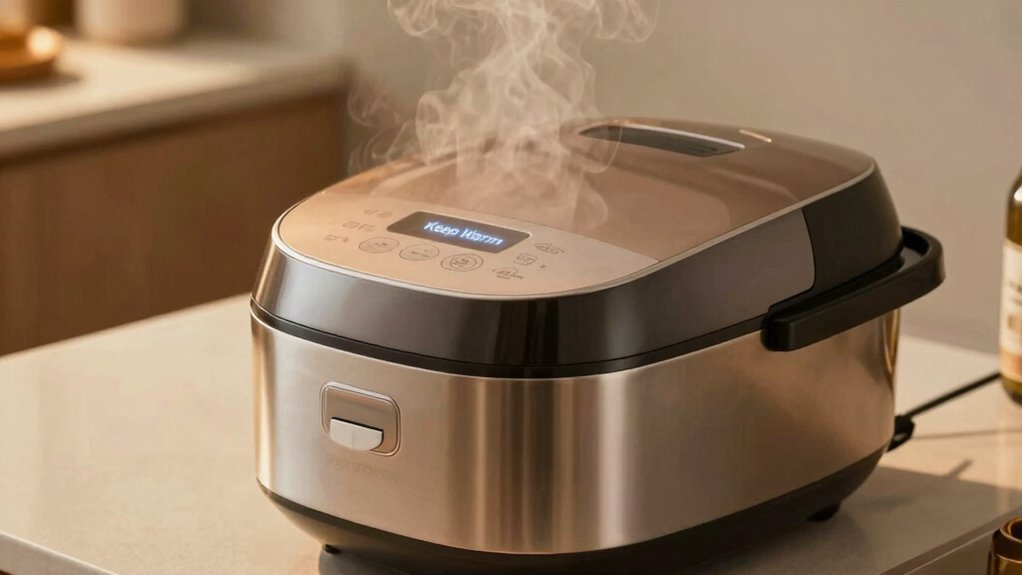
You can generally keep rice warm in a rice cooker for up to four to six hours without significant safety concerns. During this time, the rice cooker maintains a safe temperature through effective temperature regulation, preventing bacterial growth. As the rice stays warm, the appliance adjusts its heat to keep the rice at a steady, safe level. The temperature regulation system helps ensure the rice remains safe to eat during this period. Additionally, proper food safety practices advise monitoring how long rice has been kept warm to prevent spoilage. It is also helpful to understand the safety guidelines related to prolonged warm storage, as extended warm periods increase energy consumption, since the cooker continues to power the heating element. While short-term warm settings are safe, keeping rice warm for longer than six hours may cause it to dry out or develop a less desirable texture. To guarantee safety and quality, it’s best to consume the rice within this window or transfer leftovers to a refrigerator for longer storage. It is also important to understand the risks of foodborne illnesses associated with improper storage durations.
How Does the Keep Warm Function Work in Rice Cookers?
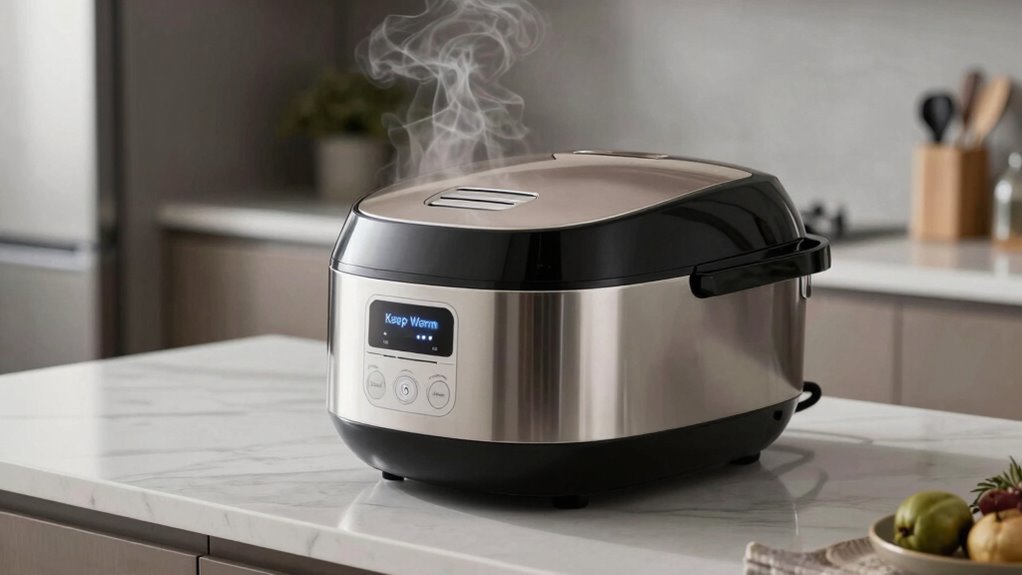
Ever wondered how the keep warm function in rice cookers maintains the rice at a safe and ideal temperature? The rice cooker mechanism activates a heating element that responds to temperature sensors, keeping rice warm through heat retention. When the cooking cycle ends, the switch shifts to keep warm mode, gently maintaining a consistent temperature to prevent bacterial growth. This process relies heavily on sensor technology to ensure safety and optimal conditions.
What Are the Signs That Rice Has Been Kept Warm Too Long?
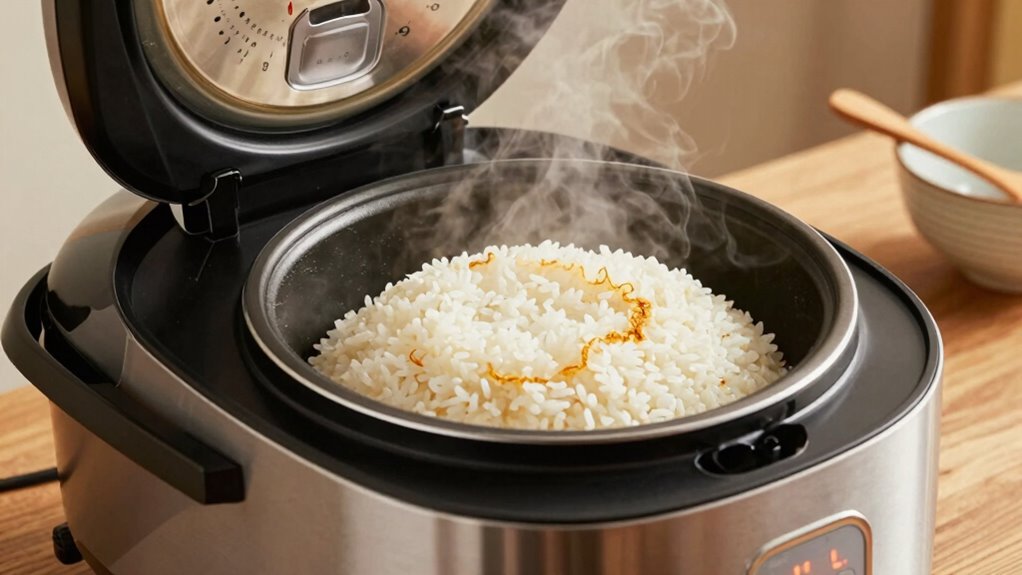
If you’ve kept rice warm for too long, you might notice it becoming dry or clumpy. An unpleasant odor may develop, signaling that the rice is starting to spoil. Additionally, the texture could change, making the rice less appealing to eat. Being aware of Free Floating can help you understand how bacteria and mold may proliferate in improperly stored rice. Moreover, prolonged warming can increase the risk of Food Safety Risks, highlighting the importance of monitoring rice during the keeping process. It’s also helpful to recognize the signs of Foodborne Illness that may result from consuming rice that has been improperly kept. Recognizing these indicators can help prevent potential health issues and maintain a safe, organized kitchen environment. To ensure safety, always adhere to recommended time frames for keeping rice warm and consider using temperature control to prevent bacterial growth.
Dryness or Clumping
How can you tell if rice has been kept warm for too long? One clear sign is dryness or clumping. When rice sits too long, moisture buildup inside the cooker can cause steam leakage, leading to uneven moisture distribution. This results in some rice becoming overly dry, while others clump together in dense blocks. If you notice the rice feels hard or crumbly, it’s a sign it’s been kept warm too long. Clumping may also occur as the rice releases starches that stick together over time, especially if moisture escapes or evaporates. These changes indicate the rice is losing its ideal texture. Pay attention to how the rice feels and looks—dryness and uneven clumping are signs it’s time to either serve or refresh it. Additionally, a methodical approach to monitoring warming times can help prevent these issues.
Unpleasant Odor Develops
When rice has been kept warm for too long, a noticeable unpleasant odor often develops. This odor signals that the rice may be spoiling or harboring mold growth, making it unsafe to eat. If you notice a sour or musty smell, it’s a sign to discard the rice immediately. Additionally, prolonged warm storage can also lead to bacterial proliferation, which can pose health risks if ingested. Proper temperature control is essential to prevent these issues and ensure food safety. Odor Development Signs | What It Means | |————————–|———————————-| | Sour or off smell | Possible spoilage or mold growth | | Musty or moldy scent | Mold has started forming | | Faint odor after hours | Rice is nearing spoilage | | Strong odor | Rice is unsafe to consume | Trust your nose; if it smells off, avoid eating the rice to prevent health risks.
Changes in Texture
Leaving rice in the “Keep Warm” mode for too long causes noticeable changes in its texture, signaling that it’s no longer safe or enjoyable to eat. One key sign is texture changes, where the rice becomes dry and sticky, losing its original fluffiness. You’ll notice it starts to clump together and feels harder when you bite into it. Moisture loss is a major factor here; as the rice sits, it slowly evaporates moisture, leading to a drier, tougher consistency. If you see the rice looks shriveled or has a crusty top, it’s a clear sign it’s been kept warm too long. These texture changes not only affect taste but also indicate the rice may have lost quality or safety for consumption. Moisture retention is essential to keeping rice safe and enjoyable during warming, as it helps maintain the ideal texture and prevents it from becoming overly dry or hard. Maintaining proper food safety practices ensures that your rice remains both tasty and safe to eat during extended warming.
How Does Leaving Rice on Warm Affect Its Quality and Safety?
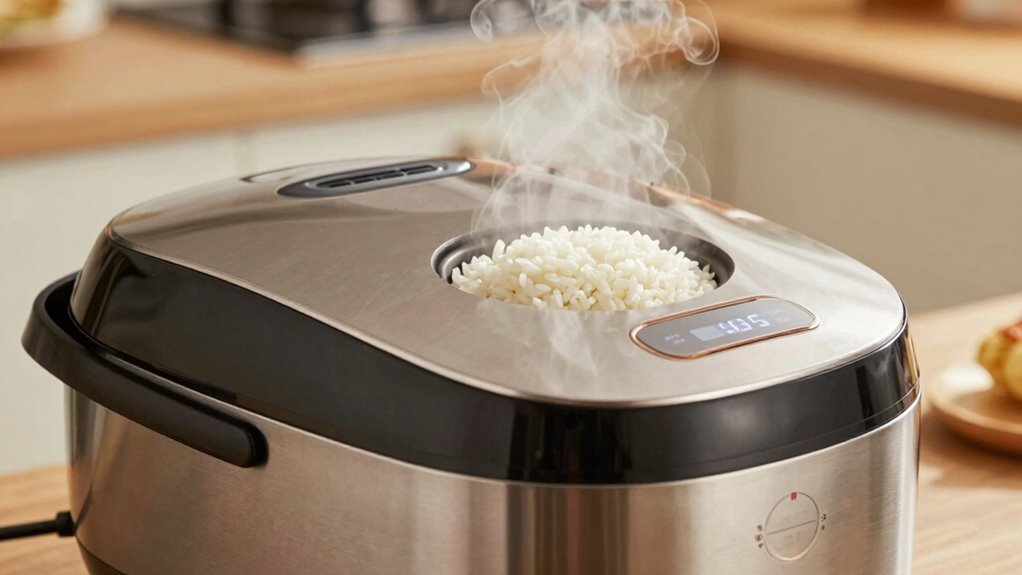
Ever wonder what happens to rice when it’s kept on the warm setting for too long? Staying in warm mode can impact both rice safety and quality. First, bacteria may develop if rice sits out too long, risking food poisoning. Second, the rice’s texture can degrade, becoming dry or sticky. Third, prolonged warmth can cause rice to ferment, leading to off odors and flavors. Additionally, temperature control is critical for preventing bacterial growth and preserving rice freshness. Proper food safety practices recommend not leaving rice on warm for more than a couple of hours. To further prevent bacterial growth, it’s essential to monitor the duration rice remains on warm mode. Moreover, understanding the temperature range that promotes safety helps in managing how long rice can be safely kept warm. Keeping rice on warm mode for extended periods doesn’t just compromise taste; it also raises health concerns. To maintain rice safety, avoid leaving it on warm for more than a couple of hours. If you need to keep it longer, transfer the rice to a cooler container or refrigerate. Staying mindful of how long you keep rice on warm helps ensure both safety and quality.
Tips for Using the Warm Setting Safely and Effectively
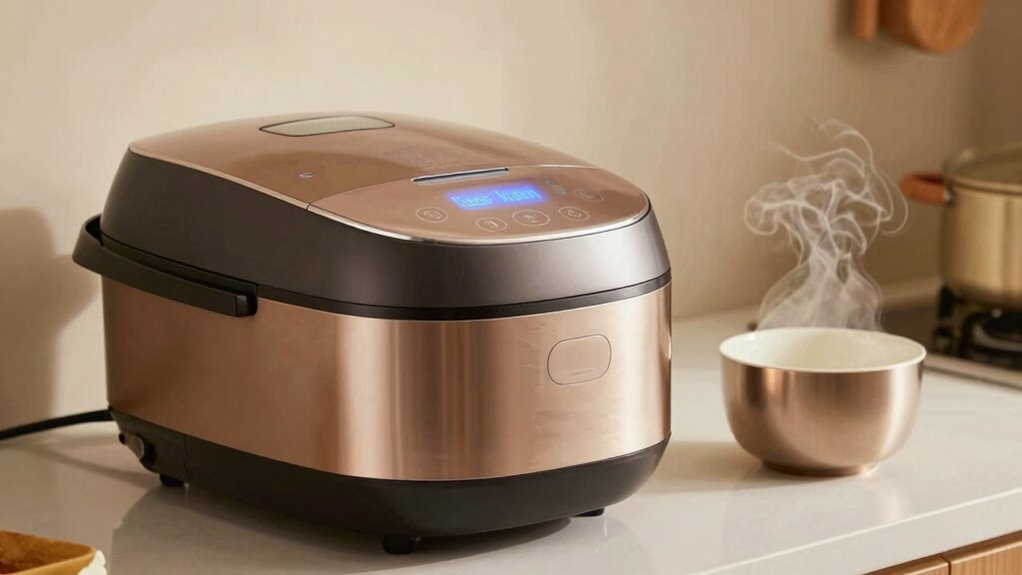
To use your rice cooker’s warm setting safely and effectively, it’s important to set clear time limits and monitor the rice regularly. Different rice varieties, like jasmine or brown rice, may respond differently to warm mode, so adjust your expectations accordingly. Use proper cooking techniques, such as fluffing rice to prevent clumping and evenly distributing heat. Keep an eye on the texture and smell of the rice, and avoid leaving it on warm for extended periods. If you notice it drying out or developing an off smell, it’s best to discard it. Regularly checking your rice helps prevent bacterial growth and maintains quality, ensuring your meal stays safe and tasty. Proper management of the warm setting makes your rice cooker a reliable tool. Additionally, understanding the importance of food safety can help you avoid potential health hazards associated with leaving rice on warm for too long.
What Factors Influence How Long Rice Remains Safe on Warm Mode?
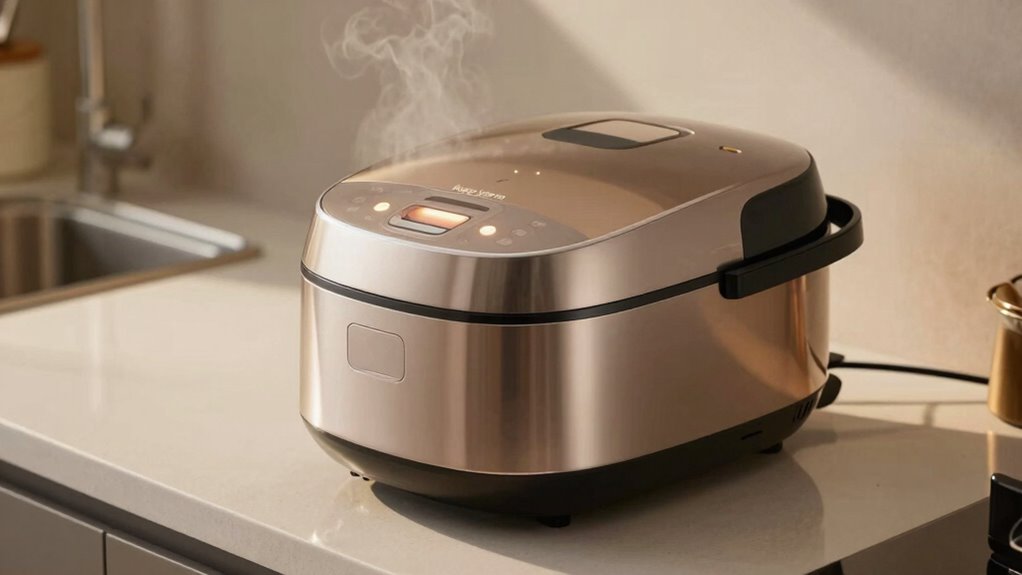
Several factors determine how long rice stays safe on the warm setting. First, temperature fluctuations can cause the rice to cool unevenly, increasing the risk of bacteria growth. Second, moisture levels play a vital role; if moisture escapes or evaporates, the rice dries out and becomes unsafe to eat. Third, the initial quality and age of the rice influence safety—older rice or improperly stored rice may spoil faster.
To keep rice safe, monitor these factors closely. Guarantee the rice remains at a consistent, warm temperature, and try to preserve moisture by covering it properly. Recognizing these influences helps you avoid food safety issues and enjoy your rice without worry.
What Happens When You Leave Rice on Warm for Extended Periods?
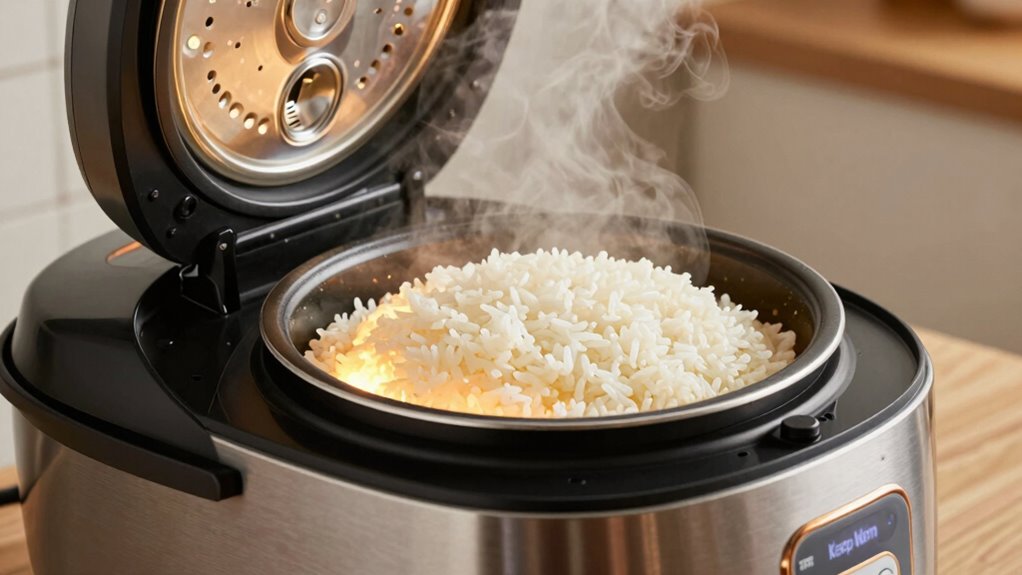
Leaving rice on warm for too long can lead to bacterial growth, increasing your risk of foodborne illness. The longer rice stays warm, the more its texture and flavor start to decline. It’s important to know when extended warm holding stops being safe and beneficial.
Bacterial Growth Risks
When rice is kept on the “keep warm” setting for too long, bacteria can start to grow rapidly, increasing the risk of foodborne illness. To practice good cooking safety, follow these storage tips to prevent bacterial buildup:
- Don’t leave rice on warm for more than 2 hours. Bacteria like Bacillus cereus thrive in warm, moist environments.
- Cool leftover rice quickly and store it in the fridge within an hour of cooking.
- Reheat rice thoroughly before consuming, ensuring it reaches at least 165°F.
Ignoring these guidelines can lead to dangerous bacteria multiplying, which makes your rice unsafe to eat. Proper storage tips and timely refrigeration are essential to reduce bacterial growth risks and keep your rice safe for later consumption.
Food Quality Decline
While keeping rice on the warm setting helps prevent bacterial growth, it can also lead to noticeable declines in food quality over time. Extended warm periods cause rice to dry out, become mushy, or develop a crust. Different cooking techniques influence how quickly these changes occur; for example, sticky rice may retain moisture longer, but long warm times still degrade texture. Rice varieties also matter—brown rice tends to dry out faster than white rice, losing flavor and nutrients. Over time, the rice’s taste and texture diminish, making it less enjoyable to eat. Even if it’s still safe, the quality decline means your rice won’t have the same freshness or appeal as when freshly cooked. It’s best to serve or refrigerate leftover rice before these issues set in.
How to Store Leftover Rice After Using the Warm Function
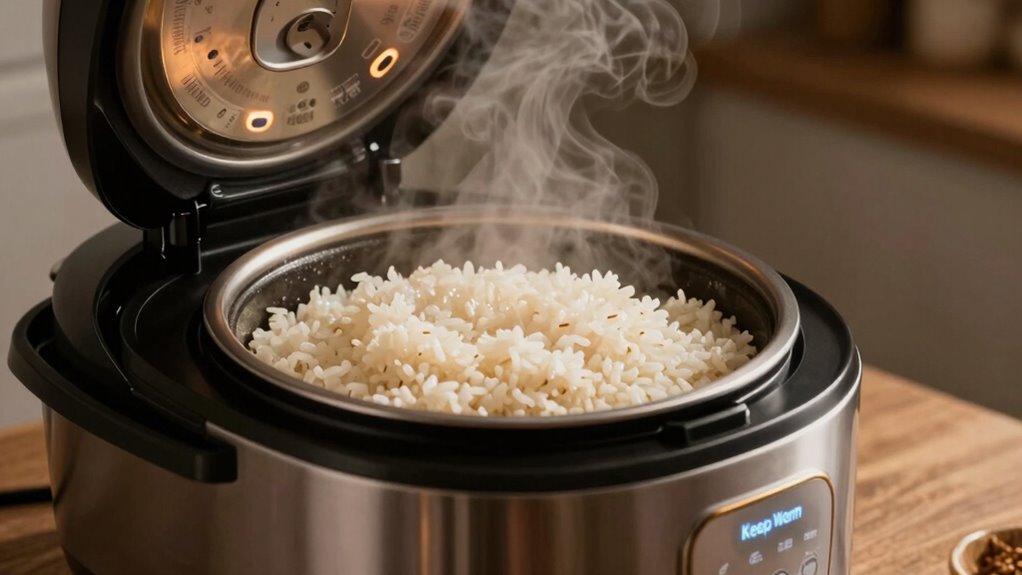
After the rice has been kept warm in your cooker, it’s important to cool it quickly before storing. Proper food storage helps prevent bacteria growth and maintains kitchen safety. To do this effectively:
- Transfer the rice to a shallow container to promote even cooling.
- Spread it out in a thin layer to speed up the cooling process.
- Place the container in the refrigerator within an hour of cooking.
Avoid leaving rice in the warm cooker for too long, as bacteria can thrive. Always refrigerate leftovers promptly and consume them within a day or two. Proper food storage isn’t just about keeping leftovers; it’s about ensuring safety and preventing foodborne illnesses. Following these steps keeps your rice safe and delicious for later enjoyment.
Frequently Asked Questions
Can Bacteria Grow in Rice Kept Warm for Long Periods?
Bacterial growth can occur if you keep rice warm for too long, especially when temperature control isn’t consistent. If the rice stays in the “keep warm” mode for more than a few hours, bacteria may multiply, posing health risks. To stay safe, it’s best to consume or refrigerate rice within 2-4 hours of cooking. Proper temperature regulation prevents bacteria from thriving and ensures your rice remains safe to eat.
Does the Type of Rice Affect How Long It Stays Safe on Warm Mode?
Yes, the type of rice affects how long it stays safe on warm mode. Different types of rice, like brown or white, have varying moisture and sugar levels that influence bacterial growth. Proper rice preparation, such as rinsing thoroughly and storing at the right temperature, helps maintain safety. Keep in mind, even with the right rice, avoid leaving it on warm mode for extended periods, typically over four hours, to prevent bacteria.
Is It Safe to Reheat Rice That Has Been Kept Warm Overnight?
Sure, reheating rice kept warm overnight is a great idea—if you enjoy risking food safety. In reality, it’s best to follow storage guidelines and avoid eating rice that’s been sitting out for hours. Bacteria can grow quickly, and reheating won’t always eliminate toxins. For safe eating, refrigerate leftover rice promptly and reheat only what you plan to eat. Your stomach will thank you for respecting proper food safety practices.
How Does the Humidity Inside the Rice Cooker Impact Safety?
Humidity inside your rice cooker can lead to moisture buildup, which creates an ideal environment for mold growth. If you leave rice on “keep warm” for too long, the moisture encourages bacteria and mold, making it unsafe to eat. To avoid these risks, regularly clean your rice cooker, and don’t keep rice warm for more than a few hours. Proper ventilation and timely consumption help guarantee food safety.
Are There Specific Rice Cooker Models Better for Extended Warm Keeping?
Some rice cooker models are better for extended warm keeping because they feature advanced Model features like smart temperature control and automatic shut-off. Check the Warm mode duration listed in the product specifications, as longer durations may increase safety risks if the cooker isn’t designed for prolonged use. Opt for models with safety features that monitor temperature and moisture, ensuring your food stays safe and fresh during extended warm periods.
Conclusion
To keep rice warm is to keep warmth alive, but not forever. It’s about balancing safety and quality, timing and attention. When you monitor the clock, check the rice, and store leftovers promptly, you protect both flavor and health. Keep warmth gentle, not eternal. Keep rice safe, keep rice delicious. Because in the end, it’s about enjoying every bite, without risking what’s behind it—time, temperature, and care.