Using the same sponge or towel for multiple tasks is a common mistake that can undo your efforts to keep food safe. It increases the risk of bacteria, germs, and mold spreading across surfaces or onto your hands. Regularly replacing or sanitizing your cleaning tools is essential to prevent cross-contamination. If you want to discover simple ways to keep your kitchen hygienic and safe, you’ll find helpful tips ahead.

Get kitchen staples and gadgets delivered free with Prime
- Fast, free delivery on millions of items
- Prime Video, Amazon Music and more included
- Member-only deals all year
Key Takeaways
- Reusing the same sponge or towel for multiple tasks increases bacteria transfer and contamination risk.
- Using damp or dirty sponges without proper sanitization fosters bacterial growth.
- Failing to replace or clean sponges and towels regularly allows bacteria to thrive.
- Mixing towels or sponges for different tasks can spread germs across surfaces and foods.
- Storing cleaning tools in damp areas promotes mold and bacteria, undermining hygiene efforts.

Even when you think you’re practicing safe cooking habits, one overlooked mistake can undo all your efforts: using the same sponge or towel for multiple tasks without proper cleaning. This small oversight can considerably impact your kitchen hygiene and compromise cross contamination prevention. Sponges and towels are essential tools, but if you don’t use them correctly, they can become breeding grounds for bacteria, germs, and other harmful microorganisms. When you wipe down counters, clean dishes, or dry your hands with the same cloth or sponge, you risk transferring bacteria from one surface or item to another. This cross contamination can lead to foodborne illnesses, which is the last thing you want when aiming for a safe and healthy kitchen environment.
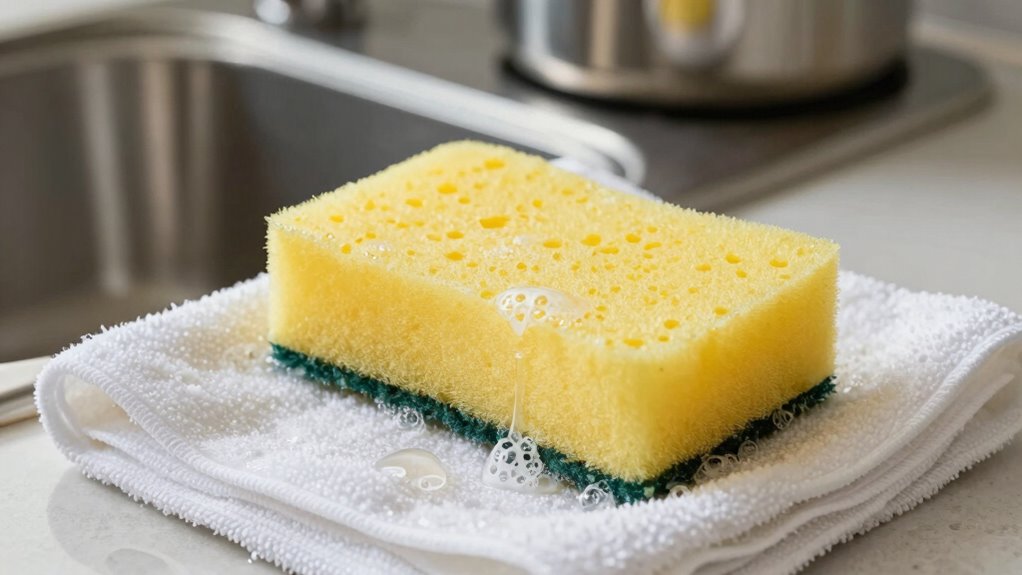
To prevent this, you need to be mindful of how you handle your cleaning tools. Regularly replacing or sanitizing sponges and towels is vital. A sponge that remains damp and dirty for too long becomes a perfect environment for bacteria to multiply. You might think rinsing it out after each use is enough, but that’s not always effective. Instead, consider microwaving a damp sponge for about 30 seconds or running it through a dishwasher with hot water regularly. For towels, wash them frequently in hot water and dry them thoroughly to eliminate bacteria. Using fresh towels for different tasks—like one for drying hands and another for wiping counters—also helps minimize cross contamination risks. Additionally, understanding kitchen hygiene practices can further help you maintain a healthier cooking environment. Proper storage and effective cleaning techniques are also crucial for keeping your tools sanitary and safe.
You should also designate separate sponges or cloths for specific tasks. For example, keep one for cleaning dishes, another for wiping down surfaces, and a different one for handling raw food. This simple division helps prevent bacteria from raw meats or contaminated surfaces from spreading to ready-to-eat foods. Remember, never use a sponge that smells bad or looks moldy, as these are clear signs it’s time to replace it. Always store your cleaning tools in a dry, well-ventilated area to inhibit bacterial growth. Proper storage and regular sanitation of your cleaning tools are key components of effective kitchen hygiene. Incorporating proper storage techniques can further extend the lifespan of your cleaning tools and keep your kitchen safer. Additionally, using antimicrobial cleaning tools can provide an extra layer of protection against bacteria buildup.
As an affiliate, we earn on qualifying purchases.
Frequently Asked Questions
Can Using the Same Sponge for Dishes and Surfaces Cause Illness?
Yes, using the same sponge for dishes and surfaces can cause illness. It increases cross contamination risks because bacteria transfer potential is high when you don’t keep cleaning tools separate. Bacteria from raw food or dirty surfaces can easily spread to clean dishes, increasing your chances of foodborne illness. To stay safe, use different sponges or sanitize them frequently, and avoid cross-contamination between surfaces and dishes during cooking.
How Often Should I Replace or Sanitize My Kitchen Towels?
You should replace or sanitize your kitchen towels every 1-2 days to prevent bacteria buildup, especially since studies show towels can harbor more germs than toilet seats. Incorporate your towels into your cleaning frequency routine, and consider using different towels for dishes and surfaces. Keep your kitchen decor both stylish and hygienic by regularly laundering your towels, ensuring a safer cooking environment and peace of mind.
Are There Specific Sponges or Towels Recommended for Safe Use?
You should choose sponges and towels made from eco-friendly materials like cellulose or bamboo, which are sustainable and gentle on the environment. Look for options with antimicrobial coatings, as they help prevent bacterial growth and keep your kitchen safer. Regularly replace or sanitize these items, especially if they show signs of wear or odor. This practice guarantees your kitchen stays hygienic and reduces the risk of cross-contamination.
What Are the Signs That My Sponge or Towel Is Contaminated?
You can tell your sponge or towel is contaminated if it smells sour or musty, shows visible mold or stains, or feels slimy even after washing. Regular cleaning hacks, like microwaving sponges or replacing towels frequently, help prevent buildup. Recognizing these signs is essential because contaminated items can harbor allergy triggers and bacteria, risking your health. Always monitor your kitchen textiles for any signs of contamination to keep your cooking space safe and hygienic.
Does Microwave Sterilization Effectively Kill Bacteria on Sponges and Towels?
Microwave sterilization does effectively kill bacteria on sponges and towels by destroying bacterial buildup. However, it’s important to guarantee they’re wet before microwaving, as moisture retention helps heat penetrate thoroughly. If they’re dry, bacteria may survive. Always microwave damp sponges or towels for about 1-2 minutes, but be cautious of hot spots. Regularly replacing your sponges and towels is also a good practice to prevent bacterial growth.
As an affiliate, we earn on qualifying purchases.
Conclusion
Remember, a stitch in time saves nine, so don’t overlook the importance of proper sponge and towel hygiene. By regularly replacing and sanitizing these items, you safeguard your kitchen from unseen germs that can undo your safe cooking efforts. Small mindful actions now prevent bigger health issues later. Keep your habits sharp and your kitchen safe—after all, an ounce of prevention is worth a pound of cure. Stay vigilant, and your kitchen will be a haven, not a hazard.
As an affiliate, we earn on qualifying purchases.
As an affiliate, we earn on qualifying purchases.
Halloween Picks
halloween
As an affiliate, we earn on qualifying purchases.