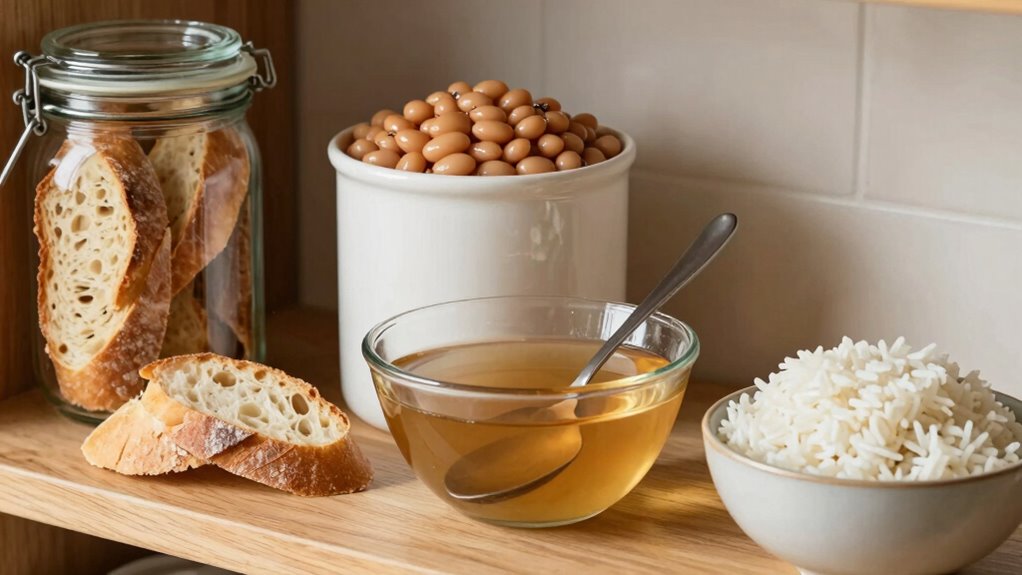

To store bread, keep it in a cool, dry place in a paper bag or bread box, or freeze it if not used quickly, wrapping it tightly. Store dried beans in an airtight container away from moisture, and refrigerate cooked beans in airtight containers or freeze them for longer shelf life. Keep broth in sealed containers in the fridge for up to 5 days or freeze in ice cube trays. Cool cooked rice quickly and store in airtight containers for a few days or freeze. Properly storing these items helps prevent spoilage and extends freshness—learn more tips to maximize your food’s lifespan.

Get kitchen staples and gadgets delivered free — and shop member deals
- Fast, free delivery on millions of items
- Access to Prime Big Deal Days deals on October 6–7
- Prime Video, Amazon Music and more included
Key Takeaways
- Use airtight, moisture-resistant containers to prevent spoilage and pests for all stored foods.
- Store bread in paper bags or bread boxes, and freeze if not consumed within a few days.
- Cool cooked beans and rice quickly before refrigerating in small portions to prevent bacterial growth.
- Transfer opened broth to airtight containers and freeze in cubes for easy portioning and extended shelf life.
- Follow recommended storage durations to maintain freshness and ensure food safety across all items.
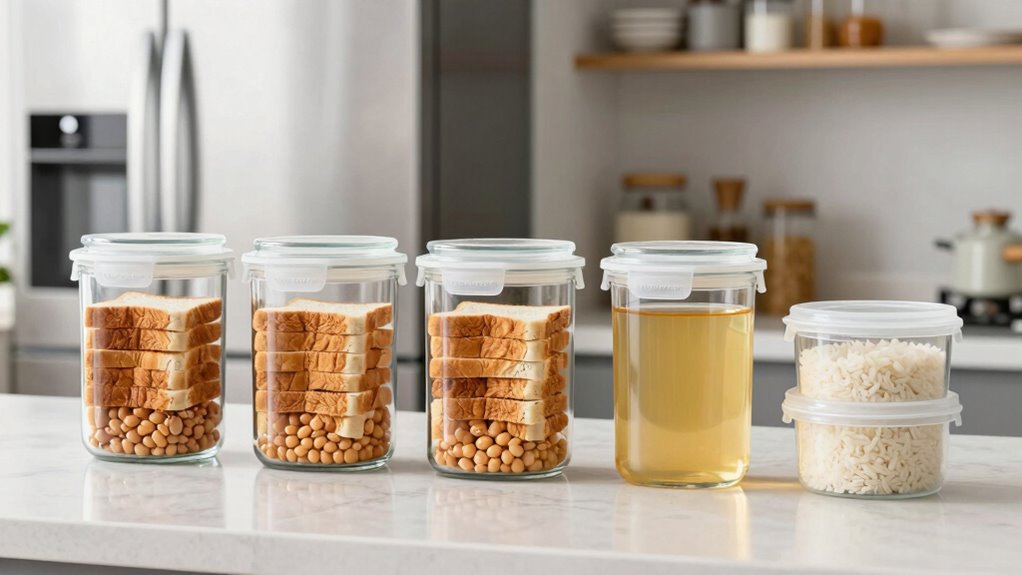
Are you confident you’re storing your food safely? Proper storage is essential for food preservation and extending the shelf life of your pantry staples. When you understand how to store bread, beans, broth, and rice correctly, you reduce waste, save money, and keep your meals fresh and safe to eat.
For bread, the key is to keep it in a cool, dry place, ideally in a bread box or a paper bag. These methods allow the bread to breathe, preventing mold growth and staling. If you don’t plan to eat it within a few days, consider freezing it. Wrap the bread tightly in plastic wrap or aluminum foil before placing it in a freezer bag. This not only prevents freezer burn but also prolongs its freshness, making it easy to enjoy slices later without sacrificing quality. Proper storage of bread is a simple way to maximize food preservation and extend its usable life.
Store bread in a cool, dry place or freeze to extend freshness and prevent mold and staling.
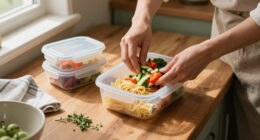
Beans, whether dried or cooked, require different storage methods to ensure safety and longevity. Dried beans should be kept in airtight containers in a cool, dark place, away from moisture and pests. This keeps them dry, preserving their quality over time. Cooked beans, on the other hand, should be cooled quickly and stored in airtight containers in the refrigerator. Consume cooked beans within three to four days to prevent spoilage. For longer storage, you can freeze cooked beans in portioned containers, which helps with meal prep and ensures you’re not wasting leftovers. Properly storing beans prevents spoilage and supports shelf life extension, making them a reliable protein source for your meals. Understanding proper storage techniques can also help prevent contamination and ensure food safety. Additionally, storing beans in the correct environment reduces the risk of pest infestation.
Broth, whether homemade or store-bought, also needs careful storage. Once opened, transfer broth to airtight containers and refrigerate promptly. Use within three to five days to prevent bacterial growth. For longer storage, freezing broth is your best option. Pour it into freezer-safe containers or ice cube trays for easy portioning. Once frozen, transfer broth cubes to a sealed bag. This method preserves the flavor and extends the broth’s shelf life, ensuring you always have flavorful stock on hand for soups and stews without worrying about spoilage. Additionally, understanding how proper storage techniques can prevent bacterial growth is crucial for food safety.
Rice, especially when cooked, should be cooled quickly and stored in airtight containers in the refrigerator. Consume cooked rice within four to six days. To extend its shelf life further, freeze cooked rice in small portions, which makes reheating quick and easy. Keep uncooked rice in a cool, dry place in an airtight container to prevent pests and moisture from ruining it. Proper storage of rice is vital for food preservation, preventing spoilage, and ensuring it remains safe and tasty for your future meals. It’s also important to follow proper cooling methods to avoid bacterial growth. By following these storage tips, you maximize food preservation and keep your pantry stocked with safe, fresh ingredients.
airtight food storage containers for pantry
As an affiliate, we earn on qualifying purchases.
As an affiliate, we earn on qualifying purchases.
Frequently Asked Questions
Can I Store Bread in the Fridge Without It Going Stale?
Yes, you can store bread in the fridge without it going stale if you use proper bread preservation techniques. Keep it in an airtight bag to prevent moisture loss, but be aware that refrigeration can still cause it to dry out faster. For longer storage, consider freezer storage tips like wrapping it tightly and freezing. This way, you preserve freshness and avoid staleness until you’re ready to enjoy it.
How Long Can Cooked Beans Be Safely Stored in the Freezer?
Think of your freezer as a loyal guardian, preserving the freshness of your cooked beans. You can safely store them for up to 3 to 4 months, but beyond that, they risk losing their flavor and texture. Employ proper storage techniques, like airtight containers or freezer bags, to maximize freezer longevity. This way, your beans stay tender and delicious, ready to be reheated when cravings strike.
Is It Better to Store Broth in Glass or Plastic Containers?
You should store broth in glass containers for better storage longevity and safety. Glass is non-porous, won’t absorb odors, and resists staining, making it ideal for preserving flavor. Plastic containers are convenient and lightweight, but they may degrade over time and stain. For longer-term storage and maintaining broth quality, glass is the smarter choice. Plus, it’s easier to see the contents and reheat safely.
How Do I Prevent Rice From Becoming Clumpy When Stored?
To prevent rice from becoming clumpy when stored, focus on rice preservation by letting it cool completely before sealing it in an airtight container. Store it in the fridge for short-term use or in the freezer for longer periods. To improve clumpy rice prevention, consider adding a small paper towel inside the container to absorb excess moisture. Shake or fluff the rice before reheating, ensuring it stays fluffy and separate.
Can I Store Leftover Bread and Baked Goods Together?
Storing leftover bread and baked goods together is totally fine, and it keeps your kitchen tidy. For bread preservation and baked goods storage, use airtight containers or resealable bags to prevent staleness and mold. Just make sure items are cool before sealing, and keep them in a cool, dark spot. Combining the goodies won’t ruin them — it’s like creating a cozy little bakery corner right in your fridge!
As an affiliate, we earn on qualifying purchases.
Conclusion
By mastering the art of smart storage, you become the guardian of your kitchen’s treasure chest, ensuring each item remains fresh and flavorful like a well-kept secret. Think of your pantry as a delicate symphony, where proper storage acts as the conductor, guiding each ingredient to perform at its peak. When you store bread, beans, broth, and rice wisely, you’re not just preserving food; you’re cultivating a harmony of taste and nourishment that sustains your culinary journey.
freezer-safe plastic bags for bread and rice
As an affiliate, we earn on qualifying purchases.
As an affiliate, we earn on qualifying purchases.
ice cube trays for broth storage
As an affiliate, we earn on qualifying purchases.
As an affiliate, we earn on qualifying purchases.
Fall Picks
fall essentials
As an affiliate, we earn on qualifying purchases.