
To cook faster with less cleanup, organize your ingredients before starting. Gather and prepare everything—washing, peeling, chopping—and set them up in small bowls in the order you’ll use them. This staging trick minimizes searching, reduces spills, and keeps your workspace neat. By working systematically, you’ll save time, avoid mistakes, and make cleanup easier afterward. Curious how to master this simple but powerful kitchen habit? Keep going to discover more tips that will change your cooking game.

Get kitchen staples and gadgets delivered free — and shop member deals
- Fast, free delivery on millions of items
- Access to Prime Big Deal Days deals on October 6–7
- Prime Video, Amazon Music and more included
Key Takeaways
- Organize and pre-portion ingredients in small containers before cooking begins.
- Arrange prepped ingredients sequentially on the countertop for easy access.
- Measure spices and liquids in advance to streamline cooking steps.
- Keep workspace tidy by grouping used ingredients, reducing clutter during cooking.
- Use a systematic workflow to minimize reaching, spills, and cleanup time.
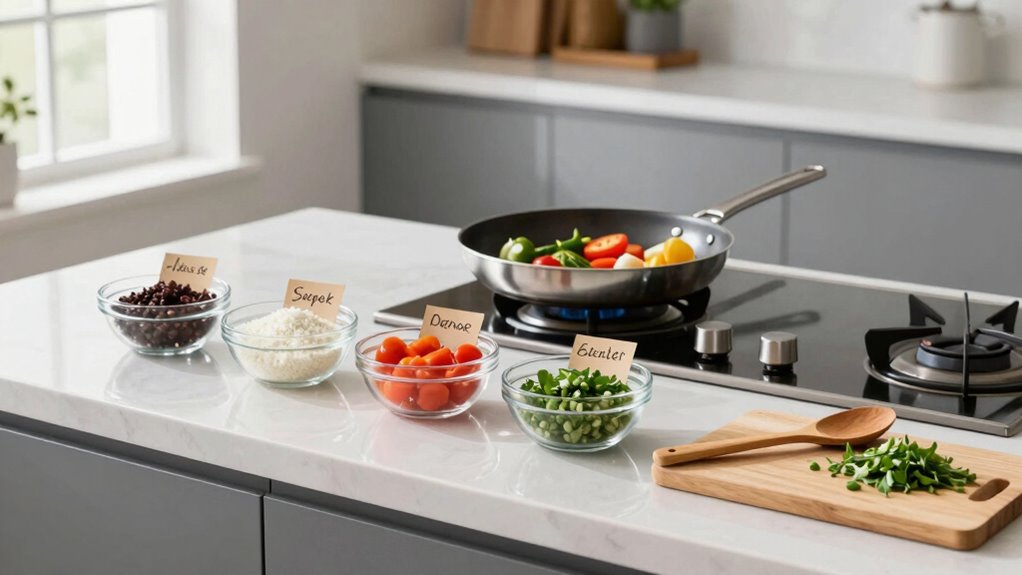
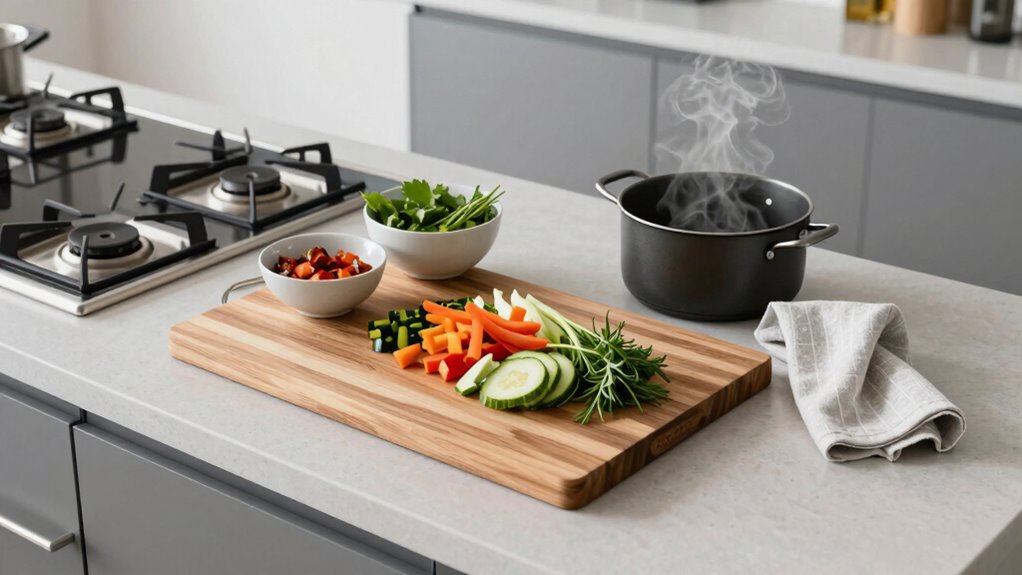
If you want to cut down on cooking time and keep your kitchen tidy, mastering a simple staging trick can make a big difference. This trick revolves around ingredient organization and improving your prep efficiency. Instead of juggling multiple bowls and rushing to find what you need, you set everything up beforehand in a way that streamlines your cooking process. The goal is to create a mini station where all ingredients are prepped and ready to go, so you waste less time searching or chopping during the actual cooking.
Start by gathering all your ingredients and tools before you turn on the stove. As you prep each item—washing, peeling, chopping—place them into small bowls or containers. This not only keeps your workspace neat but also allows you to see exactly what you have at a glance. When ingredients are organized this way, it becomes easier to add them in the right order, which speeds up your cooking and minimizes mistakes. By pre-measuring spices and liquids, you avoid interruptions once you start cooking, making your process more efficient and less stressful.
The key to this staging trick is to think ahead. Visualize your recipe step-by-step and prepare each component accordingly. For example, if a dish requires sautéed onions, chopped garlic, and diced vegetables, do all the prep at once. Arrange these in sequence on your countertop or in small containers, so you can add them directly when needed. This approach reduces the number of times you reach for ingredients, saving you time and keeping your workspace organized. Plus, it helps you stay focused on the task, rather than constantly stopping to find or prepare ingredients mid-recipe. Additionally, understanding the importance of ingredient prep can help you develop more efficient cooking habits over time, especially when combined with proper mise en place. Incorporating ingredient organization into your routine can also help you become more mindful of your ingredient usage and reduce waste.
Another benefit of ingredient organization and prepping in advance is that it reduces cleanup later on. When everything is prepped and grouped, you only need to wash a few containers instead of multiple utensils or bowls scattered across the counter. This staging process also encourages you to work more systematically, which means fewer spills and messes during cooking. You’ll find yourself finishing dishes faster because you’re not constantly interrupted by last-minute prep. Incorporating this organized prep into your routine can also help you become more mindful of your ingredient usage and reduce waste.
As an affiliate, we earn on qualifying purchases.
Frequently Asked Questions
Can the Staging Trick Be Used for All Types of Recipes?
Yes, the staging trick works for most recipes, especially those with multiple ingredients. You can use it to streamline ingredient prep and improve kitchen organization, making cooking more efficient. By gathering and preparing ingredients ahead of time, you minimize chaos and reduce cleanup. This approach is especially helpful for complex dishes, but even simple recipes benefit from better staging, saving you time and effort in the kitchen.
How Much Time Does the Staging Process Typically Save?
Back in the day, meal prep meant chaos, but staging now saves you time. Usually, it cuts prep time by about 20-30 minutes, especially when you’re doing ingredient organization. By having everything pre-measured and ready, you avoid constant trips to the fridge or pantry. This trick streamlines your process, allowing you to focus on cooking rather than searching for ingredients, making your kitchen time faster and more efficient.
Is Special Equipment Needed for Effective Staging?
You don’t need special equipment for effective staging—just some basic kitchen tools like bowls, knives, and cutting boards. These tools help you organize ingredients efficiently, making the process quicker and cleaner. Keep your tools within reach and pre-measure ingredients to streamline your workflow. With simple kitchen tools, you can easily set up your ingredients ahead of time, saving you time and reducing mess during cooking.
Can This Method Be Adapted for Large Family Meals?
Like a well-orchestrated symphony, this staging method adapts beautifully for large family meals. You can streamline meal prep and enhance kitchen organization by assigning specific stations for different dishes, prepping ingredients in advance, and utilizing multiple containers. This approach keeps everything organized, speeds up cooking, and minimizes mess. With some planning, you’ll find it easier to serve everyone efficiently, making big meals less overwhelming and more manageable.
Does Staging Impact the Flavor or Quality of the Dish?
Staging doesn’t impact the flavor or quality of your dish when done correctly. It helps with flavor preservation by keeping ingredients organized and fresh until they’re cooked, ensuring you don’t forget any essential components. Plus, it promotes quality assurance, as you can double-check ingredients and prep work before cooking begins. When you stage thoughtfully, you maintain the dish’s integrity, resulting in better flavor and a more polished final product.
As an affiliate, we earn on qualifying purchases.
Conclusion
By mastering this staging trick, you’ll turn your kitchen into a well-oiled machine, slicing your cooking time and cleanup in half. Think of it as laying out your ingredients like a symphony conductor arranging his orchestra—everything in perfect harmony. With a little prep, you’ll breeze through meals, leaving behind a spotless kitchen and more time to enjoy your delicious creations. So, give it a try and watch your cooking rhythm fall perfectly into place.
As an affiliate, we earn on qualifying purchases.
As an affiliate, we earn on qualifying purchases.
Fall Picks
fall essentials
As an affiliate, we earn on qualifying purchases.