In countertop cooking, bubbles, steam, and airflow work together to create faster, more even results. Microwave radiation causes water molecules to vibrate rapidly, forming bubbles and steam that break down food and lock in moisture. Convection currents circulate hot air, ensuring consistent heat and crispiness on all sides. These combined processes improve texture, flavor, and efficiency. If you want to understand how these science principles can elevate your cooking, keep exploring these fascinating principles.

Get kitchen staples and gadgets delivered free with Prime
- Fast, free delivery on millions of items
- Prime Video, Amazon Music and more included
- Member-only deals all year
Key Takeaways
- Microwave radiation causes water molecules to vibrate, generating internal heat and producing steam and bubbles for quick cooking.
- Bubbles and steam help break down cell walls, retain moisture, and improve food texture during microwave heating.
- Convection currents circulate hot air evenly, ensuring uniform browning, crisping, and consistent cooking in oven-based appliances.
- Airflow in convection ovens removes excess moisture and promotes desirable crusts and textures through efficient heat transfer.
- The combined effects of bubbles, steam, and airflow enable faster, more even cooking with enhanced flavor and texture.
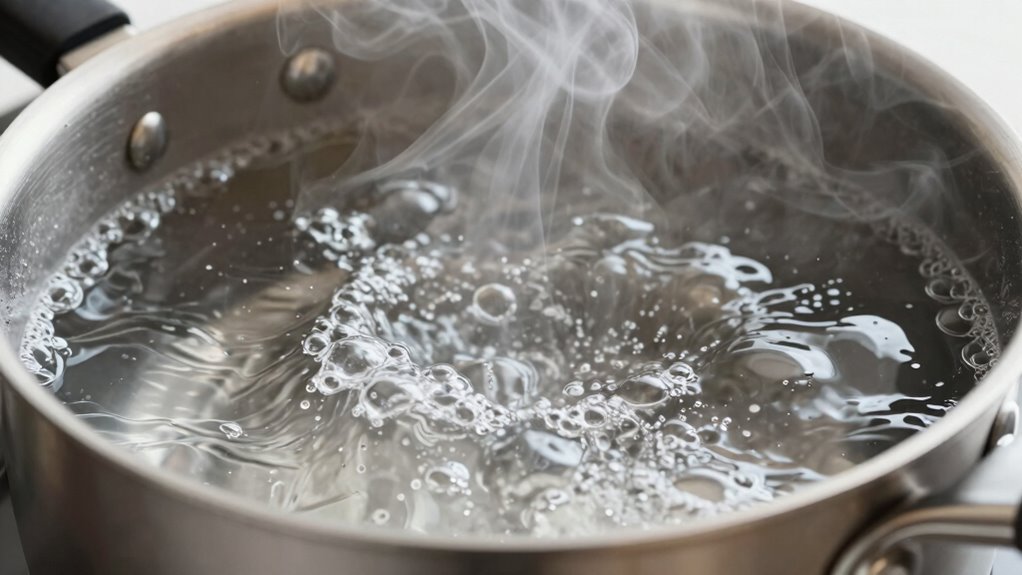
Have you ever wondered how your countertop appliances transform raw ingredients into delicious meals so quickly? It all comes down to the fascinating science behind bubbles, steam, and airflow. When you turn on your microwave or oven, you’re activating complex processes that manipulate heat, moisture, and air to cook food efficiently. A key element is microwave radiation, which heats food quickly by causing water molecules to vibrate and generate heat from within. This internal heating creates steam and bubbles inside your food, resulting in rapid cooking. Meanwhile, convection currents play an essential role in oven-based appliances. These currents are the circular movements of hot air that distribute heat evenly throughout the cooking chamber. By circulating warm air around your food, convection currents ensure consistent cooking, browning, and crisping on all sides.
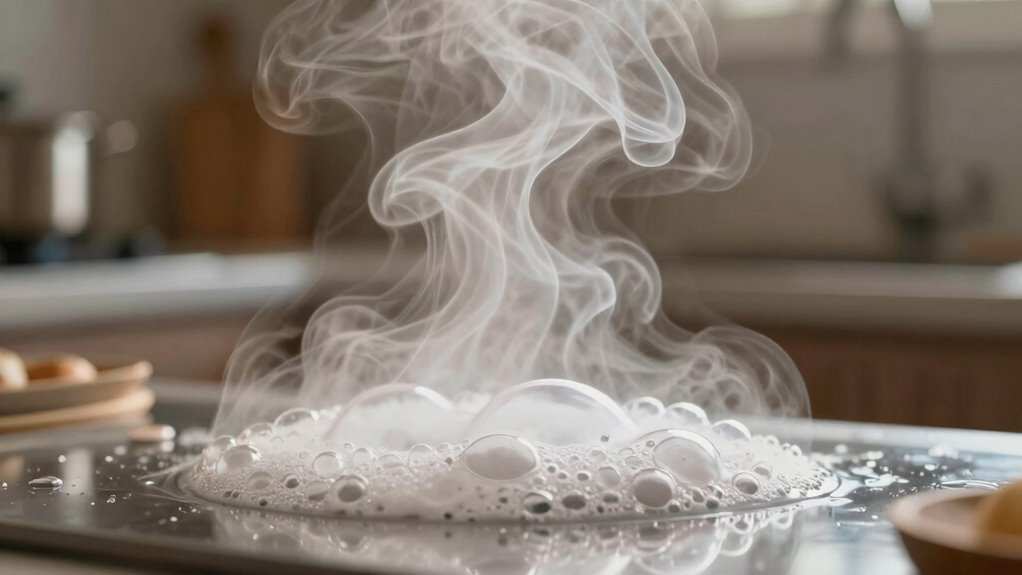
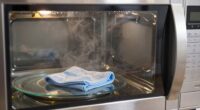
In microwave ovens, microwave radiation penetrates the food and causes water molecules to vibrate at high frequencies. This vibration produces heat that cooks the food from the inside out. As the water heats up, it turns into steam, forming bubbles that expand and help break down cell walls in ingredients. This process creates a moist environment that keeps food tender while speeding up cooking times. The rapid formation of steam also results in a buildup of pressure inside sealed containers, further accelerating the cooking process. The bubbles that form and burst distribute heat evenly, preventing cold spots and ensuring you get a uniform meal. Additionally, the interaction of microwave radiation with water molecules is a prime example of internal heating, which is fundamental to microwave cooking’s efficiency. The development of bubbles and steam inside the food is crucial for texture and flavor development during cooking. Moreover, understanding the role of moisture control can help optimize cooking outcomes and improve appliance performance.
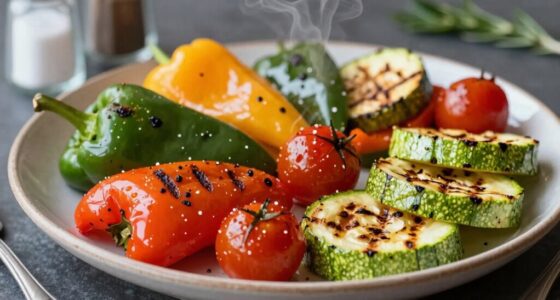
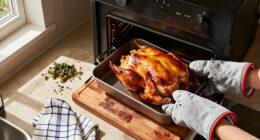
In traditional convection ovens, convection currents are the key to efficient cooking. When you turn on the oven, a fan circulates hot air around the food, maintaining a consistent temperature throughout the chamber. This airflow promotes even heat transfer, which helps in browning and crisping. The airflow also carries away excess moisture in some cases, allowing baked goods to develop a desirable crust. The movement of hot air creates a gentle, continuous cycle—hot air rises, cools, and then sinks back down, establishing convection currents. These currents are responsible for the uniform cooking and browning you see in roasted vegetables, baked casseroles, and pastries.
Both microwave radiation and convection currents demonstrate how bubbles, steam, and airflow work together to revolutionize countertop cooking. They allow you to prepare meals faster, more evenly, and with better textures than ever before. Understanding these scientific principles helps you appreciate the technology behind your appliances and how they turn simple ingredients into satisfying dishes with remarkable efficiency.
As an affiliate, we earn on qualifying purchases.
Frequently Asked Questions
How Do Bubbles Influence Heat Transfer in Countertop Cooking?
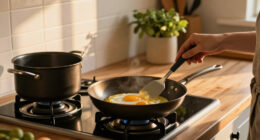
Bubbles considerably influence heat transfer during countertop cooking through bubble dynamics, which enhance heat conduction. As bubbles form and rise, they create movement in the liquid, improving contact between heat sources and the food. This agitation speeds up heat conduction, leading to more even cooking. You’ll notice that bubbles help distribute heat more efficiently, making your cooking process faster and more consistent, thanks to their role in optimizing heat transfer.
What Role Does Steam Play in Flavor Preservation?
Steam plays a vital role in flavor preservation by locking in moisture and enhancing taste. When you use steam, it creates a sealed environment that prevents flavors from escaping during cooking. This moisture retention keeps your food juicy and tender while preserving delicate flavors. By maintaining ideal humidity, steam guarantees your dishes stay flavorful, vibrant, and full of aroma, making every bite more enjoyable and satisfying.
How Does Airflow Affect Cooking Temperature Consistency?
Airflow plays a vital role in cooking temperature consistency by ensuring even heat distribution. When you improve air circulation inside your appliance, it helps regulate temperature more effectively, preventing hot spots and uneven cooking. This consistent temperature regulation means your food cooks uniformly, avoiding burnt edges or undercooked centers. By optimizing airflow, you achieve precise control, making your countertop cooking more reliable and efficient every time.
Can Airflow Modifications Reduce Cooking Time?
Yes, airflow modifications can reduce cooking time by optimizing pressure dynamics and liquid expansion within your appliance. When you adjust airflow, you enhance heat transfer efficiency, which accelerates cooking processes. Improved airflow promotes even distribution of heat, minimizes hot spots, and speeds up moisture evaporation. This combination allows liquids to expand and pressure to build more effectively, leading to quicker, more consistent cooking results without sacrificing quality or safety.
Are There Safety Risks With Bubble and Steam-Based Cooking Methods?
You should be aware that bubble and steam-based cooking methods do carry safety risks, similar to a delicate soap bubble—if mishandled, it can pop unexpectedly. Bubble dynamics can cause burns if steam escapes suddenly, so always follow safety protocols. Proper handling, venting, and temperature controls guarantee safe cooking. While these methods are innovative, respecting the risks helps you enjoy their benefits without accidents.
As an affiliate, we earn on qualifying purchases.
Conclusion
Understanding the science behind bubbles, steam, and airflow transforms your countertop cooking experience. It’s like having a secret recipe that boosts flavor and texture with every meal. By mastering these invisible forces, you become a culinary scientist, making dishes that are not just cooked but perfected. So next time you cook, remember—you’re controlling the elements like a wizard, turning everyday ingredients into magic on your countertop. The power is in your hands; let science elevate your cooking game.
As an affiliate, we earn on qualifying purchases.
As an affiliate, we earn on qualifying purchases.
NFL season / tailgating Picks
team gear
As an affiliate, we earn on qualifying purchases.