To keep your microwave performing well, clean it regularly with a damp cloth and mild soap after each use, and use lemon or vinegar for stubborn stains. Steam clean to loosen grime, and wipe down the exterior and control panel often with disinfectant. Check parts like the turntable motor and door hinges periodically, and replace worn components promptly. Keep vents clear and make sure the door seal stays clean. Follow these tips, and you’ll discover even more ways to maintain your microwave’s efficiency.

Get kitchen staples and gadgets delivered free with Prime
- Fast, free delivery on millions of items
- Prime Video, Amazon Music and more included
- Member-only deals all year
Key Takeaways
- Clean the interior regularly with damp cloth, mild soap, and steam cleaning to prevent grime buildup and maintain heating efficiency.
- Wipe exterior and control panel frequently with disinfectant to prevent dirt and germ accumulation that can affect operation.
- Inspect and replace worn parts like door hinges and turntable motor promptly to avoid performance issues.
- Keep vents and door seals clean and free of debris to ensure proper airflow and energy efficiency.
- Address spills immediately and conduct routine inspections to prevent malfunctions and extend the microwave’s lifespan.
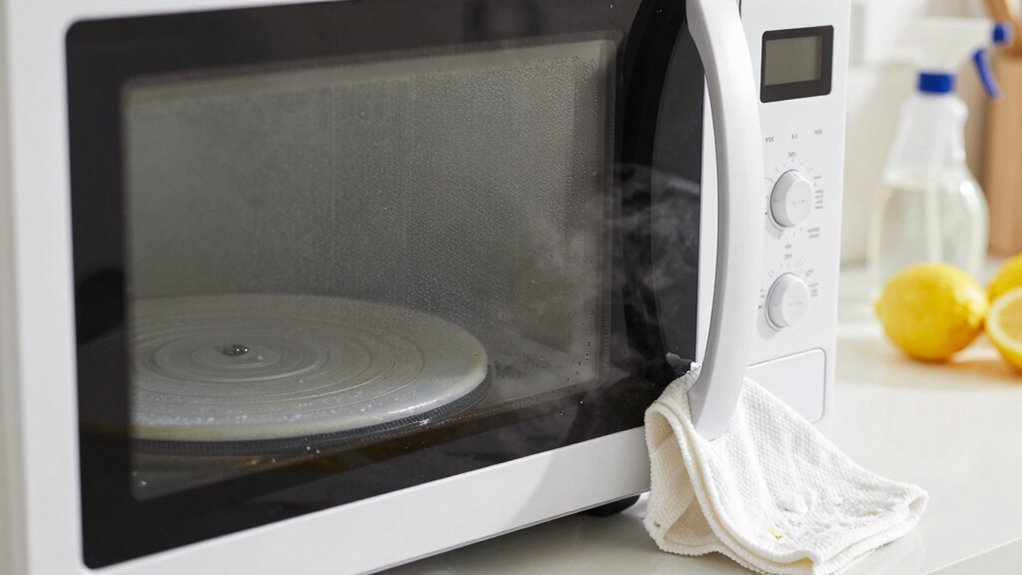
Keeping your microwave clean and well-maintained is essential for ensuring it functions efficiently and stays hygienic. When you regularly care for your microwave, you not only improve its longevity but also promote microwave safety, reducing the risk of fires or malfunctions. Cleanliness directly impacts energy efficiency, too, because a buildup of grime or food residue can cause the appliance to work harder than necessary, wasting electricity and increasing wear on its components. By establishing a simple cleaning routine, you can keep your microwave performing like new and avoid costly repairs down the line.
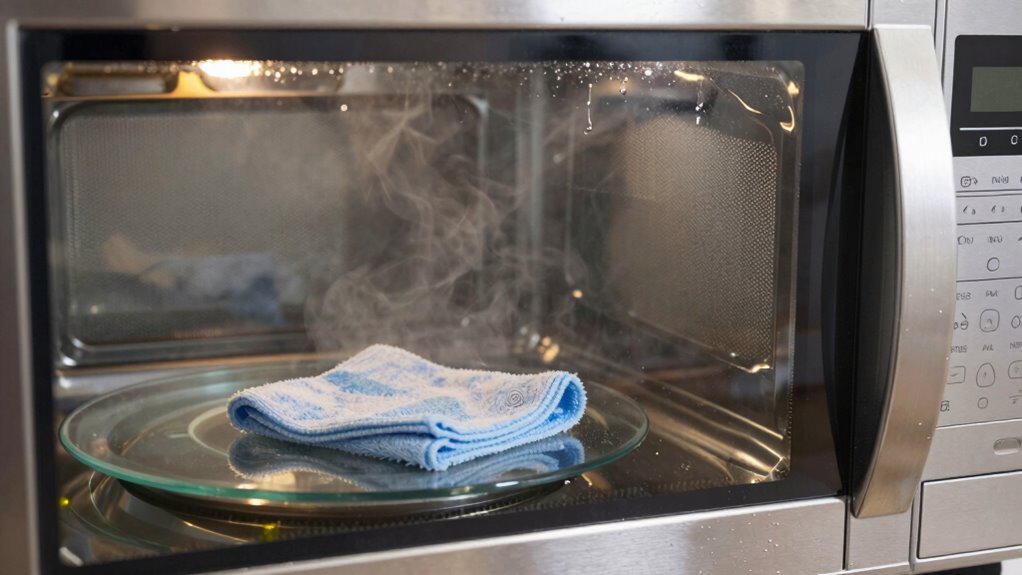
Start by wiping down the interior after each use. Use a damp cloth or sponge with a mild dish soap solution to remove food splatters and spills. For stubborn stains or dried-on food, heat a bowl of water with lemon slices or vinegar inside the microwave for a few minutes. The steam loosens grime, making it easier to wipe away. Regular cleaning prevents bacteria buildup and keeps odors at bay, ensuring your microwave remains hygienic and safe for daily use. Remember to clean the turntable and its support ring, as food particles often gather there. Removing and washing these parts regularly helps maintain optimal microwave safety and prevents uneven cooking or damage.
Pay attention to the exterior, especially the keypad and handle, which can harbor germs. Wipe these areas with a disinfectant and a soft cloth. Avoid harsh chemicals that could damage the surface or seep into the microwave’s controls. Maintaining a clean exterior also ensures you have a good grip on the door, contributing to safer operation. Periodically check the door seal and latch for dirt or debris, which can interfere with proper closing and microwave safety. A well-sealed microwave operates more efficiently because it prevents heat loss, ultimately conserving energy and reducing electricity bills. Additionally, proper maintenance can help identify and address minor issues before they become major problems, extending the lifespan of your appliance. Regular inspections of the microwave’s components, such as the turntable motor or door hinges, can also prevent future breakdowns, saving you money and inconvenience. Checking and replacing worn parts promptly can also enhance safety, reducing the risk of malfunctions or accidents. To further support this, maintaining a clean and dust-free environment around the microwave ensures better airflow and cooling, which is vital for efficient operation.
To keep energy efficiency high and performance steady, avoid running the microwave when it’s visibly dirty or with food splatters inside. Cleaning spills promptly prevents buildup that could cause the microwave to overwork, which not only wastes energy but also shortens its lifespan. Keep the vents clear of dust and crumbs to improve airflow, helping the appliance stay cool and operate efficiently. Following these simple steps ensures your microwave remains safe, energy-efficient, and ready to serve your needs without dropping in performance. Proper maintenance doesn’t take much time, but it pays off by keeping your appliance safe, clean, and functioning at its best.
microwave interior cleaning sponge
As an affiliate, we earn on qualifying purchases.
As an affiliate, we earn on qualifying purchases.
Frequently Asked Questions
How Often Should I Replace My Microwave’s Filter?
You should replace your microwave’s filter every 6 to 12 months to guarantee peak performance. Regular filter replacement helps maintain your microwave’s efficiency and extends its lifespan. Keep an eye on signs like reduced airflow or lingering odors, which indicate it’s time for a new filter. Proper upkeep prevents performance drops and maximizes your microwave’s lifespan, saving you money and hassle in the long run.
Can I Use Metal Utensils Inside My Microwave?
Using metal utensils in your microwave is like inviting a lightning storm indoors—it’s unsafe. Metal safety is essential because it can cause sparks, fires, or damage your appliance. Always avoid metal utensils and follow utensil precautions to protect your microwave’s performance. Instead, opt for microwave-safe glass or plastic containers. This simple step keeps your microwave functioning well and prevents potential hazards, ensuring your cooking remains safe and efficient.
What Are the Signs of Microwave Motor Failure?
If your microwave motor is failing, you’ll notice signs like unusual noises, longer cooking times, or the turntable not spinning. Motor issues often trigger error indicators on the display, alerting you to a problem. You might also see inconsistent heating or the microwave stopping abruptly. These signs suggest a motor failure, and addressing them early helps prevent further damage. If you notice these, consider professional repair or replacement to keep your microwave running smoothly.
How Do I Prevent Microwave Odors From Lingering?
To keep your microwave smelling fresh, embrace odor elimination with simple cleaning techniques. Wipe down the interior regularly with a mixture of water and vinegar or lemon juice to neutralize lingering smells. Leave a bowl of baking soda inside overnight to absorb odors. Make sure you cover food to prevent splatters, and clean spills promptly. These habits help maintain a fresh environment, preventing odors from settling and keeping your microwave smelling clean.
Is It Safe to Run the Microwave Empty for Cleaning?
Running the microwave empty isn’t safe and can damage the appliance, as microwave safety guidelines advise against it. Instead, use effective cleaning techniques like steaming a bowl of water with lemon or vinegar inside to loosen grime. This method cleans thoroughly without risking harm. Regularly wiping the interior with a damp cloth keeps odors at bay and maintains peak performance, ensuring your microwave stays in good shape over time.
microwave turntable motor replacement
As an affiliate, we earn on qualifying purchases.
As an affiliate, we earn on qualifying purchases.
Conclusion
Keeping your microwave clean and well-maintained isn’t just about extending its lifespan; it’s about ensuring every meal heats evenly and safely. Sometimes, a simple wipe-down coincides with a quick check-up, preventing unexpected breakdowns. When you stay attentive to its needs, you’ll notice how a little effort can make your appliance run smoothly, almost as if it’s working in harmony with your routine. So, embrace regular care — it’s the small coincidence that leads to better performance.
As an affiliate, we earn on qualifying purchases.
As an affiliate, we earn on qualifying purchases.
Fall Picks
fall essentials
As an affiliate, we earn on qualifying purchases.