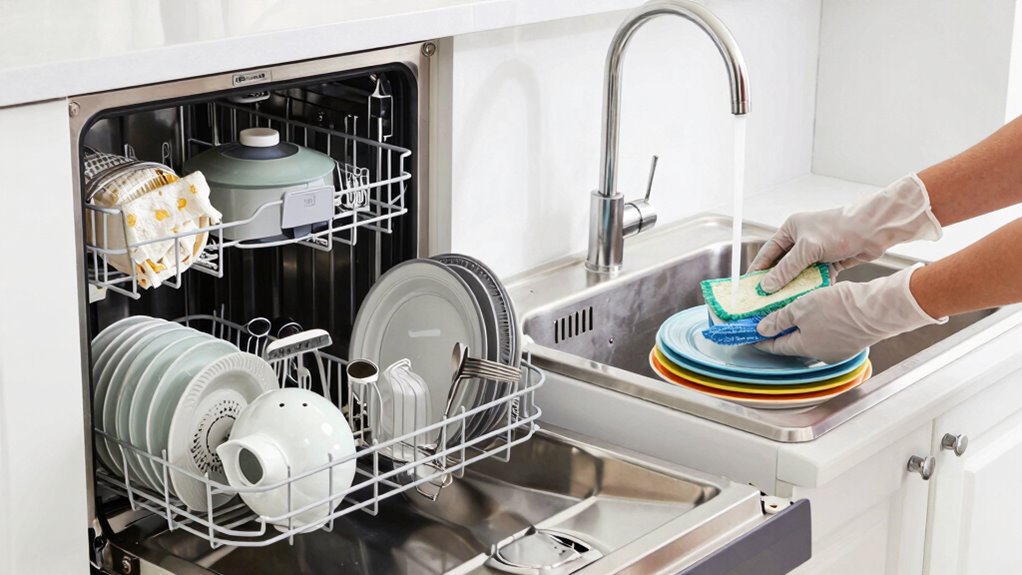

Dishwashers are generally more hygienic than hand-washing because they use hot water at around 140°F, high-pressure jets, and specialized cycles to effectively kill germs and remove residue. Proper hand-washing can be effective if done thoroughly, but it relies heavily on technique and water temperature. To truly maximize hygiene, consider how each method is used and maintained. If you want to find out which approach is best for your household, keep exploring the facts.
Key Takeaways
- Dishwashers typically achieve higher temperatures (~140°F/60°C) that more effectively kill germs than manual hand-washing.
- The mechanical action and high-pressure jets in dishwashers ensure more thorough cleaning compared to variable hand-washing techniques.
- Proper use of detergents and sanitizers in dishwashers enhances germ elimination beyond what hand-washing alone can achieve.
- Inconsistent hand-washing methods may leave residual bacteria, whereas dishwashers provide a standardized, reliable sanitation process.
- Air drying after dishwasher cycles reduces bacterial growth more effectively than towel drying, improving overall hygiene.
Which Is More Hygienic: Dishwasher or Hand-Washing?

When it comes to hygiene, many people wonder whether a dishwasher or hand-washing is more effective. Dishwasher efficiency often surpasses hand washing because machines use hot water and high-pressure jets to thoroughly clean dishes, reducing bacteria and residue. In contrast, hand washing techniques vary widely; some may not use enough water or soap, leaving behind germs. Proper hand-washing requires scrubbing, rinsing, and drying thoroughly, but even then, it can be less consistent. Dishwashers provide a more standardized cleaning process, ensuring dishes reach high temperatures that kill germs effectively. While hand washing can be effective if done correctly, dishwasher efficiency generally offers a more reliable and hygienic solution, especially for busy households or those prioritizing sanitation.
How Do Dishwashers and Hand-Washing Compare in Eliminating Germs

Both dishwashers and hand-washing differ in how effectively they eliminate germs. Temperature and mechanical scrubbing play key roles in killing bacteria, while the use of detergents and sanitizers also impacts hygiene. Understanding these factors helps you decide which method keeps your dishes safer. Additionally, the contrast ratio of the cleaning process can influence how thoroughly germs are removed from surfaces.
Temperature and Germ Kill
Because temperature plays a crucial role in killing germs, dishwashers often outpace hand-washing in sanitation. High water temperature ensures better germ elimination, reaching levels that hand-washing alone can’t achieve. Dishwashers typically use water around 140°F (60°C), which effectively destroys bacteria and viruses. In contrast, hand-washing relies on soap and scrubbing, which may not maintain sufficient water temperature throughout. European cloud innovation emphasizes the importance of consistent performance, similar to how maintaining proper water temperature is key for thorough germ elimination. Hot water enhances germ kill efficiency. Proper water temperature prevents bacterial survival. Dishwashers sustain consistent, high temperatures. Hand-washing may have inconsistent water temps. Higher temperatures reduce residual germs on dishes. Maintaining ideal water temperature is key for thorough germ elimination, making dishwashers a more reliable option for sanitation. Additionally, temperature consistency during the washing process ensures more effective sterilization.
Mechanical Scrubbing Effectiveness
The effectiveness of germ removal depends heavily on how well surfaces are physically scrubbed. If you don’t apply enough scrubbing force, germs can survive on dishes, no matter how hot the water or strong the detergent. Hand-washing relies on your manual effort and the brush’s effectiveness to remove bacteria, especially in crevices and textured surfaces. A vigorous scrub with a good brush can considerably reduce germs, but inconsistent pressure may leave some behind. In contrast, dishwashers use high-pressure water jets combined with rotating spray arms to ensure thorough cleaning. While the mechanical action in dishwashers is consistent and powerful, hand-washing depends entirely on your scrubbing force and brush effectiveness. Proper technique is essential to maximize hygiene in both methods. Additionally, understanding the role of essential oils in antimicrobial activity highlights the importance of thorough cleaning practices to effectively reduce germs and maintain hygiene. The mechanical action in dishwashers often surpasses manual scrubbing, providing a more uniform level of cleanliness. Moreover, automatic cleaning cycles in dishwashers help maintain consistent hygiene standards without relying solely on manual effort. Incorporating proper temperature control during washing can further enhance germ elimination effectiveness and ensure optimal sanitation.
Detergent and Sanitizer Use
Detergents and sanitizers play a crucial role in effectively eliminating germs during dishwashing. The effectiveness of your detergent depends on its ability to break down grease and lift bacteria from surfaces. Proper sanitizer application ensures residual bacteria are destroyed, whether in a dishwasher or by hand. When using a dishwasher, high water temperatures and specialized rinse cycles enhance detergent effectiveness and sanitizer action. Hand-washing relies heavily on thorough scrubbing and adequate sanitizer use to kill germs. Keep these points in mind:
- Use the right amount of detergent for maximum cleaning
- Confirm sanitizer is applied after washing
- High temperatures boost sanitizer efficacy
- Mechanical scrubbing complements chemical cleaning
- Regularly replace cleaning tools for better hygiene
Additionally, understanding the concept of Free Floating bacteria can help you develop better cleaning strategies to reduce germs on your dishes. Recognizing how bacteria behave during and after washing can influence your cleaning approach, making both methods more hygienic if you pay attention to detergent effectiveness and sanitizer application.
What Science Tells Us About Dish Hygiene

Scientific studies show that how you wash your dishes markedly affects their cleanliness and safety. Proper techniques reduce the risk of viral transmission and ensure bacteria eradication. Research indicates that high temperatures and effective detergents are key to eliminating germs. If you don’t wash thoroughly, hidden bacteria can survive and pose health risks. Additionally, using the correct brewing method can influence the overall hygiene of your coffee preparation. Studies also highlight that proper dish drying helps prevent the growth of bacteria post-wash. Here are some insights into dishwashing methods and their effectiveness:
Do Dishwashers Kill More Germs Than Hand-Washing?
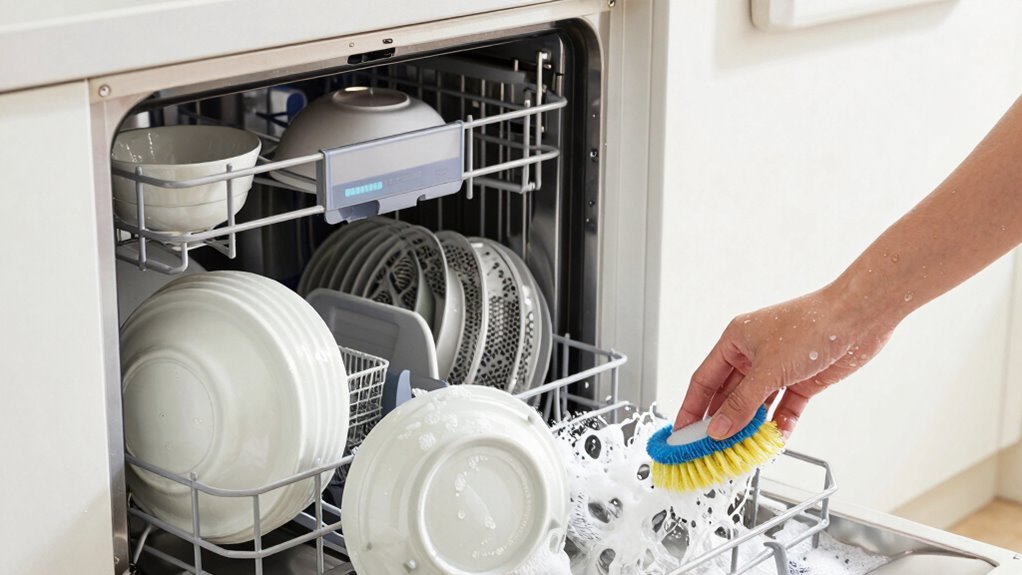
Do dishwashers truly eliminate more germs than hand-washing? Generally, dishwashers excel in germ removal thanks to their high temperatures and powerful water jets, improving sanitation efficacy. They can reach temperatures that kill many bacteria and viruses, often more consistently than hand-washing. However, the effectiveness depends on proper loading and cycle selection. Consider these points:
- High heat kills germs more reliably than manual scrubbing.
- Longer wash cycles increase germ elimination chances.
- Detergents with sanitizing agents boost sanitation efficacy.
- Incomplete drying can allow bacteria to survive.
- Hand-washing may leave behind germs if not thorough.
- Regular maintenance of whole-house water filtration systems can prevent bacterial buildup in your water supply, further enhancing overall hygiene.
- Proper sanitization procedures during dishwasher maintenance ensure optimal germ-killing performance.
- Ensuring that your dishwasher’s cleaning cycle settings are appropriately selected can maximize germ removal.
- Using appropriate detergents designed for sanitation can further improve the disinfection process.
- Additionally, maintaining proper dishwasher hygiene by cleaning filters and seals can help prevent bacterial growth within the appliance.
While dishwashers often surpass hand-washing in germ removal, their success hinges on correct operation and cycle choice. Proper maintenance also plays a crucial role in ensuring adequate hygiene.
Can Hand-Washing Be Just as Hygienic: Or More So?
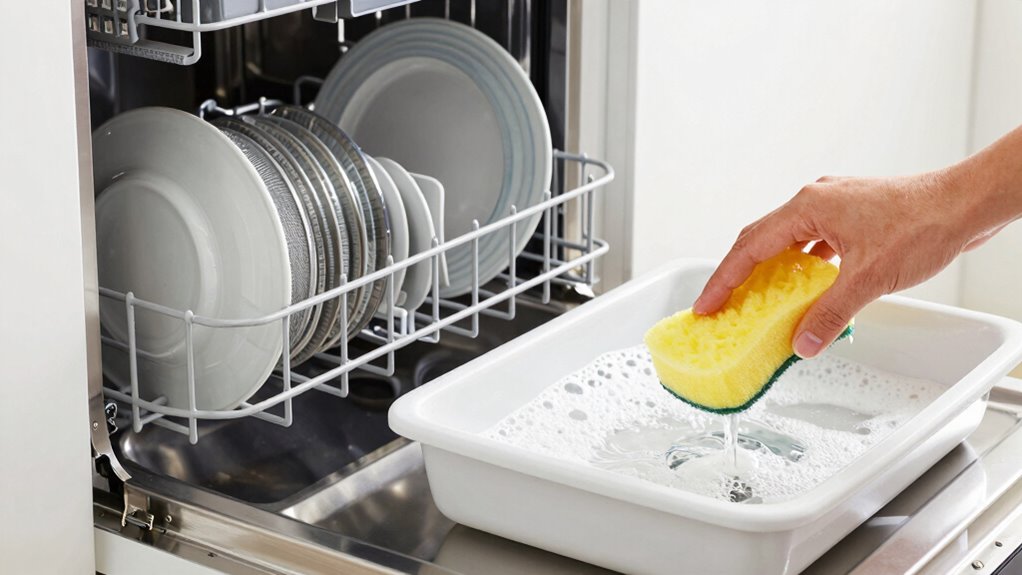
While dishwashers often outperform hand-washing in germ removal, thorough hand-washing can be just as hygienic—or even more so—when done correctly. To achieve this, you need to use plenty of soap to remove grease and germs effectively. Rinsing dishes with hot water, ideally above 140°F (60°C), helps eliminate bacteria and viruses. Be sure to scrub all surfaces thoroughly, paying attention to crevices and handles where germs hide. Watch out for soap residue, which can harbor bacteria if not rinsed properly. The key is consistency: wash for at least 20 seconds, use the right water temperature, and rinse thoroughly. Proper hand hygiene techniques are essential to maximize the effectiveness of hand-washing. When done correctly, hand-washing can match dishwasher hygiene levels, especially if you’re diligent about thoroughness and water temperature.
Key Factors That Affect How Clean Your Dishes Get
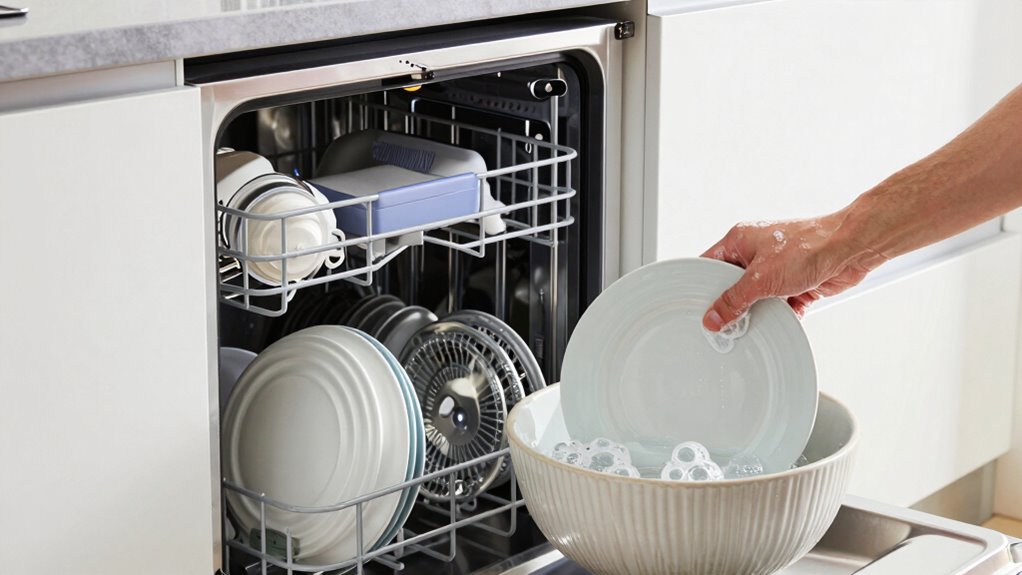
Several key factors determine how effectively your dishes come out clean, regardless of whether you hand-wash or use a dishwasher. Water temperature plays a vital role; hotter water helps dissolve grease and kills germs better. Mechanical scrubbing, whether from a dish brush or dishwasher jets, physically removes food residues and bacteria. Additionally, make sure you use enough detergent for ideal cleaning. Proper rinsing prevents soap residue, and drying methods influence hygiene by limiting bacterial growth. To maximize cleanliness, consider these factors: effective cleaning methods. Properly designed and maintained equipment ensures consistent performance and thorough sanitation. Incorporating smart appliances & kitchen technology can further enhance cleaning efficiency and hygiene standards. Focusing on these elements ensures your dishes are thoroughly cleaned and hygienic, no matter your cleaning method.
Top Tips for Maximizing Hygiene When Washing Dishes
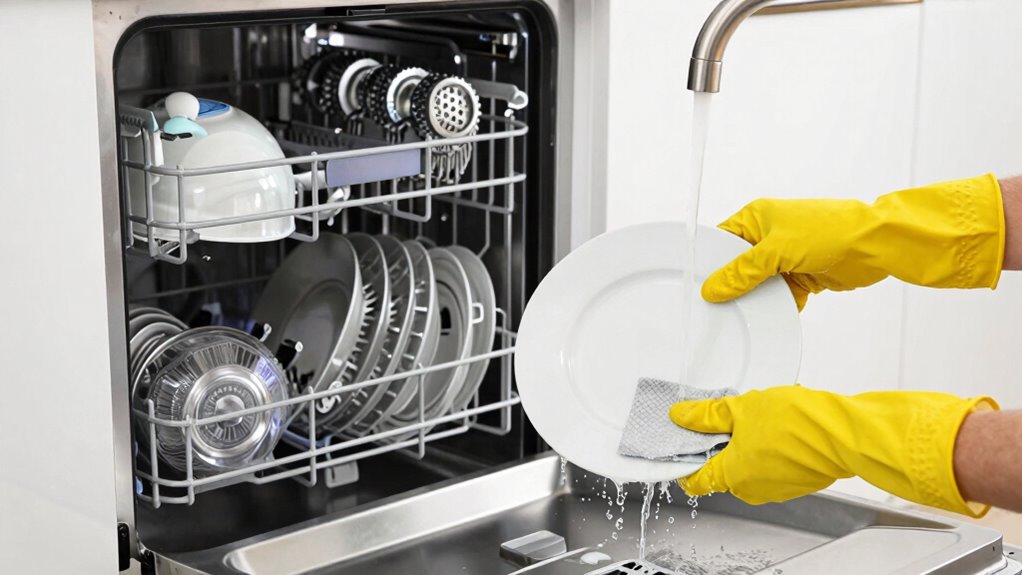
To maximize hygiene when washing dishes, you need to adopt effective practices that eliminate germs and prevent cross-contamination. Start by using hot water—aim for at least 140°F (60°C)—to kill bacteria effectively. Proper drying techniques are equally important; air drying is preferable over towel drying to avoid reintroducing germs. Make certain your dishes are thoroughly rinsed to remove soap residues and food particles. Additionally, using proper cleaning techniques can further enhance sanitation and ensure your dishes are truly hygienic.
Dishwashers vs. Hand-Washing: Which Is Better for Your Household?
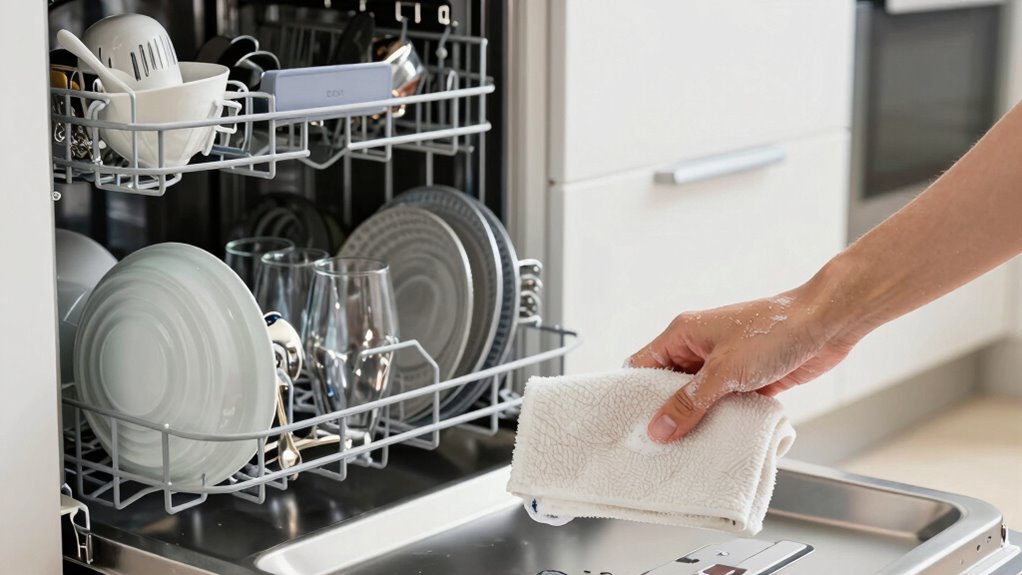
Choosing between a dishwasher and hand-washing depends on your household’s needs and priorities. Dishwashers use high water temperatures to effectively kill germs, providing consistent mechanical removal of residue and bacteria. They save time and often consume less water, especially with modern models. Hand-washing allows you to control water temperature and focus on stubborn spots, but it may rely more on your scrubbing technique. Consider these factors:
- Water temperature’s impact on hygiene and safety
- Mechanical removal efficiency in dishwashers
- Time investment for hand-washing
- Water and energy consumption
- Personal control over cleaning process
Ultimately, if you prioritize consistency, safety, and convenience, a dishwasher might be better. If you prefer targeted cleaning and control, hand-washing could suit your household better.
Frequently Asked Questions
How Long Should I Wash Dishes to Ensure Maximum Hygiene?
You should wash dishes for at least 20 seconds to guarantee maximum hygiene, especially when scrubbing thoroughly. Focus on using proper drying techniques afterward, like air drying or using a clean towel, to prevent bacteria growth. While longer dishwashing durations can help remove more germs, make certain you also rinse well and dry properly to keep your dishes truly hygienic. Consistency is key for maintaining a clean, safe kitchen.
Does Water Temperature Affect Germ Elimination During Hand-Washing?
You’re right to ask—water temperature does matter for germ elimination during hand-washing. Hot water helps kill more germs and bacteria, making your hands cleaner faster. But don’t just rely on temperature; thorough scrubbing with soap is key. Remember, a little heat can go a long way, so aim for warm water to boost hygiene without risking burns. When in doubt, combine hot water with good handwashing techniques.
Are There Specific Dish Types Better Suited for Dishwasher Cleaning?
Certain dish types, like glasses, plastic containers, and flatware, are better suited for dishwasher cleaning due to their dishwasher compatibility. Avoid putting delicate china or items with intricate designs in the dishwasher, as they risk damage. For best hygiene, choose dish type preferences that are dishwasher-compatible, ensuring thorough cleaning and sanitization. Always check manufacturers’ guidelines to confirm dishwasher suitability and prevent any damage.
Can Using Antibacterial Soap Improve Hand-Washing Hygiene?
Did you know that using antibacterial soap can reduce bacteria on your hands by up to 99.9%? Yes, it can improve your hand hygiene, especially during cold and flu season. When you wash with antibacterial soap, you’re more effectively removing germs compared to plain soap, making your hands safer. Just remember, thorough scrubbing for at least 20 seconds is key to maximizing its benefits and maintaining good hygiene.
How Does Dish Rack Cleanliness Influence Overall Dish Hygiene?
Your dish rack cleanliness directly impacts overall dish hygiene. If you neglect dish rack sanitation, microbial buildup can occur, fostering bacteria and mold. Regularly cleaning and drying your dish rack prevents this buildup, ensuring your dishes stay hygienic. A clean dish rack reduces the risk of cross-contamination, making your kitchen safer. Prioritize dish rack sanitation as part of your routine to maintain a healthier, more hygienic environment for your dishes.
Conclusion
Ultimately, whether you choose the dishwasher or hand-washing, your dishes’ hygiene depends on your care and technique. Think of your cleaning method as a garden—consistent effort and attention to detail help keep germs at bay and your kitchen sparkling. With the right approach, you can turn your dishwashing routine into a powerful shield, ensuring every plate and glass is a fortress of cleanliness, no matter which method you pick.