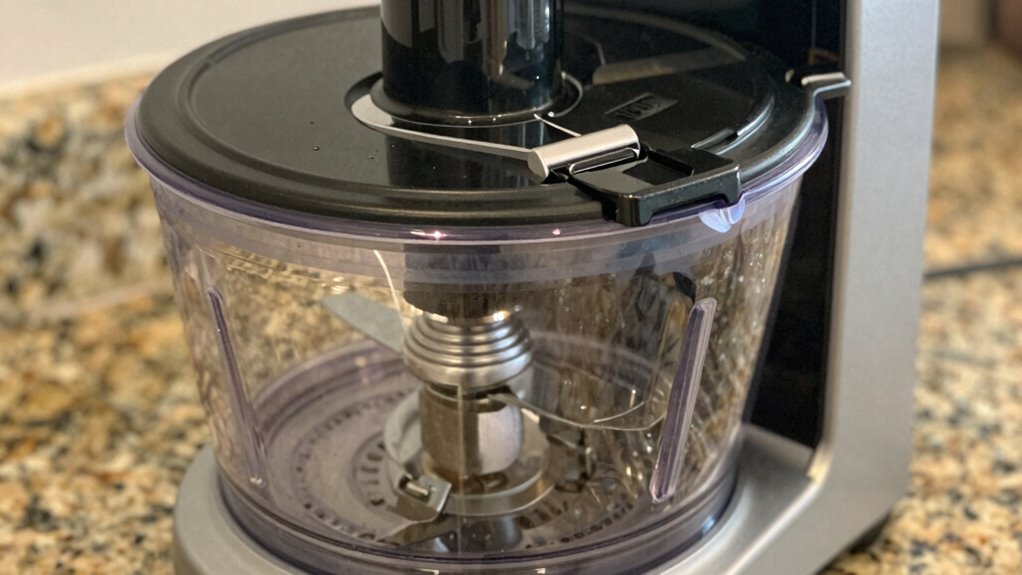

If your food processor won’t start, the most common issue is that the bowl isn’t fully locked in place. Make sure the bowl is properly aligned with the base and securely engaged with the locking mechanism—listen for a click or resistance. Many people overlook this step, causing safety features to prevent operation. To find out what else might be causing the problem and how to fix it, keep exploring the full guide.

Get kitchen staples and gadgets delivered free with Prime
- Fast, free delivery on millions of items
- Prime Video, Amazon Music and more included
- Member-only deals all year
Key Takeaways
- Ensure the bowl is fully aligned with the base and grooves match properly before locking.
- Confirm the bowl latch clicks or resists when pressed, indicating it is securely engaged.
- Check that the lid is correctly placed and not obstructing the bowl lock mechanism.
- Verify the appliance is plugged in, the outlet has power, and the power cord is undamaged.
- Inspect internal contacts and locking components for dirt, shifts, or looseness that may prevent proper locking.
food processor bowl lock mechanism
As an affiliate, we earn on qualifying purchases.
As an affiliate, we earn on qualifying purchases.
Why the Bowl-Lock Is Critical for Your Food Processor’s Safety and Performance
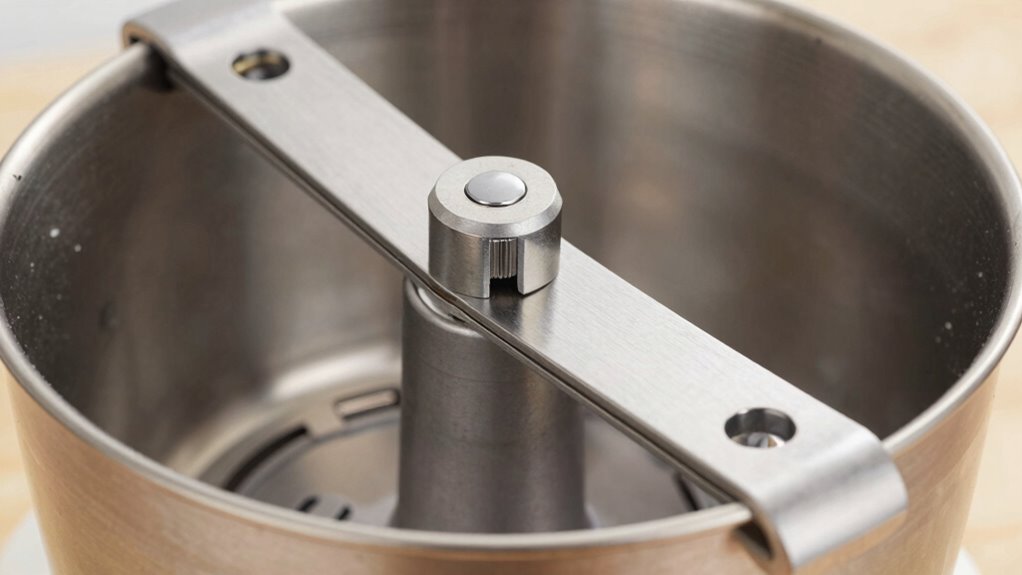
The bowl-lock mechanism is essential because it guarantees your food processor operates safely and effectively. This safety mechanism keeps the bowl securely in place during operation, preventing accidents or damage. Without a properly engaged bowl lock, the processor won’t start, as most models have a built-in safety feature that detects whether the bowl is correctly locked. This design protects you from potential injuries and ensures the appliance functions correctly. A reliable bowl lock also contributes to maximum performance by maintaining stability while processing ingredients. If the lock isn’t engaged, the motor might strain or stall, reducing efficiency. Proper engagement of the bowl lock also affects the safety features that prevent the appliance from operating when unsafe conditions are detected. Consequently, understanding the importance of the bowl lock helps you avoid unnecessary troubleshooting and keeps your food processor running smoothly. Proper engagement of the bowl lock is crucial for both safety and optimal operation.
food processor safety lock replacement
As an affiliate, we earn on qualifying purchases.
As an affiliate, we earn on qualifying purchases.
How to Check if Your Food Processor Bowl Is Properly Locked

Ensuring your food processor’s bowl is properly locked is essential for safe and efficient operation. First, check the bowl latch to see if it’s securely engaged with the locking mechanism. Most food processors have a clearly defined latch that clicks into place when the bowl is correctly seated. Gently press down on the bowl, listening for the latch to click or feel for resistance, confirming it’s locked. If the latch feels loose or doesn’t click, reposition the bowl and try again. Make sure the bowl is aligned properly with the base before locking it in place. Always verify that the locking mechanism is fully engaged before powering on, as an unlatched bowl can prevent the processor from starting and compromise safety. European cloud innovation contributes to the development of safer and more reliable kitchen appliances by integrating advanced safety features.
food processor troubleshooting kit
As an affiliate, we earn on qualifying purchases.
As an affiliate, we earn on qualifying purchases.
Common Mistakes That Stop the Bowl-Lock From Engaging
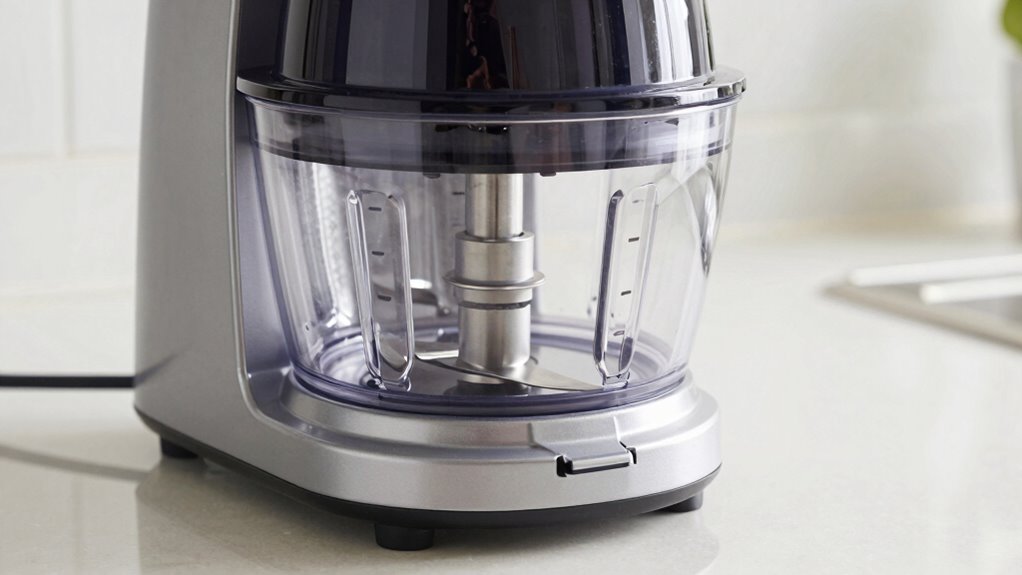
One common mistake that prevents the bowl lock from engaging is not aligning the bowl properly with the base before attempting to lock it in place. If the bowl isn’t correctly aligned, the lock mechanism won’t activate. Check your bowl alignment first, ensuring it sits snugly and matches the base’s grooves. Also, pay close attention to lid placement—if the lid isn’t properly positioned, it can interfere with the bowl lock engagement. Here’s a visual to clarify:
| Proper Bowl Alignment | Incorrect Bowl Alignment |
|---|---|
| Fits seamlessly into base | Misaligned or wobbly |
| Grooves match perfectly | Grooves misaligned |
| Locks securely in place | Moves or slips out |
| Correct Lid Placement | Incorrect Lid Placement |
| Lids snapped fully on | Lids crooked or loose |
| No gaps around edges | Gaps cause obstruction |
Getting these right prevents engagement issues.
food processor bowl latch repair
As an affiliate, we earn on qualifying purchases.
As an affiliate, we earn on qualifying purchases.
Troubleshooting When Your Food Processor Still Won’t Turn On
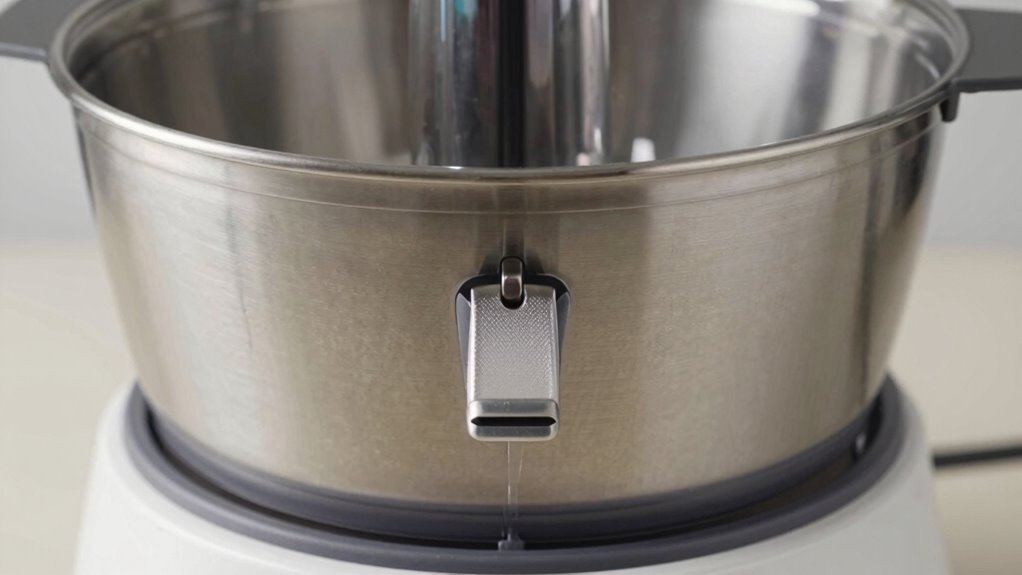
If your food processor still won’t turn on despite checking the bowl lock, the issue might be related to the power supply or internal components. First, verify it’s plugged in properly and the outlet has power. Check the cord for damage and consider resetting the circuit breaker. Sometimes, poor appliance storage can cause internal parts to shift or become loose, affecting functionality. Regular blender maintenance can prevent dust or debris buildup that hampers operation. If these steps don’t work, inspect the motor and switches for signs of wear or damage. Cleaning internal contacts and ensuring proper assembly can restore functionality. Additionally, electrical connections and internal component failure features like smart diagnostics may help identify internal issues more efficiently. Being aware of internal component failure can help you decide whether professional repair is necessary. Upgrading to smart appliance features can sometimes provide more detailed troubleshooting insights. Understanding internal diagnostics can further assist in pinpointing specific problems. If problems persist, it might be time to consult a technician, as internal component failure could be the culprit.
Quick Tips to Keep Your Food Processor Starting Safely Every Time
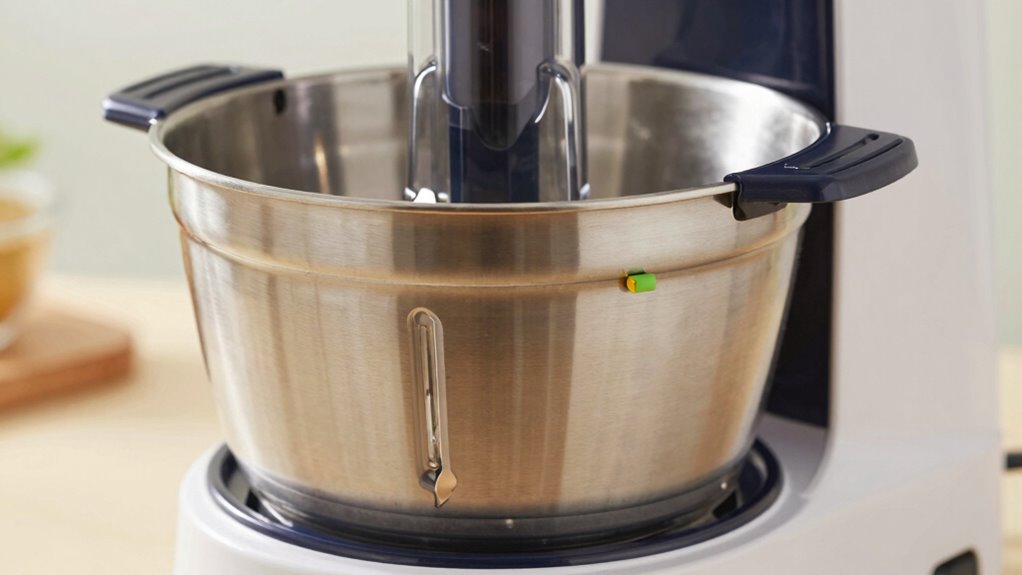
To keep your food processor starting safely every time, it’s important to perform quick, routine checks before each use. First, verify the bowl is properly aligned and securely locked into place, as misalignment can prevent the motor from engaging. Next, confirm that the power source is working by plugging the appliance into a functioning outlet and testing with another device if needed. Always validate the lid and bowl are correctly locked; most models won’t start if these aren’t properly engaged. Additionally, examine for any damage to the power cord or plug. Taking these simple steps helps prevent safety features from blocking operation, and ensures your food processor starts reliably and safely every time you use it. Regularly inspecting the electrical connections can also help identify potential hazards before use.
Frequently Asked Questions
Can a Damaged Bowl Lock Cause Electrical Issues in My Food Processor?
A damaged bowl lock can definitely cause electrical issues in your food processor. When the lock is broken or faulty, it might prevent the machine’s safety features from engaging properly, leading to a failure to start or intermittent operation. You should inspect the bowl lock carefully, as a damaged or improperly aligned lock can disrupt electrical connections, making your food processor unsafe to use until it’s repaired or replaced.
Does Temperature Affect the Bowl-Lock Mechanism’s Function?
Temperature can definitely affect the bowl-lock mechanism’s function, especially if it’s sensitive to temperature changes. Extreme heat or cold can cause the lock mechanism to become less durable or even stick, making it harder for the processor to start. To avoid issues, keep your food processor in a stable environment and avoid exposing it to rapid temperature shifts, ensuring the lock mechanism remains reliable and functions smoothly.
Are There Specific Models More Prone to Bowl-Lock Problems?
Some models are more prone to bowl-lock problems due to their design flaws, especially those with complex or less durable latch mechanisms. You’ll find that lesser-known manufacturers or budget brands often have less reliable model designs, increasing the likelihood of lock issues. To avoid frustration, choose reputable brands with a strong manufacturer reputation, as they typically produce more reliable food processors with better-designed bowl-lock systems that resist wear and failure.
How Often Should I Inspect or Replace the Bowl Lock?
Think of your bowl lock as the heartbeat of your food processor—it needs regular checkups. You should inspect the bowl lock during routine maintenance, ideally every few months, especially if you use the appliance frequently. Replace it if you notice wear, damage, or difficulty locking. Following a consistent replacement schedule guarantees smooth operation and prevents unexpected breakdowns, keeping your kitchen workhorse running like clockwork.
Is It Safe to Force the Bowl Lock if It Won’t Engage?
No, you shouldn’t force the bowl lock if it won’t engage. Forcing it can damage the locking mechanism and compromise safety precautions. Instead, follow troubleshooting steps like unplugging the appliance, inspecting for obstructions, and ensuring the bowl and lid are properly aligned. If the lock still won’t engage, consult your user manual or contact a professional. Always prioritize safety and avoid forcing parts to prevent injury or further damage.
Conclusion
Remember, ensuring the bowl is properly locked is essential for your food processor’s safety and performance. Nearly 60% of malfunctions are due to improper assembly, so taking a moment to double-check can save you time and frustration. By following these simple tips, you’ll keep your appliance running smoothly and safely. Don’t forget—regularly inspecting the lock mechanism can extend your food processor’s lifespan and prevent unexpected breakdowns. Stay vigilant, and enjoy hassle-free cooking!
Halloween Picks
halloween
As an affiliate, we earn on qualifying purchases.