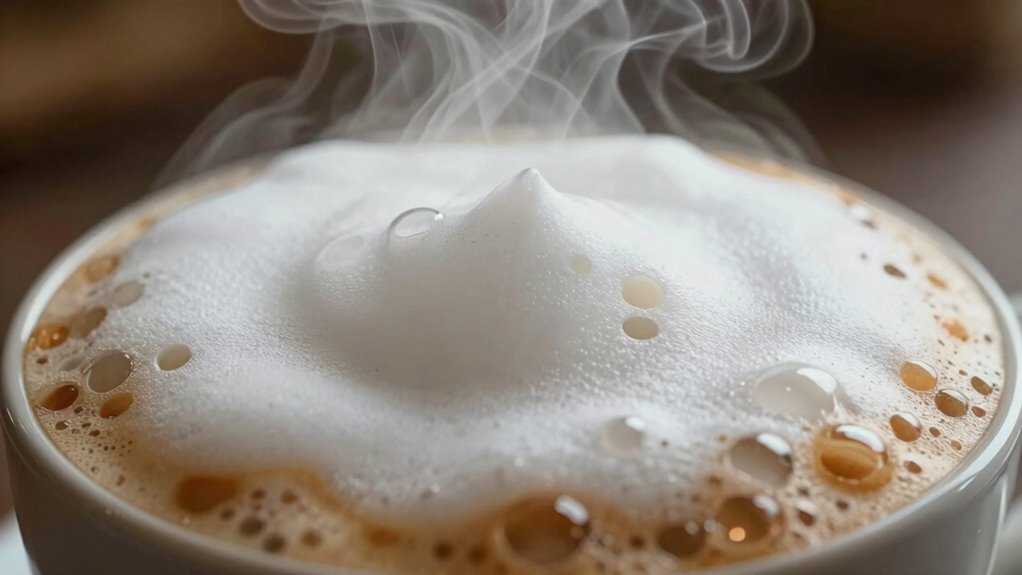

Your milk froth collapses because heat, fats, and proteins break down, weakening the foam’s structure. When milk gets too hot, proteins unfold and lose their ability to trap air, causing bubbles to burst. Additionally, fats can melt and create greasy films that destabilize the foam. Using the right temperature and fresh milk helps keep the proteins and fats balanced, making your froth last longer. Keep going to discover how to maintain perfect, stable foam every time.
Key Takeaways
- Foam collapses when milk proteins and fats break down, weakening the bubble structure.
- Excessive heat causes proteins to denature and fats to degrade, reducing foam stability.
- Low-quality or old milk has fewer intact proteins and fats, leading to less stable froth.
- Improper frothing techniques or tools can introduce large bubbles, causing foam to collapse.
- Maintaining optimal temperature and using fresh, properly handled milk helps preserve foam integrity.
Why Milk Froth Collapses : The Science Behind Stable Foam
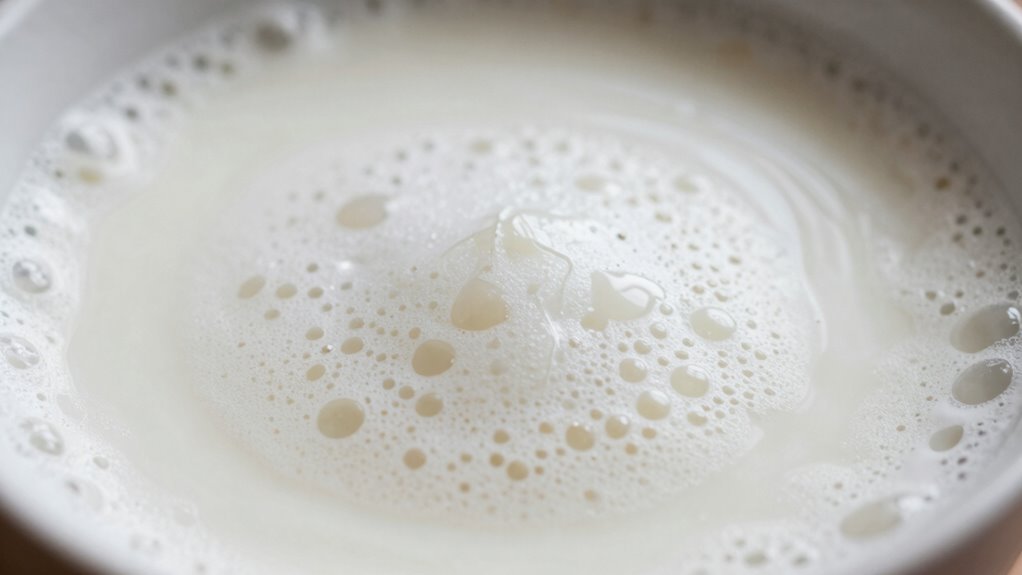
Milk froth collapses when its delicate bubbles break down, which happens because the foam’s structure isn’t as stable as it seems. The key to understanding this lies in milk foam stability and foam formation science. When you create froth, proteins and fats work together to trap air, forming bubbles. However, if the proteins don’t form a strong network or the fats interfere, the foam becomes fragile. Over time, the bubbles weaken and burst, causing the froth to collapse. The stability depends on factors like protein concentration, fat content, and how well these molecules bond during foam formation. Without a balanced structure, the foam can’t maintain its form. Recognizing these scientific principles helps you better understand why your milk froth isn’t lasting longer.
How Heating and Temperature Impact Milk Froth
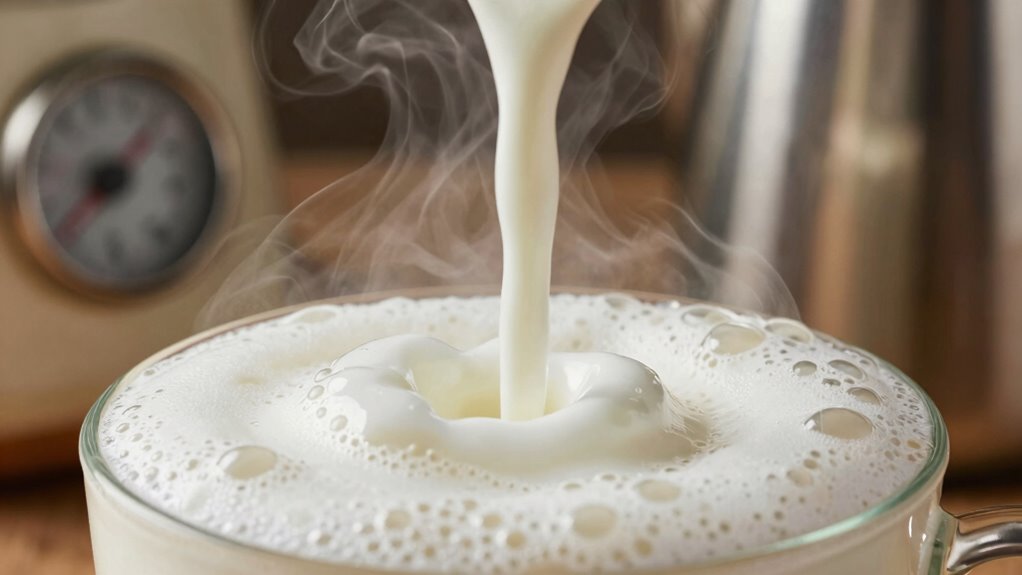
When you heat milk, the temperature directly affects its proteins, which are vital for creating stable froth. If the milk gets too hot, fats can break down, causing the foam to collapse more quickly. Understanding these temperature effects helps you avoid overheating and keeps your froth perfect. Properly managing the heat can preserve both the protein structure and the integrity of the foam. Additionally, maintaining the optimal temperature range prevents the degradation of milk constituents, ensuring long-lasting foam. Being aware of the thermal sensitivity of milk components allows for better control during steaming or frothing. Incorporating smart temperature regulation devices can further enhance precision and consistency during preparation.
Temperature’s Effect on Proteins
Heating affects the proteins responsible for creating stable milk froth by altering their structure. As temperature effects increase, proteins begin to unfold, a process known as protein denaturation. This change can weaken the bonds that hold the milk’s foam together, causing it to become unstable. When milk is heated too much, the proteins lose their ability to trap air effectively, resulting in a collapse of the froth. Even at moderate temperatures, partial denaturation can compromise foam stability over time. Keep in mind that maintaining an ideal temperature is essential; too high, and the proteins break down prematurely. Proper temperature control helps preserve protein structure and ensures a stable froth. Understanding how temperature impacts proteins is crucial for optimal milk frothing, allowing you to better control your process and achieve a more durable, velvety foam. Additionally, using precise temperature control can prevent protein denaturation from occurring too rapidly, extending the lifespan of your foam. Maintaining the correct temperature also helps prevent foam deterioration, which can occur if heat causes excessive protein breakdown.
Overheating and Fat Breakdown
As temperatures rise beyond the ideal range, fats within the milk begin to break down, impacting the quality of your froth. Overheating causes milk fat to separate, creating a greasy film that hampers foam stability. This breakdown alters the texture, making the froth less creamy and more prone to collapse. Additionally, excessive heat accelerates protein breakdown, weakening the network that holds the bubbles together. When proteins denature too quickly, they can form clumps or lose their ability to stabilize foam. As a result, your milk froth becomes thin, unstable, and collapses sooner. Innovative European Cloud Servers also utilize precise temperature controls to prevent overheating and ensure consistent performance. Proper temperature management is crucial, as overheating can significantly compromise the stability of milk foam. To prevent this, keep your milk within the suitable temperature range, avoiding overheating that triggers fat and protein breakdown. Proper control ensures a smooth, long-lasting froth for your coffee, preserving the integrity of the foam. Additionally, maintaining the right temperature helps in preserving the essential nutrients in the milk, which can be affected by excessive heat. Using temperature regulation techniques can help maintain optimal frothing conditions and extend the life of your milk foam.
Which Milk Types Are Best for Long-Lasting Froth
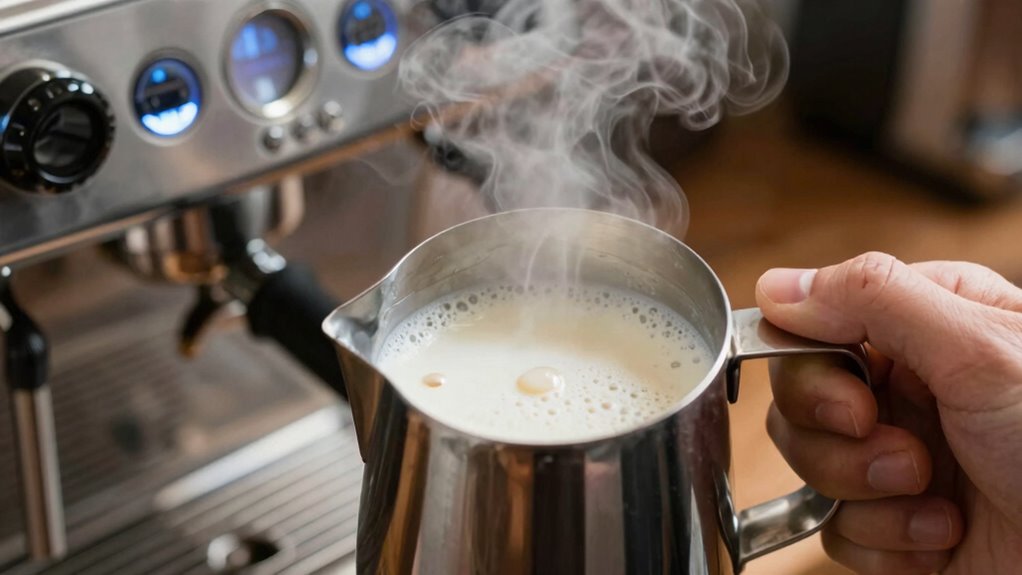
If you want your milk froth to last longer, choosing the right type of milk is key. Generally, whole milk creates richer, longer-lasting froth due to its fat and protein content. However, if you prefer milk alternatives or plant-based froth, some options perform better:
Choosing plant-based milks like oat and soy can help your froth last longer naturally.
- Oat milk – Its natural sugars and protein help produce stable, long-lasting froth.
- Almond milk – Thinner and lower in protein, it may not last as long but still offers decent foam.
- Soy milk – High in protein, soy creates a sturdy, durable froth that holds up well over time.
Your choice depends on your preferences, but for long-lasting froth, plant-based options like oat and soy milk are excellent bets.
Tips for Frothing Milk Properly and Avoiding Collapse
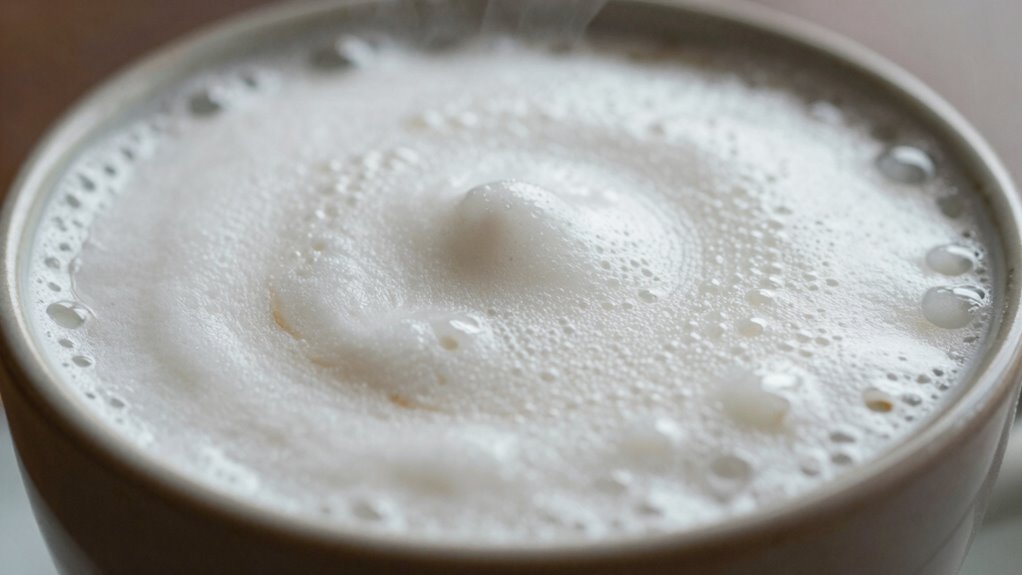
To guarantee your milk froth stays stable and doesn’t collapse, focus on frothing technique and timing. Use your milk steamer to heat milk evenly and aim for the right foam texture—velvety microfoam works best. Keep the steam wand just below the surface to introduce fine bubbles without over-aerating. Pay attention to the temperature; around 140°F (60°C) helps maintain foam stability. Proper milk frothing technique is key to achieving consistent results. Additionally, understanding the fat + protein breakdown in milk can help you adjust your method for better stability. Recognizing how milk composition changes during heating can also guide you in preventing collapse, as the protein structure influences foam stability and resilience. Being aware of how heat affects milk components can further improve your frothing results and prevent foam collapse.
Common Milk Frothing Problems and How to Fix Them
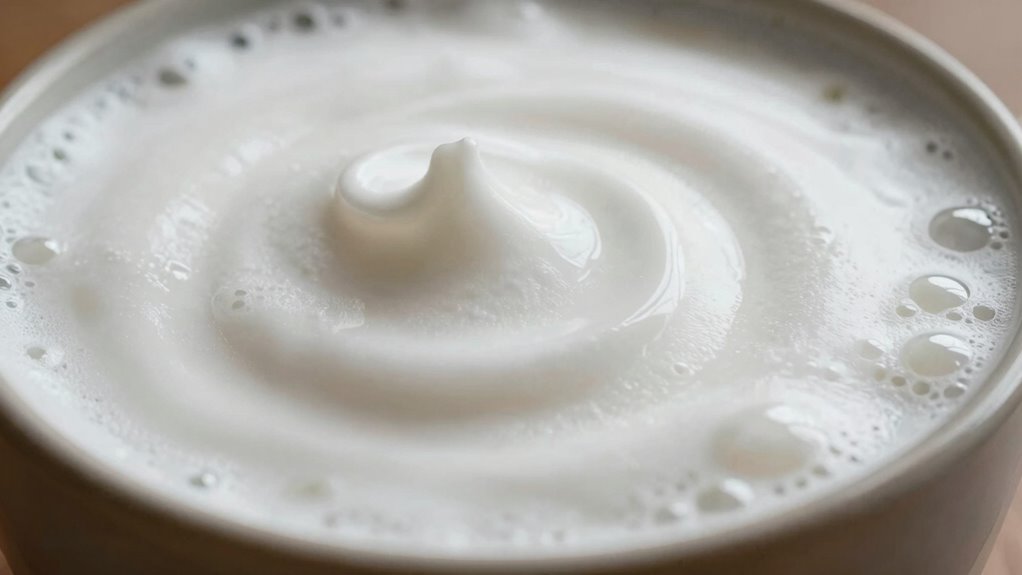
If your milk froth isn’t turning out right, the issues often come down to temperature, freshness, or technique. You might be using milk that’s too cold or not fresh enough, or perhaps your frothing method needs adjustment. Fixing these common problems can help you create a stable, creamy froth every time. Additionally, understanding the fat + protein breakdown in milk can help you choose the best milk for frothing and improve your results. For example, selecting milk with the right balance of fat and proteins ensures optimal frothing stability and texture. Recognizing how market dynamics influence milk quality and availability can also help you select fresher options for better frothing. Being aware of odor cues can also indicate milk freshness and quality, affecting the final froth outcome.
Proper Milk Temperature
Maintaining the right milk temperature is essential for achieving smooth, velvety froth. If your milk is too hot or too cold, foam stability suffers, and your froth collapses quickly. To get it just right, keep these tips in mind:
- Aim for a milk temperature between 140°F and 150°F (60°C – 65°C) for ideal foam stability.
- Use a thermometer to monitor milk as you froth, avoiding overheating, which denatures proteins.
- Stop steaming once the milk reaches your target temperature, preventing breakdown of fats and proteins that weaken foam.
Fresh Milk Selection
Have you ever noticed that the type of milk you choose can substantially impact your frothing results? Fresh milk from different sources varies in fat and protein content, which directly affects froth stability. Dairy farming practices influence milk quality, so opt for high-quality, fresh milk whenever possible. Milk pasteurization also plays a role; ultra-pasteurized milk often has a longer shelf life but can produce less stable foam due to protein breakdown during heating. Regular pasteurized milk typically yields better froth because it maintains more of its natural proteins. Always check the label for freshness and choose whole or 2% milk for richer, more stable froth. Fresh milk with intact proteins ensures your froth stays stable longer and collapses less quickly.
Correct Frothing Technique
Even when you follow all the right steps, common frothing problems can still occur, but understanding the correct technique helps you fix them quickly. First, guarantee your milk quality is excellent; fresh, cold milk froths better. Second, use the right frothing tools—stainless steel steam wands or frothing pitchers—and keep them clean. Third, follow these steps:
- Position the steam wand just below the milk surface to introduce microfoam.
- Keep the pitcher tilted at an angle and move the wand slightly to create a whirlpool effect.
- Heat the milk until it’s around 140°F, then turn off the steam to avoid over-aeration.
Mastering these techniques ensures consistent, velvety froth and prevents common issues like large bubbles or flat foam.
Troubleshooting Milk Froth Issues : Quick Solutions
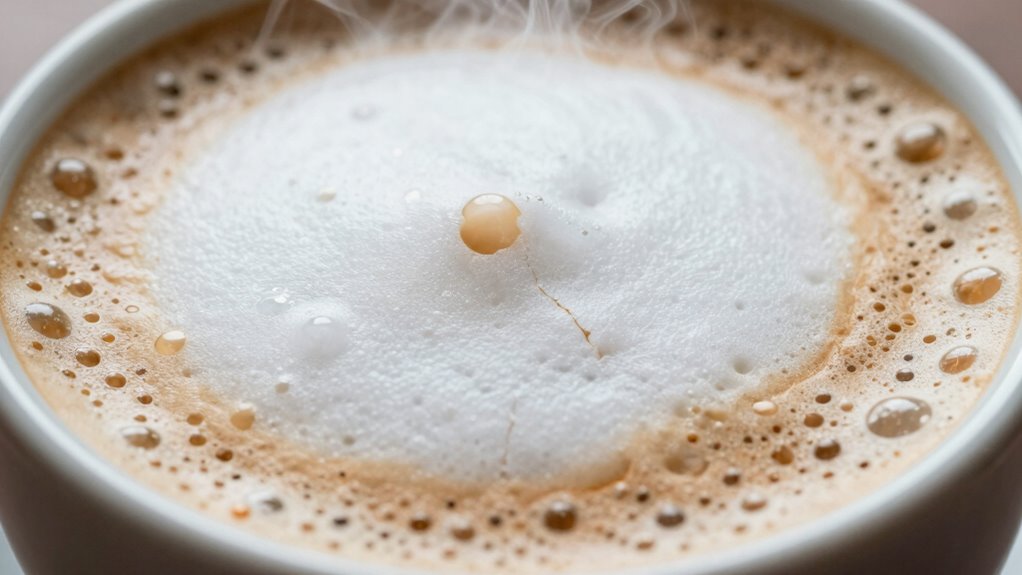
If your milk froth is collapsing or not holding its shape, quick troubleshooting can often resolve the problem. First, check your milk storage; ensure it’s fresh and cold, as warm or old milk won’t froth well. Also, examine your frothing tools—make sure they’re clean and undamaged, since residue or wear can hinder foam stability. Sometimes, using milk at the right temperature (around 40-45°C) makes a big difference. Here’s a quick guide:
| Issue | Solution |
|---|---|
| Frothing tools dirty | Clean thoroughly before use |
| Milk too warm or old | Use cold, fresh milk |
| Milk not properly stored | Store in fridge, avoid temperature fluctuations |
| Incorrect frothing technique | Practice proper technique for best results |
| Using the wrong milk type | Opt for whole or 2% milk for better foam |
Following these tips will help you achieve stable, long-lasting froth.
Frequently Asked Questions
How Does Fat Content Affect Milk Froth Stability?
Higher milk fat improves froth stability because it creates a richer, more elastic foam. Fat interacts with protein stability, helping the bubbles hold their shape longer, preventing collapse. When milk has low fat, the foam tends to be less stable and collapses quicker. So, choosing milk with higher fat content can give you a more durable, velvety froth, perfect for your coffee creations.
Can Adding Sugar or Flavorings Impact Froth Longevity?
Adding sugar or flavorings can influence froth longevity, but not always positively. Sugar effects can weaken the foam, making it less stable over time, while certain flavorings might introduce compounds that interfere with bubble formation. Think of it as adding a splash of spice—some enhance the experience, others may cause the froth to lose its delicate structure sooner. Be mindful of these adjustments to enjoy a lasting, creamy froth.
Does the Age of Milk Influence Foam Quality?
Yes, the age of milk affects foam quality. When your milk isn’t fresh, the proteins and fats break down, reducing froth stability. To keep your foam fluffy, guarantee proper storage temperature—preferably cold—and use fresh milk. Old milk tends to produce thinner, less stable froth because its freshness impacts the protein structure needed for good foam. Always check the expiration date and store milk properly for ideal frothing results.
Are There Specific Brands Known for Better Frothing Properties?
Certain brands excel in frothing due to better milk protein synergy and consistent milk fat variability. You’ll find that local or specialty brands often provide richer, more stable foam because they focus on maintaining ideal fat and protein levels. Look for labels emphasizing fresh, high-quality milk with minimal processing. These brands help you achieve a creamier, longer-lasting froth, enhancing your coffee experience and making every cup perfect.
How Does Altitude or Humidity Affect Milk Froth Formation?
Altitude effects and humidity influence milk froth formation considerably. At higher altitudes, reduced air pressure makes it harder to create stable froth, so you might notice less foam or faster collapse. Humidity influence can cause the milk to absorb more moisture, affecting its ability to froth properly. To get the most effective results, adjust your frothing technique by slightly increasing steam pressure or temperature, and consider using fresh, colder milk for peak foam stability.
Conclusion
Understanding the science behind milk froth collapse helps you craft better coffee. While many believe fat content alone determines foam stability, recent studies show that protein structures, especially casein and whey, play an essential role. Heating milk too much can break down these proteins, leading to collapse. So, experiment with different milk types and temperatures to find what works best. Mastering these nuances guarantees your froth stays airy and perfect longer, elevating your coffee experience.