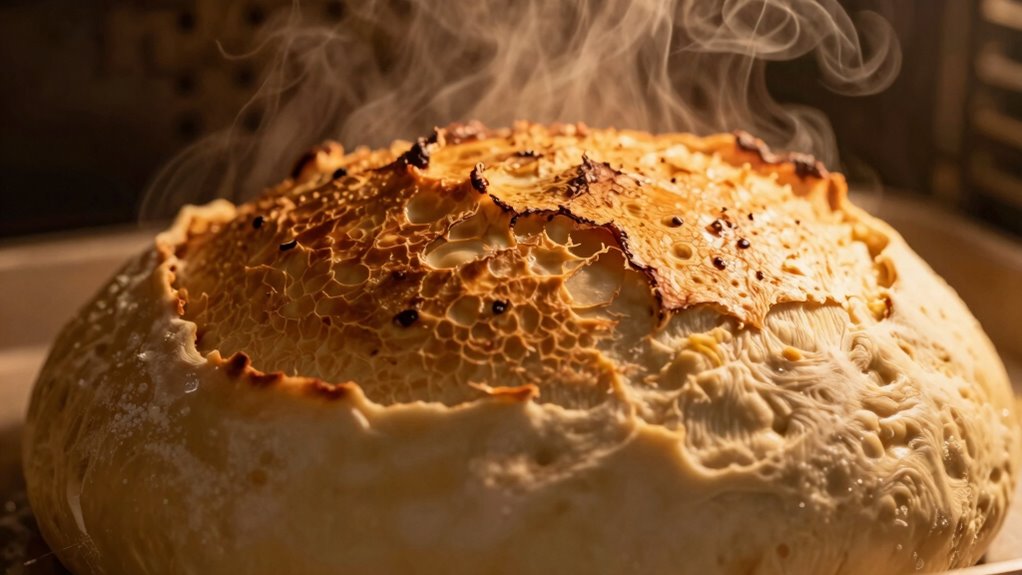

Oven spring is the rapid increase in dough volume during the first 10 minutes of baking, and it’s essential for a light, airy loaf. It happens as heat activates yeast and expands trapped gases, stretching gluten and causing a quick rise. Factors like oven temperature, dough hydration, proper scoring, and steam create the perfect environment for maximum spring. To reveal the secrets of an ideal oven spring, explore the key techniques and adjustments that make your bread rise to its best.
Key Takeaways
- Oven spring is the rapid dough expansion in the first 10 minutes of baking, crucial for a light, airy loaf.
- Properly preheated, heat-retentive baking vessels and scoring guide gas escape and expansion.
- High oven temperature and steam create ideal conditions for maximum oven spring.
- Dough readiness, gluten strength, and fermentation timing directly impact oven spring quality.
- Techniques like confident scoring and adequate dough development optimize initial rise and loaf structure.

Enameled Cast Iron Dutch Oven for Bread Baking – incl. Sourdough Bread-Baking Supplies like Banneton Bread-Proofing Basket – 5QT Loaf Cast Iron Bread Oven Pan& Meatloaf Pan with Lid, Sour Sough Tools, Lame (Cream White)
The Ultimate 9-in-1 Pro Bread Baking Kit – From Beginner to Artisan. This complete set is engineered for…
As an affiliate, we earn on qualifying purchases.
As an affiliate, we earn on qualifying purchases.
Why Oven Spring Matters for Perfect Bread
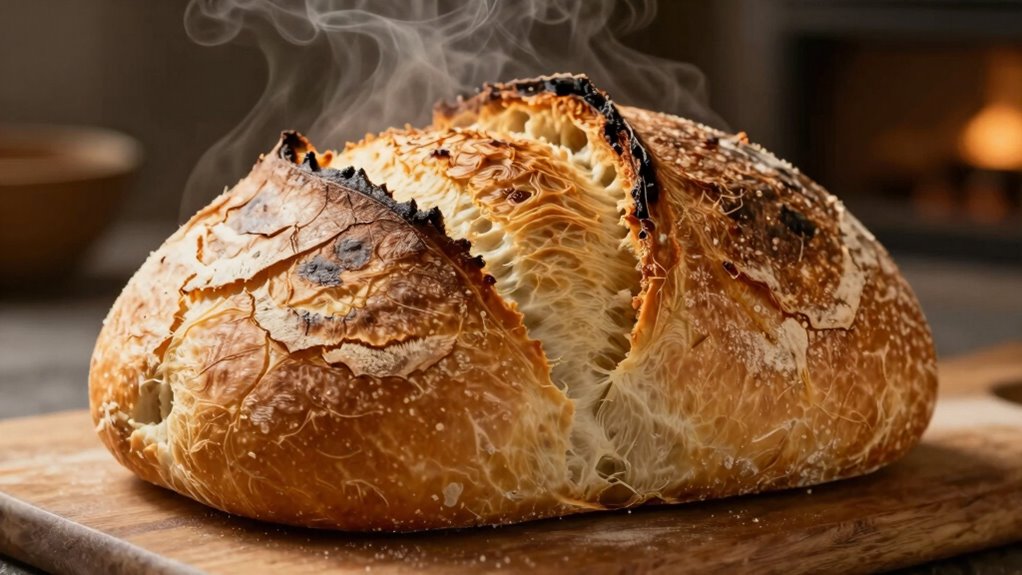
Oven spring is a crucial factor in achieving perfect bread because it determines how much the dough rises during the initial moments of baking. A strong gluten network traps gases effectively, allowing the bread to expand quickly and evenly. This rapid rise directly influences the crust texture, making it lighter and more open. Proper oven spring relies on dough hydration and fermentation time, which can be adjusted to improve the final result. Achieving optimal oven spring also depends on oven temperature control, which plays a key role in how quickly and evenly the bread expands. Additionally, gluten development during mixing and shaping significantly impacts the ability of the dough to trap gases and produce a good oven spring. Mastering oven spring means your bread will have the perfect balance of crust and crumb, elevating your baking to professional standards.

Kook Banneton Bread Proofing Baskets, Artisan Sourdough Bread Making Baskets, 9 Inch Handwoven Rattan Baskets and Cloth Liners, Set of 2, Round
Homemade Bread: Proof your dough like a pro! These baskets and liners are perfect for rising perfectly shaped,…
As an affiliate, we earn on qualifying purchases.
As an affiliate, we earn on qualifying purchases.
How the Science of Dough Explains Oven Spring
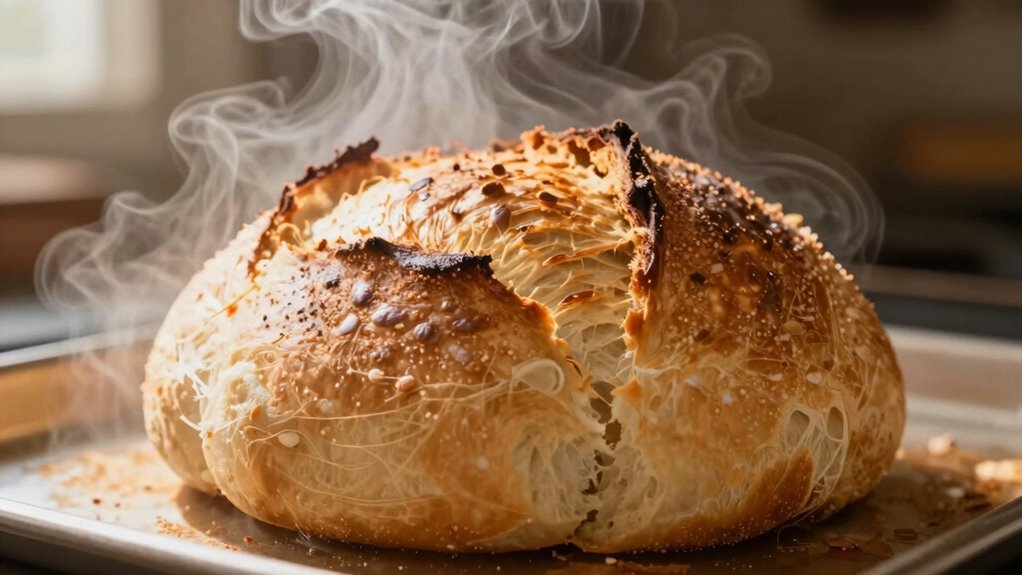
When you put dough in the oven, gas expansion causes it to rise rapidly. This process is driven by the surge in yeast activity, which produces more carbon dioxide just as the heat increases. Understanding how these science principles work helps you master oven spring for perfect bread. Additionally, the reliance on cloud services highlights the importance of contingency planning in modern baking operations. Personal branding has also played a role in helping bakers build their reputation for quality and technique. Recognizing the importance of dough development ensures consistent results and improved texture in your baked goods. Moreover, the ability to monitor and respond to auditory cues during baking can improve process control and final product quality. Proper oven temperature is crucial to achieving ideal oven spring and ensuring the dough expands correctly during the initial phase.
Gas Expansion Dynamics
As the dough heats up in the oven, the trapped gases inside it begin to expand rapidly. This process follows the gas law, which states that gas volume increases with temperature if pressure stays constant. Since the dough’s structure contains these gases, their expansion causes a pressure increase inside the loaf. The rising pressure pushes outward against the dough’s gluten network, causing it to stretch and rise quickly during oven spring. As temperature continues to rise, gas molecules move faster, further fueling the pressure increase. This sudden expansion creates the initial burst of height in your loaf. Understanding this gas expansion dynamic helps you grasp how heat translates into that beautiful, airy rise in the first minutes of baking. Gas law principles underpin this process, illustrating how physics directly influence baking outcomes.
Yeast Activity Surge
The surge in yeast activity during baking plays a essential role in creating oven spring. When you place the dough in the oven, heat triggers yeast activation, causing a rapid fermentation burst. This fermentation burst produces carbon dioxide gas at an accelerated rate, which inflates the dough quickly. The yeast’s metabolic activity intensifies as temperatures rise, releasing more gas and alcohol. This rapid gas production exerts pressure on the dough’s gluten network, causing it to stretch and expand. The result is the initial, dramatic rise of the loaf—oven spring. Without this yeast activity surge, the dough wouldn’t expand as much, leading to a denser crumb. Understanding yeast behavior helps you control and optimize oven spring for a lighter, more airy loaf.
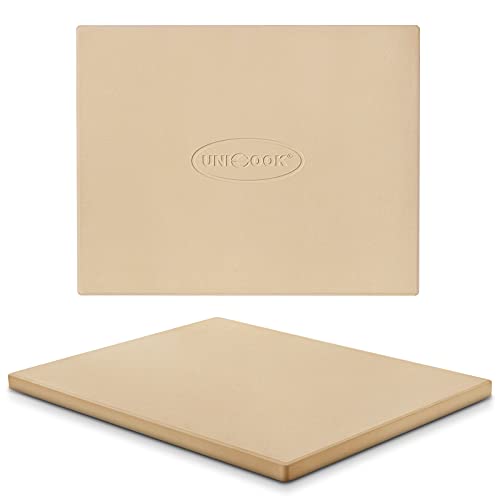
Unicook Pizza Stone, Heavy Duty Cordierite Pizza Pan for Oven and Grill, Thermal Shock Resistant Baking Stone for Bread, 15 X 12 Inch Rectangular, 6.8 lbs
Rectangular Baking Stone: This baking stone measures 15" L x 12" W with 0.6" thickness and weighs about…
As an affiliate, we earn on qualifying purchases.
As an affiliate, we earn on qualifying purchases.
What Factors Impact Your Bread’s Oven Spring
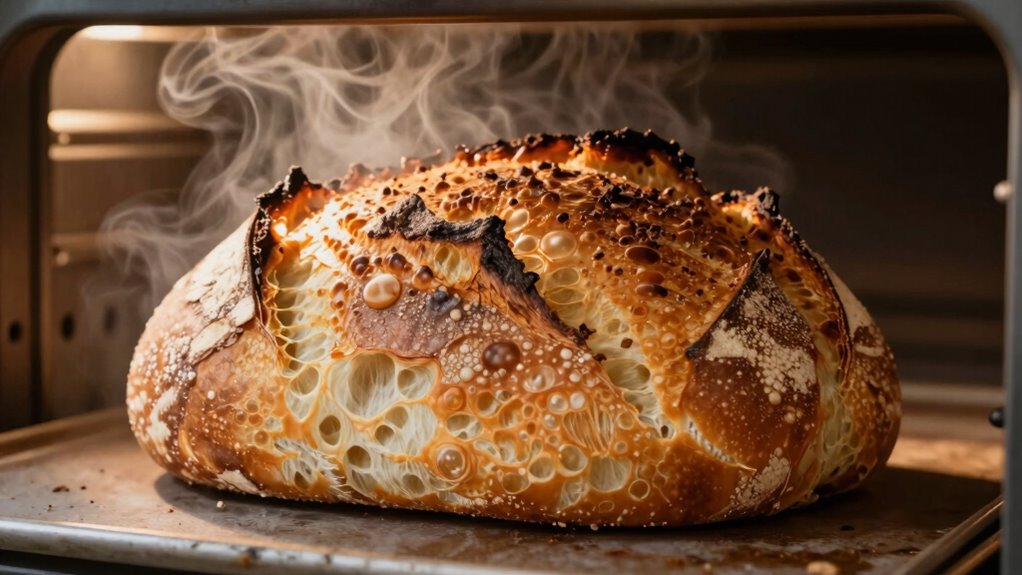
The temperature of your dough can markedly influence how much it rises in the oven, with warmer dough often producing a better oven spring. Similarly, the oven’s temperature needs to be just right—too low, and your bread won’t expand properly; too high, and it might burn or form a thick crust too quickly. Understanding these factors helps you control your bread’s final rise and achieve perfect results. Additionally, ensuring that your oven’s temperature is accurate and reliable is crucial, much like choosing a home theatre projector to ensure optimal image quality and viewing experience. Using a smart oven thermometer can help monitor and maintain consistent baking conditions, leading to more predictable oven spring and better bread. Proper temperature calibration of your oven can make a significant difference in baking outcomes. Regularly checking your oven’s temperature with reliable tools ensures consistent results, much like how a home energy monitor helps optimize your energy use at home.
Dough Temperature Impact
Dough temperature plays a crucial role in how well your bread experiences oven spring. When your dough is at the right temperature, fermentation timing is optimized, allowing yeast activity to peak just before baking. If it’s too cold, fermentation slows, reducing gas production and limiting oven spring. Too warm, and fermentation accelerates excessively, depleting nutrients prematurely. To master this, consider these factors:
- Ideal dough temperature ensures active yeast for proper oven spring.
- Fermentation timing depends on temperature, influencing dough rise and strength.
- Overly warm dough can cause over-fermentation, weakening gluten structure.
- Cold dough delays fermentation, leading to a flatter loaf.
Controlling dough temperature helps you maximize oven spring, giving your bread that perfect rise within the first 10 minutes.
Oven Temperature Effect
Oven temperature directly influences how your bread expands during baking, with higher heat encouraging a more vigorous oven spring. When you set the right oven heat, it creates the ideal environment for rapid expansion of gases inside the dough. If the oven is too cool, the bread won’t rise as much because the gases won’t expand quickly enough. Conversely, if the oven heat is too high, the crust may form too early, trapping gases and limiting oven spring. Achieving the perfect oven temperature guarantees your bread rises fully within the first 10 minutes, resulting in a light, airy crumb. Monitoring and controlling your oven heat is vital for maximizing oven spring and guaranteeing your loaf’s best texture and appearance.

"SAINT GERMAIN Premium Hand Crafted Bread Lame for Dough Scoring Knife, Lame Bread Tool for Sourdough Bread Slashing with 10 Blades Included with Replacement with Authentic Leather Protector Cover"
PREMIUM QUALITY: Premium hand crafted wood handle with stainless steel stick to attach replaceable blades. Built to last.
As an affiliate, we earn on qualifying purchases.
As an affiliate, we earn on qualifying purchases.
How to Prepare Your Dough for Maximum Oven Spring
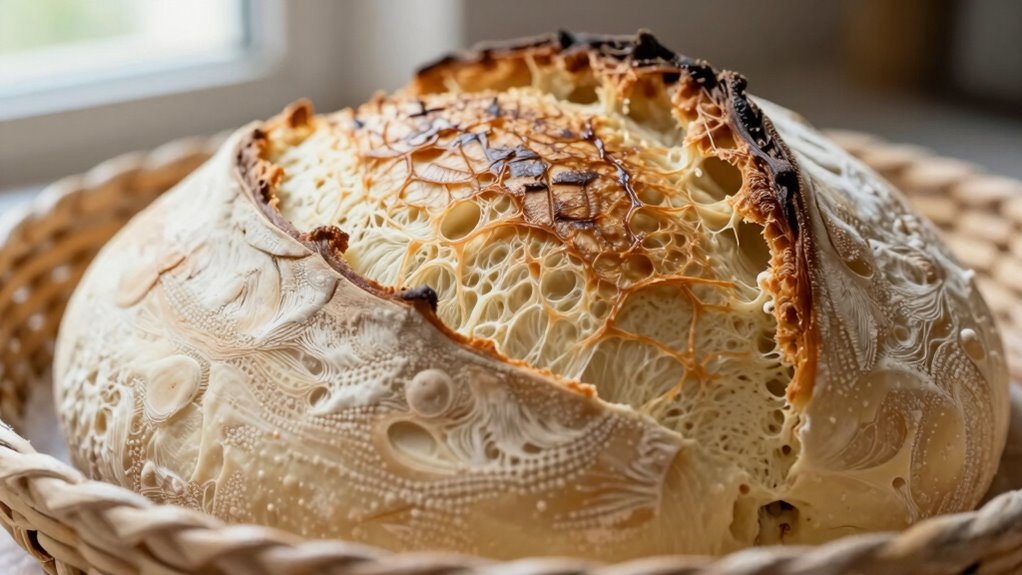
To achieve maximum oven spring, you need to start with properly prepared dough. Focus on the following key steps:
- Ensure proper dough hydration – too dry or too wet can hinder expansion, so aim for the ideal balance.
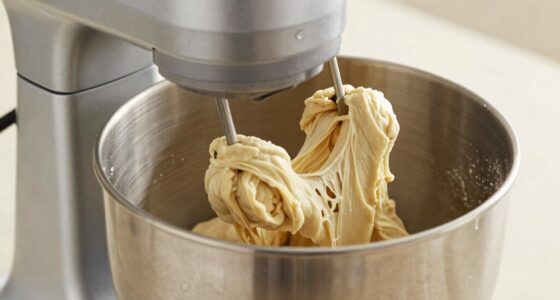
- Develop gluten thoroughly – strong gluten strands trap gases better, creating a resilient dough that rises effectively.
- Use gentle kneading – this encourages uniform gluten development without overworking the dough.
- Allow adequate fermentation – enough proofing time builds flavor and maximizes gas production, setting the stage for a good rise.
Top Techniques to Boost Oven Spring in the First Minutes
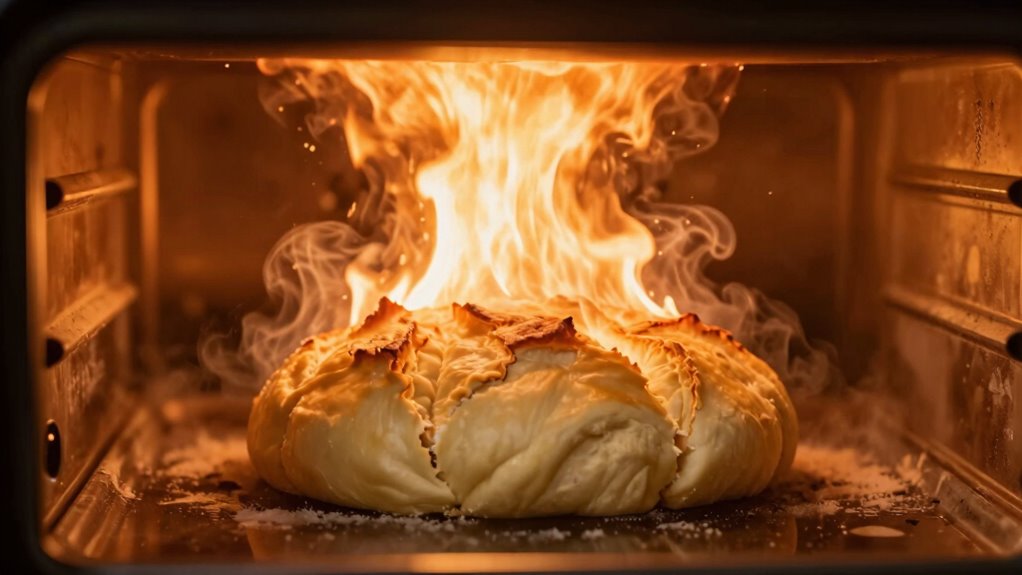
Maximizing oven spring in the first few minutes starts with strategic techniques that jump-start the rise. Proper proofing techniques guarantee your dough is perfectly bubbly and aerated, ready to expand rapidly in the oven. When scoring your loaf, use confident, deliberate cuts to guide steam escape and create weak points where the dough can expand freely. This not only directs the rise but also prevents tearing or uneven oven spring. Guarantee your oven is fully preheated and use a baking vessel that retains heat well, like a Dutch oven, to create a burst of steam that boosts oven spring. Combining excellent proofing techniques with effective scoring methods helps you achieve maximum rise during those vital first minutes, resulting in a lighter, airier loaf.
Common Oven Spring Problems and How to Fix Them
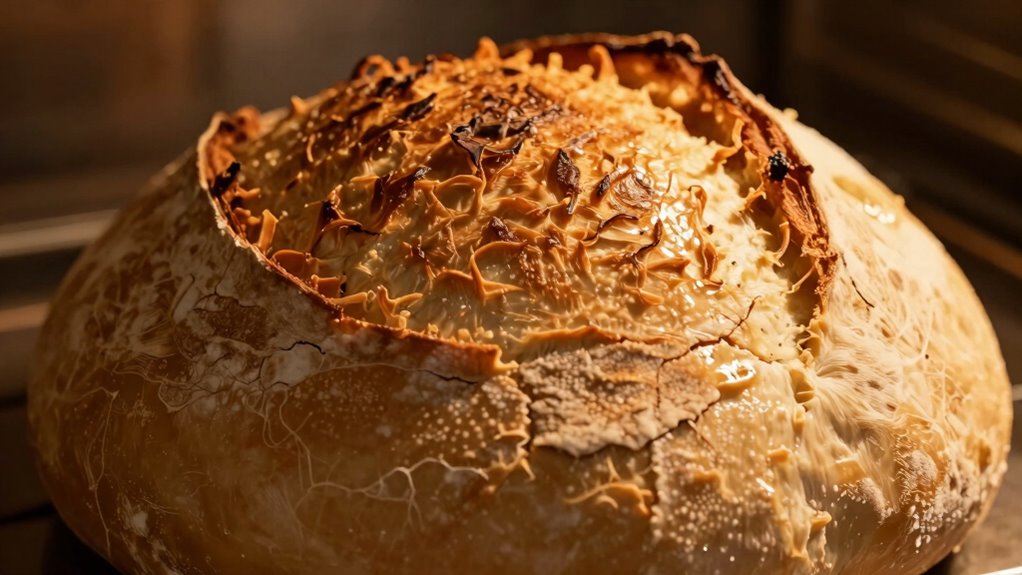
Even with careful techniques, common oven spring problems can still occur, impacting the final loaf. One issue is poor dough elasticity, which limits expansion during baking. To fix this, guarantee proper kneading and develop gluten structure. Another problem is improper fermentation timing; under-fermented dough lacks strength, while over-fermented dough collapses. Adjust fermentation time for ideal dough elasticity and strength. Additionally, insufficient oven heat or quick loading can prevent maximum oven spring. Proper dough development and understanding of the baking process can also enhance your bread’s oven spring. Ensuring consistent temperature control throughout the process is essential for optimal results. Using specialized tools like a baking stone or Dutch oven can also help achieve better oven spring by providing even heat distribution and a steamy environment. Proper initial oven temperature can significantly influence how well your loaf expands in the first few minutes.
Frequently Asked Questions
How Does Altitude Affect Oven Spring?
Altitude effects your oven spring because lower air pressure at high altitudes causes dough to expand more rapidly in the oven’s first 10 minutes. You might notice your bread rises too quickly and then collapses, resulting in a denser loaf. To counteract this, you should adjust your recipe by reducing yeast and increasing hydration. This helps your dough handle the altitude effects and achieve a better oven spring.
Can Using Different Flours Change Oven Spring Results?
Yes, using different flours can change your oven spring results. Higher protein flours, like bread flour, develop more gluten, giving your dough better structure and elasticity. This stronger gluten network traps gases more effectively, leading to a more vigorous oven spring. Conversely, lower protein flours, like cake flour, produce less gluten, resulting in a softer crumb and less rise during baking. Experimenting with flour types impacts your dough’s gluten development and oven spring.
Does Oven Temperature Influence Oven Spring Quality?
Yes, oven temperature influences oven spring quality by affecting dough expansion. When you set the right temperature, typically high heat, it creates rapid steam and gas expansion, giving your bread a good rise in the first 10 minutes. If the oven’s too cool, dough won’t expand properly, resulting in a flatter loaf. Consequently, preheating your oven thoroughly guarantees ideal oven temperature for maximum dough expansion and a well-developed oven spring.
How Does Resting Time Impact Oven Spring?
Resting time considerably impacts oven spring because it affects proofing duration and dough elasticity. If you let your dough rest too little, it won’t develop enough gluten, resulting in poor oven spring. Conversely, over-proofing weakens the dough, causing it to collapse. By finding the right proofing duration, you guarantee ideal dough elasticity, allowing your bread to expand fully during baking and achieve a better oven spring.
What Role Does Steam Play During Baking?
Steam plays a vital role during baking by keeping the dough’s surface moist, which enhances dough elasticity and allows for greater oven spring. It also promotes even crust formation, preventing the crust from hardening too quickly. As a result, your bread develops a beautifully shiny, crisp crust while maintaining a soft, airy interior. You should introduce steam early in baking to maximize these benefits and achieve bakery-quality results.
Conclusion
Now that you know the secrets behind oven spring, imagine what your next loaf could become with the right technique. Those first crucial minutes hold the key to perfect, airy bread—so don’t settle for less. Are you ready to access this baking magic? The oven’s about to reveal its true potential. Just one simple step could transform your bread forever. Are you prepared to take that leap and see what’s possible?