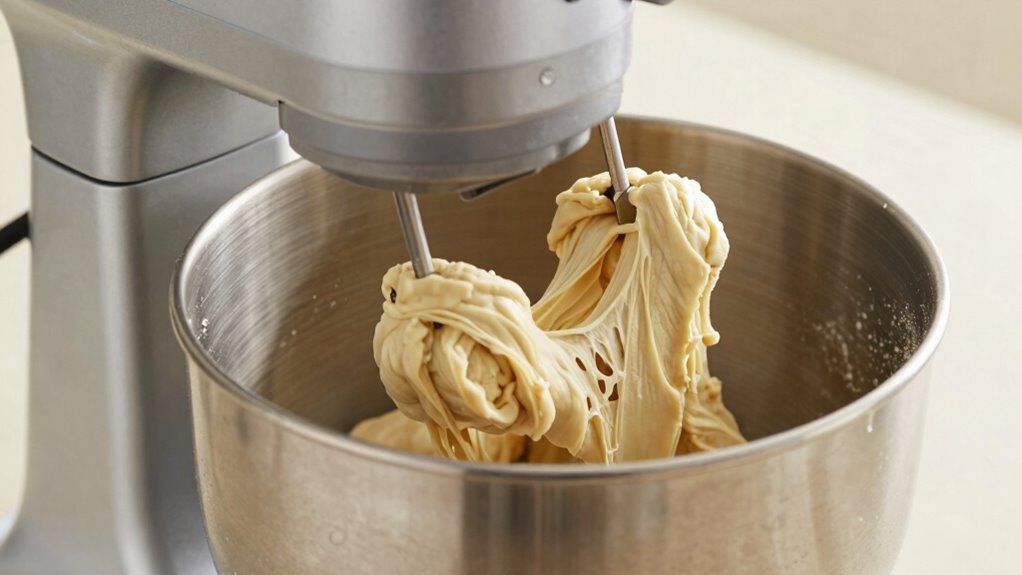

If you overknead dough in your stand mixer, you damage the gluten structure, making your bread dense and heavy. It’s easy to do if you mix on high speed or for too long, causing gluten strands to break down and the dough to become stiff and resistant. To prevent this, use low or medium speeds and stop when the dough is smooth, elastic, and slightly springy. Continue exploring how to perfect your technique for light, fluffy bread.
Key Takeaways
- Overkneading with a stand mixer at high speed damages gluten, resulting in dense, tough bread.
- Using the mixer on medium or low speed helps prevent overworking the dough.
- Overmixing causes gluten strands to break, reducing dough elasticity and gas retention.
- Monitoring dough texture and stopping when it’s smooth and elastic avoids overkneading.
- Incorporating proper timing and gentle kneading techniques ensures a light, airy loaf.
Why Overkneading With a Stand Mixer Makes Bread Dense
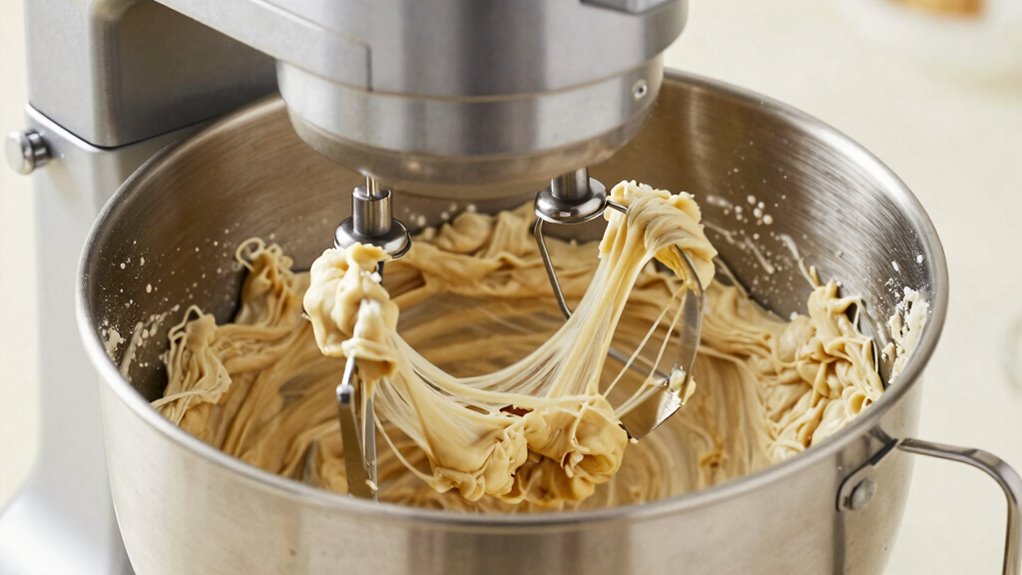
If you overknead bread dough with a stand mixer, it can become dense and heavy. Overworking the dough damages the gluten network, which is essential for creating a good artisan crust. When you knead too much, the gluten strands become overly developed and start to break down, resulting in a tight, tough structure rather than a light, airy crumb. This inhibits proper gluten development, preventing the dough from stretching easily and trapping gas effectively. As a result, the bread won’t rise well and will have a dense texture. A well-kneaded dough should be smooth and elastic, with a strong gluten network that supports a beautiful crust. Overkneading compromises this balance, making your bread heavy instead of light and crusty.
How to Recognize When Your Dough Is Overworked?
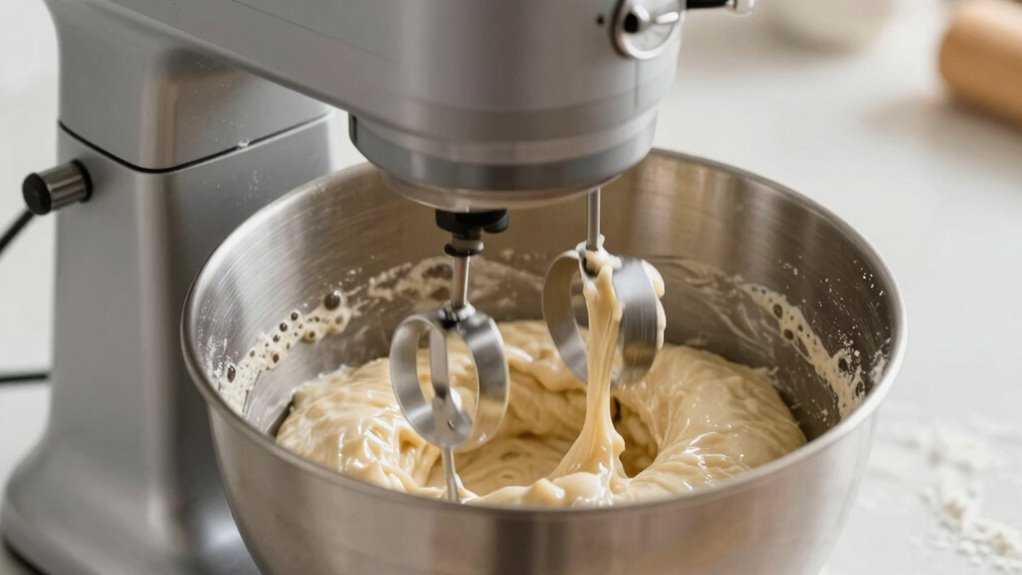
Recognizing when your dough is overworked is key to achieving perfect bread. Overworking can lead to a tough, dense loaf, so it’s important to spot the signs early. During proofing techniques, you might notice that the dough feels overly stiff or resistant when you stretch it. It may also tear easily or lose its elasticity, indicating gluten has been overdeveloped. Look for a dough that no longer springs back after gentle pressure or feels excessively dry, even with ingredient substitutions like added water or oil. You might see small tears or a rough surface forming. If you notice these signs, stop mixing immediately. Understanding these cues helps you avoid overkneading and ensures your bread remains light and airy. Additionally, incorporating energy-efficient cloud servers into your baking process can help optimize your time and resources in a sustainable way.
How to Prevent Overkneading in Your Stand Mixer
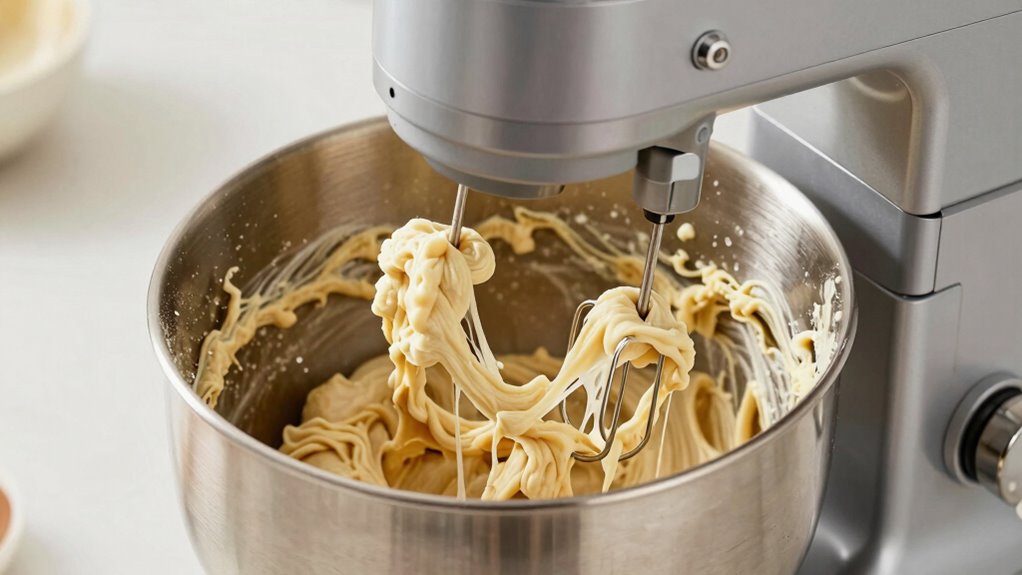
To prevent overkneading your dough in a stand mixer, it’s essential to monitor the mixing process closely and set appropriate timing. Use a low or medium mixing speed to avoid applying excessive force, which can lead to overworking the dough. Keep an eye on the dough’s temperature; warm dough can become overworked more quickly, so if it feels warm or sticky, pause and let it cool slightly. Check the dough frequently during mixing—look for signs like a smooth, elastic texture rather than overly stiff or sticky. Using a timer helps prevent overmixing, and adjusting the speed based on your dough’s response ensures you don’t accidentally overknead. Staying attentive is key to achieving the perfect, well-developed dough. Paying attention to the dough’s gluten development during mixing can also help you determine when it’s ready. Understanding the wave and wind effects can assist in maintaining consistent conditions for optimal kneading. Being aware of your mixing technique can further improve your results and prevent overworking the dough. Additionally, recognizing the importance of body temperature can help you gauge when the dough begins to overheat and needs a pause.
Tips for Kneading Dough Light and Fluffy Without Overdoing It
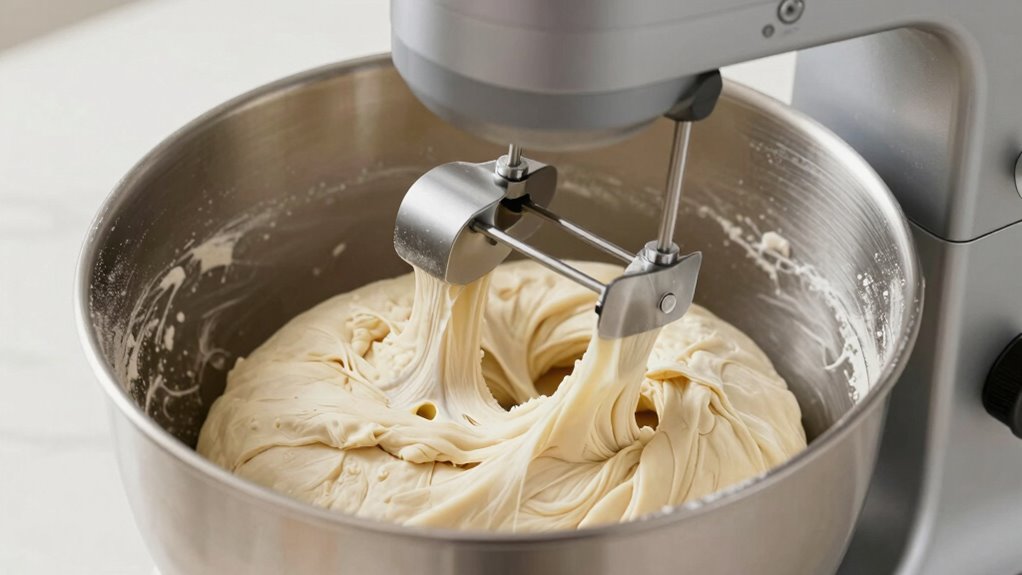
When kneading dough, achieving a light and fluffy texture requires a gentle touch to prevent overworking the gluten. Incorporate folding techniques during the kneading process to evenly distribute ingredients without excessive stretching. Be mindful of fermentation timing; giving the dough adequate time to rise allows gluten to develop naturally, reducing the need for vigorous kneading. To keep your dough airy: – Use gentle folding instead of aggressive kneading, lifting and folding the dough repeatedly. – Pause fermentation at the right moment to avoid over-proofing, which can lead to dense bread. – Keep an eye on dough texture, stopping when it’s smooth and elastic but not overly stretched. Being familiar with proper gluten development helps you better gauge when your dough is ready for the next step. Incorporating connected equipment like smart kitchen gadgets can help monitor fermentation and dough texture more precisely. Utilizing digital sensors can provide real-time feedback on dough elasticity and fermentation progress, ensuring optimal results. Additionally, understanding proper kneading techniques can help prevent common mistakes that lead to dense bread. Modern smart kitchen devices can assist in maintaining consistent kneading and fermentation conditions, making bread baking more accessible. These tips help you create a fluffy loaf without risking overworking the gluten structure.
Troubleshoot Dense Bread: Causes and Fixes
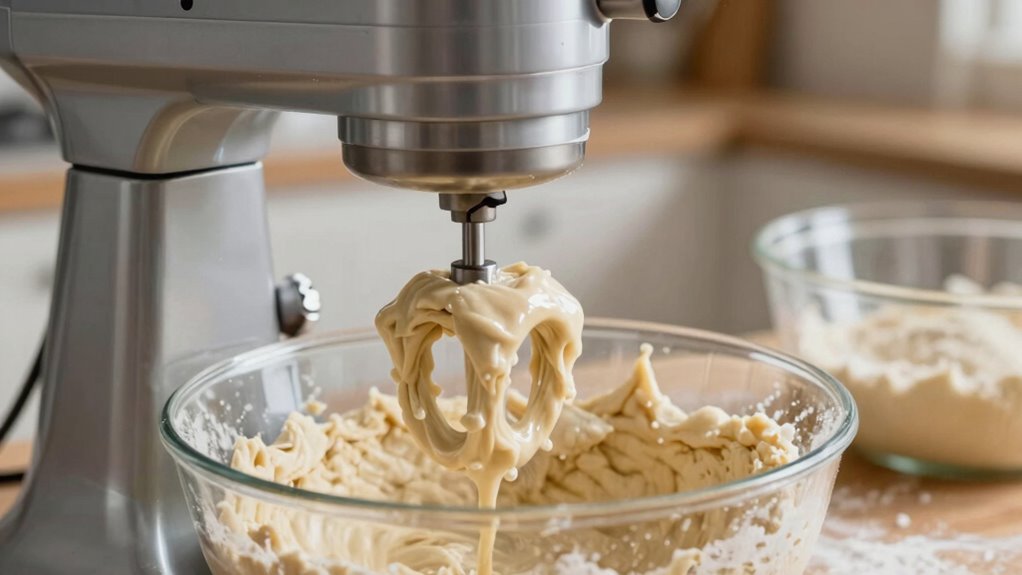
Dense bread often results from issues during mixing, fermentation, or baking that prevent proper gluten development and gas retention. If yeast activation isn’t ideal, your dough won’t produce enough carbon dioxide, leading to a dense crumb. Make sure your yeast is fresh and activated correctly before mixing. Additionally, improper flour hydration can cause dense bread; if your dough isn’t sufficiently hydrated, gluten won’t develop well. Check your recipe’s water-to-flour ratio and add liquid gradually, observing the dough’s consistency. Overmixing with a stand mixer can also break down gluten networks, making the bread heavy. To fix this, mix just until ingredients are combined and develop gluten through gentle kneading or resting. Proper yeast activation and adequate flour hydration are key to achieving light, airy bread.
Frequently Asked Questions
Can I Use a Stand Mixer for All Types of Bread Dough?
You can use a stand mixer for most bread doughs, but manual kneading might be better for delicate or highly hydrated doughs. Mixers excel at saving time and effort, especially with firm or dense doughs, but overmixing can overwork the gluten, leading to tough bread. Adjust the mixing time based on dough hydration, and don’t forget to switch to manual kneading for flaky, fragile, or very wet doughs to prevent overworking.
How Long Is Too Long to Knead Dough in a Stand Mixer?
Ever wonder how long is too long to knead dough in a stand mixer? Generally, keep mixing at a low to medium speed for about 8-10 minutes. Overmixing can overwork the dough, resulting in dense, tough bread. Pay attention to the dough’s texture—once it’s smooth and elastic, it’s ready. Don’t go beyond 10 minutes, or you risk overworking the gluten, which can negatively affect your bread’s rise.
Does Using a Higher Speed in the Mixer Affect Dough Density?
Using higher speed settings in your stand mixer can make your dough denser because it overworks the gluten structure quickly. Stick to low or medium speeds for kneading, as these settings allow the dough to develop gluten gradually without overworking it. Incorporate proper kneading techniques by monitoring the dough’s consistency, and avoid rushing the process to guarantee your bread stays light and airy.
Are There Specific Stand Mixer Attachments Better for Kneading?
You’ll want a sturdy dough hook attachment for kneading, as it handles heavy dough effortlessly without overworking it. Different attachment types, like flat beaters or whisks, aren’t ideal for kneading bread. Stick to the dough hook and use mixing speeds wisely—start slow to combine ingredients and increase gradually. This way, you prevent dense bread and guarantee perfect gluten development every time, making your baking game unstoppable!
Can Overkneading Be Corrected After the Dough Is Mixed?
You can’t fully correct overkneaded dough after mixing, but you can try to improve dough elasticity and gluten development. Gently knead the dough by hand for a few minutes or let it rest longer, which allows gluten strands to relax. Adding a small amount of water can also help, but be cautious—you might not fully undo the overworking, so it’s best to avoid overkneading from the start.
Conclusion
Did you know that overkneading can decrease bread volume by up to 20%? By understanding how to spot the signs and prevent overworking your dough, you’ll enjoy light, fluffy bread every time. Remember, using your stand mixer wisely saves time and guarantees better results. Keep an eye on your dough’s texture, and don’t be afraid to stop early. With these tips, you’ll master perfect bread—dense loaves will be a thing of the past!